 Bellingham
 Fairhaven Sits Right Where Weather Meets the House
Fairhaven's position on Bellingham Bay is part of what makes the neighborhood special — and part of what makes exterior work here harder than it looks from the street. Homes close to the water take on salt-laden air that ordinary building materials aren't built to handle over the long run. Add in Whatcom County's wet season, where driving rain comes in sideways off the Strait for weeks at a time, and a shaded, moisture-heavy tree canopy that keeps north-facing walls and rooflines damp long after a storm has passed, and you've got a climate that's genuinely tough on siding, roofing, windows, and decks alike.
We work on homes throughout Bellingham and Whatcom County, and Fairhaven has its own particular mix of conditions worth calling out directly: salt air corrosion near the bay, sustained driving rain, and a moss season that can run most of the year on shaded lots. None of this is a reason to panic about a house — it's just the reality that should drive material choices and installation details.
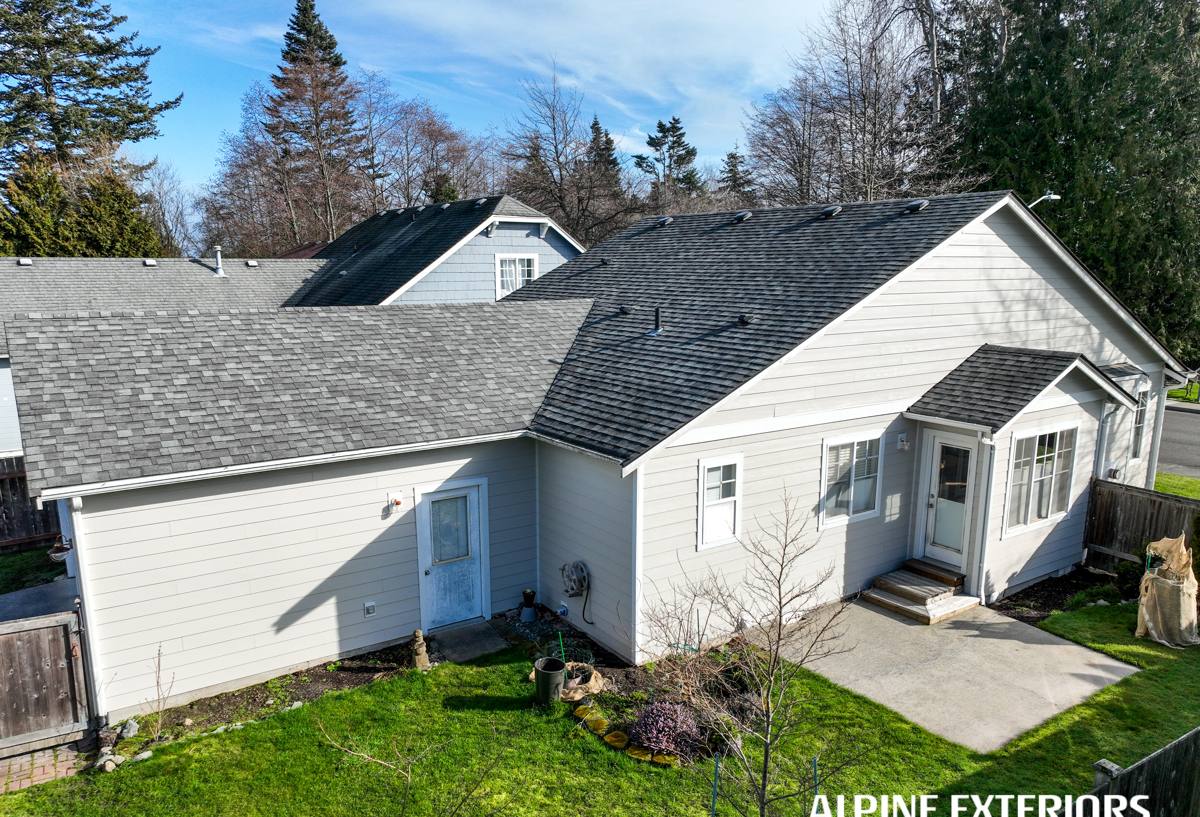
What Salt Air and Driving Rain Actually Do to a House
Salt air corrosion
Salt-laden moisture off the bay accelerates corrosion on fasteners, flashing, and trim details faster than it would a few miles inland. Cheap or mismatched hardware fails first, and once fasteners start rusting, the siding or trim they're holding starts working loose. This is a detail-level problem — it rarely shows up as a big dramatic failure, it shows up as slow, quiet deterioration around joints, nail heads, and edges.
Driving rain and wind-driven moisture
Rain that falls straight down is easy to shed. Rain that's being pushed sideways by wind off the water is a different problem — it finds its way behind poorly lapped siding, under-flashed window trim, and any gap in a roof-to-wall transition. Over years, that kind of intrusion causes rot in sheathing and framing long before it's visible from outside.
Moss, algae, and shade
Fairhaven's tree cover keeps a lot of roof and wall surfaces shaded and damp well after the rain stops. That's exactly the environment moss and algae need to establish. On roofing it degrades shingles and holds moisture against the deck. On siding it holds moisture against the substrate and, on the wrong material, feeds ongoing paint and finish problems.
Why We Install James Hardie Fiber Cement — and Nothing Else
We made a deliberate decision a while back to standardize on James Hardie fiber cement siding and stop installing vinyl, LP SmartSide, or wood products like primed spruce or cedar lap. That's not a marketing position — it's a response to what we've seen happen to exteriors in exactly this kind of climate.
Vinyl siding is affordable and low-maintenance in a general sense, but it's a thin plastic product that can warp in heat, crack in cold, and it doesn't hold up well to the freeze-thaw and moisture cycling common in Whatcom County winters. It also can't be painted to a durable factory-grade finish the way fiber cement can, which matters if a homeowner ever wants to change a color down the road.
Engineered wood siding like LP SmartSide performs reasonably well when installation and maintenance are perfect, but it's still a wood-based product with a strand-and-resin core, which means the failure mode when moisture does get in is more aggressive than fiber cement's. Caulking, flashing, and paint maintenance schedules have to be followed closely, and in a wet, shaded climate like Fairhaven's, that margin for error shrinks.
Traditional wood siding — cedar, primed spruce — has real appeal, but it's the highest-maintenance option of all: repainting or restaining on a recurring cycle, constant vigilance against rot and pests, and a material that's simply more vulnerable to the exact conditions this neighborhood sees the most of.
James Hardie fiber cement is non-combustible, dimensionally stable, and doesn't feed moss or fungal growth the way wood-based products can. Its ColorPlus factory finish is baked on under controlled conditions, holding color and resisting fade, chip, and peel far better than field-applied paint. Hardie's HZ5 product line is engineered specifically for climates with sustained moisture exposure — which describes Fairhaven well. Combined with a strong transferable warranty, it's the product we're willing to put our name behind.
What Correct Installation Actually Involves
- Proper starter strip and clearance from grade, decks, and roof lines to keep water moving away from the wall
- Correctly lapped and fastened panels using fasteners rated for coastal, corrosion-prone environments
- Flashing integrated at every window, door, and penetration — not caulk used as a substitute for flashing
- Rain screen or drainage plane detailing appropriate to the wall assembly
- Factory-finished ColorPlus edges sealed correctly at every field cut
Fiber cement siding installed without attention to these details can still fail early — the product is only as good as the crew putting it on the wall, which is why we treat installation specs as non-negotiable rather than optional.
Roofing for Fairhaven's Wet, Shaded Lots
Roofs here deal with sustained rain volume, wind exposure off the bay, and moss pressure from shade cover. We look at ventilation, underlayment quality, and flashing detail as closely as the roofing material itself — a roof can be made of great shingles and still leak at a poorly flashed valley or chimney. On shaded lots we also talk through moss prevention strategy up front, since it's far easier to design a roof that resists moss buildup than to fight it after the fact.
Windows That Actually Keep Driving Rain Out
Window failures in this climate are almost always installation failures, not product failures — a good window installed with poor flashing will leak, and a modest window installed correctly usually won't. For Fairhaven homes we pay particular attention to head flashing and side flashing details given how much wind-driven rain comes off the water, and we integrate window flashing with the siding's drainage plane rather than treating the two as separate jobs.
Decks Built for Marine Air and Constant Moisture
Decks near the bay face the same corrosion and moisture pressure as siding, plus direct weather exposure and foot traffic. Fastener choice matters as much here as anywhere on the house — corrosion-resistant hardware isn't optional this close to salt air. Proper spacing between boards, ledger flashing where the deck meets the house, and drainage underneath all determine whether a deck lasts or starts showing rot and hardware failure within a few seasons.
What a Cost Estimate Actually Depends On
Every Fairhaven property is a little different, but the factors that move a project's cost are consistent. This is meant as a general guide to what drives pricing up or down, not a quote.
| Factor | Why It Matters |
|---|---|
| Home size and wall/roof complexity | More corners, dormers, and transitions mean more material, more flashing detail, and more labor time |
| Current exterior condition | Rot repair, sheathing replacement, or moisture damage found during removal adds scope beyond the base install |
| Proximity to the water | Homes closest to the bay generally warrant the highest-tier corrosion-resistant fasteners and trim hardware |
| Access and site conditions | Tree cover, tight lots, and steep grades affect staging, scaffolding, and disposal logistics |
| Product line and finish | Hardie panel profile, plank exposure, and ColorPlus color selection all factor into material cost |
What Working With a Local Crew Looks Like
A crew that works Bellingham and Whatcom County regularly already knows how Fairhaven's microclimate behaves — which walls take the worst of the wind-driven rain, which lots stay shaded and damp longest, and which fastener specs actually hold up near the bay. That's knowledge you don't get from a general regional contractor working the whole Puget Sound area on a rotating basis. It shows up in the small decisions: where extra flashing gets added even though it's not strictly required by code, which side of the house gets the moss-resistant roofing detail, and how a deck ledger gets flashed against a wall that sees salt air every day.
We also stand behind our work with warranty coverage on both material and labor, because a fiber cement siding job, a roof, a set of windows, or a deck are all long-term investments in the house — they should be treated that way from the first estimate through the final walkthrough.
A Quick Homeowner Checklist for This Climate
- Check for peeling paint, soft spots, or visible gaps around window and door trim
- Look for moss or algae buildup on shaded roof slopes and north-facing walls
- Inspect deck hardware for rust or corrosion, especially near the water
- Watch for water staining on interior ceilings or walls near exterior penetrations
- Ask any contractor bidding exterior work what fastener and flashing spec they use — not just what siding brand
Ready When You Are
If you're noticing any of the signs above, or you're simply planning ahead for a Fairhaven home that's due for new siding, roofing, windows, or a deck, we're happy to take a look and walk through what we're seeing — no pressure, no obligation. Use the form below to request a free estimate.