 Bellingham
 Lynden's Climate Puts Real Demands on Exterior Siding
Lynden sits in the Nooksack River valley in Whatcom County, close enough to the Salish Sea that homes here deal with the same damp, marine-influenced weather that defines this corner of Washington. That means long stretches of driving rain in the fall and winter, humidity that lingers into spring, and a growing season for moss and algae that can run most of the year. Add in the salt-tinged air that moves inland off the Sound and Strait of Georgia on a west wind, and you have a combination that is genuinely hard on exterior building materials.
None of that is unusual for this part of the state, but it does mean siding choices matter more here than they would in a drier climate. Materials that are marketed as "low maintenance" in a national ad campaign often behave differently once they've spent a few winters absorbing Whatcom County rain. We've built our business around one product line because it holds up to exactly this kind of exposure, and we want Lynden homeowners to understand why before they sign a contract with anyone.
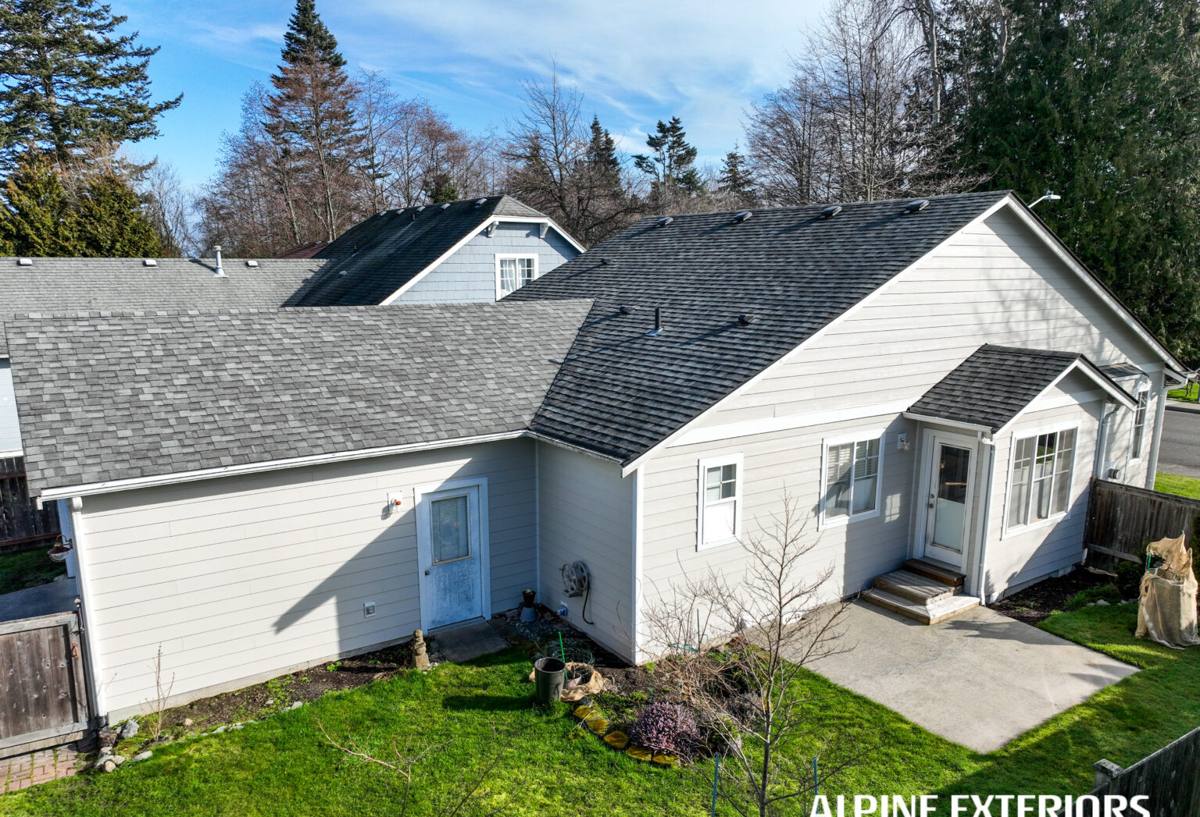
Why We Only Install James Hardie Fiber Cement
We are a James Hardie-exclusive contractor. We don't install vinyl, LP SmartSide, Cemplank, Allura, primed spruce, or cedar lap siding, even though we get asked about all of them regularly. That's a deliberate standard, not a sales gimmick, and it's worth explaining plainly.
What Wood-Based and Engineered Wood Products Face Here
Engineered wood siding relies on resin-treated strand board with a protective coating. It performs fine in controlled conditions, but any breach in that coating, whether from a nail pop, a hairline crack, or years of standing rain at a butt joint, lets moisture into the wood substrate. Once that happens, swelling and softening can follow, and it's not always visible from the ground. In a climate where rain is measured in months rather than storms, that margin for error gets tested constantly.
What Vinyl Gets Right, and Where It Falls Short
Vinyl siding is inexpensive, lightweight, and easy to install fast, which is exactly why it's popular. But it's a thin plastic product that expands and contracts with temperature swings, can crack on impact in colder snaps, and fades unevenly over time since the color is mixed through the material rather than baked onto a finished surface. It also doesn't offer the same fire resistance or the solid, substantial feel that fiber cement does against a wall.
Why Fiber Cement Wins in This Climate
James Hardie fiber cement is cement, sand, and cellulose fiber formed under pressure into a dense, stable board. It doesn't rot, it isn't a food source for moss or mildew the way raw wood can be, and it's non-combustible. Hardie also engineers specific product lines for different climate zones, including a version built for the Pacific Northwest's wet-humid conditions, which matters more in Whatcom County than it would somewhere dry.
James Hardie's HZ5 Line and Whatcom County
James Hardie manufactures its siding in climate-specific formulations, called HZ (HardieZone) products, engineered for either the humid, freeze-prone regions or the hot, dry ones. Lynden falls in the zone built for wetter, cooler climates, which affects how the board is engineered to resist moisture absorption and manage freeze-thaw cycling through the winter. That's a meaningful difference from a generic siding product sold the same way nationwide, and it's one more reason we don't treat "fiber cement" as an interchangeable commodity between brands.
Hardie's ColorPlus Technology is the other piece of the equation. Instead of field-painting after installation, boards arrive with a factory-applied, baked-on finish that resists fading and chipping far better than a job-site paint job, and it's backed by its own finish warranty separate from the product warranty. In a climate that gets this much rain and UV cycling through the year, a factory finish holds its look longer than most site-applied coatings.
What Our Installation Process Looks Like
Fiber cement siding is only as good as the installation behind it. Hardie's own warranty terms require installation to follow their published specifications, and a huge share of the siding failures we get called out to inspect trace back to shortcuts taken during the original install, not a flaw in the product itself.
- Assessing the existing wall assembly, sheathing condition, and moisture barrier before any new siding goes up
- Correct water-resistive barrier and flashing detail at every window, door, and penetration
- Proper fastener type, spacing, and placement per Hardie's installation guide
- Rain-screen or drainage gap application where the wall assembly calls for it
- Correct clearances at grade, roofline, and deck ledger boards to keep the bottom edge of the siding out of standing water
- Final inspection walk-through with the homeowner before we consider the job finished
We treat every one of those steps as non-negotiable, because in a climate like Whatcom County's, a missed flashing detail or a fastener driven wrong doesn't show up as a problem in year one. It shows up in year five or six, and by then it's a repair, not a warranty claim.
Beyond Siding: Roofing, Windows, and Decks
Siding rarely fails in isolation. Roofing, window flashing, and decks are all part of the same building envelope, and problems in one area often start or worsen problems in another. A leaking roof valley can saturate the wall sheathing behind siding that looks fine from the street. Old window flashing can send water directly behind new siding no matter how well the siding itself is installed. We handle roofing, windows, and decks as well as siding, specifically because we don't want to install a beautiful wall system on top of a compromised envelope, and because it means one crew is accountable for how all of it fits together instead of pointing fingers between separate contractors.
If you're evaluating siding for a Lynden home, it's worth having the roof and window flashing looked at in the same visit, even if siding is the main concern. Catching a related issue early is a lot cheaper than catching it after new siding is already up.
What Drives the Cost of a Siding Project
Every home is different, and we won't quote a number without seeing the house, but these are the factors that generally move the price on a fiber cement siding project in this area.
| Factor | Why It Matters |
|---|---|
| Home size and wall complexity | More corners, gables, and dormers mean more cutting, flashing, and labor time |
| Current siding removal | Tear-off and disposal of old siding adds cost versus a bare-sheathing new build |
| Sheathing and moisture barrier condition | Rot or water damage found underneath existing siding needs repair before new siding goes on |
| Board profile and Hardie product line | Lap, shingle, and panel styles carry different material and labor costs |
| Trim and accessory work | Corner boards, fascia, and soffit work often get bundled with a full siding project |
| Site access | Steep lots, tight setbacks, or multi-story walls affect scaffolding and staging time |
The honest range for a full fiber cement siding replacement on a typical single-family home runs into the tens of thousands of dollars, and we'll walk you through exactly why once we've measured your home and looked at what's underneath the current siding.
Why Hiring Local Matters in Lynden
A crew based in and around Bellingham and Whatcom County knows how the local building department handles permitting, understands the wind and moisture exposure specific to this valley, and is going to be reachable if a warranty question comes up three years down the road. Storm-chasing crews that show up after a bad windstorm and disappear once the job is paid for are a real problem in exterior contracting generally, and Lynden is not immune to it. Ask any contractor bidding your siding job how long they've been working in Whatcom County and whether they'll still be answering the phone in five years. It's a fair question, and it's one we're happy to answer plainly.
Caring for James Hardie Siding After Installation
One of the real advantages of fiber cement is how little upkeep it needs compared to wood, but "low maintenance" doesn't mean "no maintenance," especially in a climate that grows moss on nearly every north-facing surface.
- Rinse siding with a garden hose or soft wash once or twice a year to clear pollen, dust, and early moss growth
- Avoid high-pressure power washing directly at joints and seams, which can force water behind the boards
- Keep gutters clear so overflow doesn't run down the wall face repeatedly in one spot
- Trim back plantings and tree limbs that keep siding shaded and damp longer than the rest of the wall
- Have caulking at trim and window edges checked periodically, since caulk fails well before the siding itself does
If you're weighing a siding project for a home in Lynden or anywhere else in the Bellingham area, we're glad to come take a look, walk the exterior with you, and give you a straightforward, no-pressure estimate. Use the form below to get started.