 Bellingham
 Sudden Valley's Exterior Challenges Are Different From Downtown Bellingham
Sudden Valley sits in a different microclimate than the flatter, more open parts of Bellingham. The terrain around Lake Whatcom is hillier and more heavily treed, which changes how moisture moves across a home. Shade from surrounding conifers keeps siding and roofing damp longer after a storm, and that extended dampness is exactly what moss, algae, and mildew need to get established. Add in Whatcom County's long stretch of driving rain from fall through spring, plus the salt-tinged air that reaches even inland communities off the Sound, and you have an exterior envelope that's under near-constant low-grade attack for most of the year.
None of this means Sudden Valley homes are doomed to rot and stain. It means the materials and installation details matter more here than they would in a drier climate. A siding job that would hold up fine in eastern Washington can fail early on a shaded, tree-lined lot near the lake. We've built our whole approach around that reality.
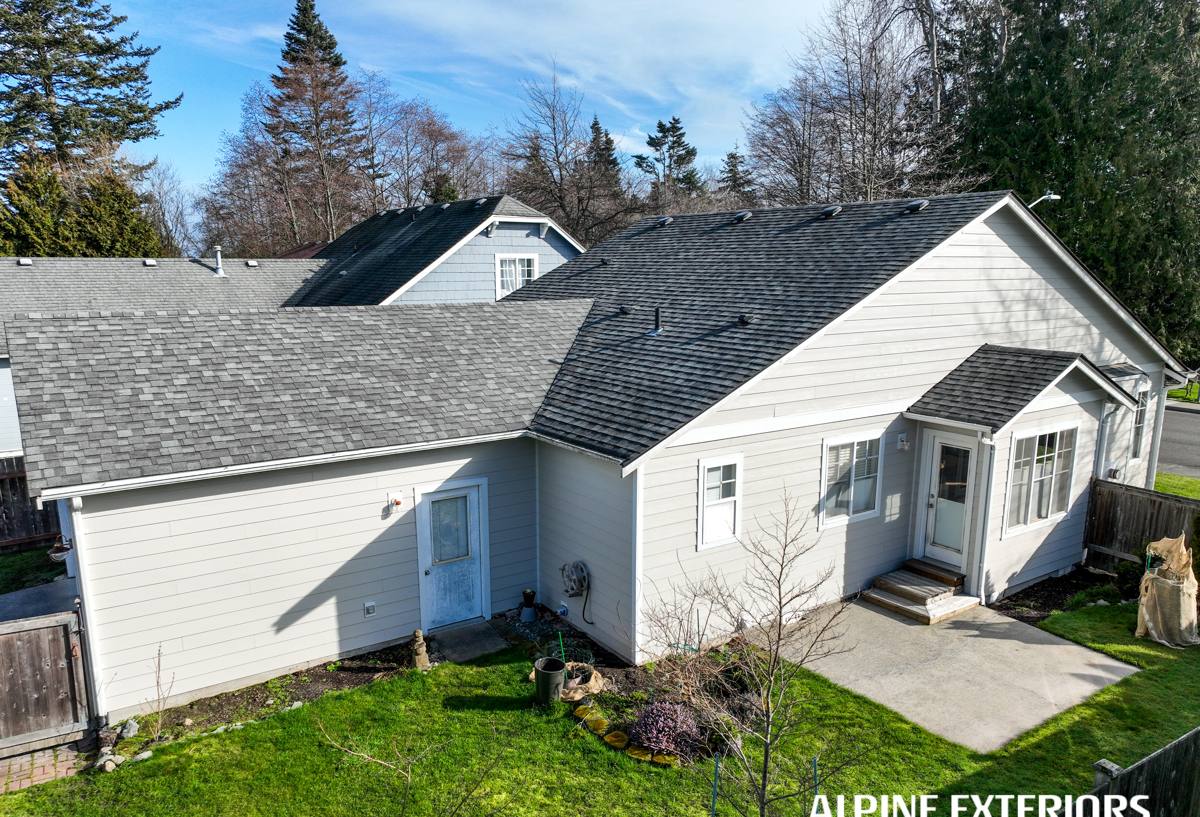
What We See on Sudden Valley Homes
Moss and Algae Growth
Wood-based siding products — cedar, primed spruce, and even some engineered wood siding — absorb moisture at a cellular level. In a shaded, tree-heavy setting like Sudden Valley, that moisture rarely gets a chance to fully dry out between rain events. The result is moss and green algae staining that creeps up from the bottom of a wall or spreads under eaves and around window trim. Pressure washing helps temporarily, but on porous or damaged siding it can force water further into the material.
Paint and Finish Breakdown
Repeated wet-dry cycling is hard on paint film. Sudden Valley's tree cover means siding often stays damp into the afternoon even on days that start sunny elsewhere in the county. That extra dwell time accelerates peeling, chalking, and color fade on field-painted siding, which usually means repainting on a shorter cycle than a homeowner in a drier part of town would expect.
Trim and Butt-Joint Failure
Most of the actual rot we find on siding jobs doesn't start in the flat field of the wall — it starts at seams: butt joints between boards, trim intersections, and anywhere caulk has failed. Once water gets behind the surface at one of these points, it can travel and do damage that's invisible until the siding is opened up.
Why We Install Only James Hardie Fiber Cement
We made a deliberate decision as a company to install James Hardie fiber cement siding exclusively — not vinyl, not LP SmartSide, not Cemplank, not Allura, not primed spruce or cedar. That's not a marketing position; it's a response to what we consistently see fail early in exactly the conditions Sudden Valley has: shade, moisture, and long moss seasons.
Fiber cement is made from cement, sand, and cellulose fibers. It doesn't have the wood-based cell structure that lets moisture soak in and drive rot, and it won't feed pests the way wood-based products can. It's also non-combustible, which matters in a region where wildfire smoke and defensible-space concerns have become a real part of homeownership conversations in Washington. James Hardie backs its siding with a strong transferable warranty and a factory-applied ColorPlus finish that's baked on under controlled conditions — a more consistent, longer-lasting result than field-applied paint exposed to Bellingham's damp air before it's ever fully cured.
A Fair Look at the Alternatives
Vinyl siding is inexpensive and low-maintenance, but it can warp in temperature swings, fade over time with no way to repaint it back to original color, and its seams and J-channels give water pathways that matter in a high-rain climate. LP SmartSide, Cemplank, and Allura are all reasonable engineered products with their own installer bases, and other contractors do good work with them — we simply chose to specialize in one system rather than stock and warranty multiple product lines. Cedar and primed spruce look beautiful when new and can be the right call for homeowners who want that specific aesthetic and are willing to commit to a real maintenance schedule, but in a shaded, wet setting like Sudden Valley, that maintenance schedule tends to be more demanding than most homeowners expect going in.
How the Job Works
Assessment
We start by walking the exterior and identifying where moisture is actually getting in — not just where the siding looks bad. That includes checking flashing above windows and doors, inspecting the transition points between siding and roofing, and looking at how close tree cover sits to the walls.
Installation Details That Matter Locally
Correct James Hardie installation isn't just nailing boards to a wall. In a climate like ours, the details that separate a job that lasts decades from one that fails in five years include:
- Proper water-resistive barrier and flashing behind every siding course, not just at obvious risk points
- Correct fastener placement and spacing per Hardie's engineering specs, which affects both wind performance and long-term board integrity
- Adequate clearance between the bottom of the siding and grade, decking, or roofing so water has somewhere to go
- Caulked and sealed joints at trim, windows, and butt seams — the exact spots where we see wood-based siding fail first
Coordinating With Other Trades
Because we also handle roofing, windows, and decks, we can look at a Sudden Valley home as one connected system instead of a set of separate projects. A roof leak at a valley, a poorly flashed window, or a deck ledger board attached without proper flashing can all send water into a wall system that otherwise has brand-new siding on it. Coordinating those trades under one crew means fewer gaps where problems fall between contractors.
Roofing, Windows, and Decks in the Same Climate
Siding doesn't work in isolation. A home's roof sheds the bulk of the water that eventually runs down and across the siding, so roof condition — especially around valleys, flashing, and moss buildup on the roof plane itself — directly affects how hard the siding has to work. Windows are one of the most common leak points on any home; failed seals or poor flashing at the window frame is a frequent source of the hidden rot we find when we open up a wall. Decks, especially ones attached to the house, need proper ledger flashing so that water running off the deck surface doesn't get driven back into the framing behind the siding. We treat all four — siding, roofing, windows, and decks — as one exterior system because on a shaded, wet lot, that's how water actually behaves.
Cost Factors for Sudden Valley Projects
Every home is different, but the factors that most often move a siding project's price up or down are consistent. This isn't a quote — it's a way to think about what drives cost before you get one.
| Factor | Why It Matters Locally |
|---|---|
| Existing siding removal and disposal | Rotted or moss-damaged wood siding often requires more careful tear-off and sheathing inspection than a straightforward re-side |
| Wall complexity and roofline | Steep, multi-gable rooflines common on Sudden Valley's hillside lots add cutting, flashing, and labor time |
| Access and tree clearance | Wooded lots sometimes need branch clearance or careful staging to protect landscaping and get equipment to the walls |
| Trim and detail package | Corner boards, window trim, and fascia choices affect both material cost and the finished look |
| Underlying sheathing condition | Any rot found once old siding comes off needs to be repaired before new siding goes on — this is the most common source of change orders |
Why a Local Crew Matters Here
A crew that works across Whatcom County regularly sees how differently homes age depending on their exposure — full sun on a Bellingham hillside behaves nothing like a shaded lot backed up to trees near Lake Whatcom. That pattern recognition affects real decisions on a Sudden Valley job: how much drying time to plan for between steps, where extra flashing attention is worth the labor, and which trim details are worth the upgrade given how much moss pressure a particular elevation is going to see. It also means we're not guessing at code requirements or building department expectations for the area — we work under them regularly.
What to Ask Any Contractor Before You Hire
- Are you licensed and insured to work in Washington, and can you provide proof?
- Who is the manufacturer-certified installer actually on site, not just the company that sold the job?
- What's your plan for flashing at windows, trim, and butt joints — not just the field of the wall?
- What warranty covers labor, separate from the manufacturer's material warranty?
- Can you show examples of siding work in similar wooded or shaded lots nearby?
What a Sudden Valley Homeowner Can Expect From Us
We show up, assess the home honestly, and tell you what we actually find — including if the issue is smaller than expected, or if it's roofing or window-related rather than a siding problem. If James Hardie fiber cement is the right fix, we'll explain why for your specific home and site conditions, not just recite a standard pitch. If your siding still has useful life left, we'll say so.
If you're noticing moss buildup, peeling paint, soft spots, or just want an honest read on how your home's exterior is holding up against Whatcom County's weather, we're happy to take a look. Reach out for a free, no-pressure estimate using the form below.