 Bellingham
 Birchwood's Exterior Challenge: Marine Air, Driving Rain, and Moss
Birchwood sits inside Bellingham, close enough to the water and the surrounding tree cover that homes here take on a specific combination of stress most inland Washington towns never deal with. You've got salt-tinged marine air drifting in off Bellingham Bay, long stretches of driving rain pushed sideways by wind off the water, and a shaded, moisture-heavy microclimate that keeps moss and algae growing on north- and west-facing walls for most of the year. None of these things individually is unusual for Whatcom County. Together, applied to the same siding for ten, twenty, thirty years, they add up.
Salt air is corrosive to exposed metal fasteners and trim, and it accelerates the breakdown of finishes that aren't built to handle it. Driving rain finds every gap in flashing, every hairline crack in caulk, and every seam where water-sensitive material was left unprotected. And moss doesn't just look bad — it holds moisture against the wall surface, which is exactly the condition that rots wood-based siding and swells composite products that weren't engineered for constant damp exposure. A house in Birchwood that's never had its siding properly inspected can be hiding real damage behind a coat of paint that still looks fine from the sidewalk.
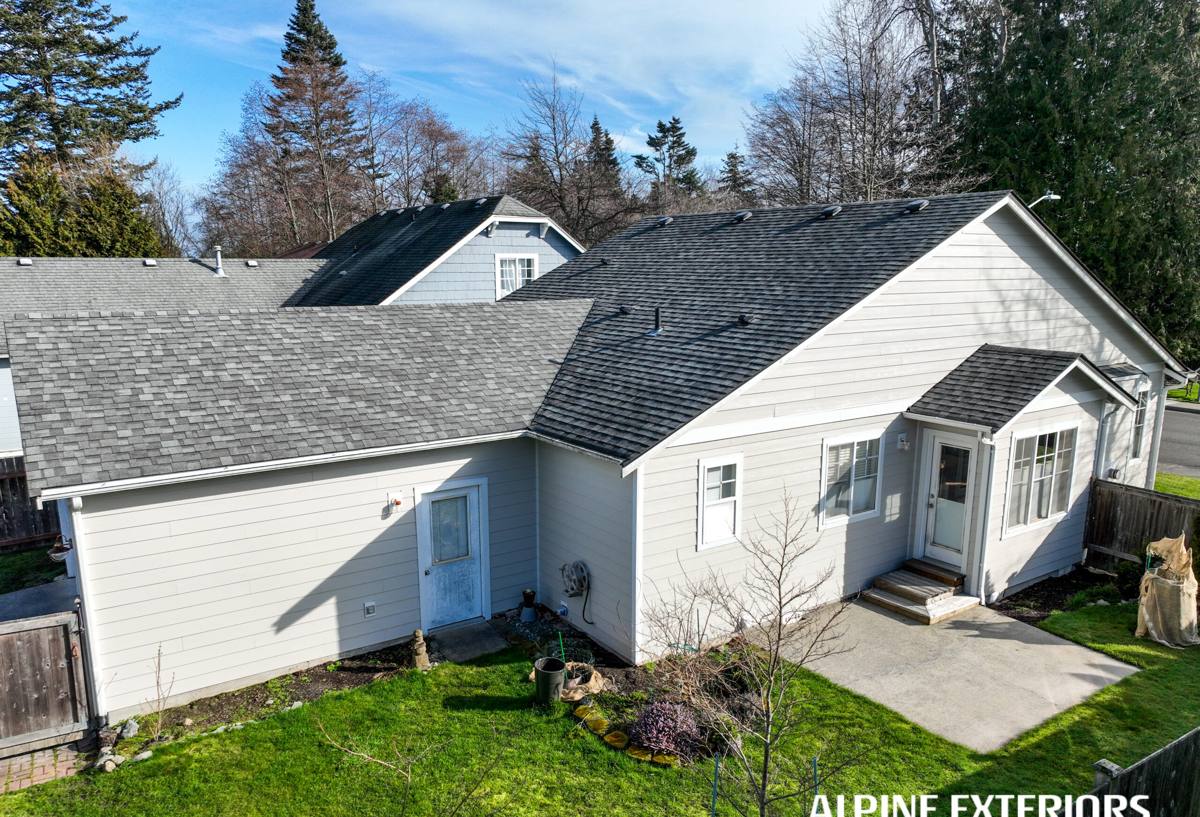
How These Conditions Show Up on Real Homes
We see a consistent pattern on Birchwood houses that haven't had a full siding assessment in a while:
- Moss and dark algae staining concentrated on shaded, north-facing, or tree-covered walls
- Soft or spongy spots near the bottom courses of siding, especially close to grade or downspouts
- Paint that's peeling or bubbling in patterns that follow seams, not just sun exposure
- Rust streaking below nail heads or metal trim pieces
- Caulk that's cracked, shrunk, or pulled away from window and door trim
- Visible warping or cupping on lap siding boards, particularly on the west or south sides that take the most direct wind-driven rain
Any one of these on its own might just mean a repaint is due. Several of them together usually mean water has been getting behind the siding for a while, and the material underneath — whatever it is — has been slowly losing its ability to protect the wall assembly.
Why We Only Install James Hardie Fiber Cement
We made a decision a while back to standardize on James Hardie fiber cement siding and stop installing vinyl, LP SmartSide, primed spruce, cedar, or other fiber cement brands like Allura or Cemplank. That's not a marketing position — it's a practical one, based on what actually holds up in a climate like ours.
Wood-based products, including engineered wood siding, rely on their outer coating and careful detailing to keep moisture out. In a climate with Bellingham's rain totals and humidity, any breach in that coating — a nail pop, a scratch, a poorly sealed cut edge — becomes an entry point for water, and wood-based cores don't handle sustained moisture well. Vinyl siding is low-maintenance in the sense that it doesn't rot, but it's thin, it expands and contracts with temperature swings, it can crack in cold snaps or warp near heat sources, and it was never designed to be a long-term match for a house that needs real weather resistance rather than just a cosmetic exterior.
James Hardie's fiber cement is cement, sand, and cellulose fiber — it doesn't rot, it doesn't feed moss the way wood fibers can, and it holds up to direct rain exposure far better than wood-based alternatives. Hardie also builds regional engineering into its product lines: their HZ5 formulation is designed for climates with more moisture and freeze-thaw cycling, which fits the Pacific Northwest better than a generic all-climate product. The factory-applied ColorPlus finish is baked on under controlled conditions, which gives it better fade and chip resistance than field-applied paint, and it comes with a real transferable warranty backing the material itself. When it's installed to spec — correct flashing, correct fastening, correct clearances — it's the product we're comfortable standing behind on a Birchwood home for decades.
Beyond Siding: Roofing, Windows, and Decks
Siding doesn't work in isolation. Water management on a house is a system — the roof sheds the bulk of it, the siding and flashing handle what runs down the walls, the windows have to seal into that wall assembly without creating a weak point, and any deck attached to the house needs its own flashing where it meets the structure. We handle all four because doing siding right often means catching problems in the other three.
A roof with worn or missing flashing at a wall intersection will keep sending water behind new siding no matter how well the siding itself is installed. Old windows with failed seals or degraded flashing tape are a common source of the water staining we find when we pull old siding off a Birchwood home. And decks that were never properly flashed where the ledger board meets the house are one of the most common rot sources we run into in this region — often invisible until the siding comes off and the damage is staring back at you. Handling these as one exterior project, rather than four separate contractors working around each other, means fewer gaps for problems to fall through.
How the Systems Interact
| Exterior Component | Common Local Issue | Why It Matters for Siding |
|---|---|---|
| Roof flashing | Worn step flashing at wall intersections | Redirects water behind new siding if not corrected first |
| Windows | Degraded seals, old flashing tape | Creates a moisture path into the wall cavity |
| Decks | Poorly flashed ledger board connections | Rot at the house connection point often hides behind siding |
| Siding | Wood-based products absorbing moisture at seams | Fiber cement resists this failure mode by design |
What a Local Bellingham Crew Actually Brings to the Job
There's a real difference between a crew that installs siding in a dozen different climate zones a year and one that works Whatcom County conditions every week. Correct fiber cement installation depends on getting the details right for the climate it's going into — proper gapping and caulking joints so the material can move without trapping water, flashing details sized for actual rainfall rather than a national average, and fastener patterns that account for the wind exposure a Bellingham house experiences off the bay. A crew that's installed Hardie on dozens of homes in this specific area knows where water tends to find its way in on a Birchwood-style lot, and builds the details around that instead of a generic checklist.
Local also means being reachable after the job is done. If a question comes up two years later about a warranty item or a piece of trim that needs attention, you're not chasing down a company that was only in town for one project. We're based here, and we're planning to still be here for the life of the product warranty.
How a Siding Project Typically Runs
- Assessment: We walk the exterior, check for existing moisture damage, evaluate the condition of trim, flashing, and any windows or deck connections that intersect the siding.
- Scope and estimate: We put together a written scope covering material, any necessary repair to sheathing or flashing found during assessment, and a straightforward cost estimate — no vague allowances.
- Prep and removal: Old siding comes off, and we address anything found underneath — soft sheathing, missing house wrap, damaged flashing — before anything new goes up.
- Water management first: House wrap, flashing at every window, door, and penetration, and proper weep details are installed before a single piece of Hardie goes on the wall.
- Installation: Fiber cement panels or lap siding installed per James Hardie's specifications — correct nailing, correct gapping, correct sealant at joints.
- Final walkthrough: We go over the finished work together, and cover what maintenance (if any) the specific product line needs going forward.
Cost Factors for a Birchwood Siding Project
Every house is different, and we don't publish blanket per-square-foot numbers because the condition of what's underneath the old siding changes the scope more than almost anything else. Factors that typically move the estimate:
| Factor | Why It Affects Cost |
|---|---|
| Existing sheathing condition | Rot or moisture damage found during removal requires repair before new siding goes on |
| Siding profile chosen | Lap siding, panel systems, and shingle-style Hardie products differ in material and labor time |
| Home height and access | Multi-story sections or difficult access add staging and labor time |
| Trim and detail work | Homes with more corners, window trim, and architectural detail take longer to flash and finish correctly |
| Tie-in work | Coordinating flashing with an aging roof, old windows, or an attached deck can add scope |
Maintenance: What Owning James Hardie Siding Actually Looks Like
Fiber cement isn't zero-maintenance, but the maintenance load is genuinely light compared to wood-based alternatives, especially in a moss-prone area like Birchwood:
- Rinse siding periodically to keep algae and moss from establishing, particularly on shaded walls
- Keep gutters clear so overflow isn't running down the wall face
- Trim back vegetation and tree limbs that keep siding shaded and damp
- Check caulk at window and door trim every few years and re-seal if it's cracked or shrinking
- Repaint only if you chose a non-ColorPlus product — factory-finished ColorPlus siding is designed to go far longer between paint jobs
Choosing a Contractor for This Kind of Work
Whatever contractor you choose for a Birchwood exterior project, a few things are worth confirming before you sign anything: are they licensed and insured in Washington, do they carry manufacturer certification for the specific product they're installing, will they put the flashing and water-management details in writing rather than leaving them as an assumption, and will they give you a straight answer about why they recommend one siding product over another rather than just pushing whatever's cheapest to install. A contractor who's confident in their material and their crew's work will walk you through all of it without hesitation.
If your Birchwood home's siding is showing its age, or if you're planning a roof, window, or deck project and want someone who can look at the whole exterior at once, we're happy to take a look and give you a straightforward, no-pressure estimate. There's no obligation — just an honest read on what your home actually needs.