 Bellingham
 Why This Decision Is Different in Bellingham
Every siding contractor gets some version of this question: is this a repair job or does the whole wall need to come off? In most of the country that's a fairly simple call based on age and visible damage. In Whatcom County it's more complicated, because our climate stacks several kinds of wear on top of each other at once — salt-laden air off Bellingham Bay, long stretches of driving, wind-pushed rain, and a moss and mildew season that can run eight or nine months out of the year on shaded, north-facing walls.
That combination means siding here often looks fine from the sidewalk while quietly failing underneath. A repair-or-replace decision that ignores what's happening behind the surface is a decision made with half the information. This page walks through how to read the signs correctly, what separates a legitimate patch job from a stopgap, and how the type of siding on your house changes the math.
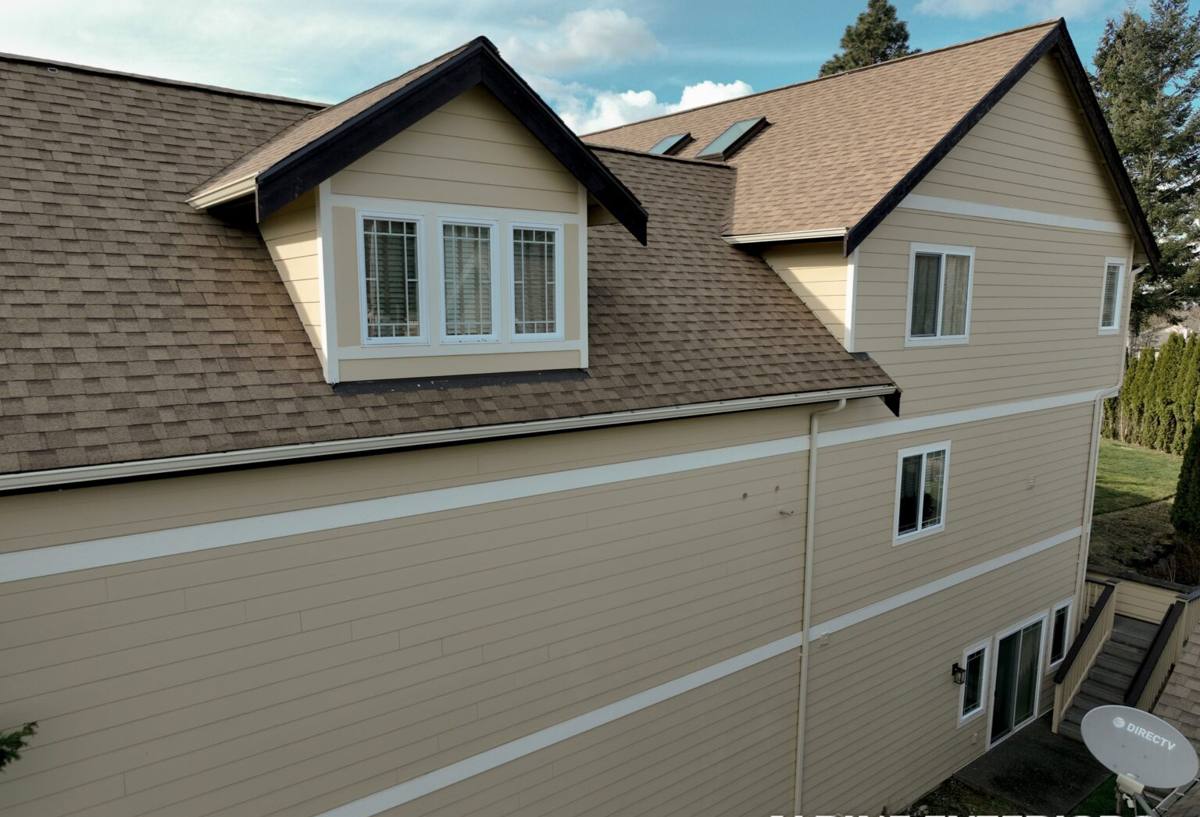
Start With What the Damage Is Telling You
Not all damage is created equal. A cracked panel from a stray branch is a different animal than soft, dark staining spreading across a whole elevation. Before you or a contractor decide anything, it helps to separate cosmetic issues from structural ones.
Cosmetic and Isolated Issues
- A single cracked, dented, or missing panel with no discoloration around it
- Fading or chalking paint on an otherwise sound surface
- Minor caulk failure at trim joints with no soft wood underneath
- Small impact damage from hail, debris, or a ladder mishap
Signs Pointing to Something Deeper
- Soft or spongy spots when you press on the siding
- Bubbling, peeling paint that keeps coming back after repainting
- Dark streaking, black mold, or persistent moss growth in the same spots year after year
- Visible warping, buckling, or panels pulling away from the wall
- Musty smell or soft drywall on the interior side of an exterior wall
The first list is usually a repair. The second list means water has been getting behind the siding for a while, and the real question isn't the siding at all — it's how much of the wall assembly underneath it has been compromised.
The Moss and Moisture Factor
Whatcom County's combination of shade, humidity, and mild temperatures is close to ideal for moss and algae growth, and siding is one of the places it likes best. On its own, surface moss is mostly cosmetic — it can be cleaned. The problem is what moss indicates: a wall surface that stays damp for extended periods. Prolonged dampness is what breaks down caulk joints, swells wood-based products, and eventually lets water track behind the cladding into the sheathing.
Houses tucked under tree cover, walls facing prevailing wind-driven rain, and north sides that rarely see direct sun are the areas we check most closely on any inspection. If moss keeps returning to the same section within a year or two of cleaning, that's usually a sign the siding in that area is holding moisture rather than shedding it — worth a closer look before assuming a wash and repaint will solve it long-term.
How the Material Changes the Repair-or-Replace Math
The honest answer to "repair or replace" depends heavily on what's currently on the house. We install James Hardie fiber cement exclusively, but plenty of Bellingham homes still have vinyl, cedar, or engineered wood siding, and each behaves differently once damage shows up.
| Siding Type | How It Typically Fails | Repair Realism |
|---|---|---|
| Vinyl | Cracking in cold snaps, warping near heat sources, color fading, brittleness with age | Individual panels can often be swapped, but exact color matches get harder every year as products are discontinued |
| Cedar / solid wood | Rot at butt joints and low clearance areas, cupping, insect damage, paint failure from moisture cycling | Spot repairs are possible early on, but rot spreads under the surface faster than it shows, so damage is often more extensive than it looks |
| Engineered wood (LP SmartSide and similar) | Swelling and delamination at cut edges, seams, and fastener points if the factory seal is breached | Once swelling starts it doesn't reverse; affected boards need full replacement, not patching |
| Fiber cement (James Hardie) | Impact chips, caulk joint wear, occasional installation-error moisture entry | Individual planks replace cleanly without swelling or rot risk, since the material itself doesn't absorb and hold water the way wood-based products do |
This is really the core of why we standardized on James Hardie years ago. Fiber cement doesn't rot, doesn't swell at cut edges, and isn't a food source for moss the way bare or thinly coated wood products can be. That doesn't make it maintenance-free, but it does make the repair conversation simpler — a damaged plank is a damaged plank, not a symptom of a slower-moving moisture problem baked into the material itself.
When a Repair Is the Right Call
We're not in the business of talking every homeowner into a full re-side — most of the time a repair is the correct, cost-effective answer. A repair makes sense when:
- Damage is confined to one or two sections, not spread across multiple elevations
- The siding is less than roughly half its expected service life
- There's no soft sheathing, staining, or interior evidence of a leak
- The product is still available or close enough to match without an obvious patch line
- The rest of the siding is performing well and simply needs cleaning or repainting
On a Hardie-sided home, this is usually the easiest version of this conversation — planks can be pulled and replaced individually, and because the material and factory finish are still in production, a repair blends in rather than becoming a visible scar on the house.
When Replacement Is the More Honest Answer
Replacement becomes the right call — not just the more profitable one for a contractor, but the genuinely correct one — when the damage stops being isolated. Signs that point toward a full re-side instead of another round of patching:
- Moisture damage shows up in multiple, unrelated areas of the house
- The siding is old enough that matching materials or colors is no longer realistic
- You're patching the same areas every year or two with no real improvement
- An inspection finds soft or rotted sheathing behind the cladding
- You're planning to sell within the next few years and want a clean inspection report
- Energy bills are climbing and the wall assembly has no meaningful insulation or house wrap
A full re-side is also the point where it makes sense to fix the underlying wall assembly — house wrap, flashing at windows and doors, proper clearance at the ground — rather than just putting new material over old problems. Repairing on top of bad flashing or missing wrap just resets the clock on the same failure.
What Drives the Cost Either Way
Exact numbers depend on the house, but the factors that move the price are consistent whether you're patching a section or doing the whole exterior.
| Factor | Effect on Cost |
|---|---|
| Extent of damage | Isolated repairs are far cheaper than full elevations; the jump from "one wall" to "whole house" is the biggest cost driver |
| Access and height | Second stories, steep grades, and tight side yards common in older Bellingham neighborhoods add labor time |
| Underlying wall condition | Rotted sheathing or missing house wrap discovered mid-job adds cost that can't be known until the siding is off |
| Material match | Discontinued vinyl or weathered wood can require repainting adjacent sections to avoid a visible patch |
| Trim and detail work | Corner boards, window trim, and soffit work often get bundled into a re-side and affect the total |
Broadly speaking, spot repairs run a small fraction of what a full re-side costs, which is exactly why it's worth getting an honest assessment rather than assuming the worst — or, on the other end, assuming a patch will hold when the underlying damage is more widespread than the visible symptom.
Questions to Ask Before You Decide
Whether you're talking to us or another contractor, these questions separate a real assessment from a quick guess:
- Did you check for soft spots or moisture behind the siding, not just the surface condition?
- Is the damage isolated, or is it a symptom showing up in more than one location?
- Can the existing material still be matched, or will a repair be visibly different?
- What's underneath — house wrap, flashing, sheathing condition — and was any of that inspected?
- If we repair now, what's the realistic timeline before this section needs attention again?
Getting an Honest Assessment
The right answer for your house depends on details you generally can't see from the ground — moisture readings, what's happening at seams and penetrations, and how the wall assembly behind the siding is holding up after years of Bellingham weather. We're happy to take a look, tell you plainly whether a repair will actually hold or whether it's time to talk about replacement, and if replacement is the right call, walk you through why we install James Hardie fiber cement and nothing else. There's no pressure and no charge for the estimate — just a straight answer.