 Bellingham
 Exterior Work in Ferndale: What the Climate Actually Does to a House
Ferndale sits close enough to the water and the lowland river valleys of Whatcom County that its homes take on a specific mix of weather stress most siding products were never designed around. You get salt-tinged air blowing in off the Strait and Bellingham Bay, long stretches of driving rain in the fall and winter, and a wet season that runs far longer than it does in most of the country. Add in the shaded, moisture-heavy conditions common on lots with mature trees or north-facing walls, and you have a near-perfect setup for moss, algae, and slow-building moisture damage on anything but the right exterior materials.
We install siding, roofing, windows, and decks across Whatcom County, and Ferndale jobs come with their own pattern. Homes here often sit on larger lots with more tree cover than in-city Bellingham properties, which means more shade, more standing moisture on north and east walls, and more moss creep on roofs and lower siding courses. Homes closer to the water or open farmland also catch more wind-driven rain, which finds every gap in flashing, trim, and siding laps that wasn't detailed correctly the first time.
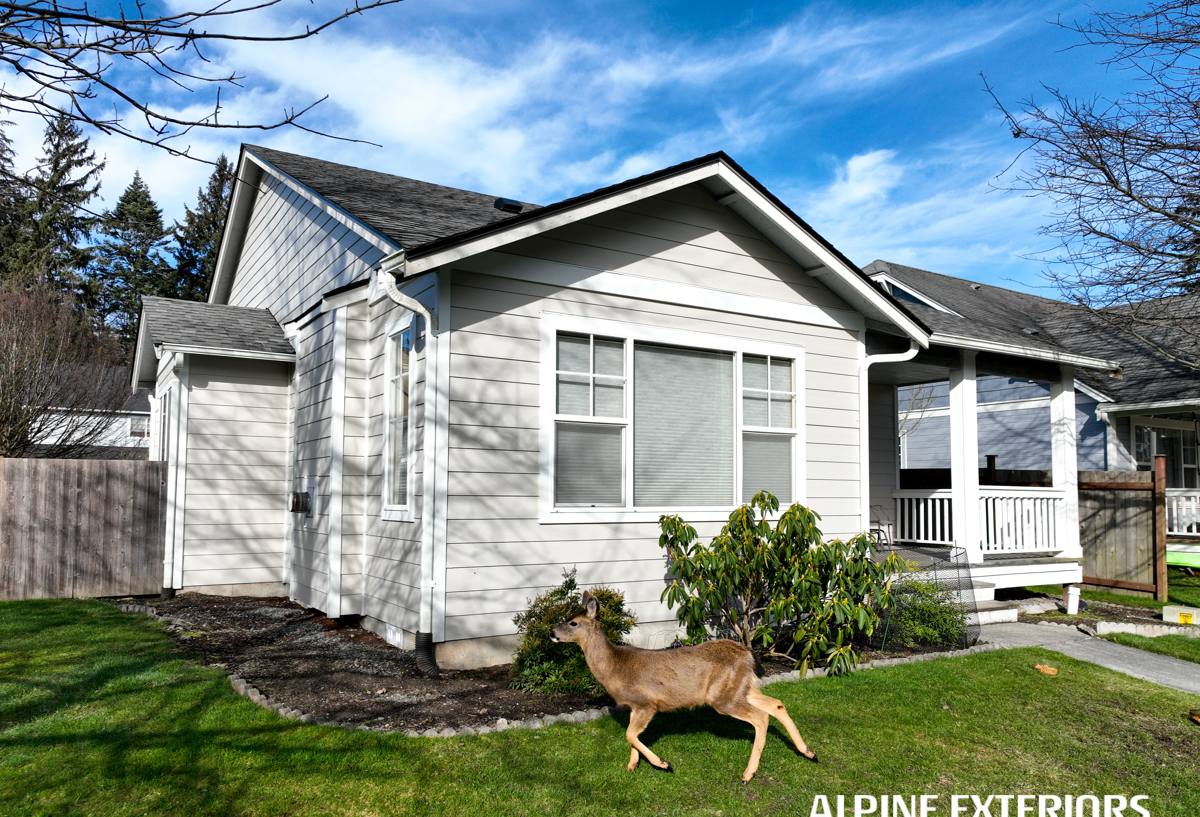
Why Salt Air and Moss Season Matter More Than People Think
Salt Air
You don't have to live directly on the waterfront to feel the effects of salt air. Airborne salt travels inland on wind and settles on exterior surfaces, where it accelerates corrosion of exposed metal fasteners, flashing, and hardware, and it can degrade certain paint and coating systems faster than a typical inland home would experience. Materials and finishes that aren't formulated to handle that exposure tend to show fading, chalking, or fastener staining years before they should.
Driving Rain
Whatcom County storms don't always come straight down. Wind-driven rain pushes water sideways into wall assemblies, testing every seam, lap, and penetration in the exterior envelope. A siding system that isn't installed with the right overlaps, flashing, and clearances will eventually let water behind the cladding — and once water gets behind siding, the damage is often happening in the wall cavity long before it shows up on the surface.
Moss Season
Whatcom County's extended damp season, especially on shaded or north-facing exposures common in Ferndale's more wooded neighborhoods, creates ideal conditions for moss and algae growth on roofing and siding. Moss holds moisture against a surface far longer than open air would, which is a problem for any material that isn't dimensionally stable or that absorbs water. Over time, trapped moisture behind moss growth contributes to rot in wood-based products and accelerates wear on lower-grade siding systems.
Why We Only Install James Hardie Fiber Cement Siding
We don't install vinyl siding, LP SmartSide, Cemplank, Allura, primed spruce, or cedar. That's a deliberate standard, not a lack of options. We install James Hardie fiber cement exclusively because it's the product we trust to hold up to exactly the conditions Ferndale homes deal with — moisture, salt air, and long-term exposure — without the maintenance burden or failure patterns we've seen in other materials.
What Rules Out the Alternatives
- Vinyl siding can warp or distort under sustained heat and shows its seams and lap lines more visibly over time; it's also more prone to wind damage in exposed, open-lot settings.
- LP SmartSide is an engineered wood product, and any wood-based siding depends heavily on caulking, paint maintenance, and cut-edge sealing to keep moisture out — a maintenance schedule that's easy to fall behind on in a climate this wet.
- Cemplank and Allura are also fiber cement, and they're reasonable products on paper, but we've standardized on one manufacturer, one installation system, and one warranty structure so every job we do is consistent and every crew member is trained the same way.
- Primed spruce and cedar are real wood, which means real wood problems: they need repainting on a real schedule, they're vulnerable to moisture intrusion at end grain and fastener points, and in a moss-prone climate like this one, they need more upkeep than most homeowners want to sign up for.
What Hardie Gets Right
James Hardie fiber cement is non-combustible, dimensionally stable in wet-dry cycling, and available in climate-engineered HZ product lines built for exactly the Pacific Northwest's moisture exposure. The ColorPlus factory-applied finish is baked on under controlled conditions rather than field-painted, which gives it better fade and chip resistance than most site-applied coatings — a real advantage against UV and salt-air exposure. It also carries a strong transferable warranty when installed to Hardie's specifications, which matters if you sell the home down the road.
How We Approach a Ferndale Siding Job
Assessment First
Every job starts with a real look at the house — not just the siding, but what's underneath it. We check for existing moisture damage, evaluate the current water management (flashing, house wrap, kickout flashing at roof-wall intersections), and identify any trouble spots like north-facing walls, areas under mature trees, or sections that have taken visible weather damage.
Installation Details That Actually Matter
Correct Hardie installation isn't just nailing boards to a wall. It depends on proper clearances from grade and roof lines, correct fastener patterns and spacing, properly lapped and sealed joints, and flashing details at windows, doors, and any wall penetration. In a driving-rain climate, these details are the difference between a wall assembly that sheds water and one that eventually traps it.
Roofing, Windows, and Decks Work Together
Siding doesn't perform in isolation. A roof with poor drainage or aging flashing can send water down onto siding it was never meant to handle. Windows with failed seals let moisture into the wall cavity from the inside out. Decks attached to the house need proper ledger flashing so they're not a water entry point at the band joist. We handle all four trades so the whole exterior envelope is treated as one connected system, not four separate scopes that don't talk to each other.
Comparing Siding Options for a Whatcom County Home
| Material | Moisture Behavior | Salt Air / Coastal Exposure | Maintenance | Do We Install It |
|---|---|---|---|---|
| James Hardie Fiber Cement | Dimensionally stable, HZ lines engineered for wet climates | Strong; factory finish resists fading and chalking | Low; occasional wash, no repainting on a fixed schedule | Yes — exclusively |
| Vinyl | Can warp/distort with heat cycling | Moderate; can fade and become brittle over time | Low, but limited repair options if damaged | No |
| LP SmartSide (engineered wood) | Vulnerable at cut edges and seams if maintenance lapses | Moderate; coating quality matters | Higher; caulk and paint upkeep required | No |
| Cedar / Primed Spruce | Absorbs moisture; prone to rot without upkeep | Weaker without diligent maintenance | High; regular repainting and sealing | No |
What Homeowners Should Watch For
If you're evaluating your home's exterior, a few warning signs point to a system that's losing the battle with the local climate:
- Visible moss or algae buildup on lower siding courses or roof valleys that keeps returning after cleaning
- Soft spots, bubbling, or discoloration near seams, corners, or window trim
- Paint that's chalking, peeling, or fading noticeably faster on south- and west-facing walls
- Rust streaking below fasteners or metal trim, especially on homes closer to open water or farmland
- Gaps or separation at siding laps, which give wind-driven rain a direct path behind the cladding
Why a Local Crew Matters
A siding crew that mostly works drier inland climates will detail a house differently than one that works Whatcom County year-round. We know which walls in this area take the worst of the wind-driven rain, which lots need extra attention to moss and shade-related moisture, and how salt exposure changes fastener and finish choices near the water. That local knowledge shows up in the small decisions — flashing details, fastener selection, clearance heights — that determine whether an exterior holds up for decades or starts showing problems in five years.
What to Expect From a Project
Typical Process
- On-site assessment of current siding, roofing, and any visible moisture or damage issues
- Written scope and product recommendation specific to the home's exposure and condition
- Removal of old siding and inspection of the sheathing and water-resistive barrier underneath
- Correction of any flashing or moisture-management issues found during removal
- Installation of James Hardie siding to manufacturer specifications, including proper fastening, clearances, and joint treatment
- Final walkthrough covering care and what to expect long-term
Cost Factors
| Factor | Why It Matters |
|---|---|
| Home size and wall complexity | More corners, gables, and trim details mean more labor and material |
| Condition of existing sheathing/wrap | Moisture damage found during tear-off adds repair scope before new siding goes on |
| Siding profile and color selection | Lap width, texture, and ColorPlus finish options affect material cost |
| Site access | Tree cover, slope, and lot layout affect scaffolding and staging time |
| Scope beyond siding | Bundling roofing, window, or deck work can improve overall efficiency and sequencing |
If you're weighing a siding, roofing, window, or deck project for a Ferndale home, we're happy to walk the property, look at what your exterior is actually dealing with, and put together a straightforward estimate — no pressure, no scare tactics, just a clear look at your options.