 Bellingham
 Siding Built for Ferndale's Weather, Not Just Its Curb Appeal
Ferndale sits close enough to Bellingham Bay and the Nooksack River bottomlands that its homes take on a specific mix of punishment: salt-laden air moving in off the water, long stretches of driving rain pushed sideways by wind off the Strait, and a moss season that can run eight months out of the year on north- and west-facing walls. Siding here isn't just a design choice — it's the first line of defense against moisture that never fully lets up. We install James Hardie fiber cement siding for Ferndale homeowners because it's the one product system engineered to hold up under exactly these conditions without turning into a maintenance project every spring.
This page is about one thing: James Hardie installation for Ferndale homes specifically. Not a general siding overview, not a sales pitch for every product on the market — just what your house actually needs given where it sits, what a correct Hardie installation looks like, and why the crew doing the work matters as much as the material itself.
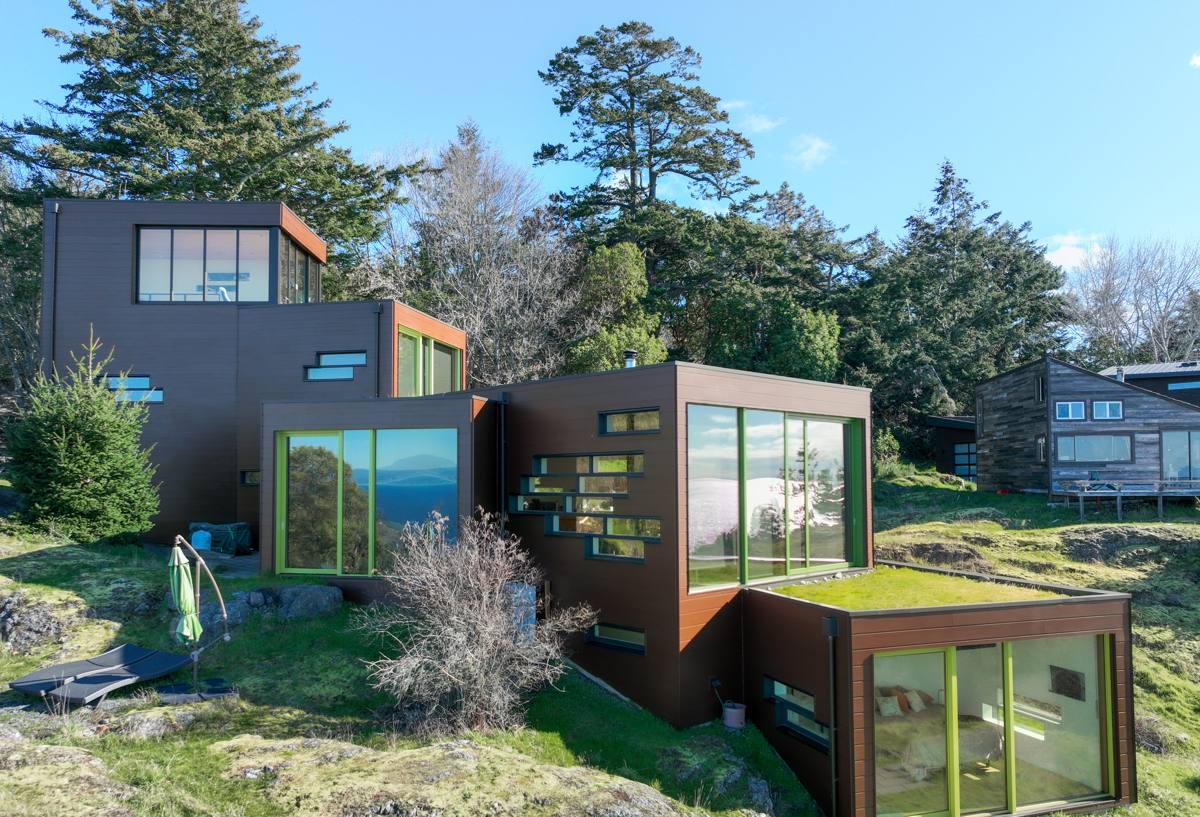
What Ferndale's Climate Actually Does to Siding
Whatcom County weather is often described as "mild," which is true in terms of temperature but misleading in terms of moisture load. Ferndale gets a steady diet of drizzle and heavier rain events from fall through spring, plus the salt-air exposure that comes with proximity to Bellingham Bay and the Puget Sound shoreline. A few things happen to exterior materials under those conditions:
- Wood-based products absorb and swell. Even primed or engineered wood siding takes on moisture at cut edges, fastener holes, and butt joints, then dries unevenly — which is where warping and soft spots start.
- Salt air accelerates corrosion. Fasteners, flashing, and trim that aren't rated for coastal exposure degrade faster here than they would inland, which can undermine an otherwise sound installation.
- Moss and algae take hold on anything that stays damp. North-facing walls, areas shaded by trees, and surfaces with any texture for spores to grip get green well before a homeowner notices — and by then it's usually feeding on the material underneath, not just sitting on top of it.
- UV exposure, while less intense than in drier climates, still fades unstable finishes over years of freeze-thaw cycling and constant damp-to-dry swings.
None of this means Ferndale is an unusually harsh place to build. It means the margin for error in material choice and installation detail is smaller than it looks, and small mistakes compound over a Pacific Northwest winter.
Why This Matters More in Ferndale Than Somewhere Drier
A siding product that performs fine in a low-humidity climate can fail early here simply because it never gets a real chance to dry out between rain events. Ferndale's proximity to the water adds the extra variable of salt exposure, which most general siding guidance doesn't account for at all. That's the gap we're filling with James Hardie: a fiber cement product engineered specifically for wet, marine-influenced climates like this one.
Why We Install Only James Hardie
We made a deliberate decision as a company to install James Hardie fiber cement siding exclusively — not vinyl, not LP SmartSide, not Cemplank or Allura, not primed spruce or cedar. That's not a marketing angle; it's a standard we hold because of what we've seen these products do (and not do) in Whatcom County conditions over time.
- Fiber cement doesn't feed moss the way wood-based products can. Hardie's cement composition doesn't provide organic material for spores to root into the way wood fiber or wood-based composites can, which matters enormously in a climate where north walls stay damp for months.
- It's non-combustible. Increasingly relevant as wildfire smoke and regional fire risk become a bigger part of Pacific Northwest summers, even in areas that don't see direct fire exposure.
- The ColorPlus factory finish is baked on, not field-applied. That matters directly for salt-air and moisture exposure — a factory-cured finish resists fading and moisture intrusion at the surface far better than site-applied paint, which is the weak point on most wood-based sidings.
- Hardie's HZ5 product line is engineered for climates like ours — cold, wet, and humid — with moisture and freeze-thaw performance built into the formulation rather than added as an afterthought.
We're not going to tell you other products are junk — some of them are reasonable choices in the right climate. What we will say is that after years of doing exterior work in this specific corner of Washington, Hardie is the only product we're willing to warranty our labor against, because it's the only one that consistently performs the way it's supposed to here.
What a Correct Installation Involves
James Hardie siding is only as good as the installation behind it. The product is engineered to perform, but a rushed or generic install — the kind that treats Hardie like it's just another lap siding — is where most of the failures we get called to fix originate. A correct job in a climate like Ferndale's includes:
Water Management Before the First Board Goes Up
- A drainage plane (weather-resistive barrier) installed continuously, with proper overlaps and no gaps at penetrations.
- Rain screen or furring strategy where wall assembly and exposure justify it, to let any incidental moisture behind the siding actually dry out instead of sitting against the sheathing.
- Flashing at every window, door, and roof-to-wall intersection — installed to shed water outward, not just caulked and hoped for.
Fastening and Clearances Specific to Fiber Cement
- Corrosion-resistant fasteners suited to coastal exposure, driven to Hardie's specified depth — not overdriven, which cracks the board's edge and creates a moisture entry point.
- Proper nail placement per Hardie's fastening schedule for the specific product line and exposure category.
- Minimum clearance from grade, roofing, decks, and patios so the bottom edge of the siding isn't sitting in a moisture trap.
Joints, Caulking, and Trim
- Butt joints backed and sealed correctly, not just butted tight and caulked over.
- Compatible caulk and trim products that won't degrade faster than the siding itself.
- Careful attention at inside and outside corners, where poor detailing is most often where moisture gets in first.
Every one of these steps is more important here than in a drier inland climate, because Ferndale's wall assemblies rarely get a long dry stretch to forgive a shortcut.
How Our Process Works
- On-site assessment. We look at your home's specific exposure — which walls take the worst weather, where moss has already established, where past moisture damage shows up, and what your current siding and trim conditions tell us about the wall assembly underneath.
- Product and line selection. We recommend the Hardie product line, plank exposure, and color/finish appropriate to your home and its exposure, not a one-size answer.
- Tear-off and inspection. Once old siding comes off, we inspect sheathing and framing for hidden moisture damage before anything new goes up — this is often where problems from a prior installation surface.
- Water management installation. Barrier, flashing, and rain screen detailing done to spec, not skipped to save a day.
- Hardie installation. Fastened, jointed, and trimmed to manufacturer specification for our climate zone.
- Final walkthrough. We go over the finished work with you directly so you know what was done and why.
Why a Crew That Already Works Ferndale Matters
Siding crews that mostly work drier or milder markets sometimes treat water management as optional or "belt and suspenders." In Ferndale, it isn't optional — it's the difference between siding that lasts its full service life and siding that needs rework in five years. A crew that regularly works Whatcom County knows:
- Which wall orientations on a given lot are going to fight moss year-round versus which ones dry out fine.
- How local wind-driven rain patterns off the bay affect flashing and joint decisions.
- What corrosion-resistant fastener and flashing specs actually hold up under sustained salt-air exposure, rather than just meeting a generic code minimum.
- How Whatcom County permitting and inspection processes typically run, so your project doesn't stall on paperwork.
That local pattern-recognition doesn't come from a product manual — it comes from having done this work, on homes like yours, in this specific climate, repeatedly.
Cost Factors for a Ferndale Hardie Project
Every home is different, but the factors that move a James Hardie installation's cost up or down are consistent. We won't quote a number without seeing your home, but this table gives you a sense of what actually drives the estimate.
| Factor | Why It Matters |
|---|---|
| Tear-off scope | Removing old siding (and disposing of it) adds labor versus installing over new construction sheathing |
| Underlying moisture damage | Rot or damaged sheathing found during tear-off has to be repaired before new siding goes up — this is common on older Ferndale homes with wood siding |
| Product line and profile | HardiePlank, HardiePanel, and HardieShingle carry different material and labor costs; ColorPlus finishes cost more than primed-for-paint options but eliminate a repaint cycle |
| Home complexity | Multiple stories, dormers, and lots of trim/corner detail increase labor time significantly |
| Exposure severity | Walls facing prevailing wind and rain may need additional rain screen or flashing work |
Signs Your Ferndale Home May Need New Siding Soon
A quick self-check before you call anyone:
- Moss or dark staining that keeps coming back within weeks of cleaning it off
- Soft spots, bubbling, or visible warping, especially on north or west walls
- Paint that's failing faster than it used to, or peeling in sheets rather than fading evenly
- Visible gaps at trim, corners, or window flashing
- Rising energy bills that can't be explained by anything else — a sign the wall assembly may be letting in moisture and losing insulation value
None of these mean you need to act today. But if more than one or two apply, it's worth having someone look at the wall assembly before a wet winter turns a cosmetic issue into a structural one.
Get a Free, No-Pressure Estimate
If you're weighing siding options for a Ferndale home, we're happy to come take a look, walk you through what we see, and give you a straight answer on what James Hardie siding would involve for your specific house — no obligation, no pressure. Use the form below to request a free estimate.