 Bellingham
 South Hill: A Neighborhood That Wears Its Weather
South Hill sits on higher ground above downtown Bellingham, and that elevation cuts both ways. Homes up here often get better views of Bellingham Bay and the islands beyond, but they also catch more of what comes off the water. Wind-driven rain hits harder on exposed slopes than it does down in a sheltered valley, and the salt air that rolls in off the Puget Sound doesn't stop at the waterfront — it travels with the wind and settles on everything above it, including siding, trim, and roofing several miles inland.
Add in Whatcom County's long, damp shoulder seasons — where a house can go weeks without a full dry day between October and April — and you get a exterior environment that's genuinely tough on building materials. It's not dramatic weather. There's no hurricane season here. It's the slow, repetitive kind of exposure that wins over time: moisture cycling in and out of siding, moss finding a foothold on anything north-facing or shaded, and salt-laden air working on paint and fasteners year after year.
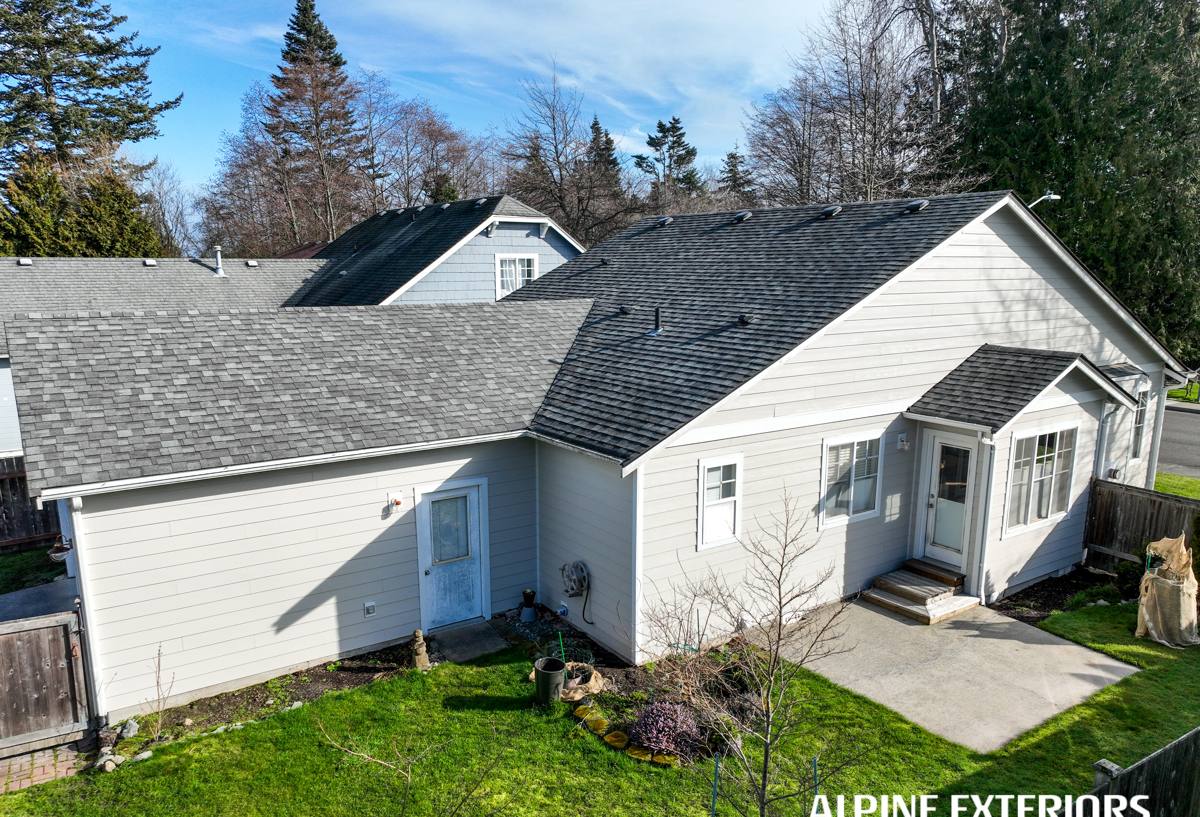
What South Hill Homes Actually Face
Salt Air
Proximity to Bellingham Bay means airborne salt is a real factor for South Hill properties, even those set back from the water. Salt accelerates corrosion on metal fasteners, flashing, and hardware, and it can degrade lower-quality paint finishes faster than manufacturers' lab tests suggest. Siding and trim products that aren't engineered with this in mind tend to show it first at butt joints, corners, and anywhere water is allowed to sit.
Driving Rain
Elevation and exposure mean wind-driven rain doesn't just fall on South Hill homes — it gets pushed sideways into wall assemblies, especially on the windward side of a house. That puts real pressure on how siding is installed, not just what it's made of. Gaps, poor flashing details, and undersized clearances are where driving rain finds its way behind the cladding and into the wall.
Moss and Prolonged Dampness
Bellingham's moss season is long, and South Hill's tree cover and shaded lots only extend it. Moss and algae don't just look bad — they hold moisture against the surface they're growing on, which is a problem for any material that can absorb water or that relies on a surface coating to keep water out. Roofs are the most visible casualty, but north-facing siding and trim see the same buildup.
Why Material Choice Matters More Here Than Elsewhere
In a drier climate, the gap between a good exterior product and a mediocre one shows up slowly, if at all. On South Hill, that gap shows up fast — usually within the first few Pacific Northwest winters. That's why we've standardized on James Hardie fiber cement siding for every siding installation we do, and don't offer vinyl, LP SmartSide, Cemplank, Allura, or wood alternatives like primed spruce or cedar.
| Factor | James Hardie Fiber Cement | Vinyl | Engineered Wood (LP-type) | Cedar / Primed Wood |
|---|---|---|---|---|
| Moisture absorption | Very low; cement-based core | Doesn't absorb, but can trap moisture behind panels | Wood-fiber core is moisture-sensitive at cut edges | Absorbs and swells if finish fails |
| Salt air resistance | Strong; factory finish engineered for exposure | Can chalk and become brittle over time | Coating wears, exposing wood fiber to salt-driven decay | Requires frequent refinishing to hold up |
| Combustibility | Non-combustible | Combustible, can soften/deform near heat | Combustible | Combustible |
| Moss/algae susceptibility | Low; hard, dense surface | Low, but seams and J-channel trap debris | Moderate; damaged coating invites growth | Higher; organic material |
| Finish warranty | Factory ColorPlus finish, long-term warranty | Color can fade unevenly, no refinish option | Field-applied paint needs recoating | Field-applied paint/stain needs recoating |
None of these alternative products are junk — vinyl is inexpensive and low-maintenance in mild conditions, engineered wood siding has a real market, and cedar has genuine aesthetic appeal. But when we weigh those trade-offs against what a South Hill roofline actually endures over 20-30 years, fiber cement is the product we're willing to put our name behind.
James Hardie, Specifically
James Hardie's fiber cement is a mix of cement, sand, and cellulose fiber, pressed and cured into a dense, stable board. It doesn't feed moss, it doesn't rot, and it's non-combustible — a real consideration given how many wildfire-adjacent insurance conversations are happening across Washington right now, even on the wetter west side of the state.
HZ Product Lines
Hardie engineers its siding into climate zones. HZ5 products are built for the wetter, more freeze-prone regions of the country, with a formulation and finish designed around real moisture exposure rather than a one-size-fits-all national spec. That's the line that makes sense for a hillside home taking on driving rain and salt air.
ColorPlus Technology
Rather than field-painting siding after installation, Hardie bakes a factory finish onto every board before it ever leaves the plant. That finish is more consistent than a job-site paint job, resists fading better, and comes with its own finish warranty separate from the product warranty — meaning color failure and material failure are both covered, not just one.
Warranty Structure
Hardie's non-prorated, transferable limited warranty is one of the strongest in the fiber cement category. Transferability matters on South Hill, where homes change hands and a documented, honored warranty is a real selling point rather than a footnote.
Installation Is Where Products Succeed or Fail
Even the best siding product can underperform if it's installed without respecting the details that matter in a wet climate. This is where a lot of exterior problems actually originate — not in the material, but in the install.
- Correct nailing pattern and fastener spacing per Hardie's published specs, not a generalized approach
- Proper clearance between siding and grade, decks, roofing, and other transitions so water has somewhere to go
- Flashing integrated at every window, door, and penetration — not caulk used as a substitute for flashing
- Rain screen or drainage plane behind the siding to let incidental moisture drain and the wall assembly breathe
- Butt joints and corners sealed and detailed to shed water rather than collect it
- Factory-cut edges kept sealed; field cuts treated per manufacturer requirements
We install to these standards on every job, not just the ones where it's convenient. It's slower work than a rough nail-up job, but it's the difference between siding that looks right for a season and siding that performs for decades.
The Full Exterior, Not Just Siding
Siding doesn't work in isolation. On South Hill, roofing, windows, decks, and siding all interact at the same joints and transitions, and problems in one system show up as damage in another. A roof that isn't shedding water properly will stain and saturate the siding below it. Windows that aren't flashed correctly will feed moisture into the wall cavity behind good siding. A deck ledger attached without proper flashing can rot the wall it's bolted to.
Because we handle siding, roofing, windows, and decks, we look at a South Hill home's exterior as one connected system rather than a series of separate trades. That matters most at the details — where a roof edge meets a wall, where a window sits in a siding field, where a deck ties into the house — because those are exactly the spots where driving rain and long wet seasons cause the most damage over time.
Why a Local Crew Matters on South Hill
A crew that works Whatcom County year-round knows what a South Hill winter actually does to an exterior, not just what a spec sheet says it should withstand. That local experience shows up in small decisions — how much clearance to leave on a shaded, moss-prone elevation, which details to double up on for a windward wall, how local permitting and inspection tends to go. It also means we're a known, findable business if a warranty question comes up five or ten years down the road, not a crew that worked the area for one season and moved on.
What to Expect From a South Hill Project
Every project starts with a walk-around of the home to look at exposure — which walls take the worst of the wind and rain, where moss and moisture are already showing, and where existing siding, trim, roofing, or window flashing may already be compromised. From there we put together a scope that addresses the actual condition of the house, not a generic package, and walk through material, color, and line options within the Hardie system.
If you're dealing with moss staining, fading, soft spots, or siding that's simply reached the end of its service life on your South Hill property, we're glad to take a look and give you a straight answer about what's going on and what it would take to fix it right. Reach out for a free, no-pressure estimate — there's a form below to get started.