 Bellingham
 York Sits Close to the Water — and It Shows on the Siding
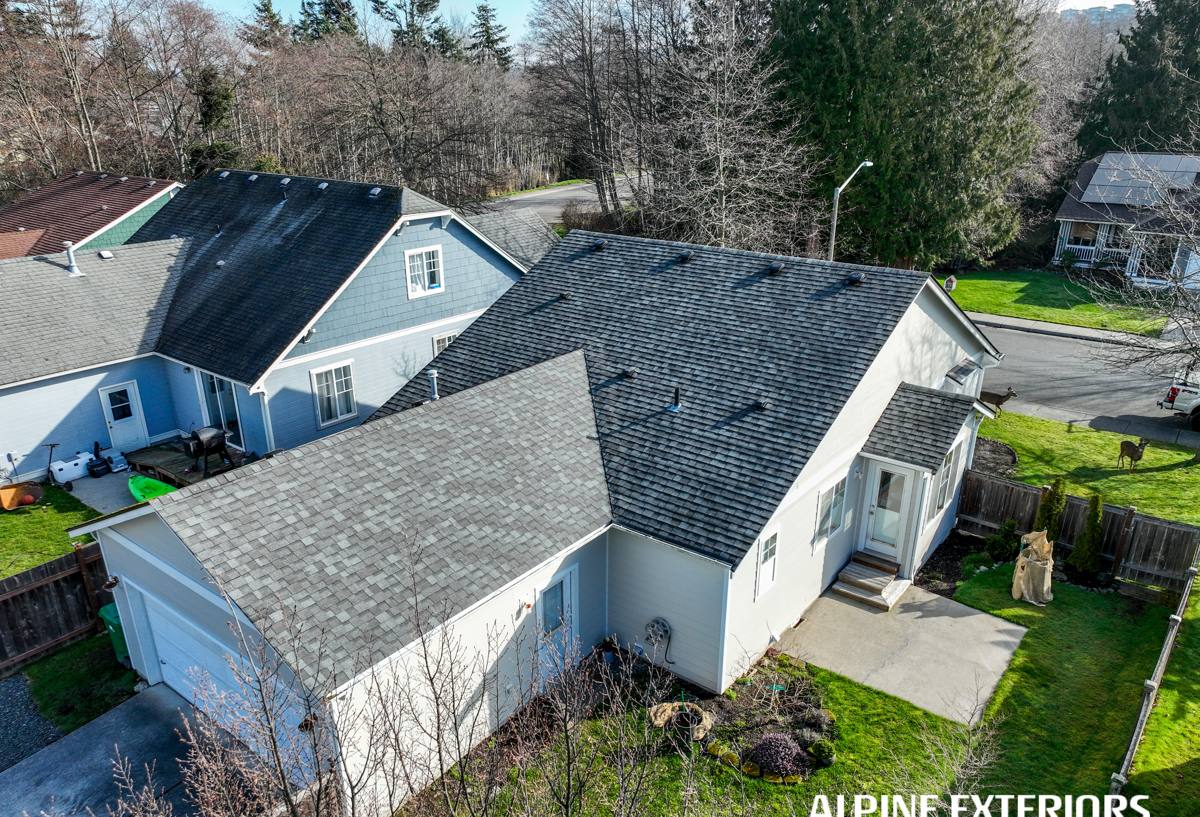
York is one of Bellingham's older, close-in neighborhoods, and homes there carry a lot of the same exterior wear you see across the city's inner core. Being near Bellingham Bay means everything on the outside of a house — siding, trim, roofing, windows — is working against a marine climate every single day, not just during the wet months. Salt-laden air, near-constant moisture, and long stretches without direct sun add up differently than they would in a drier inland town, and it changes what actually holds up on a house over a 15- or 20-year span.
We've worked on homes throughout Whatcom County long enough to know that what looks fine on day one doesn't tell you much. The real test is how a siding, roofing, or window product performs after five winters of driving rain and five summers of humid air that never fully dries out the wood underneath.
What Bellingham's Climate Actually Does to a House
Salt Air and Marine Exposure
Even a few miles inland from Bellingham Bay, airborne salt and moisture accelerate corrosion on fasteners, flashing, and metal trim, and they keep painted and coated surfaces working harder than they would elsewhere. Materials that aren't engineered for coastal exposure tend to show fading, chalking, or fastener staining earlier than their warranty paperwork suggests.
Driving Rain
Bellingham doesn't just get a lot of rain — it gets a lot of wind-driven rain, which pushes water sideways into joints, seams, and butt ends that a straight-down rain would never reach. Siding systems and window installations that rely on face-sealing alone (rather than proper drainage planes and flashing) are the ones that eventually let water in behind the cladding, where it does the most damage.
The Long Moss Season
Low winter sun angles, tree cover common in older neighborhoods, and near-constant dampness give moss and algae a long window to establish themselves on roofs, shaded siding, and deck surfaces. Once established, moss holds moisture against the substrate, which is exactly the condition that rots wood trim and degrades cheaper composite materials.
Why Siding Material Is the Decision That Matters Most
Roofing gets replaced on a schedule. Windows get replaced when they fail. But siding is the single largest surface on the house, and it's the first line of defense against everything described above. A siding material that's marginal for this climate doesn't fail all at once — it fails slowly, through swelling, delamination, or paint breakdown, often not showing serious problems until the substrate underneath is already compromised.
That's the reason we made a deliberate call as a company: we install James Hardie fiber cement siding, and only James Hardie fiber cement siding. We don't install vinyl, LP SmartSide, Cemplank, Allura, primed spruce, or cedar. That's not a marketing position — it's a standard we hold because of what we've seen these products do, and not do, in exactly the kind of climate York sits in.
What We're Not Installing, and Why
| Material | What it does well | Where it struggles in Whatcom County |
|---|---|---|
| Vinyl | Low upfront cost, low maintenance in dry climates | Expands and contracts with temperature swings, can warp, doesn't handle impact well, seams are a moisture entry point |
| LP SmartSide | Engineered wood strand product, easier to cut than fiber cement | Wood-based core is vulnerable to moisture intrusion at cut edges and joints if caulking and paint maintenance lapse |
| Cedar (natural) | Classic look, renewable material | Needs ongoing staining or sealing, susceptible to moss, rot, and insect damage in constant damp conditions |
| Primed spruce | Lower material cost | Softwood substrate, primer is a maintenance layer not a permanent shield, short realistic lifespan here |
| James Hardie fiber cement | Non-combustible, factory-cured ColorPlus finish, engineered HZ product lines for climate zones | Requires correct installation (clearances, fastening, flashing) to perform to spec — which is why installation quality matters as much as the product |
Every product on that list has a legitimate use somewhere. Our position is narrower than "this product is bad" — it's that for a marine, high-rainfall climate like Bellingham's, the long-term maintenance burden and moisture risk of the alternatives isn't worth it when a better-suited material exists. Fiber cement doesn't rot, doesn't attract insects, and doesn't rely on a paint film as its only defense against water. The ColorPlus factory finish is baked on under controlled conditions, which holds color and resists fading better than field-applied paint, and Hardie's HZ5 product line is specifically engineered for wetter, harsher climate zones like ours.
What James Hardie Installation Actually Involves
Fiber cement is only as good as the installation behind it. A correct install includes proper drainage planes, correct fastener placement and spacing, appropriate clearances from grade and roof lines, and flashing detail at every window, door, and penetration. This is where a lot of the "fiber cement problems" homeowners hear about actually originate — not from the material, but from installers cutting corners on details that don't show up until a few winters of driving rain find the gap.
We install to manufacturer spec because that's what keeps the transferable warranty valid and, more importantly, what actually keeps water out of the wall assembly. That includes:
- Correct starter strip and flashing at the foundation line
- Proper overlap and fastening pattern per Hardie's installation guide
- Rain-screen or drainage plane behind the siding, not just a face seal
- Sealed and flashed window and door penetrations
- Appropriate clearance from roof lines, decks, and grade to avoid moisture wicking
Beyond Siding: Roofing, Windows, and Decks
Siding doesn't work in isolation. A house is one connected exterior envelope, and we handle roofing, windows, and decks alongside siding because they all interact — a leaking roof-to-wall transition, a poorly flashed window, or a deck ledger board attached without proper flashing can undermine even a well-installed siding job. Whatcom County's rainfall totals mean roof drainage, gutter sizing, and flashing details carry more consequence here than they would in a drier region.
Windows in older neighborhoods often reach the end of their service life around the same time siding does, and replacing both together lets us integrate the flashing properly rather than patching new siding around aging window units. Decks facing the long moss season need material choices and drainage details that account for shade and standing moisture, not just structural span tables.
Why a Local Crew Matters for a Neighborhood Like York
Exterior work in Whatcom County isn't generic. Crews who work here regularly know how the rain moves during a fall storm, how low the winter sun sits, and which details fail first when a house sits under tree cover for eight months a year. That local knowledge shows up in small decisions — flashing choices, fastener spacing, where a rain-screen gap actually needs to be wider — that a crew unfamiliar with this climate might treat as optional.
It also means someone is nearby if a question comes up two years after the job is done, not a regional company that finished the project and moved on to the next county. For homeowners in York, that's a practical consideration as much as a comfort one.
Signs Your Siding Is Telling You Something
Because siding failure is usually gradual, it helps to know what to watch for before small problems become structural ones.
- Paint that's chalking, peeling, or fading unevenly, especially on shaded or north-facing walls
- Soft spots or visible swelling at seams, corners, or butt joints
- Persistent moss or algae growth that keeps returning after cleaning
- Gaps or separation at trim, window, and door edges
- Visible fastener staining or rust streaking
- Musty smell or soft drywall on interior walls near exterior siding
What a Project Timeline Looks Like
Every home is different, but most siding projects in this area follow a similar shape: an on-site assessment of the existing wall assembly and any moisture damage, a material and color selection process, permitting where required, tear-off and any necessary sheathing repair, then the fiber cement installation itself with full flashing and drainage detail. Weather windows matter here — we plan around Bellingham's rain patterns rather than fighting them, which is another advantage of working with a crew that schedules around this specific climate instead of a generic regional forecast.
Get a Straight Answer for Your Home
If you're weighing a siding, roofing, window, or deck project for a home in York, we're happy to take a look and give you an honest read on what your house actually needs — not just a sales pitch for the biggest job possible. Reach out for a free, no-pressure estimate, and we'll walk the exterior with you and talk through what we see.