 Bellingham
 Siding in Sehome: What the Neighborhood Is Up Against
Sehome sits close enough to Bellingham Bay that salt-laden air is a constant, low-grade presence on exterior surfaces, even on homes several blocks inland. Combine that with the driving rain that rolls off the water through fall and winter, plus a moss season that can stretch from October well into spring, and you get a climate that is genuinely hard on siding. It's not dramatic weather — no hurricanes, no hailstorms — but it's relentless, and relentless is what wears out the wrong siding material over time.
Homes in Sehome span a wide range of ages and styles, from older bungalows and craftsman-era houses near the hillside to newer infill construction and multi-family buildings closer to the commercial corridors. What they share is exposure to the same core problem: moisture that doesn't fully leave the air for months at a stretch, and organic growth (moss, algae, mildew) that thrives in that dampness, especially on north-facing walls and anywhere shaded by mature trees or neighboring structures.
Why This Matters More in Sehome Than It Might Elsewhere
Bellingham's hillier neighborhoods, Sehome included, often have homes positioned to catch runoff, shade, and wind in ways flatter areas don't. A wall that stays damp longer because it's shaded most of the day, or a section of siding that catches wind-driven rain because of how the lot is oriented, will show wear faster than the rest of the house. That's exactly the kind of localized failure we look for during an inspection — it's rarely the whole house that fails at once, it's the corner that never really dries out.
Why We Only Install James Hardie Fiber Cement
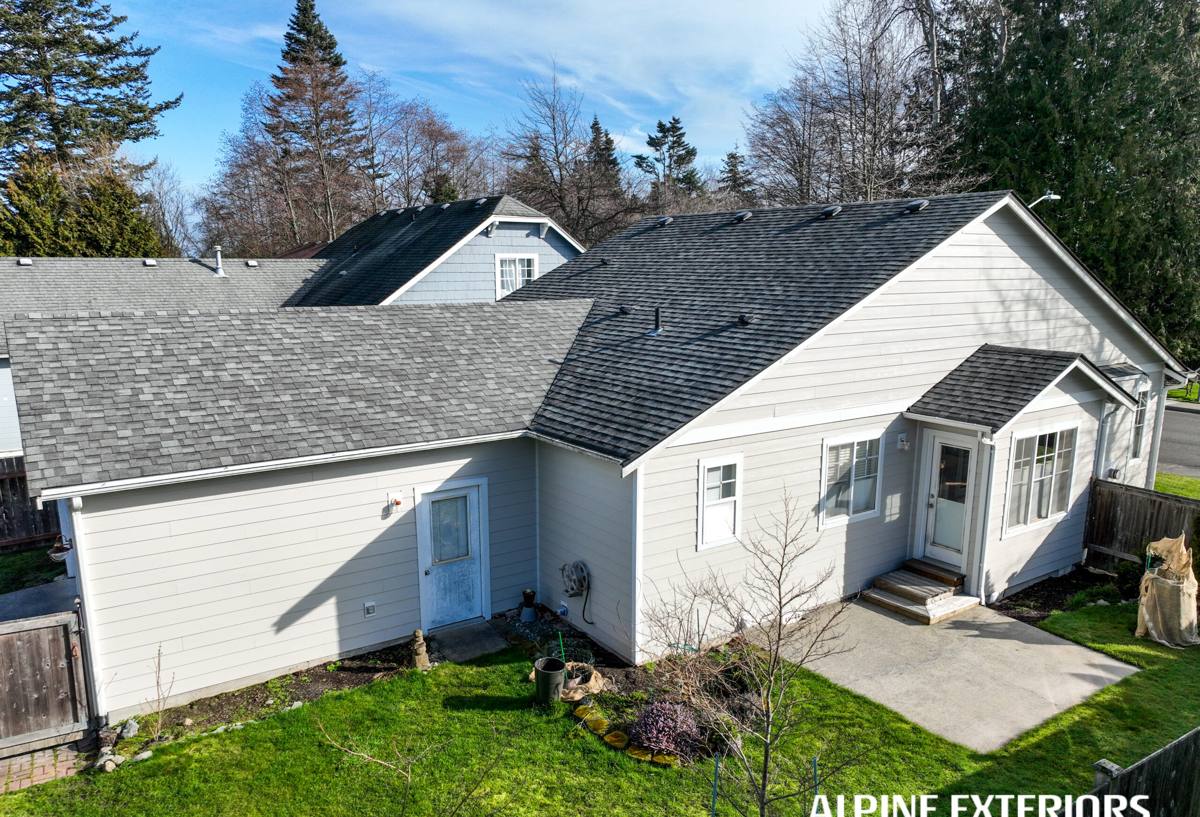
We get asked fairly often why we don't offer vinyl, LP SmartSide, or other engineered wood siding products alongside Hardie. The honest answer is that we made a decision a while back to standardize on one product system rather than carry several, and James Hardie fiber cement was the one that held up best to the kind of climate Whatcom County actually has.
Fiber cement is non-combustible, which matters increasingly to insurers and homeowners in Washington. It doesn't rely on a factory-applied coating to keep water out the way engineered wood does — the material itself is cement, sand, and cellulose fiber, and it doesn't swell, delaminate, or feed fungal growth the way wood-based products can if a seam or cut edge is exposed to moisture over years. In a neighborhood like Sehome, where damp conditions are the norm rather than the exception, that difference compounds over the life of the siding.
What We Give Up by Not Offering Everything
We'll say plainly: standardizing on one product means we can't be the cheapest bid on every job, and we can't offer vinyl for someone who specifically wants the lowest upfront cost. What we get in exchange is a crew that installs one system extremely well, with flashing details, fastening patterns, and clearances dialed in from repetition rather than guesswork — and a product line built for Pacific Northwest moisture rather than a general-purpose national spec.
How James Hardie Handles Salt Air and Sustained Moisture
James Hardie's HardiePlank and HardiePanel products come with a factory-applied ColorPlus finish, which is baked on under controlled conditions rather than field-painted. That matters in a climate like ours because field-applied paint is only as good as the weather conditions on the day it's applied, and it's the first thing to fail when a house sits in damp, low-sunlight conditions for months. A factory finish holds its color and its seal far more consistently over time.
The material itself doesn't corrode from salt exposure the way some metal components can, and it doesn't provide the cellulose "food source" that algae and moss favor as readily as bare or aging wood siding does. It still needs to be kept clean — nothing eliminates moss and algae growth entirely in this climate — but it doesn't degrade structurally from that growth the way wood substrates eventually can.
Moss and Algae: Realistic Expectations
No siding product, Hardie included, is immune to surface growth in a climate this wet and shaded. What changes with fiber cement is the consequence of that growth. On wood-based siding, prolonged moss or algae cover traps moisture against a surface that can absorb it, which accelerates rot at seams and fastener points. On fiber cement, surface growth is a cosmetic issue that a wash and occasional gentle cleaning resolves, without the same risk of structural compromise underneath.
Full Exterior Services for Sehome Homes
Siding is our specialty, but exterior systems don't work in isolation — roofing, windows, and decks all interact with how well a house sheds water, and in a neighborhood with this much sustained moisture, that interaction matters.
- Siding: James Hardie lap siding, panel siding, and trim, installed with attention to flashing and clearances specific to our climate.
- Roofing: Roof condition directly affects how water moves down and around a house — a roof that's shedding water improperly onto siding will shorten that siding's life regardless of what it's made of.
- Windows: Window flashing and integration with siding is one of the most common points of water intrusion we find during inspections, particularly on older Sehome homes with original or aging window units.
- Decks: Outdoor living structures exposed to the same rain and moss conditions as the siding, built and maintained with the same climate realities in mind.
Because we handle all four, we can look at a Sehome home as one connected system rather than four separate projects, which tends to catch problems — like a roof-to-wall transition that's been quietly feeding moisture into a wall cavity — that a siding-only contractor might miss entirely.
What a Siding Project in Sehome Typically Involves
Inspection and Assessment
We start by walking the exterior and identifying where the existing siding is actually failing versus where it's just aged cosmetically. In this climate, that often means checking north- and west-facing walls first, looking at ground clearance, and checking window and door flashing before we ever talk about products or pricing.
Removal and Sheathing Check
Once old siding comes off, we check the sheathing and house wrap underneath. This step matters everywhere, but it matters more in a climate where hidden moisture damage has had years or decades to develop unnoticed behind siding that looked fine from the street.
Installation
James Hardie installation is not a generic nail-it-up process — it involves specific fastener patterns, joint treatment, and clearances from grade, decks, and roofing that are engineered into Hardie's installation instructions. Getting these details right is what determines whether the product performs the way it's rated to over the following decades.
Finish and Cleanup
ColorPlus-finished panels don't require field painting, which shortens the finish stage considerably compared to a wood product that needs primer and topcoat before it's actually protected.
Cost Factors for Sehome Siding Projects
Every home is different, and we don't quote sight-unseen, but the factors that move a Sehome siding project's cost up or down are fairly consistent:
| Factor | Why It Matters |
|---|---|
| Home size and wall complexity | More corners, dormers, and trim details mean more labor and cut waste |
| Current siding removal | Full tear-off versus siding over an existing layer changes labor scope |
| Sheathing repair needed | Hidden moisture damage found during removal adds material and labor |
| Product line and profile | HardiePlank lap siding, HardiePanel, and trim combinations price differently |
| Access and lot conditions | Hillside lots, tight setbacks, and limited staging area affect labor time |
| Window and door integration | Additional flashing work where openings need attention during re-siding |
Signs a Sehome Home May Need Siding Attention
- Persistent moss or algae staining that returns quickly after cleaning
- Soft spots, bubbling, or visible swelling, especially near the ground or under windows
- Paint that's peeling or failing faster than expected on wood or engineered wood siding
- Visible gaps or separation at seams, corners, or trim boards
- Noticeably higher heating bills, which can point to compromised siding and insulation
- Warping or cupping boards, particularly on shaded or north-facing walls
Why a Local Crew Matters Here
Whatcom County's exterior climate isn't extreme, but it is specific, and specific climates reward contractors who work in them repeatedly rather than occasionally. A crew that installs Hardie siding across Bellingham neighborhoods through wet falls and mossy winters learns where water tends to collect on this region's homes, which flashing details actually matter here, and which shortcuts show up as problems three years later rather than three months later. That's the kind of knowledge that doesn't transfer well from a national franchise operating out of a distant office.
Being local also means we're accountable in the neighborhood we work in — if a detail needs a second look after a hard winter, we're not far away, and our reputation in Bellingham depends on the work holding up, not just on the day it was finished.
Get an Estimate for Your Sehome Home
If you're noticing moss buildup, aging siding, or you're just planning ahead for a home in Sehome, we're happy to take a look and give you an honest read on where things stand. The estimate is free, there's no pressure attached to it, and you'll get a straight answer about what your home actually needs.