 Bellingham
 Asphalt Shingles and Sehome's Coastal Climate
Sehome sits close enough to Bellingham Bay and the surrounding waterways that salt-laden air is a real factor in how a roof ages here, not a theoretical one. Add in Whatcom County's wet-season rainfall, wind that regularly drives that rain sideways under poorly flashed edges, and tree cover that keeps roof surfaces shaded and damp for much of the year, and you get a climate that is genuinely harder on a roof than most manufacturers' warranty testing assumes. An asphalt shingle roof can still be an excellent, affordable choice here — but only if it's specified and installed with this specific combination of conditions in mind.
Salt Air and Metal Fatigue
Homeowners tend to think of salt air as a concern for siding and gutters, but it affects roofing too — specifically the metal components. Nail heads, flashing, and any exposed fasteners corrode faster near the water than they would twenty or thirty miles inland. A roof that uses standard fasteners and thin flashing stock in a coastal-influenced neighborhood like Sehome will show rust streaks and loosened flashing years before an identical roof would inland. This is a materials-selection issue, not an installation-skill issue, and it's one of the first things worth asking a roofer about.
Driving Rain and Wind-Driven Water
Bellingham doesn't get the heaviest rainfall totals in the state, but a large share of what falls here arrives as sustained, wind-driven rain rather than brief downpours. That matters because wind-driven rain doesn't just run off a roof — it gets pushed sideways and upward under shingle tabs, around chimney and skylight flashing, and into any gap where the underlayment wasn't lapped correctly. A roof that would perform fine in a calmer climate can leak in Sehome simply because the installer didn't account for water moving in directions gravity alone wouldn't predict.
The Long Moss Season
Whatcom County's cool, damp stretch runs long — often eight months or more of conditions moss and algae find comfortable. Shaded roof sections, north-facing slopes, and areas near overhanging trees stay damp longest and grow moss fastest. Left unmanaged, moss doesn't just look bad: it lifts shingle edges, holds water against the roof deck, and accelerates granule loss. A roofing plan for a Sehome home has to include a real strategy for moss, not just a one-time cleaning.
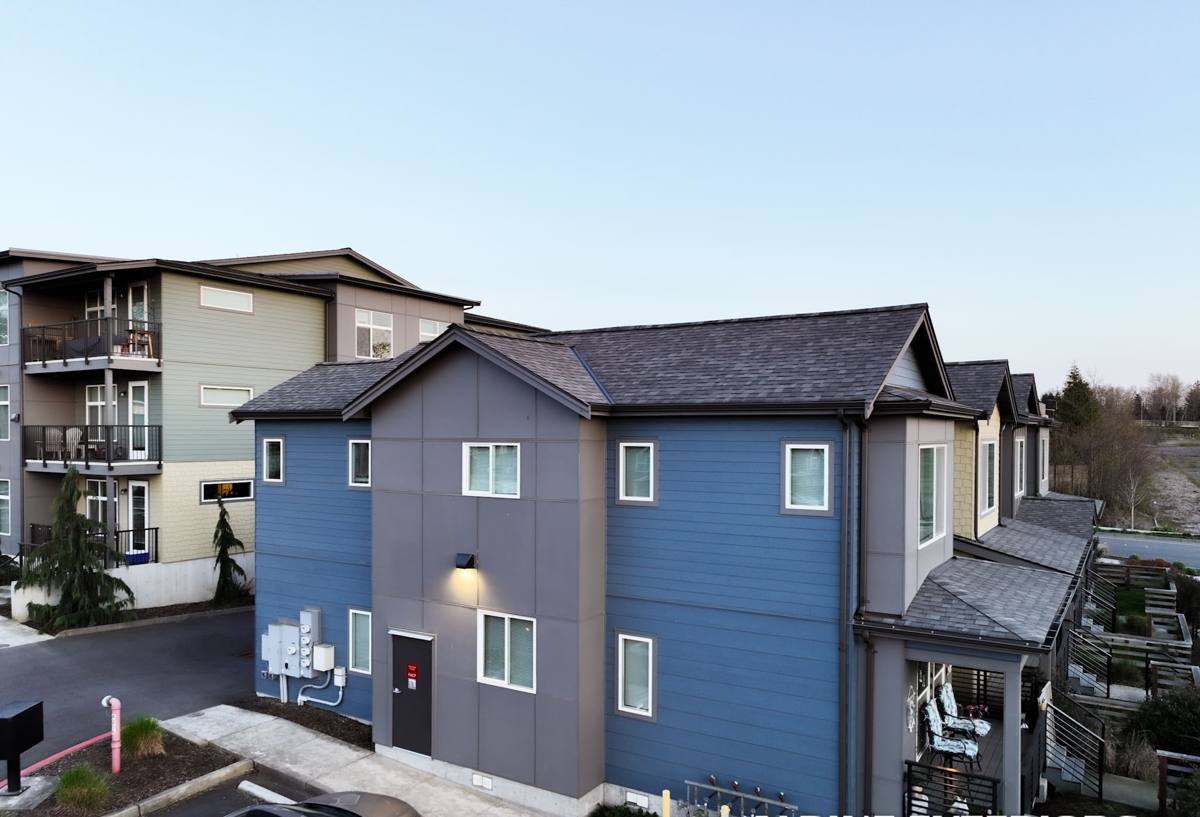
What a Correctly Installed Asphalt Shingle Roof Involves
Asphalt shingles are a forgiving, well-understood product, but a shingle roof is a system — the shingle itself is only one layer of it. Most leaks and premature failures we get called out to inspect trace back to a shortcut somewhere else in that system, not a defective shingle.
Starting With the Deck, Not the Shingles
Nothing above the roof deck matters if the deck itself is soft, delaminated, or improperly fastened. A correct tear-off exposes the full deck so it can actually be inspected — not just glanced at — and any damaged sheathing gets replaced before a single new shingle goes down. Roofing over a compromised deck is one of the most common shortcuts in the industry, and it's invisible from the ground for years until it isn't.
Underlayment and Water Barriers
Given how much wind-driven rain this area sees, underlayment choice matters more here than in drier climates. Synthetic underlayment with properly lapped, sealed seams is the baseline. Eave and valley areas — where water concentrates and moss tends to collect — benefit from a self-adhering ice-and-water barrier membrane even in a region that rarely sees ice dams, simply because it seals around fastener penetrations far better than felt or standard synthetic underlayment alone.
Flashing Is Where Roofs Actually Fail
Chimneys, skylights, sidewalls, and roof-to-wall transitions are where the overwhelming majority of shingle roof leaks originate — almost never in the open field of shingles. Step flashing at sidewalls, counter-flashing at chimneys, and properly formed valley metal all need to be installed (or replaced) as part of the job, not reused from the old roof to save time. Reused flashing is one of the more common corners cut on re-roofs, and it's a poor place to save money.
Ventilation and Moisture From Inside
A roof also has to manage moisture coming from inside the attic, not just from the weather outside. Balanced intake and exhaust ventilation keeps the underside of the deck dry and helps shingles run at a more consistent temperature, which extends their service life. In a damp climate like this one, poor attic ventilation shows up as premature shingle curling and, in worse cases, deck rot that isn't visible until a re-roof exposes it.
Choosing a Shingle Built for This Climate
Not every asphalt shingle is a good match for a coastal, moss-prone neighborhood. The table below compares the general tiers of asphalt shingle available, with the tradeoffs that matter most for a Sehome roof.
| Shingle Type | Typical Lifespan | Best For | Consideration in Sehome |
|---|---|---|---|
| 3-tab (economy) | 15–20 years | Budget-driven projects, rentals | Lower wind rating and thinner mat; moss and granule loss show sooner |
| Architectural / dimensional | 25–30 years | Most owner-occupied homes | Heavier mat and better wind rating; the standard recommendation here |
| Algae-resistant (AR) coated | 25–30 years | Shaded lots, north slopes, tree cover | Copper-infused granules slow algae/moss regrowth; worth the upgrade in most of Sehome |
| Impact-rated / high-wind | 30+ years | Exposed sites, higher-wind lots | Higher upfront cost; can reduce long-term maintenance and insurance considerations |
Our default recommendation for this neighborhood is an architectural shingle with algae-resistant granules and a high wind rating. The upcharge over a basic architectural shingle is modest, and given how long moss season runs here, it's one of the better dollar-for-dollar upgrades available.
Repair or Replace: Reading the Signs
Not every roofing problem calls for a full replacement. A localized leak, a section of storm-damaged shingles, or a flashing failure around a single penetration can often be repaired correctly and buy years of additional life. The signs below help separate a repair situation from a replacement situation.
- Granule buildup in gutters and downspouts, especially after a wind event — normal in small amounts, a red flag in large amounts
- Shingles that are cupping, curling, or cracking across large sections rather than one isolated area
- Visible daylight or staining in the attic near valleys, chimneys, or sidewalls
- Moss growth thick enough to hold visible moisture against the roof surface for days after rain
- A roof already past 20–25 years old with no major work done, regardless of how it looks from the ground
- Soft or spongy spots underfoot when walked (only assessed by a professional — never test this yourself)
If only one or two of these apply, a targeted repair is usually the honest recommendation. If several apply at once, patching individual spots tends to just delay a replacement while spending money that doesn't carry forward.
Our Process, Start to Finish
The steps below are consistent regardless of the size of the job, from a single-slope repair to a full tear-off and replacement.
- On-site inspection of the roof, deck, flashing, and attic ventilation — not just a look from the driveway
- A written estimate that spells out shingle tier, underlayment, flashing scope, and ventilation work as separate line items
- Protection of landscaping, siding, and windows before any tear-off begins
- Full tear-off to bare deck (for replacements) so the deck can actually be inspected, with damaged sheathing replaced
- Ice-and-water membrane at eaves and valleys, synthetic underlayment across the field
- New flashing at chimneys, sidewalls, and valleys — not reused flashing from the old roof
- Shingle installation to manufacturer specification for nailing pattern and exposure, which is what preserves the wind warranty
- Ventilation check and correction where intake or exhaust is inadequate
- Magnetic sweep of the yard and driveway for stray fasteners, plus a final walkthrough with the homeowner
Keeping Moss and Algae From Shortening Your Roof's Life
Even a well-installed, algae-resistant shingle roof benefits from some routine attention in a climate that stays damp as long as this one does. None of the following requires climbing on the roof yourself.
- Have moss and debris cleared from valleys and shaded slopes at least once a year, more often under heavy tree cover
- Keep gutters and downspouts clear so water isn't backing up under the lowest course of shingles
- Trim back overhanging branches to reduce shade and debris buildup on north-facing sections
- Ask for a gentle, low-pressure cleaning method — pressure washing strips granules and shortens shingle life
- Have flashing and sealant checked every few years, since these fail well before the shingles themselves typically do
- Schedule a post-storm check after any significant windstorm to catch lifted or missing shingles early
Cost Factors for Sehome Homes
Every roof is priced individually after inspection, but the factors below are what actually move the number up or down on most Sehome projects.
| Factor | Why It Matters |
|---|---|
| Roof pitch and complexity | Steeper roofs and multiple valleys or dormers take longer and require more safety setup |
| Number of existing layers | Tearing off two layers of old shingles costs more in labor and disposal than one |
| Deck condition | Rotted or delaminated sheathing found during tear-off adds material and labor to replace it |
| Shingle tier chosen | Algae-resistant and high-wind shingles cost more per square than basic architectural |
| Access and site conditions | Tree cover, tight lots, and limited staging area near the street can add setup time |
| Ventilation upgrades | Adding or correcting intake/exhaust venting is worth doing during a re-roof, and adds modest cost |
We walk through each of these on-site during the estimate so the final number isn't a surprise once work begins, and so you understand exactly what's driving the price rather than being handed a single lump figure.
Why Hire a Crew That Already Works in Sehome
A roofer who mainly works drier, inland climates will often spec and install a roof that's technically correct by the book but not matched to what this area actually throws at it — lighter flashing, standard underlayment where a membrane would hold up better, no real conversation about moss. A crew that regularly works Sehome and the surrounding Bellingham neighborhoods has already seen which details cause early failures here and builds around them from the start, instead of learning it on your roof. That local pattern recognition is worth more than it sounds like on paper — it's the difference between a roof that needs attention again in eight years and one that goes the full distance of its expected life.
If you're weighing a repair, planning ahead for a replacement, or just want an honest read on where your current roof stands, we're glad to come take a look. The estimate is free, there's no pressure to move forward, and you'll get a straight answer about what your roof actually needs — use the form below to get started.