 Bellingham
 Exterior Work in Silver Beach: What the Climate Actually Does to a House
Silver Beach sits in one of the more tree-covered, moisture-heavy pockets of Bellingham. Between the shade canopy, the humidity that settles in low and wooded lots, and the marine air that moves through Whatcom County off the water, homes here deal with a slower-drying, moss-friendly environment for most of the year. It's not dramatic weather in the way a hailstorm or a hurricane is dramatic — it's persistent, low-grade moisture pressure that works on a house month after month, year after year.
That combination — salt-tinged air, driving rain that comes in sideways during winter storms, and a moss season that can stretch from October through May — is exactly the kind of exposure that separates siding products that hold up from siding products that need constant attention. It's also why we don't treat Silver Beach like a generic job. A house tucked under mature trees with limited afternoon sun dries differently than one out in the open, and that changes how we think about ventilation, flashing, and product selection before we ever pick up a nail gun.
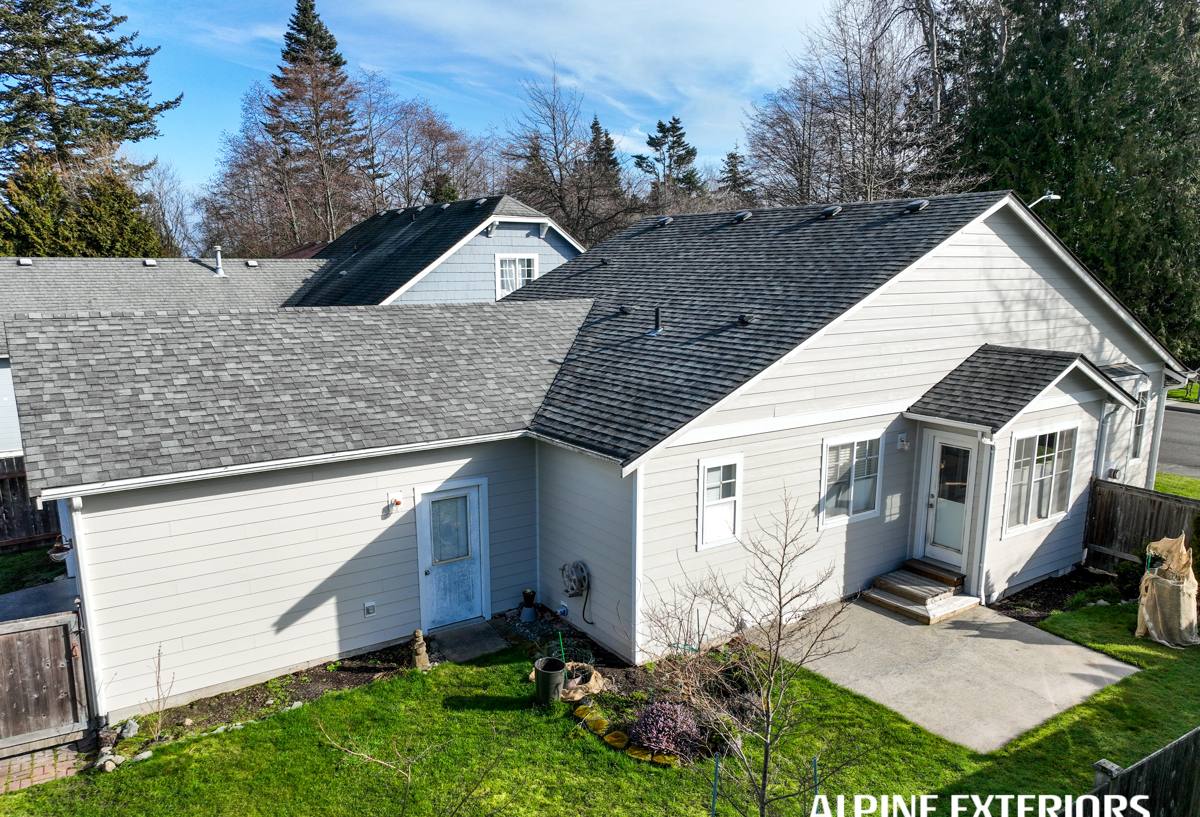
Why Siding Material Choice Matters More Here Than in Drier Climates
In a dry inland climate, a lot of siding materials can get away with mediocre moisture performance because they simply don't see much moisture. That's not the deal in Bellingham, and it's especially not the deal in a shaded, humid neighborhood like Silver Beach. Here, the material itself has to be doing real work against water intrusion, swelling, and organic growth — because the climate isn't going to let a weak product coast.
This is the core reason we install James Hardie fiber cement siding exclusively, and why our educational materials talk openly about products we don't install — vinyl, LP SmartSide, primed spruce, cedar, and composite panels like Cemplank or Allura. Each of those has legitimate strengths. None of them, in our professional judgment, hold up to Pacific Northwest wet-side exposure as consistently as properly installed fiber cement, and we'd rather tell homeowners that plainly than sell a product we don't fully stand behind.
Wood and Engineered Wood Siding in a Moss-Heavy Yard
Cedar and primed spruce are beautiful, and they're not fake claims to say so — they age with real character. But wood siding is organic material in a climate that grows organic material extremely well. In a shaded lot like a lot of Silver Beach parcels, wood siding needs consistent repainting, caulk maintenance, and moss removal to avoid rot at butt joints and lower courses. Engineered wood products (LP SmartSide is the common brand) improve on some of raw wood's weaknesses with resin treatment, but they're still wood-based at the core, and the edges and cut ends remain the vulnerable point if field-cutting and sealing aren't done exactly to spec.
Vinyl Siding Against Driving Rain
Vinyl is inexpensive and low-maintenance in the sense that it doesn't need painting. But it's a thin, flexible material that relies almost entirely on correct lap and overlap installation to keep wind-driven rain out — and Silver Beach gets its share of that during winter systems moving off the Sound. Vinyl also tends to look its age faster than fiber cement, chalking and fading under UV and salt-air exposure, and it can't be repainted to refresh it the way fiber cement can.
The James Hardie Standard We Hold Every Job To
James Hardie fiber cement is a blend of cement, sand, and cellulose fiber, engineered specifically to resist moisture, resist fire (it's non-combustible), and hold factory-applied color for far longer than field-painted materials. For a climate like ours, the relevant details are:
- HZ5 product engineering — Hardie's HZ product lines are formulated by climate zone; the Pacific Northwest wet zone gets a formulation built around our rain and humidity, not a generic national product.
- ColorPlus factory finish — baked-on, UV-cured color that resists fading and chipping far better than a site-applied paint job, which matters when a house sits under tree shade and never fully dries between rain events.
- Non-combustible core — increasingly relevant as wildfire smoke and ember exposure become a broader Pacific Northwest concern, even away from direct fire zones.
- Transferable, long-term warranty — backed by manufacturer engineering data specific to the product line, not a generic contractor promise.
We didn't standardize on Hardie because it's the only product on the market — we standardized on it because after years of exterior work across Whatcom County, it's the one that keeps performing after the honeymoon period is over.
What Correct Installation Actually Involves
Fiber cement siding is only as good as the installation behind it. This is a big part of why we're specific about only doing Hardie — we know the product's installation requirements cold, rather than juggling different manufacturer specs across several product lines. On a Silver Beach home, correct installation typically means:
- Proper weather-resistive barrier and rainscreen or drainage plane behind the siding, so any moisture that does get past the cladding has somewhere to go.
- Correct flashing at every window, door, and roof-to-wall intersection — the majority of siding failures we see on older homes trace back to flashing details, not the siding material itself.
- Ground and roofline clearances kept to manufacturer spec, which matters more on shaded, damp lots where splashback and slower drying are already working against the wall assembly.
- Correct fastening pattern and nail placement, since fiber cement is unforgiving of shortcuts in a way that vinyl simply isn't.
- Factory-cut edges used wherever possible, with any field cuts properly sealed per Hardie's specifications.
A Full Exterior Envelope Approach: Siding, Roofing, Windows, Decks
Siding doesn't work in isolation. On a shaded, moisture-prone property, the roof, windows, and siding all interact — a roof that sheds water poorly onto a wall, or a window that isn't flashed correctly, will undermine even a perfectly installed Hardie siding job. Because we handle roofing, windows, and decks in addition to siding, we look at a Silver Beach home as one connected system rather than a siding quote in isolation.
That matters in practice: if a homeowner is dealing with moss on the roof and green streaking on the siding at the same time, those two things usually have a related cause — poor airflow, tree cover, or a drainage issue — and it's worth addressing both rather than patching one and leaving the other to keep feeding the problem. The same logic applies to decks, which take a similar beating from standing moisture and moss in shaded Whatcom County yards.
Cost Factors on a Silver Beach Siding Project
Every home is different, but the variables that move a siding estimate in this neighborhood tend to be consistent. We won't quote a number without seeing the house, but here's what typically drives cost up or down:
| Factor | Why It Matters |
|---|---|
| Existing siding removal | Tear-off of old wood, vinyl, or aluminum siding adds labor and disposal cost versus a bare or already-stripped wall. |
| Hidden moisture or rot damage | Shaded, damp lots are more likely to reveal sheathing or framing damage once old siding comes off, which needs repair before new siding goes on. |
| Home size and wall complexity | Dormers, multiple gables, and cut-up wall lines take more labor per square foot than a simple rectangular elevation. |
| Trim and accessory work | Fascia, soffit, corner boards, and trim packages are often bundled with siding for a finished, weathertight result. |
| Access and site conditions | Sloped lots, mature trees, and tight setbacks common in Silver Beach can affect scaffolding and staging time. |
| Product line and color | Hardie's various HZ panel, plank, and shingle-style products carry different price points, and ColorPlus versus field-painted finishes affect cost too. |
Why a Local Crew Matters for This Neighborhood
A contractor who works across Bellingham and Whatcom County regularly sees how differently identical siding products perform depending on microclimate — a sunny, open lot near the water behaves differently than a shaded lot back from the road. That local pattern recognition shapes real decisions: how tight we set reveal gaps, how we handle ventilation behind the cladding, and where we push back on shortcuts that might be fine in a drier region but aren't fine here.
It also means we're not disappearing after the invoice clears. Warranty follow-up, storm-related questions, and general exterior maintenance advice all go smoother with a contractor who's local to the area and familiar with how Silver Beach homes specifically age.
Keeping a Silver Beach Exterior Healthy Between Projects
Whatever siding is currently on a home, a few habits go a long way in this climate:
- Keep gutters clear so overflow doesn't run down the siding face and feed moss growth at the top courses.
- Trim back branches and foliage that keep a wall shaded and slow to dry after rain.
- Rinse visible moss and algae buildup with a low-pressure wash rather than a high-pressure blast, which can force water behind lap joints.
- Check caulking at trim, window, and door joints annually — this is where most water intrusion starts, regardless of siding material.
- Have flashing and roof-to-wall transitions inspected periodically, especially after a hard winter storm season.
Get a Local, No-Pressure Estimate
If you're weighing a siding replacement, planning roofing or window work alongside it, or just want an honest read on what your Silver Beach home's exterior needs, we're happy to take a look. There's no pressure and no sales script — just a straightforward assessment from a crew that works this climate every day. Use the form below to request a free estimate.