 Bellingham
 Siding Built for Happy Valley's Climate
Happy Valley sits close enough to Bellingham Bay and the surrounding wetlands that homes here deal with a specific combination of exterior stress: salt-tinged air moving in off the water, long stretches of driving rain through fall and winter, and shaded, moisture-holding conditions that keep moss and algae active for much of the year. None of that is unusual for Whatcom County, but it adds up faster on some exterior products than others. Siding in this neighborhood isn't just a cosmetic choice — it's the first line of defense between your home's structure and a climate that rarely gives siding a break.
We install exclusively James Hardie fiber cement siding, and that decision is rooted in what actually holds up under Bellingham conditions over decades, not just what looks good the day it goes up.
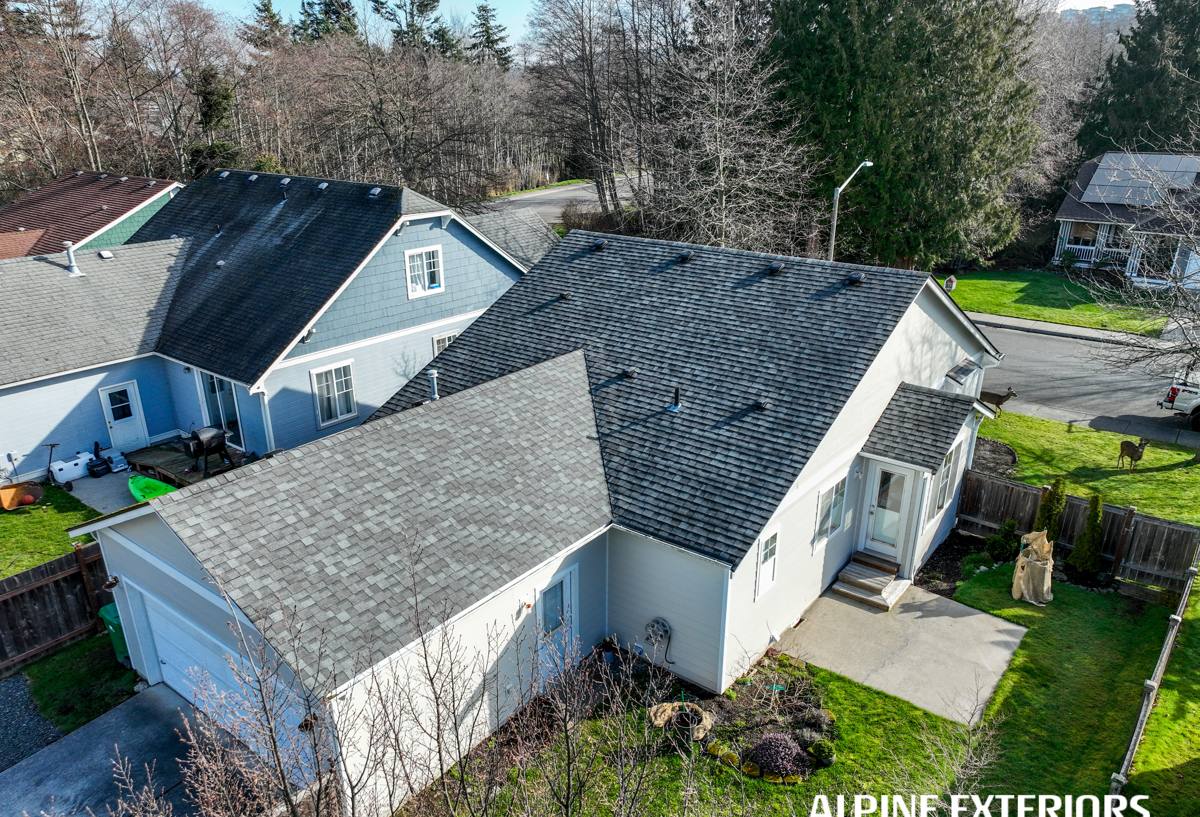
What Happy Valley Homes Are Up Against
Salt Air and Coastal Moisture
Even a few miles inland from Bellingham Bay, airborne salt and moisture accelerate corrosion on fasteners, flashing, and any siding material with metal components or exposed seams. Salt-laden air also holds moisture against a wall system longer than dry inland air would, which matters for anything that isn't fully sealed or that relies on paint film to keep water out.
Driving Rain
Whatcom County's rain doesn't always fall straight down. Wind off the water pushes it sideways into wall assemblies, which puts real pressure on seams, laps, and butt joints. Products that are sensitive to water intrusion at the edges — swelling, delaminating, or wicking moisture into the substrate — show that weakness fastest in exactly this kind of weather pattern.
Moss and Algae Season
Shade, humidity, and mild temperatures mean moss and algae can establish on north-facing walls, under eaves, and anywhere airflow is limited almost year-round here. Porous or absorbent siding materials give moss and mildew something to hold onto and feed on. Siding that resists moisture absorption at the surface is significantly easier to keep clean and keeps organic growth from working its way into the material itself.
Why We Only Install James Hardie
We made a decision years ago to standardize on one siding system rather than offer a menu of products with different trade-offs. James Hardie fiber cement is engineered specifically for wet, coastal Pacific Northwest conditions through its HZ5 product line, which is formulated for exactly this climate zone.
- Non-combustible material — fiber cement doesn't burn, which matters for insurance conversations and long-term risk, not just wildfire-adjacent properties.
- ColorPlus factory finish — baked-on color that resists fading and chipping far better than field-applied paint, which matters when your siding is facing salt air and UV exposure together.
- Moisture resistance — fiber cement doesn't swell, rot, or delaminate the way wood-based or wood-fiber composite products can when they take on water at seams and cut edges.
- Transferable warranty — a real, manufacturer-backed warranty that adds value if you sell the home, not just marketing language.
We don't install LP SmartSide, vinyl, Cemplank, Allura, primed spruce, or raw cedar. That's not a knock on every homeowner who has one of those products on their house today — plenty of them perform fine for a while under the right conditions. It's that when we weigh installation sensitivity, long-term moisture behavior, and maintenance burden against what Bellingham's climate actually does to a house year after year, Hardie is the product we're willing to put our name behind and warranty our workmanship on.
A Quick Comparison
| Factor | James Hardie Fiber Cement | Vinyl | Wood-Based Composites (LP-type) |
|---|---|---|---|
| Moisture/rot resistance | Excellent — cement-based, won't rot | Won't rot, but seams can trap moisture behind panels | Vulnerable at cut edges and seams if moisture gets in |
| Salt air / coastal durability | Strong — factory finish resists fading and chalking | Can become brittle and discolor over time | Coating can wear, exposing substrate to moisture |
| Fire resistance | Non-combustible | Melts/deforms under heat | Combustible wood-based core |
| Moss/algae resistance | Dense, low-absorption surface | Low absorption but seams collect debris | More porous, can hold moisture near surface |
| Typical lifespan (installed to spec) | Decades, factory-finish extends repaint cycle | Moderate, fades and becomes brittle | Moderate, dependent on maintenance and sealing |
Roofing, Windows, and Decks — The Whole Envelope
Siding doesn't work in isolation. In a neighborhood like Happy Valley, where rain, wind, and moisture all press on a home from multiple directions, the roof, windows, and any exterior decking all interact with how water moves around your walls. We handle roofing, window replacement, and deck construction alongside siding because a weak point in any one of those systems undermines the others — flashing details at rooflines and window openings are often where water actually gets in, not through the siding field itself.
When we quote a siding job, we're looking at the whole exterior picture: how your roof sheds water past the wall line, whether your windows are properly flashed and sealed, and whether decks or attached structures create moisture traps against the house.
How the Job Works
Assessment
We start with an on-site look at your current siding, trim, flashing, and any problem areas — soft spots, moss buildup, staining, or gaps that suggest water intrusion. This tells us what's actually happening behind the surface, not just what's visible from the curb.
Product and Color Selection
James Hardie's HZ5 line and ColorPlus palette give Happy Valley homeowners real options without sacrificing the climate-specific engineering. We'll walk through lap siding, panel, and trim combinations that fit the style of your home and the neighborhood.
Installation to Manufacturer Spec
Fiber cement performs the way it's rated to perform only when it's installed correctly — proper fastener placement, correct clearances from grade and roofing, sealed joints, and flashing details that account for wind-driven rain. This is where a lot of the long-term difference between a good siding job and a problem job actually comes from, and it's a big part of why we control installation quality rather than subcontracting it out to whoever's available.
Cleanup and Walkthrough
We finish with a full site cleanup and walk the finished work with you, including care and maintenance guidance specific to your home's exposure — north-facing walls that need occasional moss treatment look different than a south-facing wall that gets more sun and drying time.
Cost Factors Homeowners Should Know
| Factor | How It Affects Cost |
|---|---|
| Home size and wall complexity | More corners, dormers, and cutouts mean more labor and trim work |
| Current siding removal | Tear-off of old material adds cost versus installing over a prepared surface |
| Substrate condition | Rot or water damage found underneath existing siding requires repair before install |
| Product line and profile | Panel vs. lap siding, trim details, and ColorPlus vs. field-painted options vary in price |
| Access and site conditions | Steep grades, tight lot lines, or limited equipment access affect labor time |
We give straightforward, itemized estimates rather than vague ballpark numbers, because the honest answer is that cost depends heavily on what we find once we're actually looking at your walls.
Why a Local Crew Matters
Bellingham and Whatcom County have their own microclimate quirks — Happy Valley's exposure to bay-driven wind and rain isn't identical to a more sheltered inland neighborhood, and a crew that works this region regularly knows where water tends to find its way in on homes built to this area's typical construction patterns. Local crews also understand permitting requirements through the City of Bellingham and know how local weather windows affect scheduling — you don't want a siding job rushed into a wet stretch of fall weather by a crew that isn't planning around it.
What to Check Before Hiring Any Siding Contractor
- Are they licensed and insured to work in Washington State, and can they show proof?
- Do they install to the manufacturer's specific installation manual, not just general practice?
- Will they put installation workmanship in writing, separate from the manufacturer's product warranty?
- Do they inspect and repair substrate/sheathing issues before installing new siding over them?
- Can they explain flashing details at windows, doors, and rooflines specific to your home?
- Do they have local references or completed work you can drive by in the area?
Get an Honest Look at Your Home
If you're noticing moss buildup, fading, soft spots, or just want to know how your current siding is holding up against what Happy Valley's climate throws at it, we're happy to take a look. Fill out the form below for a free, no-pressure estimate — we'll give you a straight assessment of what your home actually needs, whether that's a full siding replacement or a smaller repair.