 Bellingham
 Exterior Work in Sunnyland, Bellingham
Sunnyland sits in one of Bellingham's older, established residential pockets, with the kind of housing stock you find across much of the city: a mix of mid-century homes, post-war bungalows, and newer infill construction sitting on tree-shaded lots. Whatcom County's climate doesn't care how old your house is — it treats every exterior the same way, and over enough winters that treatment adds up. We've worked on homes throughout this part of Bellingham long enough to know what holds up here and what quietly fails a few years after the ladders are put away.
This page covers what Sunnyland homeowners should know about siding, and how it connects to the roofing, window, and deck work we also handle, since on most homes those systems fail or succeed together, not separately.
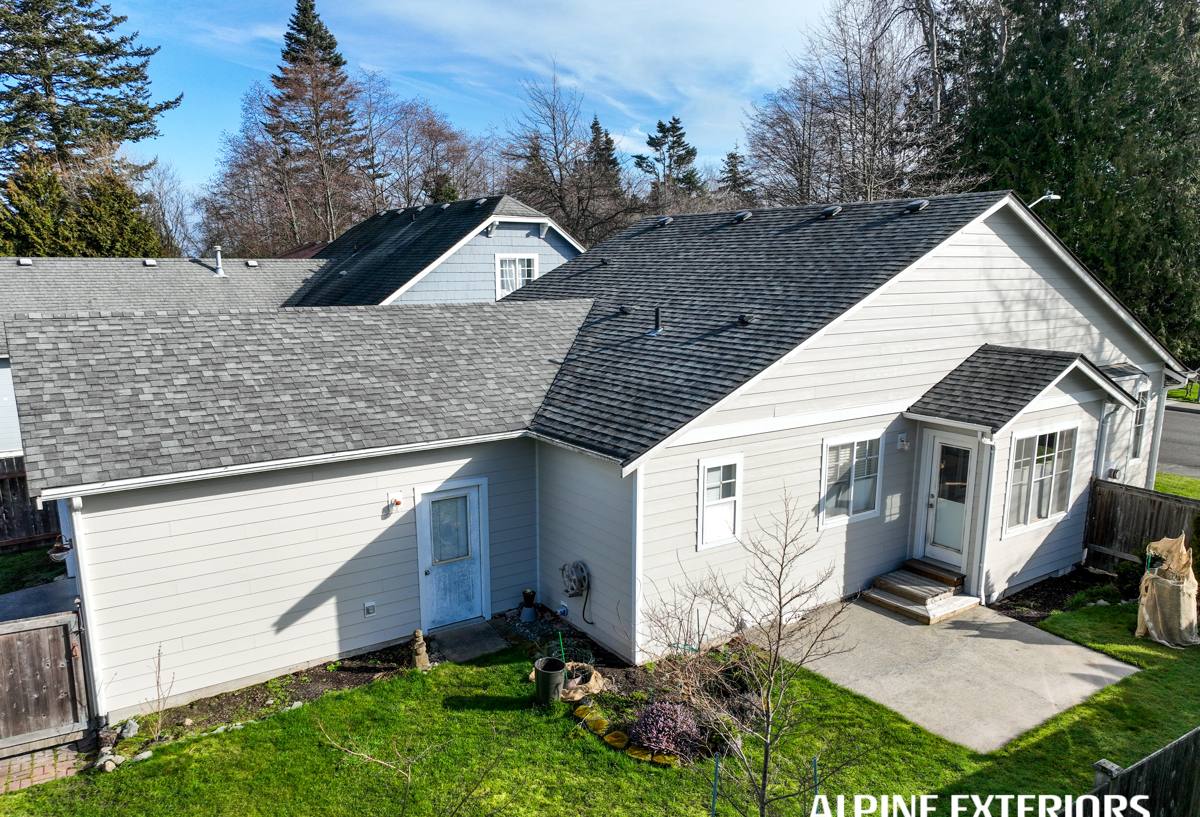
What the Climate Does to Sunnyland Exteriors
Three things define exterior wear in this part of Whatcom County, and Sunnyland gets all three.
Salt Air
Bellingham sits on Bellingham Bay, and even a few miles inland, marine air carries salt that accelerates corrosion on fasteners, flashing, and any metal trim on a home's exterior. It also keeps humidity elevated year-round, which matters more for siding than most homeowners realize — damp air slows drying time after every rain event, and siding that can't dry out between storms is siding that eventually fails from the inside.
Driving Rain
Bellingham's rain doesn't just fall straight down. Wind off the Sound and the Strait pushes it sideways into walls, particularly on west- and south-facing elevations. Driving rain finds every gap in flawed flashing, every hairline crack in old caulking, and every seam where siding wasn't lapped correctly. On a well-built wall it never gets past the first layer of defense. On a compromised one, it works its way behind the cladding and starts rotting sheathing long before anyone sees a stain on the outside.
Moss Season
Whatcom County's moss season runs long — realistically most of the year on shaded, north-facing walls and roof planes. Moss and algae hold moisture against a surface far longer than open air would, which is a problem for any material that isn't dimensionally stable or that relies on paint film integrity to stay watertight. It's also a cosmetic problem homeowners notice immediately, since green-black streaking on siding or a roofline is one of the first things a visitor sees pulling into the driveway.
Why We Only Install James Hardie Siding
We install James Hardie fiber cement siding exclusively. We don't install vinyl, LP SmartSide, Cemplank, Allura, primed spruce, or cedar, and that's a deliberate professional standard, not a sales pitch. Here's the honest reasoning, product by product.
Vinyl
Vinyl is inexpensive and low-maintenance in mild, dry climates. In a wet, marine climate like Bellingham's, it expands and contracts more than fiber cement, its seams and J-channels are common entry points for wind-driven rain, and it can warp or become brittle over time. It's not a bad product everywhere — it's a poor fit for this specific climate.
LP SmartSide, Cemplank, and Allura
LP SmartSide is engineered wood, which means it's still wood at its core — vulnerable to moisture intrusion at cut edges and butt joints if caulking and flashing aren't maintained perfectly, indefinitely. Cemplank and Allura are fiber cement competitors to Hardie; they're a similar material category but with different manufacturing processes, warranty structures, and factory-finish systems, and in our experience Hardie's ColorPlus finish and engineering hold up more consistently over the long run.
Primed Spruce and Cedar
These are real wood siding, and real wood siding needs a maintenance commitment most homeowners underestimate: repainting or restaining on a cycle, caulking upkeep, and vigilance about moss and mildew, all in a climate that makes every one of those chores harder. Cedar looks beautiful the day it goes up. Keeping it looking that way in Whatcom County for fifteen years is a real, ongoing cost.
What Hardie Gets Right
James Hardie fiber cement is non-combustible, dimensionally stable in wet-dry cycling, and available in HZ5 formulations engineered specifically for climates like the Pacific Northwest's. The ColorPlus factory finish is baked on under controlled conditions rather than field-applied, which means better adhesion and a longer color life than most site-painted materials. It carries a strong transferable warranty when installed to Hardie's specifications, which matters both for a homeowner staying put and for resale. It's not the cheapest option on day one, but it's the one we're willing to put our name on.
How Installation Actually Protects a Sunnyland Home
Fiber cement siding is only as good as the wall assembly behind it. Given how much driving rain this region sees, the details most homeowners never think about are the ones doing the real work:
- A weather-resistant barrier installed correctly behind the siding, lapped shingle-style so water sheds outward instead of working inward
- Properly flashed windows, doors, and any penetration through the wall, since these are the highest-risk leak points on any home
- Correct fastening per Hardie's specifications — under- or over-driven nails both compromise the panel's ability to move and seal correctly
- Proper clearance at the bottom of the siding from grade, decks, and roof lines, so splashback and standing water don't sit against the material
- Factory-cut and factory-primed edges used wherever possible, with any field cuts sealed per manufacturer spec
Skip any one of these and you can install genuine Hardie board and still get a wall that fails early. This is why we treat installation quality as inseparable from product choice — the best material in the world doesn't overcome a rushed install.
Roofing, Windows, and Decks: The Rest of the Envelope
Siding doesn't work in isolation. On most Sunnyland homes we're asked to look at siding, the roof, windows, and any deck attached to the house are all part of the same conversation, because water intrusion at one system often shows up as damage somewhere else.
Roofing
A roof in poor condition sends water down behind fascia and into wall assemblies below it, no matter how good the siding is. Moss on a roof plane also tends to migrate to nearby siding and trim, so if your roof has heavy moss growth, that's worth addressing at the same time as any siding project.
Windows
Old or poorly flashed windows are one of the most common hidden leak sources we find when we open up a wall. If a siding replacement is on the table, it's the cheapest point in the project's life to also address failing window flashing, since the wall is already open.
Decks
Decks that attach directly to a house create a ledger connection that, if flashed incorrectly, channels water straight into the wall behind it. In a region with this much rainfall, deck-to-house connections deserve the same scrutiny as any other flashing detail.
Comparing Siding Options for a Marine Climate
| Material | Moisture Performance in Bellingham's Climate | Maintenance Burden | Typical Lifespan |
|---|---|---|---|
| James Hardie Fiber Cement | Engineered for wet-dry cycling; HZ5 formulation for this region | Low — factory finish, occasional wash | 30+ years with correct install |
| Vinyl | Seams and channels vulnerable to wind-driven rain | Low, but can crack/warp over time | 15-25 years, climate-dependent |
| LP SmartSide / Engineered Wood | Vulnerable at cut edges without diligent caulk maintenance | Moderate — caulk and edge sealing upkeep | 20-30 years if well maintained |
| Cedar / Primed Spruce | Absorbs moisture; needs consistent finish upkeep | High — repaint/restain cycle | Varies widely with maintenance |
These figures are general industry ranges, not guarantees — actual performance always depends on installation quality, exposure, and upkeep.
Signs a Sunnyland Home Needs an Exterior Evaluation
Most exterior damage in this climate is progressive and quiet. A few signs worth acting on before they become bigger repairs:
- Soft or spongy spots when you press on siding, especially near the bottom courses
- Visible moss or algae streaking that returns quickly after cleaning
- Paint that's peeling or bubbling rather than fading evenly
- Gaps or separation at siding seams, corner boards, or trim
- Interior signs like musty smells or discoloration near exterior walls
- Any visible daylight or drafts around window and door trim
Why a Local Crew Matters
A crew that works Whatcom County year-round knows the difference between a Bellingham winter and a generic Pacific Northwest winter — the specific way wind comes off the bay, how long moss season actually runs on a shaded north wall versus a sun-exposed south wall, and which details fail first on homes in this particular part of the state. That's not something a crew based somewhere drier picks up from a manual. It comes from repairing the same failure patterns on the same style of homes, season after season, in this exact climate.
Get a Free, No-Pressure Estimate
If you're weighing a siding project, dealing with a roof that's past its prime, or just want an honest read on your home's exterior condition, we're glad to take a look. There's no pressure and no obligation — just a straightforward assessment from a crew that works in Bellingham and Whatcom County every day. Use the form below to request a free estimate.