 Bellingham
 Siding Built for Cordata's Corner of Whatcom County
Cordata sits in north Bellingham, close enough to Bellingham Bay to catch salt-laden air off the water and far enough inland to collect the moisture that piles up against the foothills to the east. That combination is tougher on exterior siding than most homeowners realize. It's not one big storm that wrecks a house here — it's forty years of steady dampness, low winter sun, and shaded north walls that never fully dry out between rains. We've worked on homes throughout this part of Whatcom County long enough to know exactly what that does to a wall system over time, and we build our siding installations around it.
This page covers what Cordata homes typically face, how we approach siding, roofing, windows, and decks for this specific microclimate, and why we've standardized on one siding product instead of offering a menu of options.
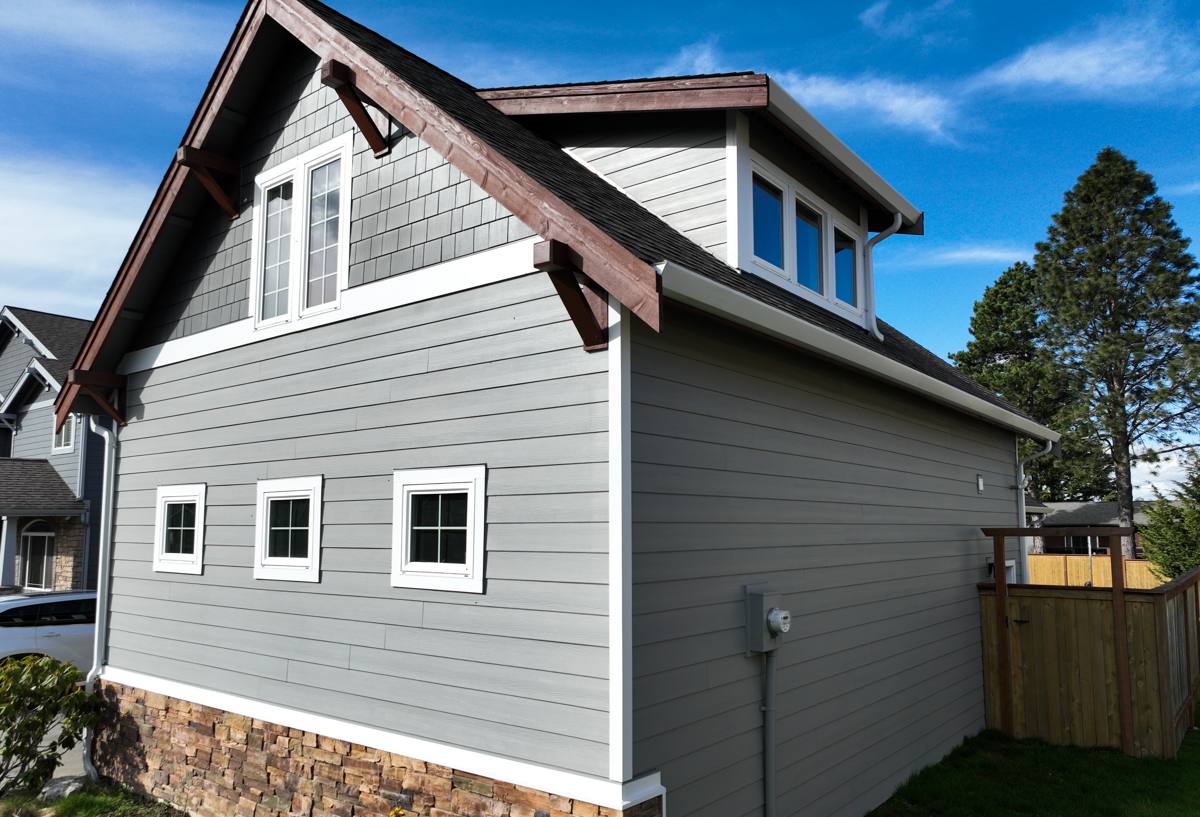
What the Climate Does to Siding Here
Salt Air and Corrosion
Proximity to Bellingham Bay means airborne salt finds its way onto exterior surfaces, fasteners, and trim throughout the year. Salt air accelerates corrosion on unprotected metal components and can degrade certain paint and coating systems faster than manufacturers' standard warranties assume for inland climates. Siding, fasteners, and flashing all need to be chosen with that in mind, not just for coastal-front properties but for anything within a few miles of the water — which includes most of north Bellingham.
Driving Rain and Wind-Driven Moisture
Whatcom County doesn't just get a lot of rain — it gets rain pushed sideways by wind off the Strait of Georgia and the bay. Wind-driven rain finds gaps that vertical rain never would: unsealed laps, poorly flashed windows, and butt joints that were caulked instead of properly detailed. A siding system that performs fine in a calm, dry climate can fail here simply because it wasn't installed with wind-driven moisture in mind.
Moss, Shade, and Slow-Drying Walls
Cordata's mature tree cover and the region's long, overcast stretches mean north- and east-facing walls often stay damp for days after a storm passes. That's exactly the environment moss and mildew need to take hold, and it's exactly the environment where a moisture-sensitive siding material struggles most. A wall that dries slowly needs a cladding material that tolerates repeated wet-dry cycles without swelling, delaminating, or rotting at the edges.
Why We Only Install James Hardie Fiber Cement
We get asked why we don't offer vinyl, LP SmartSide, or other engineered wood options. It comes down to a simple standard we hold ourselves to: we only put our name on work we're confident will still look right in twenty years, on this specific coastline, in this specific climate. After years of installing and repairing siding throughout Whatcom County, James Hardie fiber cement is the product we trust to meet that bar consistently.
What Makes It Fit This Climate
- Non-combustible core — fiber cement doesn't burn, rot, or feed insects, which matters in a region with both wet-rot risk and, in dry summer stretches, wildfire smoke and ember exposure.
- Engineered for moisture cycling — Hardie's HZ10 product line is formulated specifically for wetter, cooler climates like the Pacific Northwest, where walls go through repeated soak-and-dry cycles rather than one dry season.
- Factory-applied ColorPlus finish — the finish is baked on under controlled conditions rather than field-painted, which holds up better against salt air and UV than most site-applied coatings and reduces how often the exterior needs repainting.
- Dimensionally stable — fiber cement doesn't swell and shrink with moisture the way wood-based products can, so laps, joints, and caulk lines stay tighter over time instead of opening up and inviting water behind the cladding.
We're not going to tell you competing products are junk — plenty of them have a place. But we won't install a wood-fiber composite or vinyl product on a Cordata home and then stand behind it the same way we stand behind Hardie. The trade-offs in moisture tolerance, long-term appearance, and warranty structure aren't ones we're willing to install around.
How a Siding Project Works With Us
Assessment and Sheathing Check
Before we talk product colors, we look at what's underneath the existing siding. In a climate this wet, hidden sheathing damage is common on homes with aging siding, especially around window heads, deck ledgers, and any wall that's been shaded and damp for years. We flag rot or moisture damage honestly before it becomes a change-order surprise mid-project.
Water Management Details
The siding itself is only part of keeping a Cordata home dry. Flashing at windows, doors, and roof-to-wall transitions, along with a properly installed weather-resistive barrier and rainscreen gap where appropriate, do as much work as the cladding does. We install to manufacturer spec and local code, not to the minimum that happens to pass inspection.
Fastening and Finish
Corrosion-resistant fasteners matter more here than in a drier, inland climate because of the salt air. We use fastening schedules and hardware suited to coastal Whatcom County conditions, not generic inland specs.
Roofing, Windows, and Decks — the Rest of the Envelope
Siding doesn't work in isolation. A roof that's shedding water improperly, windows that leak at the flange, or a deck ledger that's trapping moisture against the wall will undermine even a perfect siding job. Because we handle roofing, windows, and decks as well, we look at a Cordata home's exterior as one connected system rather than quoting siding in a vacuum and hoping the rest holds up.
- Roofing — proper underlayment, flashing, and ventilation matter as much as the roofing material itself in a climate with this much sustained rainfall and moss pressure.
- Windows — flashing integration between the window and the new siding is one of the most common failure points we find on older homes; we detail this correctly rather than caulking over a gap.
- Decks — ledger board attachment and flashing where a deck meets the house is a frequent hidden rot source in wet Pacific Northwest climates, and it directly affects the wall siding sits on.
Comparing Siding Approaches for a Cordata Home
| Factor | James Hardie Fiber Cement | Engineered Wood / Vinyl |
|---|---|---|
| Moisture cycling tolerance | Formulated for repeated wet-dry cycles (HZ10 line for this climate) | More sensitive to sustained moisture exposure over time |
| Salt air / coastal exposure | Factory finish holds up well against UV and airborne salt | Field-applied or lower-durability finishes may fade or degrade faster |
| Fire resistance | Non-combustible core | Wood-based products are combustible; vinyl can deform under heat |
| Long-term maintenance | Repainting intervals typically longer due to factory finish | Often needs more frequent repainting or caulk maintenance |
| Warranty structure | Strong transferable warranty when installed to spec | Varies widely by manufacturer and installer |
Signs Cordata Homeowners Should Watch For
- Soft or spongy spots when pressing on siding, especially near the bottom courses or window sills
- Persistent moss or dark streaking on north- and east-facing walls that doesn't clear up between dry spells
- Visible gaps, warping, or buckling at siding laps and butt joints
- Paint that's peeling or bubbling rather than just fading evenly
- Rust staining below fasteners or trim, a sign salt air is attacking hardware
- Musty smell or visible staining on interior walls that back up to exterior siding
Any one of these is worth a look before it turns into sheathing or framing repair. Catching it at the siding stage is a fraction of the cost of catching it after water has been getting behind the wall for a year or two.
Why a Local Crew Matters for This Neighborhood
A crew that mostly works drier, inland climates will detail a wall differently than a crew that works Whatcom County's coastal weather every week. We know which walls in this area take the worst of the wind-driven rain, how much moss pressure to expect on shaded elevations, and where salt air does the most damage to fasteners and trim. That local pattern recognition shows up in the small decisions — flashing details, fastener choice, rainscreen use — that determine whether a siding job is still performing well in fifteen years or starting to show problems in five.
Get a Free Estimate
If you're in Cordata or elsewhere in the Bellingham area and want a straight answer on what your siding, roofing, windows, or deck actually need, we're glad to take a look. There's no pressure and no obligation — just an honest assessment from a crew that works this climate every day. Reach out using the form below to schedule a free estimate.