 Bellingham
 Siding in the Columbia Neighborhood: A Different Kind of Weather Test
Homes in the Columbia neighborhood sit close enough to Bellingham Bay and the surrounding waterways that their exterior walls take on a specific set of stresses most inland Whatcom County homes never see. Salt-laden air, wind-driven rain off the water, and long stretches of shade and dampness that keep moss and algae established for most of the year all work on siding at the same time. None of these forces are dramatic on their own. It's the combination, repeated across dozens of wet seasons, that separates siding systems that hold up from ones that don't.
We've worked on enough homes in and around Bellingham to know that a siding product's marketing sheet rarely matches how it actually behaves under this kind of exposure. This page walks through what Columbia homeowners are up against, what we install and why, and how our full exterior work — siding, roofing, windows, and decks — fits together to protect a home in this specific climate.
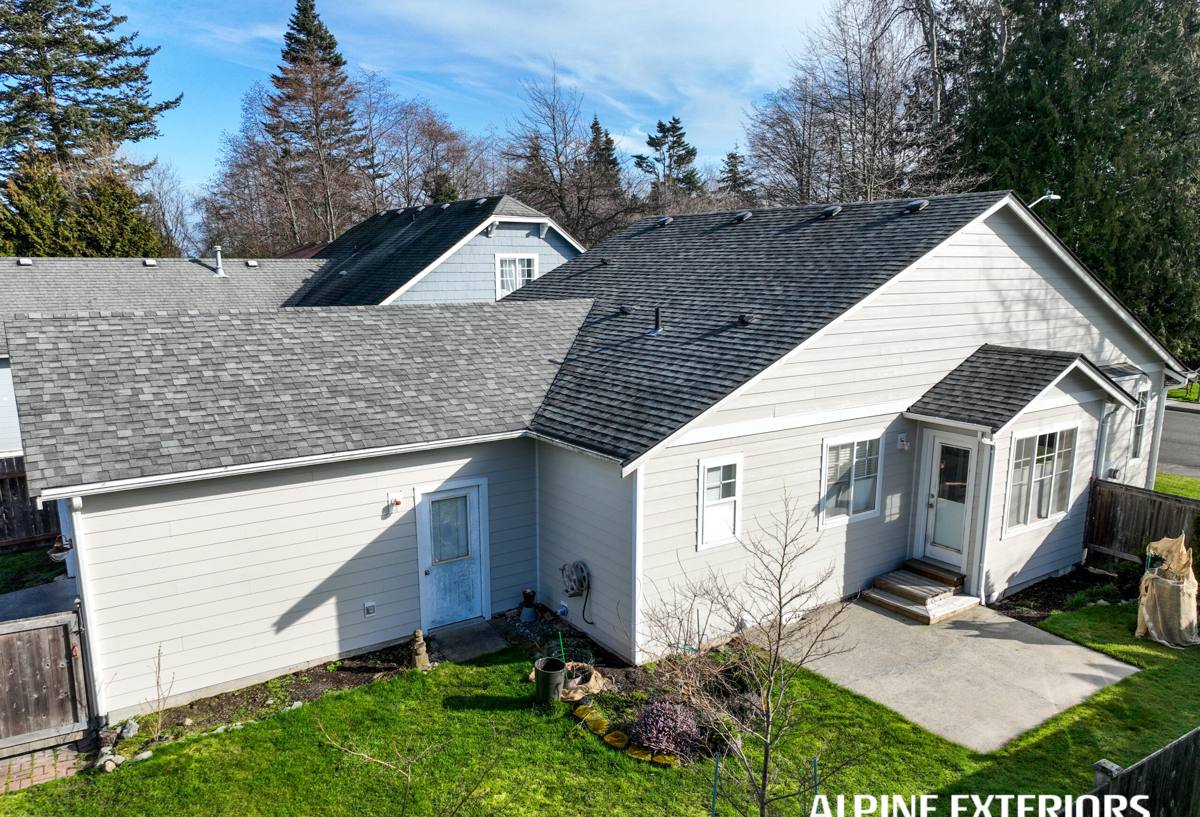
What Salt Air, Rain, and Moss Actually Do to a House
Salt Air
Proximity to saltwater means airborne salt settles on exterior surfaces and accelerates corrosion of exposed metal fasteners, flashing, and hardware. It also draws moisture, keeping surfaces damp longer than they would be a few miles inland. Siding materials and fastening systems that aren't rated for coastal exposure tend to show premature wear — fastener staining, corrosion streaks, and softened edges — well before their expected service life is up.
Driving Rain
Storms coming off the water don't just fall straight down; wind pushes rain sideways into wall assemblies, lap joints, and trim. A siding system with weak water-shedding detail, or one that depends on paint film alone to stay sealed, is more likely to let moisture behind the cladding over time. Once water gets behind siding, the sheathing and framing pay the price, not just the surface finish.
Moss and Algae
Bellingham's long wet season and the amount of tree cover in neighborhoods like Columbia create ideal conditions for moss, lichen, and algae to take hold on north-facing and shaded walls. Organic growth isn't just cosmetic — it holds moisture against the siding surface for extended periods, which is exactly the condition that causes rot in wood-based products and accelerates the breakdown of anything not engineered to resist it.
Why We Install Only James Hardie Fiber Cement
We made a decision as a company to install one siding system: James Hardie fiber cement. We don't offer vinyl, LP SmartSide, Cemplank, Allura, primed spruce, or cedar as options, and that's worth explaining honestly rather than just stating it.
Fiber cement is non-combustible and dimensionally stable — it doesn't expand and contract with moisture the way wood-based products do, and it doesn't soften or warp when it stays wet for long stretches, which matters directly in a climate like this one. James Hardie's ColorPlus factory-applied finish is baked on and warrantied against fading and peeling in a way field-applied paint systems on other products typically are not. For a wall that's going to face driving rain and salt air for decades, a finish that's chemically bonded at the factory — rather than one that depends on perfect field painting conditions — is a meaningful advantage.
James Hardie also engineers regional product lines, including HZ5 formulations built specifically for wetter, more variable climates like the Pacific Northwest. That's a level of climate-specific engineering we haven't found matched by the alternatives we chose not to carry. None of those other products are inherently bad — vinyl is inexpensive and low-maintenance in mild climates, cedar has real aesthetic appeal, engineered wood products have improved over the years. But each comes with a trade-off — moisture sensitivity, a maintenance schedule, a weaker warranty structure, or performance that depends heavily on installation precision — that we weren't comfortable standing behind on homes exposed to this much salt air and rain.
Siding Options at a Glance
| Material | Moisture Behavior in Coastal Climate | Maintenance Burden | Factory Finish |
|---|---|---|---|
| James Hardie Fiber Cement | Dimensionally stable, resists moisture-driven warping | Low — occasional wash | ColorPlus, factory-baked, warrantied |
| Vinyl | Can warp or become brittle with temperature swings; seams are a moisture path | Low, but limited repair options if damaged | Color molded through, fades over time |
| Cedar / Primed Wood | Absorbs moisture, prone to rot and moss retention without diligent upkeep | High — regular sealing, painting, moss treatment | Field-applied, weather-dependent |
| Engineered Wood (LP SmartSide-type) | Improved over older OSB products, but edge and seam moisture intrusion remains a risk | Moderate — caulking and paint maintenance | Field-applied or factory-primed |
What Correct Installation Looks Like on a Columbia Home
Fiber cement performs the way it's designed to only when it's installed correctly, and installation quality matters more in a driving-rain climate than almost anywhere else in the country. That means proper flashing at every window, door, and penetration; correct fastener spacing and type to resist corrosion; adequate clearance from grade, decks, and roof lines so water sheds away from the wall assembly; and a rainscreen or drainage plane approach where the wall design calls for it. We follow James Hardie's published installation specifications on every job, because deviating from them is where most siding failures — regardless of brand — actually originate.
On Columbia-area homes specifically, we pay close attention to shaded and north-facing walls where moss establishes fastest, and to any area near ground-level plantings or fencing that traps humidity against the siding. Small details in those zones — starter strip placement, caulking joints, proper overlap — make a real difference over a 20- or 30-year timeline.
Beyond Siding: Roofing, Windows, and Decks
Siding doesn't work in isolation. A roof that's shedding water properly, windows that are flashed and sealed correctly, and a deck that isn't trapping moisture against the house all affect how long a siding job lasts. We handle all four:
- Roofing: Roof condition directly affects wall assemblies below the eaves — poor flashing or aging shingles send water where it doesn't belong.
- Windows: Window flashing integrates directly with siding installation; doing them together, or at least coordinating the sequence, avoids gaps that cause leaks later.
- Decks: Ledger board connections and deck-to-house transitions are a common point of hidden water intrusion if not detailed properly.
When one crew understands how all four systems interact, the whole exterior gets treated as a single water-management system rather than four separate projects that happen to touch the same house.
Why a Local Crew Matters in a Neighborhood Like This
Whatcom County's coastal microclimates vary block by block — a home a few streets from the water can face meaningfully different exposure than one further inland, even within the same neighborhood. A crew that works this area regularly develops a feel for which walls need extra attention, how local permitting works, and what actually holds up here versus what looks good on paper. That local knowledge shows up in the small decisions made on-site — where to add extra flashing, how tight to run a drainage gap, which walls need a closer look at bid time — decisions a crew unfamiliar with Bellingham's specific weather pattern might not think to make.
Signs Your Current Siding May Be Struggling
If your Columbia-area home is showing any of the following, it's worth having someone take a look before small issues become structural ones:
- Persistent moss or algae staining that returns quickly after cleaning
- Soft spots, bubbling, or visible warping, especially on shaded walls
- Peeling or flaking paint that keeps recurring in the same areas
- Visible gaps or separation at seams, corners, or trim
- Rust streaking near fasteners or metal flashing
- Musty odors or discoloration on interior walls that back up to exterior siding
What to Expect From an Estimate
A siding estimate on a Columbia home typically includes a walk of the full exterior, a look at problem areas like shaded walls and grade clearance, an honest read on whether repair or full replacement makes sense, and a written scope that spells out the James Hardie product line, color, and installation details specific to your home. We're not going to push a full replacement if targeted repair or maintenance is genuinely the better call for your situation.
If you're noticing wear on your home's exterior, or you're planning ahead for a project, we're happy to come take a look. The estimate is free, there's no pressure, and you'll walk away with a clear, honest picture of where your home stands — use the form below to get started.