 Bellingham
 Allura Fiber Cement: A Product We Respect, But Don't Install
Every so often a homeowner in Bellingham or elsewhere in Whatcom County asks us to bid a job using Allura fiber cement siding, sometimes because a previous quote specified it, sometimes because they found it while researching options online. We turn those jobs down, and we think homeowners deserve a straight explanation of why rather than a vague "we don't carry that." This page is that explanation.
To be clear up front: Allura is a real fiber cement product, not a knockoff or a bargain-bin material. It's manufactured from the same basic recipe as most fiber cement siding — Portland cement, sand, and cellulose fiber, cured under pressure. It's non-combustible, it doesn't attract termites, and it holds paint or factory finish far better than wood. Our decision not to install it isn't about the raw material being unsafe or defective. It's about the full package — warranty structure, regional support, and climate-specific engineering — and how that package holds up over 20-plus years on a house that sits fifteen minutes from salt water.
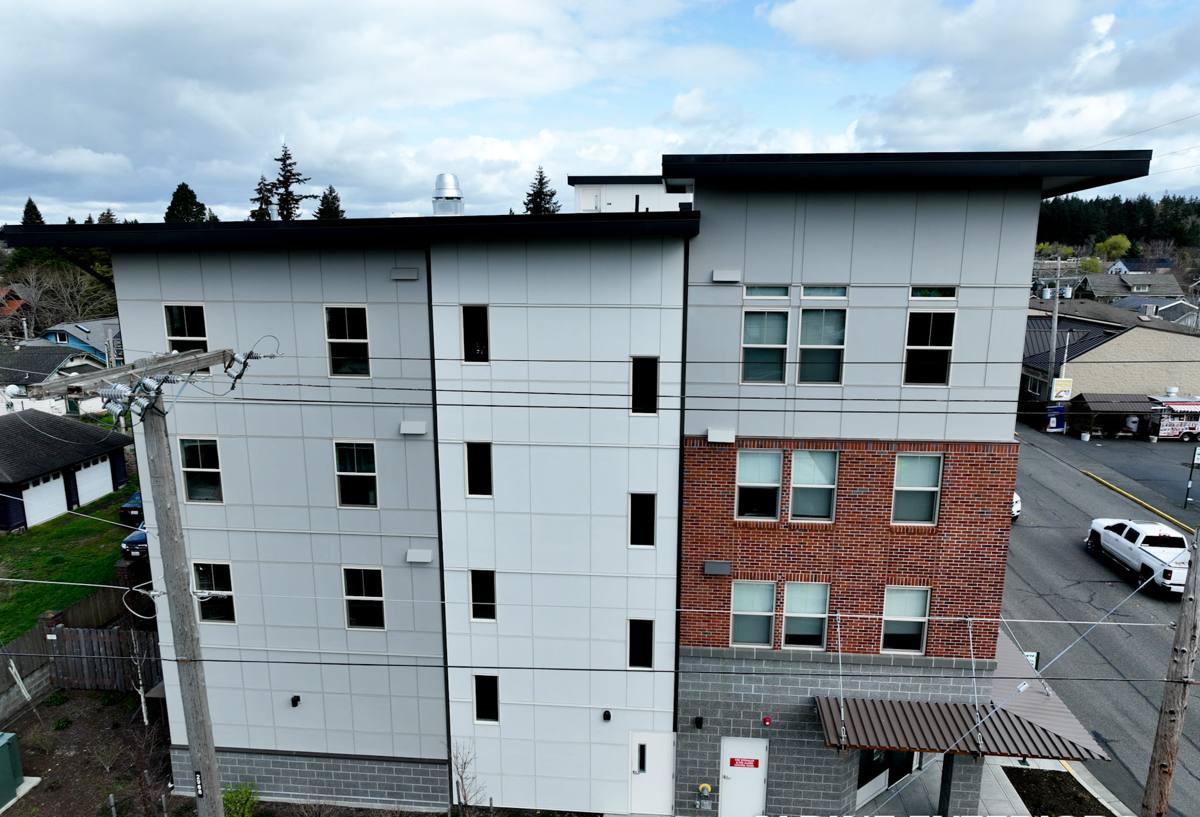
What Allura Gets Right
We'll say this plainly because a lot of "why we don't install X" pages skip it: Allura fiber cement is a legitimate, code-compliant siding product used successfully across the country. It comes in lap, panel, and trim profiles similar to what most fiber cement buyers expect, it's available primed or factory-finished, and it carries a limited warranty typical of the category. If a contractor with real experience in the product installs it correctly and the homeowner maintains it, there's no reason to expect catastrophic failure.
Where our concerns start isn't the chemistry of the board. It's everything around the board — how it's engineered for a specific climate, how the factory finish is warrantied, and whether the support infrastructure exists locally to back that warranty up decades from now.
Why Bellingham's Climate Raises the Stakes
Siding decisions matter more here than in a lot of the country. Bellingham and the rest of Whatcom County sit in a marine climate with salt air off Bellingham Bay and the Strait of Georgia, driving rain that comes in sideways off the water for months at a stretch, and a moss and algae season that can run from October through May on north-facing and shaded walls. That combination punishes any siding product with a weak factory finish, poor moisture management, or a formulation that wasn't engineered with this kind of exposure in mind.
A siding product that performs fine in a drier, more moderate climate can show its weaknesses here in ways that don't show up for the first five or ten years — finish chalking, color fade on the weather side, moss taking hold in a coating that wasn't built to resist it, or caulk joints failing faster than expected under near-constant moisture cycling. That's the lens we evaluate every product through, and it's the lens that ruled Allura out for us.
Where Our Standard Diverges From Allura
Climate-Engineered Product Lines
James Hardie engineers its fiber cement in distinct formulations for different climate zones across the country — a version built for hot, humid Southeast exposure is not the same recipe as the version built for the wet Pacific Northwest. That regional engineering is a real, documented part of Hardie's manufacturing process, and it's specifically why we spec their HZ10 product line for jobs in this part of Washington. Allura does not offer that same climate-zone-specific manufacturing approach. Its formulation is more uniform nationally, which may be perfectly adequate in many markets but doesn't give us the same confidence for a wall that faces sustained coastal rain and salt-laden air for months every year.
Factory Finish and Color Warranty Structure
A prefinished fiber cement board is only as good as its factory coating. Hardie's ColorPlus finish is a baked-on, multi-coat finish system backed by its own dedicated finish warranty, separate from the substrate warranty, specifically covering fade and peeling. Allura's prefinished option carries a warranty as well, but the coverage terms, coating process, and color-match consistency over time are structured differently, and we haven't seen the same long track record of finish performance in wet coastal conditions that we've seen with Hardie's system.
Regional Distributor and Support Network
This is the part homeowners rarely think about until they need it: what happens when a panel gets cracked by a falling branch in year twelve, or a warranty claim needs to be filed in year eighteen? Hardie has a dense distributor and dealer network throughout Western Washington, which means matching material, color-matched trim, and warranty support are all readily available locally, years after installation. Allura's distribution footprint in the Pacific Northwest is thinner. That doesn't make the product bad, but it does mean a homeowner filing a claim or needing a matching replacement panel a decade from now may have a harder path than they would with a product that's stocked and supported by every siding distributor in the region.
Comparing the Two Head-to-Head
| Factor | James Hardie (HZ10) | Allura |
|---|---|---|
| Climate-specific formulation | Yes — engineered by climate zone | No — more uniform national formulation |
| Factory finish warranty | Separate, dedicated ColorPlus finish warranty | Included in standard limited warranty |
| PNW distributor density | Wide, well-stocked network | Thinner regional presence |
| Fiber cement composition | Cement, sand, cellulose fiber | Cement, sand, cellulose fiber |
| Non-combustible | Yes | Yes |
| Track record on the Salish Sea coast | Long, well established | Limited compared to Hardie |
Installation Consistency Matters As Much As the Board
A siding crew that installs one manufacturer's system day in and day out develops a level of familiarity that shows up in the finished product — correct fastener patterns, proper clearances at grade and roof lines, consistent caulking practices, and knowing exactly how that specific product handles Whatcom County's particular mix of wind-driven rain. When a crew bounces between three or four different fiber cement brands depending on what a customer requests, that consistency erodes. We made the decision to standardize on one manufacturer specifically so every job we do benefits from the same depth of product-specific knowledge, rather than treating each brand as interchangeable.
What We Require Before Recommending Any Siding Product
- A factory finish warranty with documented performance in wet, coastal, marine climates
- A distributor network in Western Washington that can supply matching material for decades, not years
- A manufacturing process that accounts for regional climate rather than a one-size-fits-all formulation
- A transferable warranty structure that holds up for resale value, not just the original owner
- A track record we can verify locally, not just manufacturer marketing claims
Allura didn't clear all five of those bars to our standard. That's the honest, complete reason it's not in our lineup.
What This Means for Resale and Long-Term Ownership
Siding is a 20 to 40 year decision, and most homeowners will sell before that clock runs out. Buyers and their inspectors increasingly recognize name-brand fiber cement, and James Hardie in particular has become something close to a known quantity in real estate listings across Western Washington. A well-documented, transferable warranty from a widely distributed manufacturer is a genuine selling point when it's time to list the house. A less commonly seen brand isn't a red flag by itself, but it's one more thing an inspector or buyer's agent has to research, and in a market where buyers are already asking pointed questions about moisture management on coastal homes, we'd rather hand a seller a straightforward answer than an explanation.
Why We Standardized on James Hardie
We install James Hardie exclusively for the same reasons laid out above, applied consistently: climate-zone-engineered formulations, a factory finish warranty with a genuine track record in marine environments, a distributor network that will still be here to support a claim in twenty years, and a level of crew familiarity that comes from installing one system correctly, over and over, rather than several systems adequately. On a house that has to shrug off salt air, driving rain, and months of moss pressure every single year, we'd rather bet on the product with the deepest regional track record than the one with the thinner one.
If you're weighing siding options for a home in Bellingham or elsewhere in Whatcom County, we're glad to walk through what we'd actually recommend for your specific exposure, elevation, and budget — no pressure, and no pitch for a product we wouldn't put on our own house. Reach out for a free estimate using the form below.