 Bellingham
 Metal Roofing for Columbia Homes
Columbia sits close enough to Bellingham Bay that salt-laden air, wind-driven rain, and a moss season that can run eight months or more all show up on rooflines faster than they do further inland. Homeowners here already know the drill: asphalt shingles that looked fine two years ago are suddenly curling at the edges, streaked with algae, or shedding granules into the gutters. Metal roofing isn't a trend on this street grid — it's a practical answer to a specific set of local problems, and it only works as well as it's installed.
This page covers what metal roofing actually needs to do for a Columbia home, what separates a correct install from a shortcut job, and how we approach the work when we're on your roof.
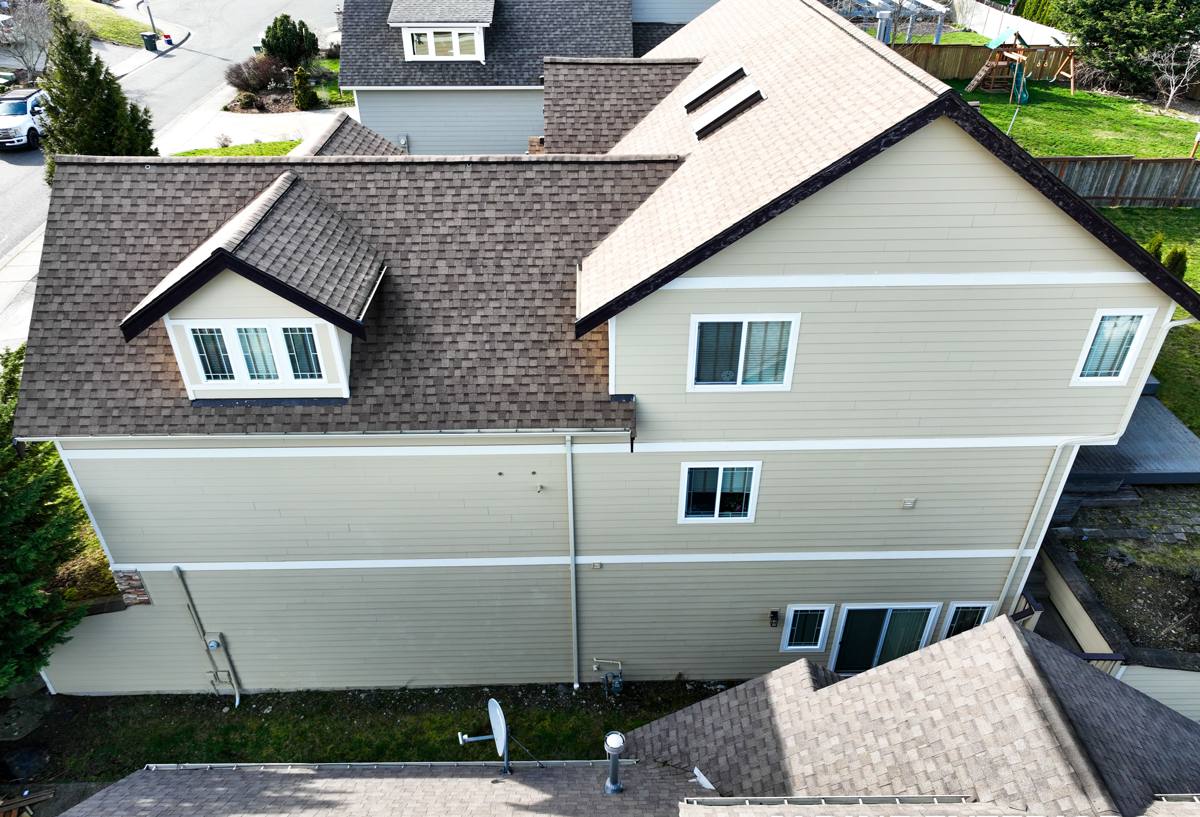
What the Local Climate Does to a Roof
Whatcom County's marine climate is mild compared to a lot of the country, but "mild" doesn't mean easy on a roof. Three things do most of the damage over time:
- Salt air: Proximity to the bay means airborne salt settles on exposed metal, fasteners, and flashing. Untreated or poorly coated materials corrode faster here than they would twenty miles inland.
- Driving rain: Wind off the water pushes rain sideways into laps, seams, and fastener penetrations that would stay dry in a calmer climate. Roofs here need water management that assumes rain won't just fall straight down.
- A long moss season: Shade, moisture, and mild temperatures give moss and algae a long window to establish themselves, especially on north-facing slopes and anywhere debris collects.
None of these are exotic problems — they're the normal cost of living near the water in Whatcom County. But they add up differently on a shingle roof than they do on a properly installed metal one.
Why Metal Roofing Holds Up Well Here
Metal roofing doesn't eliminate maintenance, but it changes the equation in a Columbia homeowner's favor in a few concrete ways:
Moss and algae have less to grip
Moss needs a rough, organic surface to anchor into. Granulated asphalt gives it exactly that. A smooth metal panel gives moss spores far less to hold onto, so growth tends to stay light and surface-level instead of rooting into the material itself. It doesn't make a roof moss-proof — anything shaded and damp long enough will grow something — but it dramatically cuts down what takes hold and how hard it is to remove.
Water sheds instead of soaking in
Steep-slope metal panels, especially standing seam systems, shed driving rain quickly instead of giving wind-blown water time to work under a lap. That matters on exposed sections of a roof where gusts off the bay hit at an angle.
Longer service life against the elements
A correctly installed and finished metal roof can outlast several cycles of asphalt shingles, which matters when you're weighing the higher upfront cost against decades of not re-roofing.
Choosing the Right System for a Coastal-Influenced Property
Not all metal roofing is built the same way, and the right choice depends on your home's exposure, roof pitch, and budget. The two systems we install most often are standing seam and exposed-fastener (screw-down) panels.
| Factor | Standing Seam | Exposed-Fastener |
|---|---|---|
| Fasteners | Hidden, clipped beneath panel seams | Visible screws through the panel face |
| Water resistance | Excellent — no face penetrations for wind-driven rain to find | Good, but gasketed screws are a maintenance point over time |
| Best for | Exposed elevations, low slopes, salt-air proximity | Outbuildings, sheltered slopes, tighter budgets |
| Typical lifespan | Longer, with fewer service points | Solid, but fastener gaskets need periodic checking |
| Upfront cost | Higher | More affordable |
For most Columbia homes, especially anything with a roof face pointed toward open wind, we lean toward standing seam. It has no exposed penetrations for driving rain to exploit, and it holds up better against decades of salt exposure. Exposed-fastener panels are still a legitimate option on sheltered slopes or secondary structures where budget matters more than maximum longevity — we'll tell you honestly which situation you're in.
What a Correct Metal Roof Installation Actually Involves
Metal roofing fails prematurely almost exclusively because of installation shortcuts, not the material itself. A correct job on a Columbia home includes:
Deck inspection and prep
The sheathing underneath gets checked for soft spots, moisture damage, and proper fastening before anything goes on top of it. Installing metal over a compromised deck just hides the problem.
Underlayment built for wind-driven rain
We use synthetic or self-adhered underlayment rated for the exposure the roof will actually see, with extra attention to eaves, valleys, and any area where wind-blown rain is likely to find its way under a lap.
Flashing at every transition
Chimneys, skylights, wall intersections, and valleys are where roofs actually leak — the field of the roof rarely fails first. Flashing details get formed and sealed for this specific climate, not generic ones pulled off a shelf.
Fastening and clip spacing to the manufacturer's spec
Wind uplift near the bay is a real design factor, not a formality. Panels and clips get spaced and fastened to hold under the gusts this area actually sees.
Ventilation that doesn't trap moisture
Metal roofs need proper intake and exhaust airflow beneath them. Get this wrong and you trade one moisture problem (moss on the surface) for another (condensation in the attic).
How Our Process Works
- On-site inspection: We walk the roof, check the deck and current flashing, and look at exposure — which slopes take the worst of the wind and rain, which stay shaded and damp longest.
- System recommendation: Based on that inspection, we'll tell you whether standing seam or an exposed-fastener system fits your home and budget, and why.
- Written estimate: Clear scope, materials, and cost — no vague allowances buried in the fine print.
- Tear-off and deck repair: Old roofing comes off, and any deck issues we find get addressed before a single panel goes down.
- Installation: Underlayment, flashing, and panels installed to manufacturer spec and this climate's demands.
- Final walkthrough: We go over the finished roof with you, including what routine maintenance looks like going forward.
Cost Factors for a Columbia Metal Roof
Pricing depends on your specific roof, but the main variables are consistent across most projects:
| Factor | Effect on Cost |
|---|---|
| Panel system (standing seam vs. exposed-fastener) | Standing seam runs higher due to labor and hidden-fastener hardware |
| Roof complexity (valleys, dormers, penetrations) | More transitions mean more flashing labor |
| Tear-off vs. re-roof | Removing old roofing and repairing deck issues adds cost but is often necessary |
| Roof pitch and access | Steep or hard-to-access roofs take longer and need more safety setup |
| Panel finish and coating | Higher-grade coatings resist salt-air corrosion longer but cost more upfront |
We give straightforward, itemized estimates so you can see exactly what's driving the number — not a flat price with no explanation behind it.
Living With a Metal Roof in Whatcom County's Moss Season
Even a well-installed metal roof benefits from a little seasonal attention:
- Keep gutters and valleys clear of needles and leaf debris where moss spores collect and moisture sits longest.
- Trim back overhanging branches that keep a section of roof shaded and damp through the wet months.
- Do a visual check after major windstorms for lifted flashing or debris buildup in valleys.
- Address any light surface moss early with a gentle, roof-safe treatment rather than letting it spread across a full season.
- Have flashing and sealant points checked periodically, especially around chimneys and skylights, since these are the most common leak points over time.
None of this is heavy maintenance — it's the same kind of upkeep any coastal-influenced roof needs, just with fewer surprises because the material itself is doing more of the work.
Why a Crew That Already Works in Columbia Matters
Metal roofing specs written for a dry inland climate don't automatically translate to a neighborhood exposed to bay winds and a long wet season. A crew that already works Columbia and the surrounding Bellingham area knows which elevations take the worst of the driving rain, how long moss season actually runs here, and which flashing details tend to fail first on homes like yours — because we've seen it, not because we read it in a manual. That local pattern recognition is the difference between a roof that's technically installed to code and one that's actually built for where it sits.
If you're weighing a metal roof for your Columbia home, we're happy to take a look and give you a straight answer about what your roof needs — no pressure, no upsell. Reach out for a free estimate using the form below.