 Bellingham
 Siding Installation Built for Sehome's Housing Stock
Sehome is one of Bellingham's older, more established neighborhoods, and that shows up in the siding we get called out to replace. Many homes here were built or last re-sided decades ago, long before today's weather-resistive barriers, drainage planes, and factory-cured finishes existed. Others have had two or three siding jobs layered on top of each other over the years, each one patched around windows, trim, and old flashing details instead of starting from a clean, correctly sequenced install. When we work in Sehome, the first job is almost always figuring out what's actually happening behind the old siding — not just what color to put on top of it.
That mixed housing stock, close to the center of Bellingham and up against Sehome Hill, means every home is a little different: different original construction quality, different past repair history, different exposure depending on which side of the hill or which direction the house faces. A siding installation that works for one house on the block isn't automatically right for the one next to it. That's the case for a proper local assessment before any material goes up.
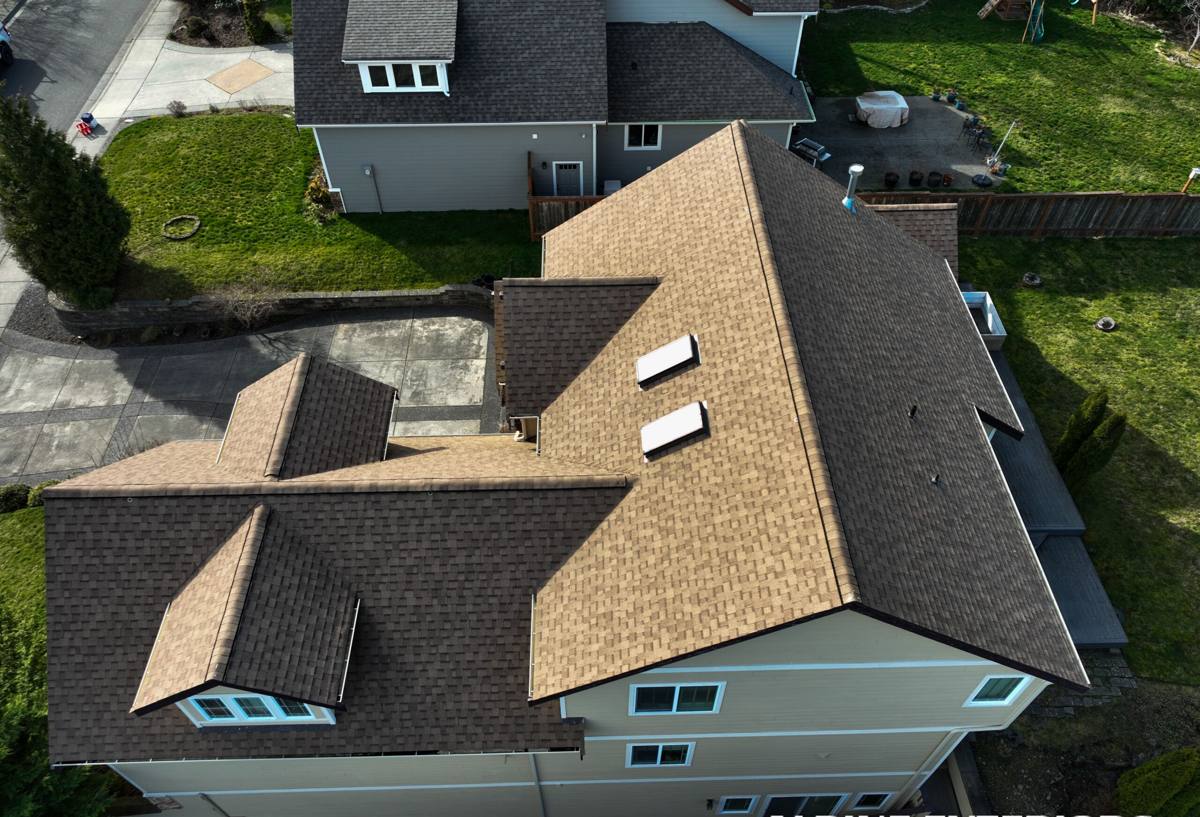
Why Bellingham's Marine Climate Is Hard on Siding
Bellingham sits on the water, in Whatcom County, and that location cuts both ways. It gives the area its mild temperatures, but it also means every home's exterior is dealing with three things nearly year-round: salt-laden air off Bellingham Bay, driving wind-driven rain, and a moss season that can stretch from fall through spring.
Salt Air
Airborne salt accelerates corrosion on exposed metal fasteners, flashing, and hardware, and it can degrade lower-quality paint finishes faster than inland siding ever sees. Siding facing the water side of a property takes this hardest, but salt air moves with wind and doesn't stay neatly on one side of a house.
Driving Rain
Rain in this part of Whatcom County rarely falls straight down — wind pushes it sideways, driving water into laps, seams, and trim joints that would stay dry in a calmer climate. Siding systems and installation details that aren't built for wind-driven rain will eventually let water past the surface, even if the face of the siding looks fine.
Moss Season
Shade, moisture, and mild temperatures are exactly what moss and algae need, and Bellingham gives them all three for much of the year. Moss holds water against a wall surface far longer than open air would, which is a slow, steady problem for any siding material that isn't dimensionally stable or that absorbs moisture into its core.
What a Correct Siding Installation Actually Involves
Siding installation is not just fastening panels to a wall. In a climate like Bellingham's, the parts nobody sees are what determine whether a job lasts fifteen years or fifty.
- Weather-resistive barrier: a continuous, properly lapped house wrap or building paper behind the siding, not just tucked in around openings.
- Flashing at every penetration: windows, doors, hose bibs, vents, and any other break in the wall plane need flashing that sheds water down and out, not into the wall cavity.
- Drainage plane and rainscreen gap: a small air gap behind the siding lets any water that does get past the surface drain and dry out instead of sitting against the sheathing.
- Correct fastener type, spacing, and depth: under- or over-driven fasteners are one of the most common causes of premature siding failure.
- Manufacturer-specified clearances: gaps at grade, roof lines, decks, and abutting trim so the bottom edge of the siding never sits in standing water or constant splash-back.
- Factory-finished or field-finished per spec: caulking, priming, and paint (where required) done to the manufacturer's actual instructions, not general contractor habit.
Skip any one of these and the siding can still look right for a year or two — the failures in a marine climate are usually slow and hidden, which is exactly why so many older Sehome homes have moisture damage well before the siding itself looks obviously worn.
Why We Install Only James Hardie Fiber Cement
We made a decision as a company to install one siding system — James Hardie fiber cement — and not vinyl, LP SmartSide, Cemplank, Allura, primed spruce, or cedar. That's not a marketing angle; it's a standard we hold ourselves to because of what we've seen these products do over time in exactly the conditions Sehome deals with.
Fiber cement is non-combustible, dimensionally stable, and doesn't absorb and swell with moisture the way wood-based or engineered-wood products can. In a climate with a long wet season and real moss and algae exposure, that stability matters more than it does in drier parts of the country. James Hardie's HZ product lines are engineered specifically for climate zones like ours, and the ColorPlus factory finish is baked on and warrantied against fading and peeling in a way field-applied paint on other substrates typically isn't.
We're not going to tell you vinyl or engineered wood siding is garbage — vinyl is inexpensive and easy to install, and engineered wood has a lower material cost than fiber cement. Those are real advantages for some budgets. What we won't do is put our name on an install and then watch it struggle with moisture, moss, or salt exposure a few years later when we know a better-suited material exists. That's the honest trade-off, and it's why every quote we write for Sehome is for James Hardie.
Our Installation Process, Start to Finish
- On-site assessment: we look at your existing siding, sheathing condition where accessible, trim, flashing, and any moisture staining or soft spots before quoting anything.
- Tear-off and inspection: old siding comes off in sections so we can actually see the sheathing and framing underneath, not guess at it.
- Repair as needed: any rot, soft sheathing, or damaged framing gets addressed before new material goes up — no siding over hidden problems.
- Weather-resistive barrier and flashing: installed continuous and lapped correctly at every window, door, and penetration.
- James Hardie installation: panels, planks, or trim installed to manufacturer fastening and clearance specifications.
- Detail work: caulking, touch-up paint where required, and a final check of every seam and corner.
- Walkthrough: we go over the finished job with you before we consider it done.
Siding Material Comparison
| Material | Moisture Behavior | Finish Durability | Fire Resistance |
|---|---|---|---|
| James Hardie fiber cement | Dimensionally stable, does not swell or rot | Factory ColorPlus finish, long warranty | Non-combustible |
| Vinyl | Doesn't absorb water but can warp with heat/cold cycling | Color molded in, can fade over time | Combustible, can melt |
| Engineered wood (e.g. LP SmartSide) | Wood-based core, vulnerable at cut edges and unsealed spots | Field or factory finish, maintenance-dependent | Combustible |
| Cedar | Absorbs moisture, needs consistent maintenance | Requires refinishing on a schedule | Combustible |
Signs Your Sehome Home May Need New Siding
- Bubbling, peeling, or bulging siding panels, especially on the water-facing or shaded sides of the house
- Soft or spongy spots when you press on the siding near the bottom edge or below windows
- Persistent moss or algae growth that comes right back after cleaning
- Visible gaps, warping, or panels that have pulled away from the wall
- Interior signs like peeling paint, musty smell, or staining on walls that back up to exterior siding
- Siding that's original to a home built more than 20-25 years ago and hasn't been inspected behind the surface
What Affects the Cost of a Siding Job in Sehome
Every home is priced individually after a real assessment, but a few factors consistently move the number: how much of the existing siding needs to come off versus what can be left in place, whether sheathing repairs turn up once the old siding is removed, the complexity of the roofline and trim detailing, and how many stories and how much total wall area the home has. Access — tight lots, hillside grading, or limited staging space, which is common on some Sehome streets — can also affect labor time. We walk through all of this with you before any work starts, so there's no guessing at what you're paying for.
Why a Crew That Already Works Sehome Matters
A siding crew that already knows the Sehome housing stock — the era most homes were built, the common flashing shortcuts from past decades, how moss and shade patterns play out on a given lot — spots problems faster and prices jobs more accurately than a crew seeing this neighborhood for the first time. It also means we're not guessing at how Bellingham's marine climate treats a given detail; we've already seen it play out on homes like yours.
If you're weighing a siding replacement in Sehome, we'd rather give you a straight, no-pressure look at your home's actual condition than a generic quote. Fill out the form below for a free estimate and we'll walk the property with you.