 Bellingham
 Siding Built for Sehome's Specific Climate Problem
Sehome sits close enough to Bellingham Bay to catch salt-laden air off the water, and it sits on and around a wooded hillside that keeps a lot of the neighborhood in shade for a good part of the year. That combination — salt exposure plus shade plus Whatcom County's long, wet fall-through-spring stretch — is exactly the kind of environment that wears out the wrong siding material fast. Homes here don't just get rained on; they stay damp longer between rain events than siding in a drier, sunnier part of the state, and that extended dampness is what drives moss, mildew, and slow rot into siding that isn't built to handle it.
We install James Hardie fiber cement siding exclusively, and Sehome is a good example of why. This page walks through what the local climate actually does to siding, what a correct Hardie installation looks like for this specific area, and how our process works from first look to final inspection.
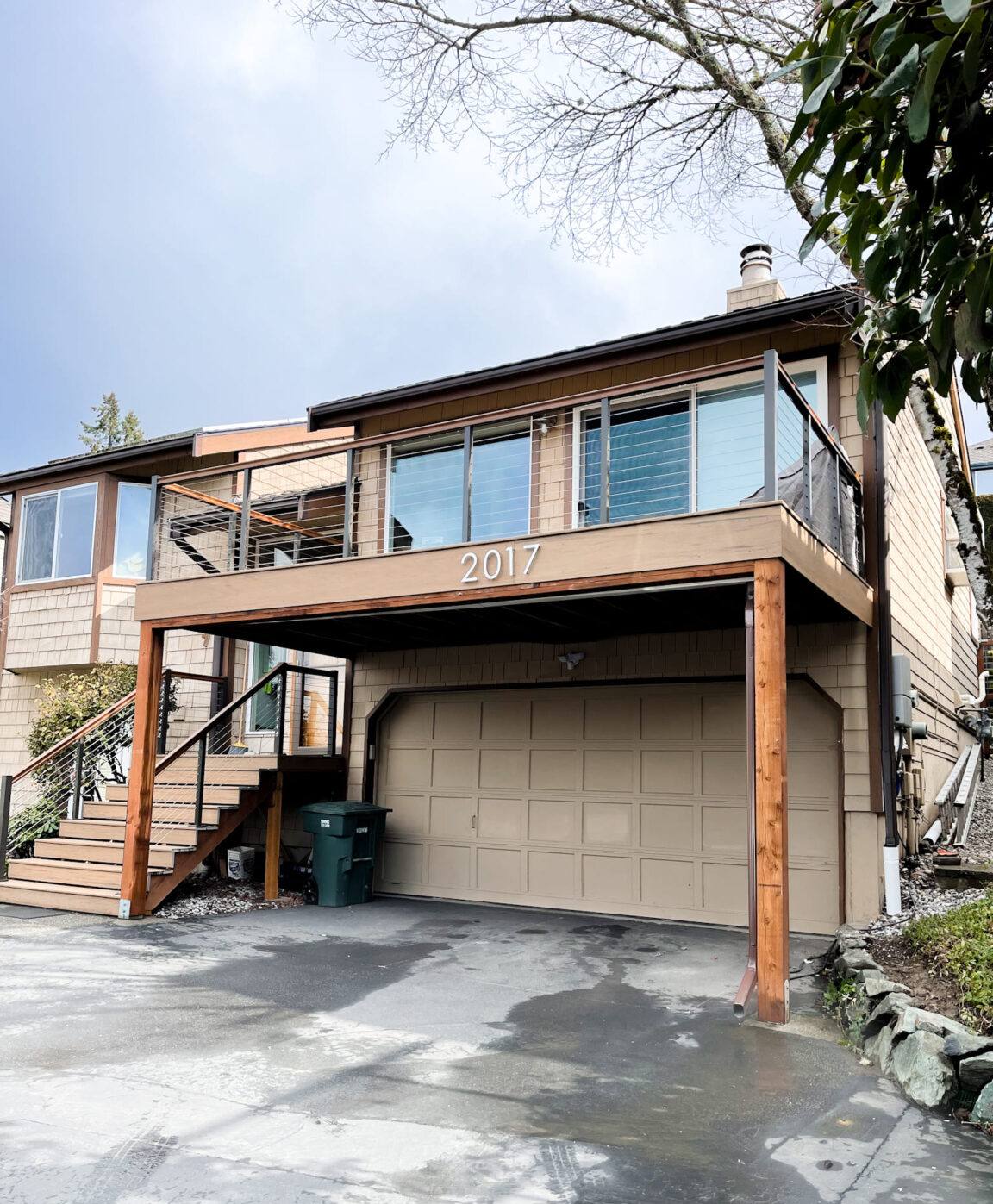
What Salt Air, Driving Rain, and Moss Season Actually Do to a House
Salt Air
Proximity to Bellingham Bay means airborne salt settles on exterior surfaces over time. On untreated or poorly finished wood siding, that salt accelerates finish breakdown and pulls moisture into the substrate faster than it would inland. On metal fasteners and trim that aren't rated for coastal exposure, it speeds up corrosion. It's a slow, cumulative effect — not something that shows up in year one, but something that shows up as premature paint failure and soft spots by year eight or ten on the wrong products.
Driving Rain
Storms coming off the Sound don't just fall straight down — wind-driven rain hits siding at an angle and finds every gap, seam, and poorly lapped joint. Siding systems that rely on caulk and paint film as their primary water defense are working against the odds in this kind of weather. Water that gets behind the siding and can't dry out is the single biggest cause of hidden rot in this region.
Moss Season
Bellingham's moss season isn't a few weeks — with the tree cover common in and around Sehome's hillside lots, shaded siding can stay damp enough to support moss and algae growth for months at a stretch. Moss holds moisture against the surface, and on wood-based products that moisture works its way into the material itself, not just the finish.
Why Sehome's Housing Mix Makes This Worse (or Better)
Sehome has a mix of older homes near Western Washington University and newer construction filling in around them. The older housing stock is more likely to still have original wood siding or a first-generation vinyl retrofit — both of which are now decades into fighting this climate with materials that were never engineered for it. The newer builds are more likely to already have fiber cement, but not always installed with the moisture-management details this climate demands. Age of the house matters less than what's actually behind the siding and how it was put on.
This is also why a full tear-off and reside is often the right call here rather than an overlay. Reinstalling over compromised sheathing or without a proper drainage plane just traps the same moisture problem under a new-looking surface.
What a Correct James Hardie Installation Involves in This Climate
James Hardie siding is engineered to resist moisture, fire, pests, and impact far better than wood or vinyl — but the material only performs as well as the installation. In a climate like Sehome's, a handful of details separate a siding job that lasts decades from one that fails early despite using the right product.
- A functioning rain screen gap behind the siding so any moisture that does get past the surface can drain and dry instead of sitting against the sheathing.
- Correct flashing at every horizontal transition — window heads, trim boards, roof-to-wall intersections — so driving rain has nowhere to collect.
- Proper lap and fastener placement per Hardie's published installation specs, not "close enough" spacing that opens gaps over time.
- Factory-primed or ColorPlus-finished cut edges sealed correctly, since exposed raw edges are where moisture intrusion typically starts.
- Clearance from grade, decks, and roof lines so siding isn't sitting in a moisture trap from day one.
Skip any one of these and you can end up with premature staining, trim rot, or moss taking hold in the gaps — even with a top-tier product on the wall.
Why We Standardized on James Hardie Instead of the Alternatives
We used to get asked about vinyl, LP SmartSide, and cedar plenty, and each has a real place in the market — this isn't a knock on homeowners who've chosen them. But once you factor in what Whatcom County's climate does to a house over 20-plus years, the trade-offs stack up against them for a company that wants to stand behind its work:
- Vinyl can warp or crack in temperature swings and offers little to no protection against moisture once a seam opens — and it can't be repainted to refresh a tired-looking house.
- LP SmartSide and other engineered wood products use a wood-strand core that, while treated, is still more vulnerable to long-term moisture intrusion at cut edges and seams than fiber cement is.
- Cedar and primed spruce look great new but require ongoing refinishing to keep water out, and in a shaded, damp environment like Sehome's, that maintenance window shrinks fast.
James Hardie's fiber cement composition doesn't feed moss or rot the way wood-based products do, it's non-combustible, and the ColorPlus factory finish holds color and resists fading without the repaint cycle wood siding demands. That's the whole reason it's the only product we put on a house.
Comparing the Options for a Sehome Home
| Factor | James Hardie Fiber Cement | Vinyl | Cedar / Primed Wood |
|---|---|---|---|
| Moisture & rot resistance | High — engineered fiber cement core | Won't rot, but seams trap water behind panel | Vulnerable once finish fails |
| Moss/algae resistance on shaded walls | Strong with ColorPlus finish | Moderate; can discolor | Low — organic surface feeds growth |
| Salt air performance | Strong, non-corrosive core | Can become brittle over time | Finish breaks down faster near salt exposure |
| Maintenance cycle | Occasional wash; repaint only if desired | Low maintenance but not repairable/repaintable | Refinish every few years |
| Fire resistance | Non-combustible | Melts/burns | Combustible |
| Typical cost position | Mid-to-upper | Lower | Mid-to-upper, plus ongoing upkeep cost |
Our Process for a Sehome Siding Project
1. On-Site Assessment
We walk the exterior and check the areas most exposed to wind-driven rain and shade — typically the north and west-facing walls — along with trim, window flashing, and any spots already showing moss or staining. If there's existing damage, we identify how far it goes before quoting the job.
2. Moisture and Substrate Check
Before any siding goes up, we confirm what's underneath is sound. Installing new Hardie siding over damaged or wet sheathing just hides a problem that will resurface, so this step isn't optional.
3. Tear-Off and Prep
Old siding comes off, sheathing gets repaired as needed, and a proper weather-resistive barrier and rain screen system go in before a single piece of Hardie touches the wall.
4. Installation to Manufacturer Spec
Siding, trim, and flashing go in following James Hardie's published installation guidelines — the fastening pattern, lap, and clearances that keep the warranty valid and the wall performing as designed.
5. Final Walkthrough
We review the finished job with the homeowner, checking caulking, trim lines, and finish consistency before calling it done.
Why Hiring a Crew That Already Works This Area Matters
A siding crew that mainly works drier inland climates can install a technically fine job that still underperforms here, because they're not used to designing for sustained dampness and shade. A crew that already works Bellingham and Whatcom County jobs knows to prioritize the rain screen detail, knows which wall orientations in a hillside, tree-covered neighborhood like Sehome need the most attention, and is familiar with local permitting and inspection expectations. That local repetition is what keeps a job from becoming a callback.
Signs Your Current Siding Is Already Losing the Fight
- Moss or dark streaking that returns within weeks of being washed off
- Soft or spongy spots when pressed, especially near the bottom courses or trim
- Paint that's peeling or bubbling rather than just fading
- Visible gaps at seams, corners, or window trim
- Musty smell or interior wall staining near exterior walls
None of these mean you need to panic, but they're worth having looked at before they turn into a sheathing repair on top of a siding job.
Get a Straight Answer for Your Home
If your Sehome home is showing any of these signs, or you're planning ahead for a siding replacement, we're happy to take a look and give you a straightforward assessment — no pressure, no upsell to a product we don't stand behind. Request a free estimate using the form below and we'll walk you through what your home actually needs.