 Bellingham
 Cordata's Climate Is Harder on Siding Than It Looks
Cordata sits in that stretch of north Bellingham where the weather feels mild on paper but is genuinely tough on a home's exterior. Whatcom County's marine climate means moisture is almost never fully gone — even on dry-looking days, humidity stays high, and siding rarely gets a long enough dry stretch to fully release the water it's absorbed. Add in salt-tinged air drifting in off Bellingham Bay, driving wind-driven rain during fall and winter storms, and a moss season that can stretch from October well into spring, and you have a climate that punishes any siding product or installation with even minor weaknesses.
None of this is dramatic or sudden. It's slow. A poorly flashed window, a caulk joint that was never meant to last, or a siding product that wasn't built for constant damp cycling will look fine for a few years and then fail all at once — usually as rot, staining, or paint failure that's expensive to fix because the damage is already behind the surface.
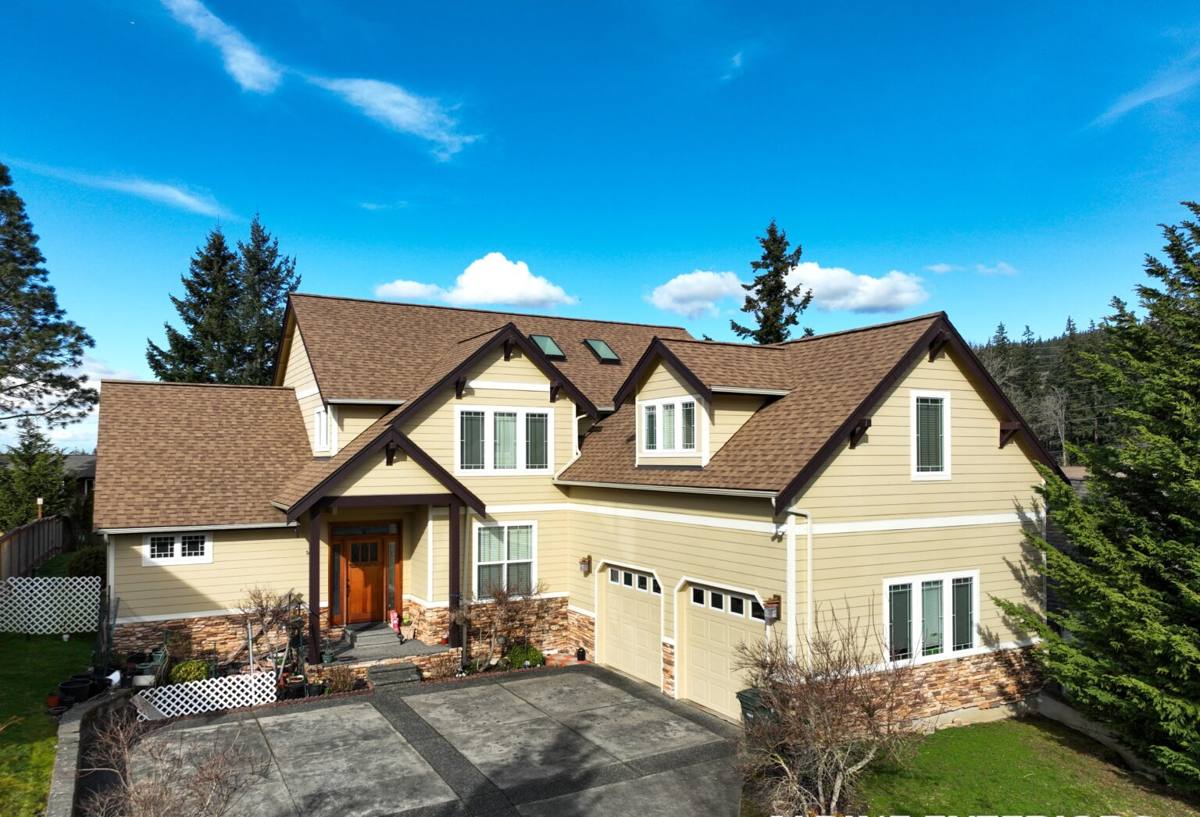
What "Correct" Siding Installation Actually Means Here
It's Not Just Nailing Boards to a Wall
Good siding installation in this climate is really a water-management system, and the siding itself is only the visible layer. Underneath it needs a continuous weather-resistive barrier, properly lapped and taped seams, and flashing at every window, door, and horizontal trim piece that could otherwise trap water against the wall. Skip any one of these steps and the siding on top can look perfect while the wall behind it is quietly rotting.
Fastening and Clearances Matter More Here Than in Drier Climates
Fastener placement, spacing, and depth all affect how a home handles the freeze-thaw and wet-dry cycling that's routine in Whatcom County. Siding also needs proper clearance from grade, roofing, decks, and hardscaping — even an inch or two of missing clearance can turn a well-built wall into one that wicks moisture straight out of the ground or off a roof edge every time it rains.
Rainscreen Gaps Give Water Somewhere to Go
A small drainage gap between the siding and the weather-resistive barrier lets any moisture that does get past the surface drain and dry out instead of sitting against the sheathing. In a climate where the siding rarely gets a full week to dry out, that gap is the difference between siding that lasts decades and siding that traps moisture behind it year-round.
Why We Only Install James Hardie Fiber Cement
We install James Hardie fiber cement siding exclusively — not vinyl, not LP SmartSide, not cedar, not other fiber cement brands. That's not a marketing position; it's a standard we hold because of what we've seen this climate do to alternatives over time.
- Non-combustible: Fiber cement doesn't feed a fire the way wood-based or vinyl products can, which matters for insurance and long-term risk, not just code compliance.
- Climate-engineered HZ formulations: Hardie's HZ5 product line is engineered specifically for regions with freeze-thaw cycling and sustained moisture exposure — exactly the profile of a Whatcom County winter.
- ColorPlus factory finish: The finish is baked on at the factory under controlled conditions, which holds up better against UV, salt air, and moss growth than a field-applied paint job that has to cure in variable Pacific Northwest weather.
- Real dimensional stability: Fiber cement doesn't swell, warp, or cup the way some wood-fiber composite products can when they take on repeated moisture.
- A warranty that transfers: A strong, transferable warranty protects the investment for whoever owns the home next, which matters in a neighborhood like Cordata where turnover happens.
We're not going to tell you every alternative product is worthless — some have real strengths. But when we weigh moisture behavior, maintenance burden, and long-term performance in this specific climate, Hardie is what we're willing to put our name behind and warranty.
Signs Your Current Siding Is Already Struggling
Most siding failure in this area doesn't announce itself. It shows up as small, easy-to-dismiss symptoms first. Before assuming your siding just needs a cleaning or a paint touch-up, walk your home's exterior and check for these:
- Dark streaking or green-black moss buildup that returns quickly after cleaning
- Soft, spongy spots when you press on siding near the bottom courses or under windows
- Paint that's bubbling, peeling, or chalking heavily in patches rather than evenly
- Visible gaps or separation at seams, corners, or trim joints
- A musty smell near exterior walls inside the home, especially in closets or corners
- Warping, bowing, or waviness visible when you sight down the wall at a low angle
- Caulk that's cracked, shrunk, or missing at butt joints and penetrations
Any one of these on its own might be minor. Several together usually means moisture has already gotten past the surface layer.
How Our Installation Process Works
Assessment and Tear-Off
We start by inspecting the existing wall assembly, not just the siding. If there's hidden rot or sheathing damage from a previous installation, we identify it before covering it back up — replacing siding over compromised sheathing just repeats the same failure a few years later.
Water Management Layer
We install a continuous weather-resistive barrier with properly lapped and sealed seams, then flash every window, door, and horizontal trim transition so water is directed out and away from the wall rather than trapped behind it.
Furring and Fastening
Where the assembly calls for it, we install furring for a rainscreen gap, then fasten the Hardie boards according to manufacturer specification for fastener type, spacing, and penetration depth — not a generalized approach borrowed from another product.
Trim, Caulk, and Final Detailing
Final trim, corners, and caulking are finished using compatible, climate-rated sealants at every joint that needs one — and we're deliberate about which joints should be caulked and which should be left to drain, since over-caulking can trap moisture just as easily as under-caulking releases it.
Correct Installation vs. Corner-Cutting: What's Actually Different
| Detail | Correct Installation | Corner-Cutting Installation |
|---|---|---|
| Weather-resistive barrier | Continuous, properly lapped and sealed | Gaps or missing overlap at seams |
| Flashing | Installed at every window, door, and trim transition | Skipped or minimal, relying on caulk alone |
| Drainage gap | Rainscreen gap included where called for | Siding installed tight to the wall |
| Fastening | Matches manufacturer spec exactly | Generic spacing, wrong fastener type |
| Ground and roof clearance | Meets minimum clearances at grade, decks, roofing | Siding run too close to grade or roof lines |
| Visible result in year one | Looks the same as a rushed job | Looks the same as a correct job |
| Visible result in year ten | Holds paint, resists moss, no hidden rot | Staining, soft spots, possible sheathing damage |
That last row is the point. In this climate, you can't tell a correctly installed wall from a cut-corner one just by looking at it fresh. The difference shows up years later, which is exactly why the installation details matter more than the finished appearance on day one.
Why Local Experience in Cordata and Whatcom County Matters
Siding specs written for a general climate zone don't always match what a specific neighborhood actually experiences. A crew that regularly works homes in and around Bellingham already knows how the local moisture cycle behaves through the seasons, which details tend to fail first on homes in this area, and how to sequence a project around realistic weather windows instead of guessing. That local pattern recognition is hard to get from a crew that mostly works drier or more consistent climates and treats every job the same way.
There's also a practical side: local crews know Whatcom County permitting expectations, understand common construction patterns in newer Cordata-area subdivisions versus older homes nearby, and aren't learning the region's quirks on your project for the first time.
What to Expect After Installation
Correctly installed James Hardie siding is low-maintenance, not zero-maintenance. Plan on an occasional rinse to keep moss and organic growth from taking hold, periodic inspection of caulk joints, and prompt attention if you ever notice a gutter overflow or roof leak directing extra water onto a wall section. None of that is heavy upkeep — it's the same light attention any exterior surface needs in a wet climate.
If you're seeing early signs of siding trouble on a Cordata home, or you're planning ahead for a replacement before it becomes an emergency, we're happy to take a look. We offer free, no-pressure estimates — walk the exterior with us, ask questions, and get a straight answer about what your home actually needs.