 Bellingham
 Deck Repair Built for Barkley's Conditions
Barkley sits close enough to Bellingham Bay and the surrounding tree cover that decks here age differently than decks in drier parts of Whatcom County. Salt-tinged air off the bay, long stretches of driving rain through fall and winter, and a moss season that can run six months or more all work on wood, fasteners, and finishes at the same time. A deck that looks fine from the yard can already have soft framing underneath it, and a deck with a little moss on the boards is usually further along than it looks.
We repair decks in Barkley regularly enough to know which parts of a structure fail first in this climate and which ones tend to hold up. This page walks through what we actually find on Barkley decks, what a correct repair involves, and how to think about repair versus replacement before you spend money on either.
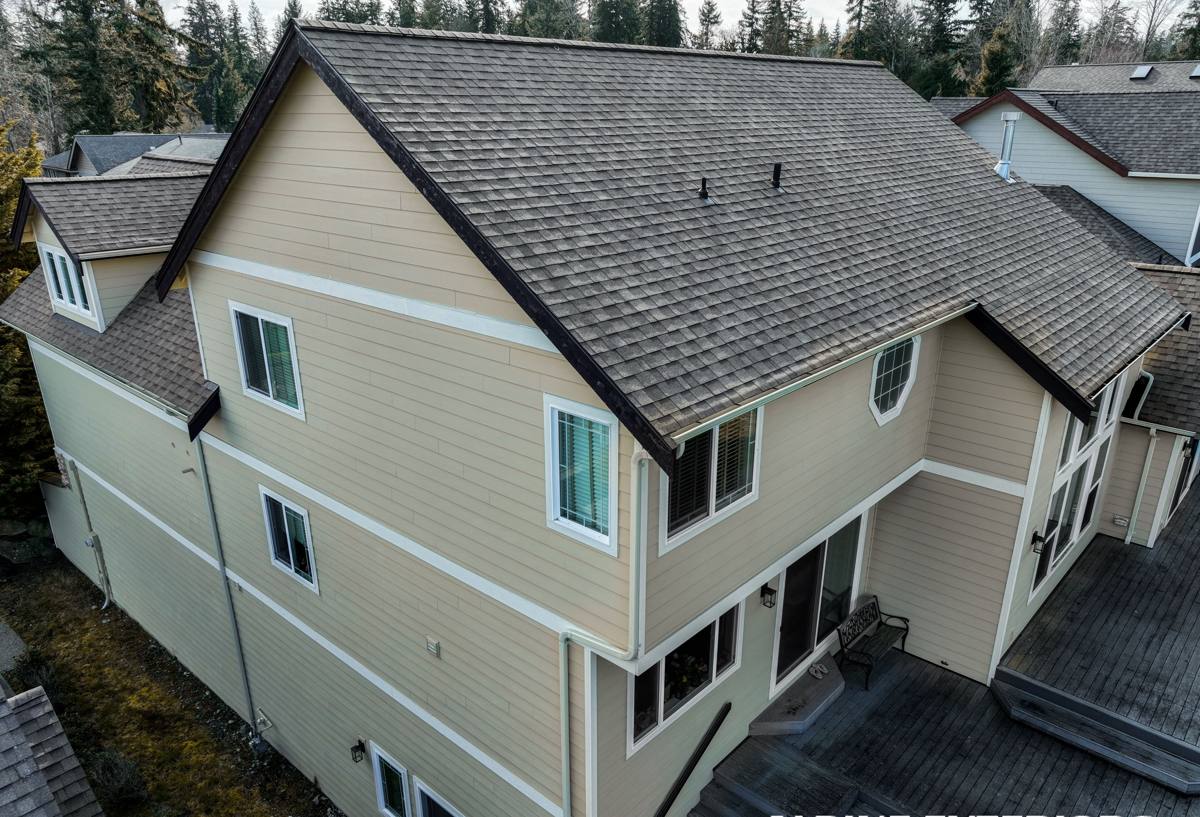
Why Decks Take a Beating in This Part of Bellingham
Salt Air and Corrosion
Proximity to the bay means a steady, low-level exposure to salt-laden air, even for homes that aren't waterfront. Salt accelerates corrosion in metal fasteners, joist hangers, and structural screws. Once a fastener starts to rust, it loses holding strength well before the rust is visible from the surface, which is one reason a deck can feel "a little bouncy" long before anything looks broken.
Driving Rain
Whatcom County's wet-season storms don't just fall straight down — wind-driven rain gets pushed sideways into ledger boards, stair stringers, and the gap where decking meets the house. That's the number-one spot we find rot on Barkley decks: the ledger board and the flashing (or lack of flashing) behind it.
A Long Moss Season
Tree cover and shade in and around Barkley keep decks damp longer after each rain, which is exactly what moss and algae need to establish. Moss holds moisture directly against the wood surface, and on painted or sealed decking it also traps water under a finish that's supposed to be shedding it. Left alone through a full moss season, that moisture cycle breaks down fastener coatings and wood fiber alike.
The Problems We Actually Find on Barkley Decks
- Ledger board rot where the deck attaches to the house, usually from missing or failed flashing
- Corroded or failing fasteners — nails, screws, and joist hangers that have lost holding strength to rust
- Soft or spongy joists under decking that still looks presentable from above
- Post and footing movement from saturated soil around the base of support posts
- Moss and algae staining on decking boards, stairs, and railings
- Delaminating or swelling composite decking at cut ends and fastener points that weren't properly sealed at installation
- Loose or wobbly railings, often the first thing homeowners notice and the last thing that gets fixed
What a Correct Deck Repair Involves
A deck repair that only replaces what's visible from the yard is a cosmetic fix, not a structural one. We treat every repair call as a chance to check the whole system, not just the board someone pointed at.
Structural Inspection First
Before any board comes off, we check the ledger connection, joist condition, post bases, and footings. Rot and fastener corrosion both tend to start below the surface, so a proper inspection means probing suspect areas, not just looking at them.
Flashing Gets Fixed, Not Just Covered
If the ledger board is rotting because of missing or damaged flashing, replacing the wood without correcting the flashing just restarts the same failure on a timer. Any ledger repair we do includes bringing the flashing detail up to a standard that actually sheds water away from the house.
Matching Fasteners to the Framing
Mixing old fasteners with new lumber, or using the wrong fastener coating for treated wood, is a common shortcut that causes early failure. We match fastener type and coating to the lumber and to the exposure the connection will see.
Structural Repairs Before Cosmetic Ones
Refinishing or replacing decking boards over a joist or post problem hides the issue temporarily and costs more in the long run. Structural repairs — joists, posts, footings, ledger — always come before surface work.
Repair or Replace? How We Help You Decide
Not every deck problem calls for full replacement, and not every deck is worth repairing piece by piece. The honest answer depends on the age of the deck, how much of the framing is affected, and how the structure was built in the first place.
| Factor | Leans Toward Repair | Leans Toward Replacement |
|---|---|---|
| Framing condition | Isolated soft spots, mostly sound joists | Widespread rot across multiple joists or beams |
| Ledger board | Localized damage, flashing correctable | Extensive rot along the full ledger length |
| Deck age | Under 15–20 years, built to a reasonable standard | Older deck nearing the end of its practical service life |
| Fasteners/hardware | Some corrosion, framing still solid | Widespread hardware failure throughout the structure |
| Cost of repair vs. new build | Repair cost is a fraction of replacement | Repair cost approaches what a rebuild would cost |
Broad, honest ranges: minor repairs (a few boards, fastener replacement, railing tightening) often land in the low hundreds to around a thousand dollars. Moderate repairs involving ledger flashing or joist sections tend to run higher. Anything approaching full reframing starts to compete with the cost of a new deck, which is the point where we'll tell you plainly if rebuilding makes more sense than repairing.
How Our Repair Process Works
- Free on-site inspection — we look at the whole structure, not just the reported problem, including probing for hidden rot
- Written scope and price — you know exactly what's being repaired and why before work starts
- Structural repairs first — ledger, flashing, joists, posts, and footings addressed as needed
- Fastener and hardware replacement — matched to the lumber and exposure, not just whatever's on the truck
- Decking, stair, and railing work — boards, treads, and rail components replaced or reset as needed
- Final walkthrough — we check the repair together before we consider the job done
Materials and Fasteners for This Climate
For a place with this much salt air and rain, material choice matters as much as workmanship. We use stainless or heavy-coated fasteners rated for treated lumber contact, proper self-adhered flashing membrane at ledger and post connections, and decking materials chosen for how they'll actually behave here rather than how they look in a showroom.
Both wood and composite decking have a place, and each comes with trade-offs worth knowing:
- Cedar and treated wood — natural look, repairable board-by-board, but needs periodic sealing and cleaning to keep moss and moisture from taking hold
- Composite decking — low maintenance and moss-resistant on the surface, but installation details (fastener spacing, ventilation, cut-end sealing) matter more than with wood, since mistakes there tend to show up as swelling or staining years later
Our standard is to install and repair each material the way its manufacturer actually recommends for wet-climate use, rather than taking shortcuts that save an hour on install day and cost years of service life.
Between-Visit Maintenance Checklist
A few habits during Bellingham's wet months go a long way toward keeping repairs small instead of structural:
- Sweep leaves and debris off decking regularly through fall — trapped leaves hold moisture against boards
- Rinse moss and algae off decking and stairs before it builds up a slick, moisture-holding layer
- Check that gutters and downspouts near the deck aren't dumping water onto the structure or its footings
- Look at the ledger board area where the deck meets the house once or twice a year for staining or soft wood
- Test railings and stair treads by hand periodically — looseness usually shows up before visible damage does
- Keep planters and other water-trapping items from sitting directly on decking boards long-term
Why a Barkley-Experienced Crew Matters
Some homes in Barkley are part of planned developments with exterior design guidelines, which can affect what's allowed for railing style, decking color, or visible structural changes — worth checking before you finalize a repair plan if your property falls under one. Beyond that, a crew that already works this neighborhood knows the typical construction era and framing details common to Barkley homes, which speeds up diagnosis and avoids guesswork.
Local experience also means we're not learning Whatcom County's rain and moss patterns on your project — we're applying what we already know works here.
Get a Straight Answer on Your Deck
If your Barkley deck has soft spots, moss buildup, a wobbly railing, or you just want a second opinion before spending money, we're happy to take a look. We offer a free, no-pressure estimate — you'll get a straight answer on whether repair makes sense or whether it's time to talk replacement, with nothing pushed on you either way. Fill out the form below to get started.