 Bellingham
 Roof Repair in Sehome: A Different Climate Than Most Roofers Admit
Sehome sits on a wooded hillside close to Bellingham Bay, which means local roofs deal with a combination most manufacturers' installation guides don't fully account for: salt-laden air off the water, long stretches of driving rain, and heavy shade from mature evergreens that keeps roof surfaces damp for days after a storm passes. None of that damage happens overnight. It shows up as a slow accumulation of small failures — a lifted shingle tab here, a soft spot in the underlayment there — until a homeowner notices a stain on a ceiling and assumes the worst.
Most of the time, the worst isn't what's needed. A correctly diagnosed roof repair in Sehome usually means fixing the specific failure point, not tearing off a roof that still has years of service life left. This page covers what that actually looks like: what Bellingham's climate does to a roof over time, what a proper repair involves, and why the details matter more here than in drier parts of Whatcom County.
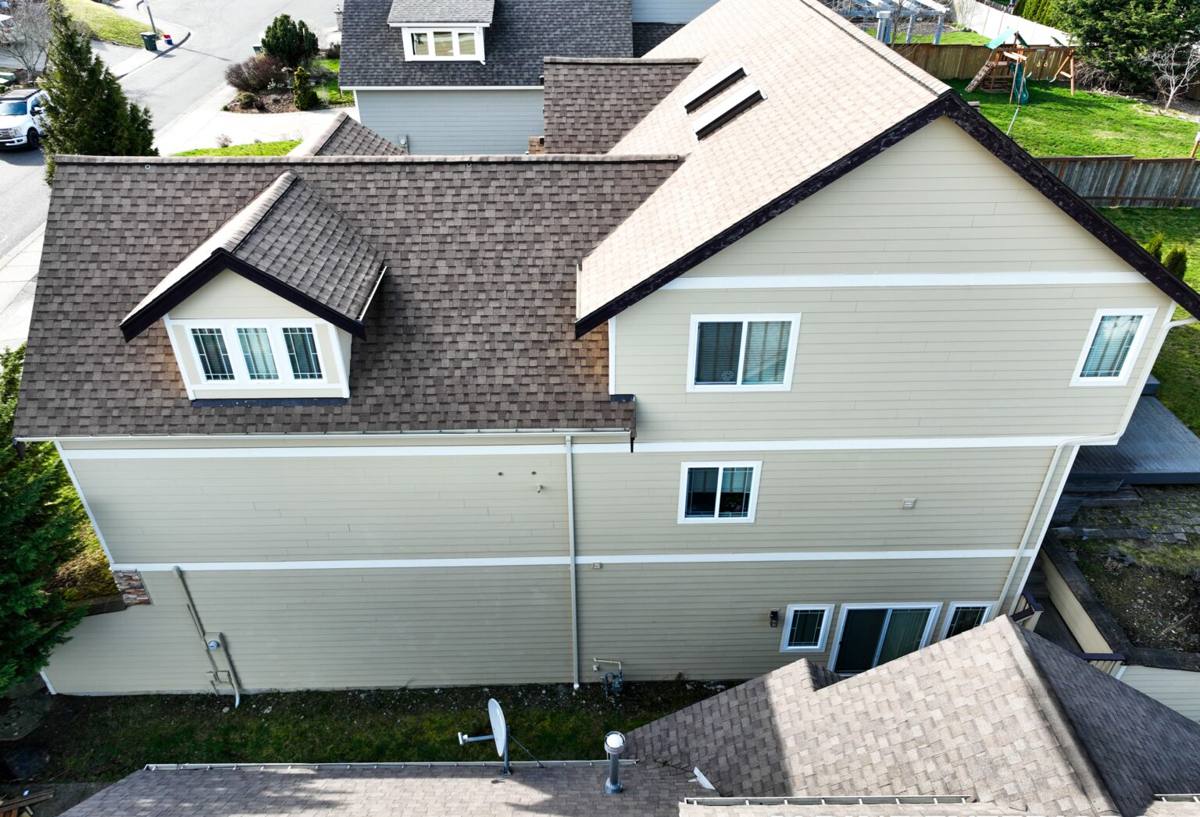
What Bellingham's Weather Actually Does to a Roof
Salt Air and Metal Fatigue
Homes closer to the bay see accelerated corrosion on exposed metal — flashing, fasteners, gutter hardware, and any exposed screw heads. Galvanized coatings that hold up fine inland can start showing rust streaks years earlier near the water. This matters most at flashing joints, since a corroded flashing seam is one of the most common places a roof starts leaking long before the shingles themselves fail.
Driving Rain and Wind-Driven Water
Bellingham's rain rarely falls straight down. Wind off the water pushes it sideways, which forces water up under shingle tabs, into valleys, and around anything that penetrates the roof — vents, skylights, chimneys. A roof that would shed water fine in a calm rain can leak in a Sehome windstorm if the underlayment or flashing details weren't built for sideways water in the first place.
Shade, Moss, and Moisture Retention
Sehome's tree cover, including the mature stands around Sehome Hill, keeps a lot of roof surfaces shaded through the day. Shaded roof sections dry out slower after rain, and slower drying is exactly what moss and algae need to establish. Moss doesn't just look bad — its root structure lifts shingle edges and holds water against the roof deck, which is how a cosmetic moss problem quietly becomes a leak.
Signs a Sehome Roof Needs Repair — Before It Needs Replacement
- Granules collecting in gutters or at downspout outlets, especially after a windy rain
- Moss or dark algae streaking concentrated on north-facing or heavily shaded slopes
- Curling, cupping, or lifted shingle edges, particularly around valleys and roof penetrations
- Rust staining or visible corrosion at flashing around chimneys, skylights, or vent pipes
- Soft or spongy spots when walking the roof deck (a sign of trapped moisture underneath)
- Daylight visible through the roof deck from inside an attic or crawlspace
- Ceiling stains that appear only during or after wind-driven rain, not steady rain
Any one of these on its own is usually a straightforward repair. Several showing up together, especially combined with a roof over 20 years old, is when a repair-versus-replace conversation becomes worth having honestly.
Moss Removal: Treating the Cause, Not Just the Symptom
A lot of moss "cleanup" is just a pressure wash that strips granules off the shingles along with the moss, which shortens the roof's remaining life instead of extending it. Correct moss treatment on a Sehome roof means low-pressure application of an appropriate cleaning solution, gentle removal of built-up debris in valleys and behind chimneys, and — where it makes sense — zinc or copper strips installed near the ridge so rainwater carries a mild anti-moss treatment down the roof naturally between cleanings.
Because of the shade cover common in this neighborhood, moss will come back faster here than on an open, sun-exposed roof elsewhere in Whatcom County. That's not a sign the first treatment failed — it's a maintenance rhythm specific to homes under tree canopy, and it's worth planning for rather than being surprised by.
What a Correct Roof Repair Actually Involves
Diagnosis Before Anything Gets Touched
The single biggest difference between a repair that holds and one that fails again in a year is whether the actual source of the leak was found. Water travels along roof sheathing and rafters before it drips through a ceiling, so the stain a homeowner sees is often several feet from where the water is actually getting in. A proper repair starts on the roof itself — checking flashing, valleys, penetrations, and shingle condition uphill from the interior damage — not just patching where the ceiling looks wet.
Matching Materials, Not Just Covering the Spot
Patch repairs done with mismatched shingle profiles or the wrong flashing metal tend to create a new weak point right next to the old one. A correct repair replaces damaged underlayment, uses flashing appropriate to the surrounding material, and ties new shingles into the existing course pattern so water sheds the way the original roof design intended.
Sealing for Wind-Driven Rain, Not Just Vertical Rain
Given how much of Bellingham's rain arrives sideways, repairs here need attention to details that matter less in calmer climates — proper shingle nail placement so tabs don't lift in gusts, correctly lapped step flashing at walls and chimneys, and ice-and-water shield or equivalent membrane at vulnerable spots like valleys and eaves.
Common Roof Materials in Sehome & What Their Repairs Involve
| Material | Typical Issue in This Climate | What a Repair Usually Involves |
|---|---|---|
| Asphalt composition shingle | Granule loss, curling, moss in shaded sections | Spot shingle replacement, underlayment patch, moss treatment |
| Wood (cedar) shake or shingle | Moss and moisture retention, splitting from wet/dry cycling | Individual shake replacement, increased ventilation, moss control |
| Metal roofing/panels | Fastener backing out, seam and flashing corrosion near the bay | Fastener replacement, seam resealing, flashing swap where corroded |
| Flat or low-slope membrane | Ponding water, seam separation | Seam repair or patch, drainage correction at low points |
Whatever the material, the repair standard should be the same: fix the actual point of failure with the correct matching material, not a generic patch that just buys a season or two.
Our Repair Process
- Inspection. We walk the roof and the attic where accessible, tracing the leak or damage to its actual source rather than just the spot where it shows up inside.
- Honest diagnosis. We explain what we found in plain terms — including telling you when a repair is the right call and when a larger issue makes more sense to address now rather than patch repeatedly.
- Written estimate. You get a clear scope and price before any work starts, no surprise add-ons once we're up there.
- The repair itself. Matching materials, correct flashing details, and attention to the wind-driven-rain and moss issues specific to this area.
- Cleanup and check-in. Debris cleared, gutters checked for granule buildup from the repair area, and a rundown of anything worth watching going forward.
Repair or Replace? Honest Cost Factors
| Factor | Leans Toward Repair | Leans Toward Replacement |
|---|---|---|
| Roof age | Under 15-20 years | Past the material's expected service life |
| Extent of damage | Isolated to one section or penetration | Widespread across multiple slopes |
| Underlying deck condition | Solid, dry sheathing | Soft, rotted, or repeatedly wet decking |
| Repair history | First or second repair on this roof | Same areas patched multiple times already |
| Moss/algae extent | Manageable with cleaning and treatment | Root damage already affecting shingle integrity |
We'll walk through where your roof falls on this before recommending anything — a repair that's honestly the right call shouldn't turn into an upsell.
Why a Crew That Already Works Sehome Matters
A roofer who works this neighborhood regularly already knows which details tend to fail first on hillside, shade-covered homes near the bay — where moss builds fastest, which flashing details take the worst of the wind-driven rain, and how tree cover affects drying time after a storm. That familiarity shows up in faster, more accurate diagnosis and fewer repeat visits for the same underlying problem. It also means scheduling around Bellingham's actual weather windows, rather than a schedule built for a drier region that doesn't account for how many workable roofing days Whatcom County really gets through fall and winter.
Keeping a Repaired Roof in Good Shape
Once a repair is done, a little seasonal attention goes a long way in this climate:
- Clear gutters and downspouts before the fall rains arrive, so water isn't backing up under the eaves
- Have shaded, moss-prone sections checked annually, even if the rest of the roof looks fine
- Trim back tree limbs that keep a section of roof shaded and slow to dry
- Watch for granule buildup in gutters as an early warning sign, not just an aesthetic issue
- Address small leaks quickly — deck rot from a slow, ignored leak turns a repair into a much larger job
If you're dealing with a leak, visible moss, or you just want a second opinion on whether your roof needs a repair or something more, we're happy to come take a look. The estimate is free, there's no pressure attached to it, and you'll get a straight answer either way.