 Bellingham
 Board & Batten Siding in Columbia: A Style That Suits the Neighborhood
Columbia is one of Bellingham's older, established residential neighborhoods, with a mix of early-1900s bungalows, mid-century homes, and newer infill construction sitting under a mature tree canopy. Board and batten siding — wide vertical panels with narrow strips (battens) covering the seams — reads as a natural fit here. It has deep roots in Pacific Northwest building tradition, gives a home a clean, vertical-line look that suits both older craftsman-style houses and more modern builds, and can be used as a full siding system or mixed with horizontal lap siding as an accent on gables, dormers, or entry features.
But the look is only part of the story. In Whatcom County's climate, board and batten siding lives or dies on the details of how it's installed — the flashing, the drainage plane, the fastening, and the material underneath the finish. We install board and batten siding in Columbia regularly, and this page covers what actually matters for homes in this specific part of Bellingham.
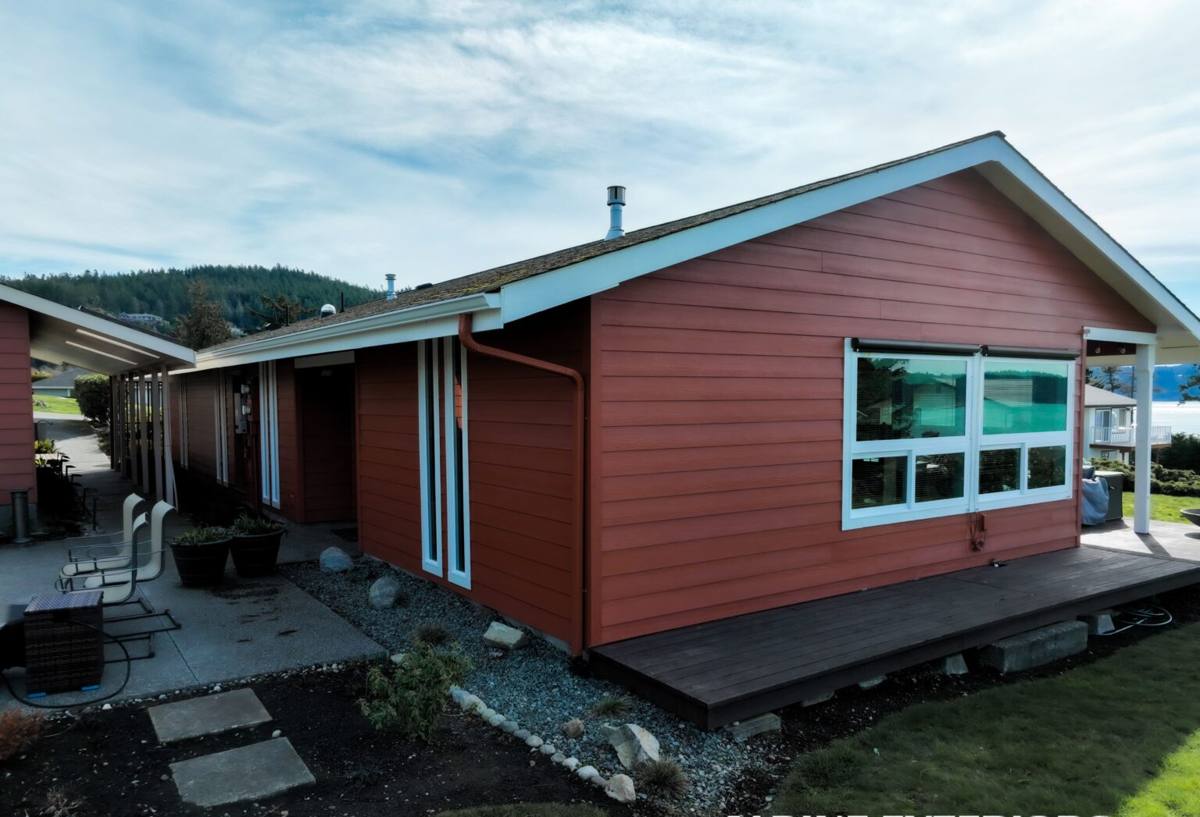
What Bellingham's Climate Does to Board & Batten Siding
Every siding style has to survive the same regional conditions, but board and batten's vertical seams and exposed battens make it more sensitive to how well those conditions are managed at installation.
Salt Air and Coastal Moisture
Homes closer to Bellingham Bay deal with a steady low-level salt content in the air. Salt-laden moisture accelerates corrosion on fasteners, flashing, and trim, and it settles into porous or poorly sealed siding surfaces over time. Board and batten's narrow battens have more total seams and fastener points per square foot than wide lap siding, so a material or finish that can't shrug off that salt exposure shows problems — corrosion streaking, softened edges, failed caulk joints — sooner than it would on a simpler siding profile.
Driving Rain and Wind-Driven Wall Wetting
Whatcom County gets a lot of rain, and a fair amount of it doesn't fall straight down — wind off the water and through the valley pushes rain sideways into exterior walls. Board and batten siding has vertical joints running the full height of a wall section, which means water has more opportunity to find a path behind the siding if the drainage plane and flashing details aren't built correctly. This is the single biggest factor separating a board and batten job that lasts decades from one that causes hidden rot in five to ten years.
Moss, Algae, and a Long Shaded Season
Columbia's tree cover is part of its character, but shade plus Bellingham's long wet season is exactly the environment moss and algae need. North-facing walls and anything sitting under overhanging branches stay damp longer between rain events, and battens create horizontal ledges and shadow lines where moss spores settle more readily than on a flat lap surface. Siding that absorbs moisture or has a soft, porous surface gives moss something to grip; a hard, factory-sealed surface gives it far less to work with.
Why Board & Batten Needs to Be Done Right — Not Just Installed
Board and batten looks simple from the ground, but it's less forgiving of shortcuts than standard lap siding. A few things have to happen correctly, every time:
- A continuous, correctly lapped water-resistive barrier (WRB) behind the siding, with all seams taped
- Proper flashing at every window, door, and roof-to-wall intersection — these are the points where vertical siding is most likely to leak
- Adequate rainscreen gap or venting behind the panels so any moisture that does get in can drain and dry out
- Correct fastener type, spacing, and depth for both the panels and the battens — over-driven or under-driven fasteners are a leading cause of early failure
- Batten spacing and caulking done to the manufacturer's specification, not just "close enough"
Skip any one of these and the siding can look fine for a year or two while moisture works its way in behind it — which is the worst kind of problem, because it's invisible until the damage is already significant.
Why We Only Install James Hardie for Board & Batten Siding
We install James Hardie fiber cement exclusively — we don't do vinyl board and batten, LP SmartSide, Cemplank, Allura, or wood board and batten in primed spruce or cedar. That's a deliberate standard, not a sales preference, and it matters even more for board and batten than for standard lap siding because of the exposure issues above.
Wood board and batten (cedar or primed spruce) is a traditional look, and we understand its appeal, but it requires ongoing repainting or staining and is genuinely vulnerable to the rot risk described above once any water gets behind a board — especially in a shaded, damp neighborhood like Columbia. Vinyl board and batten is low-maintenance but it's a thin, flexible material that can warp or bow at cold-to-hot cycles and has visible seams that don't hold up to close inspection. LP SmartSide is a wood-strand product with an engineered treatment, but it depends on an intact factory coating to resist moisture — any cut edge, fastener puncture, or coating breach becomes a moisture entry point over time.
James Hardie fiber cement is non-combustible, dimensionally stable in wet climates, and available in HZ5 formulation engineered for exactly the wet, temperate conditions found in the Pacific Northwest. Its ColorPlus factory finish is baked on rather than field-applied, which means better adhesion and color retention through the kind of freeze-thaw and driving rain cycles Whatcom County sees every winter.
Board & Batten Material Comparison
| Material | Moisture / Rot Resistance | Moss & Algae Resistance | Maintenance | Typical Lifespan |
|---|---|---|---|---|
| James Hardie fiber cement | Excellent (non-combustible, engineered for wet climates) | High — hard factory-cured surface | Occasional wash; no repainting for many years | 30+ years with proper install |
| Cedar / primed spruce wood | Vulnerable once coating or caulking fails | Low to moderate — porous surface | Repainting/staining every few years | 15-25 years, install-dependent |
| LP SmartSide | Good while coating is intact; edges/cuts are weak points | Moderate | Periodic recoating, edge sealing | 20-25 years typical |
| Vinyl board and batten | Doesn't rot, but can warp/gap | Moderate — smooth but seams collect debris | Low, but panels can't be spot-repaired cleanly | 15-25 years, UV/temperature dependent |
What a Correct James Hardie Board & Batten Installation Involves
Whether we're using Hardie's Artisan board and batten collection or building the look with HardiePanel and Hardie Trim battens, the sequence matters as much as the material:
- Remove existing siding and inspect the sheathing for hidden moisture damage before anything new goes up
- Repair or replace any compromised sheathing — covering up a rot problem is never an option
- Install a continuous water-resistive barrier with properly lapped and taped seams
- Set up a rainscreen gap so water that gets past the surface has somewhere to drain and dry
- Flash every window, door, and roof intersection individually — no relying on caulk alone
- Fasten panels and battens per Hardie's specification for our exposure and wind zone
- Caulk and finish per Hardie's published installation instructions to keep the warranty valid
This is also why we check the manufacturer's installation instructions against the specific wall assembly on each job rather than treating every house the same — a shaded, moss-prone wall in Columbia and a sun-exposed wall on the same house can call for slightly different attention to detail, even with identical materials.
Our Process for Columbia Homeowners
For most board and batten projects in this neighborhood, the process looks like this: an on-site assessment where we check the existing siding, trim, and any signs of past moisture intrusion; a written estimate that spells out material, scope, and timeline; a pre-installation walkthrough so you know what to expect; the tear-off and installation itself, done section by section with daily cleanup; and a final walkthrough where we go over the finished work and register the manufacturer's warranty in your name.
Because we work in Columbia and the surrounding Bellingham neighborhoods regularly, we're familiar with the older home construction common in this area — balloon framing, older sheathing types, and the kind of siding-over-siding shortcuts that sometimes show up on houses that have had multiple owners. That familiarity shortens the assessment phase and reduces surprises once the old siding comes off.
Maintenance in a Wet, Salt-Air Climate
Board and batten siding is low-maintenance when it's Hardie fiber cement, but "low-maintenance" isn't "no-maintenance." A short annual routine goes a long way in this climate:
- Rinse siding once or twice a year, especially north-facing and shaded walls where moss is more likely to start
- Keep gutters clear so overflow doesn't run down the wall behind the siding
- Trim back branches and shrubs that keep a wall section shaded and damp longer than the rest of the house
- Check caulking at trim, windows, and battens every year or two, and have any cracked or missing caulk redone promptly
- Have any impact damage (ladders, debris, equipment) repaired rather than left exposed
Because Hardie's ColorPlus finish is factory-applied and warranted against fading and peeling, you're not on a repainting schedule the way you would be with wood siding — but the maintenance items above are still what keeps a board and batten installation performing the way it's supposed to for decades.
Why Hiring a Crew That Already Works in Columbia Matters
Board and batten siding is unforgiving of installation shortcuts, and the consequences of a bad install — hidden rot behind vertical seams — don't show up until years later, when they're expensive to fix. A crew that already works in Columbia and the surrounding Bellingham area knows the local building patterns, has already dealt with the moisture and moss issues specific to shaded, older lots in this part of town, and is close enough to come back quickly if a warranty question or minor issue ever comes up. That local familiarity is worth more than a lower bid from a crew that's never worked in this climate or this kind of housing stock.
If you're considering board and batten siding for a home in Columbia, we're happy to take a look and give you a straightforward, no-pressure estimate — just fill out the form below.