 Bellingham
 Building Decks in Sehome's Marine Climate
Sehome sits close enough to Bellingham Bay that salt-laden air reaches every deck in the neighborhood, whether it's three blocks from the water or up on the hill. Combine that with the driving rain that comes off the Sound in fall and winter, plus a moss season that can stretch from October through April, and you have a set of conditions that punishes decks built to a generic national spec. A deck that would hold up fine in Spokane or Boise can start showing corrosion streaks, soft spots, and slick green film within a couple of years in Whatcom County. Building for Sehome means building for this specific combination of salt, moisture, and shade — not for the weather on the box.
We've worked on homes throughout this neighborhood and the surrounding Bellingham hillside, and the pattern repeats: decks fail first at fasteners, then at ledger connections, then at end grain that was never properly sealed. None of that is expensive to prevent up front. It's expensive to fix after the fact.
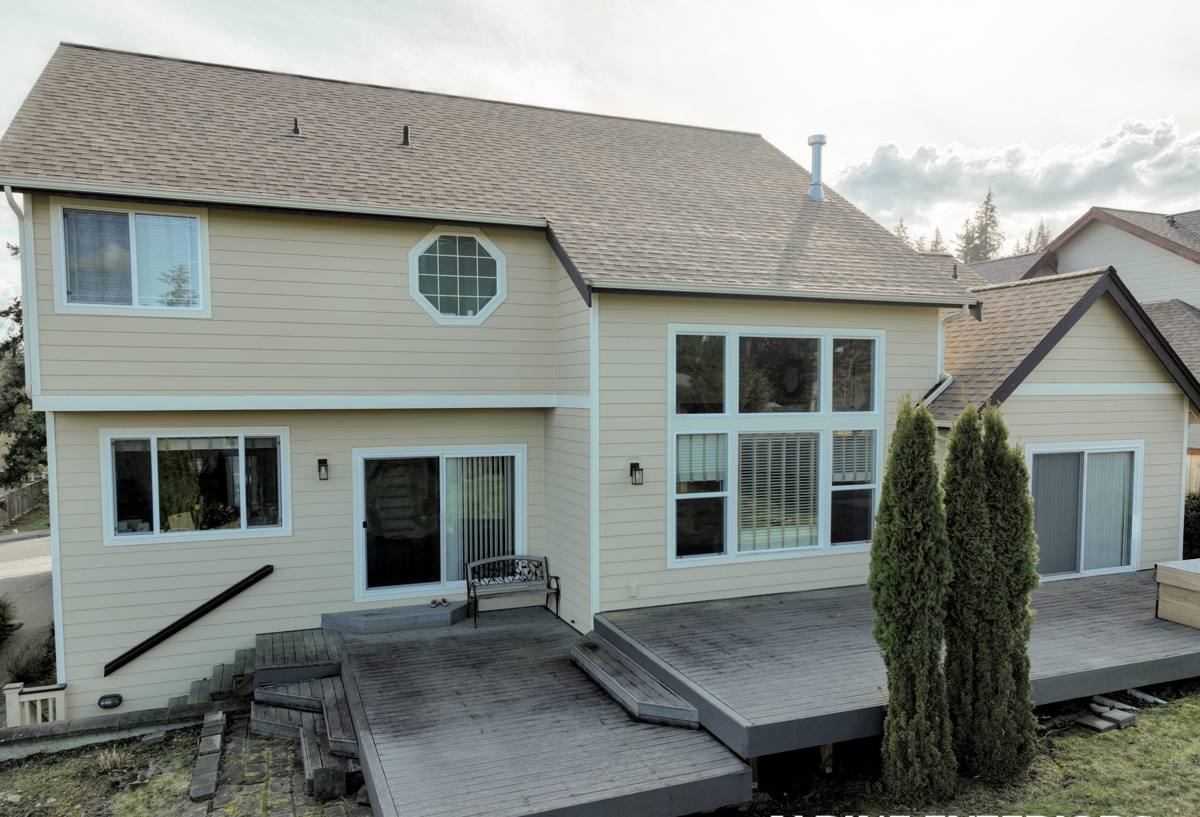
What Sehome Homes Actually Need From a Deck
Sehome is a mix of older craftsman and mid-century homes on tree-shaded lots, along with newer infill construction, many on sloped or uneven ground. That mix creates a few recurring needs:
- Framing and footings engineered for grade changes and, in some cases, retaining conditions where a deck steps down a slope
- Decking and railing materials that shed moss and moisture instead of trapping it, since mature tree canopy keeps many yards shaded and damp longer than open lots
- Corrosion-resistant hardware throughout, not just at the visible connections, because marine air finds every exposed fastener eventually
- Drainage detailing at the ledger and support posts so water is directed away from the house rather than pooling against siding or foundation
- A structure that can be re-sealed, re-stained, or otherwise maintained without a full rebuild every five years
None of these are exotic requirements. They're standard good practice for the Pacific Northwest — but they're also the details that get skipped when a deck is built to a bare-minimum spec or by a crew that doesn't normally work in this climate.
Shade, Moss, and Slip Risk
Shaded lots under mature trees hold moisture longer after a storm, which means moss and algae get a head start on any horizontal surface that isn't designed to shed water and dry quickly. On stairs and walking surfaces, that's not just a maintenance nuisance — it's a slip hazard. Board spacing, surface texture, and drainage slope all affect how fast a deck dries out between rains, and that should be part of the design conversation from the start, not an afterthought once moss shows up.
Choosing the Right Decking Material
There's no single "best" decking material for Sehome — it depends on budget, how much upkeep you're willing to do, and how the deck will be used. Here's how the common options actually compare under our regional conditions:
| Material | Moisture & Moss Behavior | Maintenance | Typical Lifespan Here |
|---|---|---|---|
| Pressure-treated fir/hemlock | Absorbs moisture, needs sealing to resist moss and checking | Annual cleaning, re-seal every 2-3 years | 10-15 years with upkeep |
| Cedar | Naturally rot-resistant, still needs sealing against moss staining | Cleaning plus periodic oil or sealant | 15-20 years with upkeep |
| Composite decking | Sheds moisture well, some early composite products trapped algae in surface texture | Periodic washing, no staining or sealing | 25+ year warranties, actual lifespan varies by product line |
| PVC/capped polymer | Fully moisture-resistant, least hospitable surface for moss | Occasional washing only | 25+ year warranties |
We install all of these depending on what a homeowner wants, but we're honest about the trade-offs. Wood costs less up front and looks great, but it demands real annual maintenance in this climate or it will show it. Composite and PVC cost more initially and some early-generation composite products had a reputation for surface algae in shaded, damp settings — that's a product-generation issue more than a category flaw, and it's worth asking any installer which specific product line and cap technology they're proposing before you compare price quotes.
Framing, Footings, and What's Underneath
What you can't see is what determines how long a deck actually lasts. On sloped or uneven Sehome lots, footing depth and placement matter more than they would on a flat, open lot — footings need to reach stable soil below the frost line and be sized for the actual load and span, not just whatever the minimum code table allows. Ledger attachment to the house is another spot we pay close attention to: it has to be flashed correctly so water sheds away from the rim joist and siding, because a poorly flashed ledger is one of the most common sources of hidden rot behind a deck that otherwise looks fine.
Joist and beam spacing should account for the decking material you choose — composite and PVC products often have tighter span requirements than solid wood, and installing them on framing designed for lumber spacing leads to bounce and premature sagging.
Fasteners and Hardware
This is where salt air does the most damage. Standard galvanized fasteners can start showing corrosion within a few years this close to Bellingham Bay. We use stainless steel or heavy-duty coated fasteners rated for coastal exposure at every connection — joist hangers, structural screws, post bases, and railing hardware — not just at the parts of the deck that are visible.
Our Process for a Sehome Deck Project
- On-site assessment — we look at grade, drainage, sun exposure, existing structure (if replacing a deck), and how the space will actually be used
- Design and material selection — sized and laid out for your lot and budget, with an honest walkthrough of material trade-offs
- Permitting — we handle the City of Bellingham permit application and inspection scheduling for you
- Footings and framing — built to span and load requirements for your specific site, not a generic minimum
- Decking, railing, and finish work — installed with attention to drainage, board spacing, and moisture management
- Final walkthrough — we go over maintenance expectations so you know what upkeep to expect and when
Permits and Code in Bellingham
Most new decks and significant deck rebuilds in Bellingham require a building permit, and inspections typically check footing depth, ledger attachment, and railing height and spacing before the work is closed up. Skipping this step is a real risk — beyond the legal exposure, an unpermitted deck can complicate a home sale or insurance claim later. We pull permits as a standard part of every project so you don't have to navigate city requirements yourself.
Maintaining a Deck Through Whatcom County's Wet Season
Whatever material you choose, a little seasonal maintenance goes a long way in this climate. A simple annual routine keeps a deck safe and extends its life significantly:
- Clear leaves and debris from between boards before fall rains set in — trapped organic matter is what feeds moss and mildew growth
- Rinse or lightly scrub decking surfaces at least once before winter to remove algae film before it sets in
- Check fastener heads and railing connections for early signs of corrosion or looseness
- Inspect the ledger flashing and area where the deck meets the house for signs of water staining
- Re-seal or re-stain wood decking on the manufacturer or supplier's recommended cycle — don't wait until it looks obviously weathered
- Confirm stairs and walking surfaces aren't developing a slick moss film, especially on shaded sections
Why It Matters to Hire a Crew That Already Works in Sehome
A deck contractor who mostly builds in drier climates will default to specs that work fine somewhere else and fall short here. Choosing fasteners rated for coastal exposure, flashing a ledger correctly for sustained rain, and designing a walking surface that dries fast in a shaded yard aren't things you can bolt on after the fact — they have to be part of the plan from day one. Working regularly in Bellingham and the surrounding Whatcom County neighborhoods means we're not guessing at how salt air and a long moss season affect a structure over time — we've seen it firsthand on decks we've built, repaired, and rebuilt.
If you're planning a new deck or replacing one that's showing its age, we're happy to take a look at your property and walk through the options honestly, including what each material and approach will actually cost you in upkeep over time. Reach out for a free, no-pressure estimate using the form below.