 Bellingham
 Why Sehome Decks Take More of a Beating Than People Expect
Sehome sits close enough to Bellingham Bay that salt-laden air is a constant, even on the hillside blocks well back from the water. Combine that with our long wet season, heavy tree cover in older parts of the neighborhood, and the shoulder-season fog that keeps surfaces damp for days at a time, and you have a climate that is quietly hard on outdoor structures. Wood decking shows it first — graying, splintering, and hosting moss almost year-round in shaded spots. But composite decking isn't immune either. It just fails differently, and usually more slowly, which is exactly why the installation details matter so much here.
The core problem in Sehome isn't any single storm. It's the cumulative effect of moisture that never fully leaves. Driving rain off the Bay gets pushed sideways into ledger boards and stair stringers. Moss spores settle into any surface that stays damp and shaded longer than a day or two, and Sehome's mature tree canopy provides plenty of that shade. Add in the salt content in coastal air, which accelerates corrosion on fasteners and hardware, and a deck built without those factors in mind will show problems within a few seasons — even if the decking boards themselves are rated for decades.
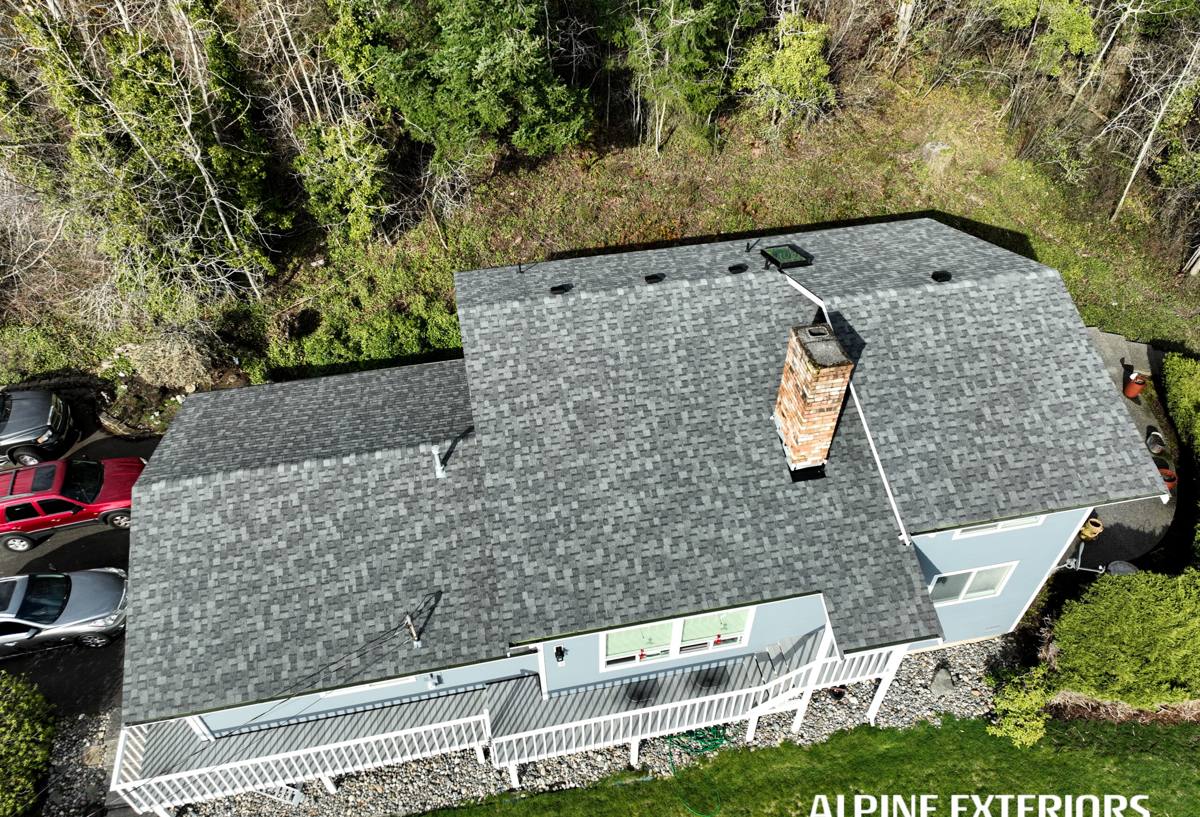
What a Correct Composite Deck Installation Actually Involves
Composite boards get most of the marketing attention, but the boards are the easiest part to get right. The substructure underneath is where a deck earns its lifespan, especially in a climate like ours.
Framing and Ledger Attachment
Any deck that attaches to the house needs a properly flashed ledger board with a water-resistant barrier behind it and flashing that directs water away from the rim joist, not into it. In a neighborhood with as much sustained rainfall as Sehome sees, a ledger without correct flashing is one of the most common places we find hidden rot when we're called out to look at an older deck.
Joist Protection
Framing lumber under composite decking should be protected with joist tape or a comparable membrane over every joist top, not just where boards butt together. This stops water that gets between boards from soaking into the wood framing below — the number one cause of a composite deck that looks fine on top but is failing structurally underneath.
Drainage and Airflow
Composite decking doesn't rot, but the framing under it can, and moss and mildew still grow on any composite surface that can't shed water and dry out. Proper joist spacing, a slight slope away from the house, and enough clearance underneath for airflow all matter more in a shaded, damp neighborhood than they would in a drier climate.
Fasteners and Hardware
Salt air corrodes standard fasteners faster than most homeowners expect. We use stainless steel or coated fasteners rated for coastal exposure, along with corrosion-resistant joist hangers and structural screws, so the hardware doesn't become the weak point in an otherwise well-built deck.
Choosing the Right Composite Board for a Whatcom County Deck
Not all composite decking behaves the same way in our climate, and the right choice depends on where on the property the deck sits.
Capped vs. Uncapped Composite
Fully capped composite boards have a polymer shell wrapped around the wood-plastic core, which resists moisture absorption and staining far better than older uncapped composite products. In a moss-prone, shaded environment like much of Sehome, that cap also makes surface cleaning dramatically easier — moss and algae sit on top of the board rather than working into it.
Grooved vs. Solid-Edge Profiles
Grooved boards with hidden fastener systems give a cleaner look, but the grooves themselves can collect debris and moisture in a shaded yard. On decks that sit under heavy tree cover, we sometimes recommend a solid-edge board or a hidden-fastener system with better drainage channels specifically to reduce the buildup that feeds moss growth.
Color and Heat Considerations
Darker composite colors show less staining from tannins and organic debris — a real advantage under trees — but they also absorb more heat on the rare sunny days we do get. For most Sehome yards, mid-tone woodgrain colors strike the best balance between hiding the inevitable seasonal debris and staying comfortable underfoot.
Composite Decking Compared to the Alternatives
| Material | Moisture & Moss Behavior | Maintenance | Typical Lifespan |
|---|---|---|---|
| Pressure-treated wood | Absorbs water, splinters, hosts moss readily in shade | Annual cleaning, periodic staining/sealing | 10-15 years before major repairs |
| Cedar | Naturally rot-resistant but still needs sealing against constant damp | Regular sealing, moss removal | 15-20 years with upkeep |
| Capped composite | Doesn't absorb moisture into the core; surface moss wipes off easily | Occasional wash, no staining or sealing | 25-30 years, often warrantied |
| PVC decking | Fully moisture-resistant but can feel less natural underfoot | Occasional wash | 25-30+ years |
We install composite decking as our standard recommendation for Sehome projects because it offers the best combination of moss resistance, low upkeep, and long-term value for what this climate throws at a deck. Wood isn't wrong for every project, but it asks a lot more of the homeowner in a neighborhood with this much shade and rainfall, and we'll say so plainly during your estimate rather than upselling a product that doesn't fit your yard.
Our Process, Start to Finish
1. On-Site Assessment
We walk the property, note grade, drainage patterns, sun and shade exposure, and how close the deck sits to mature trees. Sehome's terrain varies block to block — some lots are fairly level, others have real slope — and that changes footing and framing decisions.
2. Design and Material Selection
We talk through board color, railing style, and layout based on how you actually use the space, then match composite products to the shade and moisture conditions specific to your yard rather than defaulting to one line for every job.
3. Permitting
Most new decks and many substantial rebuilds in Bellingham require a building permit, and guardrails, stair geometry, and footing depth all have to meet current code. We handle the permit submission and inspections as part of the job so you're not tracking that down yourself.
4. Construction
Framing first, with flashing, joist protection, and corrosion-resistant hardware installed correctly the first time — these are the steps that don't show up in the finished look but determine how the deck performs in year eight, not just year one. Then decking, railings, and any stairs.
5. Final Walkthrough
We go over the finished deck with you, explain what maintenance (if any) it actually needs, and make sure drainage is working the way it should before we consider the job done.
Permits, Setbacks, and Code Basics for Sehome Properties
Bellingham's permitting requirements apply to most deck construction, and a few code points come up often in this neighborhood specifically:
- Decks over a certain height typically require guardrails, generally in the 36-42 inch range depending on the current code cycle — we confirm the exact requirement for your project at permit time.
- Footing depth and spacing depend on soil conditions and deck load, and Sehome's mix of flat and sloped lots means footing plans aren't one-size-fits-all.
- Setback requirements from property lines can affect how large or how close to a boundary a deck can be built, especially on the tighter, more established lots common in this part of Bellingham.
- Stair rise and run, and handrail requirements, are code items inspectors check closely — getting them right the first time avoids a failed inspection and a delay.
We pull the permit, coordinate inspections, and make sure the finished deck matches what was approved, so you're not the one interpreting Whatcom County or City of Bellingham code on your own.
Living With a Composite Deck in a Moss-Prone Climate
One of the real advantages of composite decking for a Sehome property is how little it asks of you compared to wood, but "low maintenance" doesn't mean "no maintenance" in a climate this wet.
- Sweep off leaves and needles regularly in fall and winter — organic debris left sitting in shade is what gives moss and algae a foothold, even on capped composite.
- Rinse the deck surface a few times a year with plain water and a soft-bristle broom or brush; capped composite doesn't need harsh chemicals.
- Keep gutters and downspouts near the deck clear so water isn't being funneled directly onto the decking or framing below.
- Trim back overhanging branches where practical to cut down on shade and debris, which reduces moss pressure without changing your yard's character.
- Check railing posts and stair connections once a year for any looseness — hardware is the first thing coastal air affects, even when it's corrosion-resistant.
None of this is heavy work, and it's a fraction of what a wood deck demands in the same conditions. But skipping it entirely, especially the debris removal, is how even a good composite deck ends up looking neglected within a couple of wet seasons.
What Affects the Cost of a Composite Deck in This Area
| Factor | Why It Matters Here |
|---|---|
| Lot slope and access | Sehome's hillside lots can require more complex footings or extra labor to get materials to the build site |
| Existing structure condition | Tear-off and framing repair on an older deck adds cost if hidden rot or corrosion is found |
| Board selection | Capped composite and PVC cost more upfront than wood but reduce long-term maintenance spending |
| Railing and stair complexity | Multi-level decks or steep-lot stairs add framing, hardware, and code compliance work |
| Permit and inspection scope | Larger or taller decks trigger more detailed engineering and inspection requirements |
We won't quote a price without seeing the site, because the honest answer is that lot conditions in this neighborhood vary enough that a flat per-square-foot number can be misleading either direction. What we can promise is a clear, itemized estimate before any work starts.
Why It Matters to Hire a Crew That Already Works in Sehome
A contractor who mostly builds decks in drier inland climates will make different default choices than one who works Bellingham's coastal, moss-heavy conditions every week — sometimes without realizing it, because those defaults work fine somewhere else. Knowing which streets in this neighborhood sit in heavier shade, how the local soil handles footings, and which flashing and fastener choices actually hold up against salt air isn't something you get from a spec sheet. It comes from having built and later serviced decks in these exact conditions.
We're a Bellingham-based crew, and Whatcom County's climate is the only climate we build in. That means the framing, drainage, and hardware choices on your Sehome deck reflect what we've actually seen fail and what holds up, not a generic national installation standard.
If you're planning a new composite deck or replacing an aging wood one, we're happy to take a look and put together a free, no-pressure estimate — just fill out the form below and we'll get in touch.