 Bellingham
 Why Blaine Homes Are Hard on Siding
Blaine sits right on the water at the northern edge of Whatcom County, and that location comes with a specific set of problems for exterior siding. Homes here take on salt-laden air off the Strait of Georgia and Drayton Harbor, near-constant driving rain through the fall and winter, and long stretches of damp, low-light weather that keep north- and west-facing walls wet for days at a time. Add in a moss season that can run from early fall through late spring, and you have a climate that punishes any siding material with a weak point.
Salt air accelerates corrosion on fasteners and trim, driving rain finds every gap in flashing and caulk, and moisture that never fully dries feeds moss, algae, and eventually rot behind the cladding. None of this is unique to one house — it's the baseline condition for siding anywhere near Blaine's waterfront and the surrounding county. The material and the installation both have to be chosen with that baseline in mind, not against a generic "Pacific Northwest" assumption that treats a sheltered inland lot the same as an exposed shoreline one.
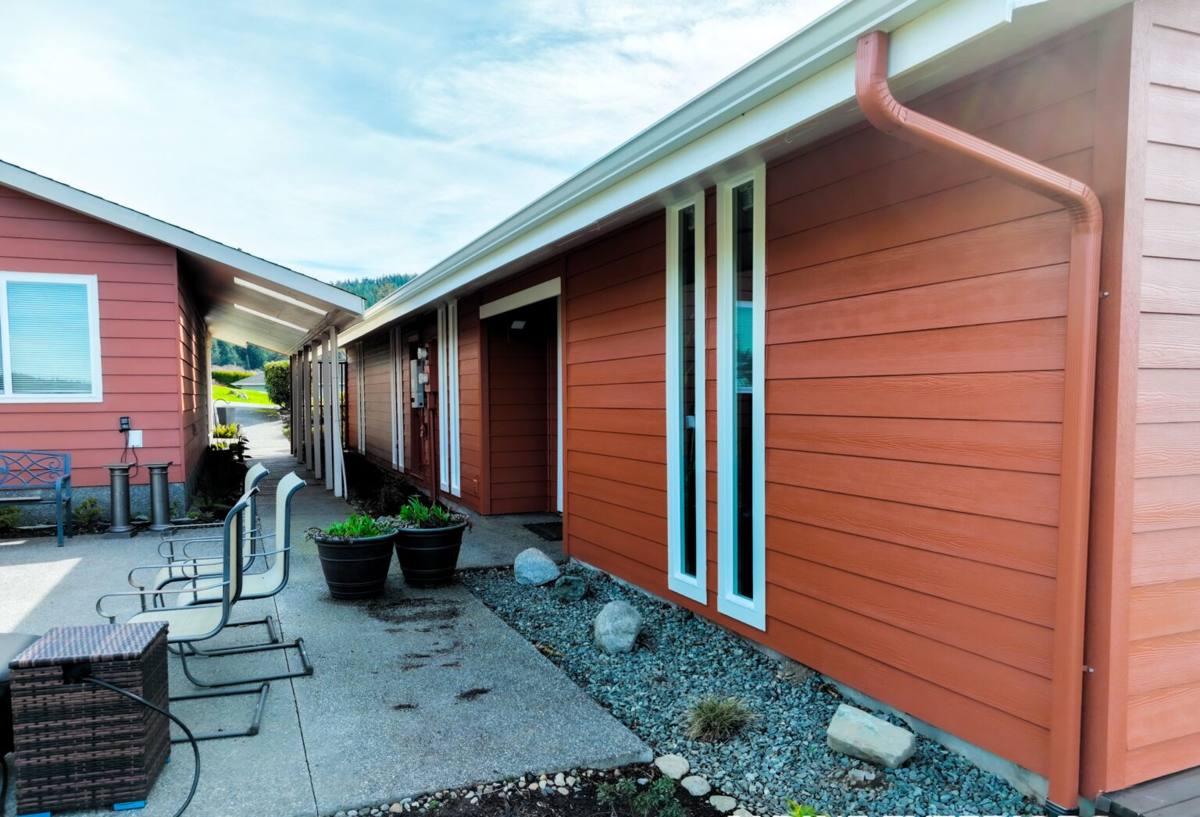
What "Correct" Siding Installation Actually Involves
Siding failures in this climate are almost never about the siding material sitting out in the open and wearing down evenly. They're about water getting behind the cladding through a gap, seam, or fastener hole and then having nowhere to go. A correct installation is built around keeping water out first, and managing the water that does get in second.
Wall Prep and Water-Resistive Barrier
Every square foot of sheathing gets inspected before new siding goes up. Soft or water-damaged sheathing gets replaced, not covered over. A code-compliant weather-resistive barrier goes on next, lapped correctly from the bottom up so water sheds outward instead of working its way behind the seams.
Rain Screen Gap
In a climate with this much sustained moisture, a drainage gap between the barrier and the siding matters. It lets any water that does get past the cladding drain and lets the wall assembly dry out between rain events instead of staying saturated. Skipping this step is one of the more common shortcuts that shows up years later as trapped moisture and rot.
Flashing at Every Penetration
Windows, doors, hose bibs, light fixtures, vents — every penetration through the siding is a place water can enter if it's not flashed correctly. This is detail work, not a place to save time, and it's where a lot of the long-term performance of a siding job actually gets decided.
Fastening and Fit
Fiber cement siding has specific fastener spacing, nailing patterns, and clearance requirements from grade and from roof lines. Installed too tight, panels can't move with seasonal expansion and contraction. Installed with gaps too wide or fasteners in the wrong spot, you get premature wear at the stress points and open seams that let moisture in.
Caulking, Trim, and Factory Finish
Joints and trim transitions get sealed with the right sealant for a factory-finished fiber cement product, not a general-purpose caulk that will fail in a few years. Where the factory finish itself is doing the weatherproofing, protecting cut edges and touching up correctly at the end of the job is part of getting the finish to last.
Why We Only Install James Hardie Fiber Cement
We install James Hardie fiber cement siding exclusively. We don't install vinyl, LP SmartSide, Cemplank, Allura, or primed wood siding like spruce or cedar, and that's a deliberate standard, not an oversight.
Vinyl is inexpensive and low-maintenance, but it's a thin material that can warp in heat, crack in cold, and it isn't the water-management system a wet climate really calls for — it relies heavily on what's behind it doing the work. Engineered wood products like LP SmartSide perform reasonably well when installed and maintained exactly to spec, but they're wood-based, and wood-based siding is more sensitive to sustained moisture exposure than fiber cement — a real consideration on a site that stays damp as long as Blaine does. Primed cedar or spruce siding needs ongoing paint maintenance to stay ahead of moisture, and that maintenance schedule is unforgiving in a climate that doesn't give a wall much time to dry.
James Hardie fiber cement is non-combustible, holds its factory ColorPlus finish for years without repainting, and Hardie's HZ5 product line is engineered specifically for climates with prolonged moisture exposure, which describes Whatcom County's coastline well. It resists moss and algae better than wood-based products, doesn't rot, and carries a strong transferable warranty when installed to Hardie's specifications. We standardized on it because it's the product we're comfortable putting our name behind on a Blaine job, not because it's the only option on the market.
Our Installation Process
- On-site assessment — we look at wall condition, existing siding, trim, flashing, and any signs of past moisture intrusion before quoting anything.
- Scope and product selection — plank profile, exposure, and color are chosen for the house and confirmed with you before ordering.
- Tear-off and sheathing repair — old siding comes off, sheathing is inspected, and any damaged material is replaced.
- Weather barrier and rain screen — installed per code and per Hardie's fastening and clearance specifications.
- Flashing and trim — windows, doors, and penetrations are flashed before siding goes on around them.
- Siding installation — panels and trim installed to manufacturer spec for fastener pattern, spacing, and clearance from grade and roofline.
- Caulking and finish check — joints sealed, cut edges protected, final walkthrough with you.
What Drives Cost on a Blaine Siding Job
| Factor | Why It Matters |
|---|---|
| Wall exposure | Water-facing or wind-exposed walls near the shoreline often need more flashing and prep attention than sheltered walls. |
| Sheathing condition | Hidden rot from a prior siding failure adds repair work before new siding can go up. |
| House size and complexity | More corners, penetrations, and roof lines mean more flashing and trim detail. |
| Siding profile and trim package | Lap width, trim style, and accent details affect material and labor. |
| Tear-off scope | Full removal of old siding versus a smaller repair-and-replace section changes labor time significantly. |
Every one of these gets assessed on-site before we give you a number — broad ranges without seeing the house don't tell you much and aren't something we'll guess at over the phone.
Signs Your Siding Needs Attention
- Soft spots or visible warping anywhere on the siding, especially near the bottom courses
- Persistent moss or algae growth that comes back within weeks of cleaning
- Paint that's peeling, bubbling, or failing faster than it should
- Gaps opening up at seams, corners, or trim joints
- Staining or discoloration around windows, doors, or other penetrations
- A musty smell or visible moisture inside exterior walls
- Siding that's more than 20-25 years old and hasn't been reassessed recently
Any one of these on its own isn't necessarily an emergency, but in Blaine's climate they tend to compound quickly once moisture finds a way behind the wall.
Why a Crew That Already Works Blaine Matters
Siding installation isn't one-size-fits-all across Whatcom County. A crew that regularly works Blaine and the surrounding waterfront communities has already seen how salt exposure, wind-driven rain, and moss patterns behave on homes in this specific area — which walls take the worst of it, where flashing tends to get skipped on older builds, and what a install actually needs to hold up here versus a drier inland lot. That's the difference between a generic siding job and one that's actually built for where the house sits.
We also know the practical side of working this area — access on tighter waterfront lots, coordinating around weather windows during the wetter months, and sequencing a tear-off so your walls aren't left exposed longer than necessary. None of that shows up on a spec sheet, but it affects how smoothly the job goes and how well it performs afterward.
Maintenance After Installation
James Hardie siding is genuinely low-maintenance compared to wood-based alternatives, but "low-maintenance" doesn't mean "no maintenance" in a climate like this. A periodic rinse to knock down moss and algae buildup, a visual check of caulking and trim joints every year or two, and prompt attention to any landscaping that's pushing sprinklers or plant growth against the siding will keep a correctly installed job performing the way it's supposed to for decades.
If you're seeing early wear, persistent moss, or you're just ready to replace aging siding before it becomes a bigger problem, we're happy to come take a look. Reach out for a free, no-pressure estimate — we'll walk the house with you, tell you what we see, and give you a straight answer on what it would take to do the job right.