 Bellingham
 Why Barkley Homes Need Windows Built for This Climate
Barkley sits close enough to Bellingham Bay and the surrounding wetlands that homes here deal with a specific combination of weather stresses: salt-tinged marine air, long stretches of driving rain off the Sound, and a moss season that can run from fall through spring. None of that is unusual for Whatcom County, but it does mean windows here work harder than windows in a drier inland climate. A window that's rated fine on paper can still underperform if it wasn't sealed, flashed, and fitted with this specific mix of moisture and salt exposure in mind.
Energy efficiency in this context isn't just about a lower heating bill, though that's real. It's about keeping wind-driven rain out of the wall cavity, keeping condensation off the glass in winter, and keeping a frame from degrading years before it should. In Bellingham's climate, an underperforming window shows up as fogged glass, a cold draft near the sill, or soft trim before it ever shows up as a spike in the utility bill.
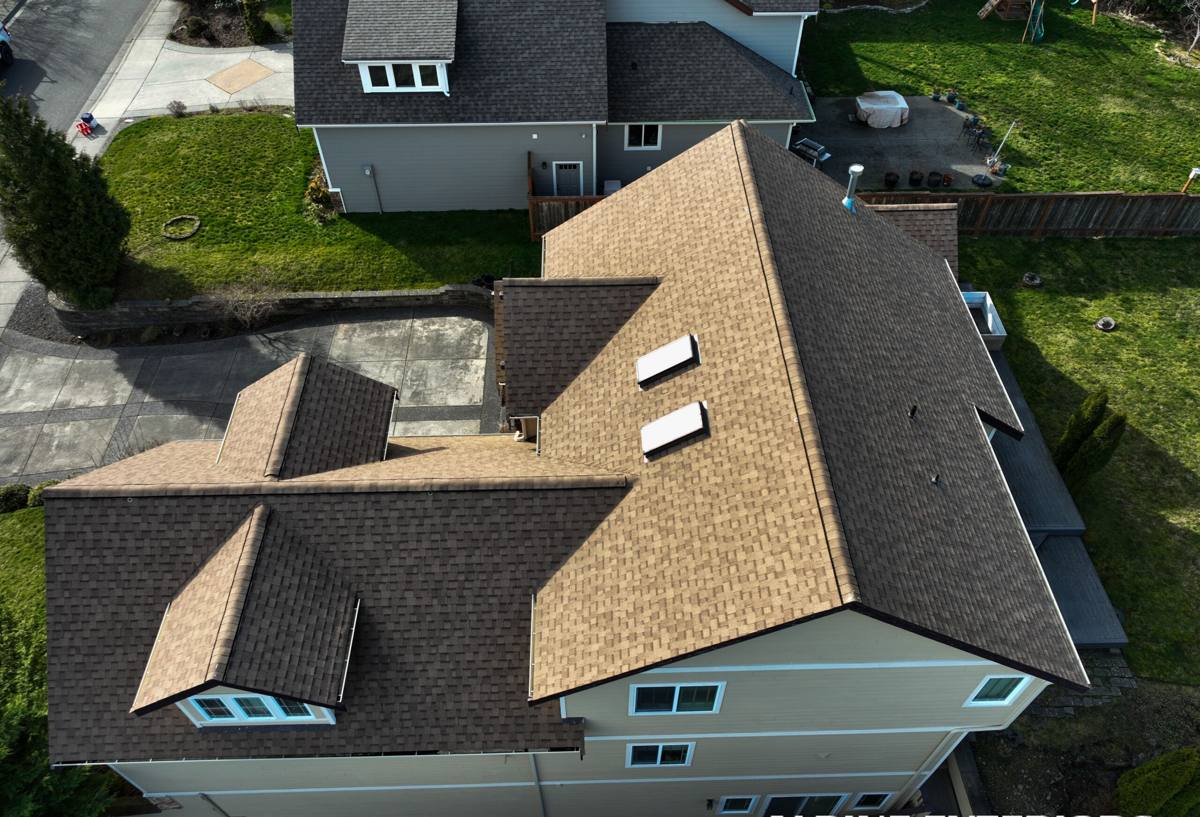
What "Correct" Looks Like on This Job
It Starts Before the Window Ever Goes In
Most window failures we get called out to fix in this area aren't product failures — they're installation failures. The window itself was fine. The flashing, the sill pan, or the sealant detail wasn't. A correct install in a wet marine climate means:
- A sloped sill pan or sill flashing that sheds water forward, not just a bead of caulk at the bottom edge
- Housewrap or weather-resistive barrier integrated with the window flange in the right shingle-lap order, so water moves down and out, never behind the barrier
- Backer rod and compatible sealant at the perimeter, not just whatever caulk was on the truck
- Proper shimming so the frame isn't racked, which is what causes seals to fail early and sashes to bind
- Insulation in the gap between the window and the rough opening — an air gap there undercuts the efficiency rating no matter how good the glass is
Skip any one of these steps and you can end up with a window that looks fine for a year or two and then starts showing staining, soft wood, or a musty smell at the sill — problems that are far more expensive to fix than they would have been to prevent.
The Glass and Frame Have to Match the Exposure
Not every wall of a house sees the same weather. A west- or southwest-facing wall in Barkley catching driving rain off the water needs more attention to water management than a sheltered north wall. We factor that into where we recommend extra flashing detail or a different sealant approach, rather than treating every opening on the house identically.
Signs Your Current Windows Are Costing You More Than They Should
Homeowners often wait until a window is obviously broken before calling anyone, but by then the fix is usually bigger than a window replacement. Watch for:
- Condensation or fog between the panes of a double-pane unit — the seal has failed and the insulating gas is gone
- Visible daylight or a draft you can feel with your hand at the frame edge
- Wood trim or sill that's soft, discolored, or has a persistent musty smell
- Green or black growth on the exterior trim around the window — a sign moisture is sitting there longer than it should
- Difficulty opening, closing, or locking a window that used to operate smoothly
- A noticeable temperature difference standing near the window versus the middle of the room
Any one of these on its own might just mean one window needs attention. Several at once, especially on the same exposure of the house, usually points to a systemic issue with how that wall was built or previously flashed.
Frame and Glass Options: What Actually Matters Here
There's no single "best" window material for every house — it depends on the home's age, siding type, and budget. In this climate, we weigh moisture tolerance and maintenance burden as heavily as upfront cost.
| Frame Type | Moisture Tolerance | Maintenance | Typical Fit |
|---|---|---|---|
| Vinyl | Good — doesn't rot or corrode | Low; occasional cleaning | Most retrofit and replacement projects |
| Fiberglass | Very good — stable in temperature swings | Low | Larger openings, higher-exposure walls |
| Wood-clad | Depends heavily on cladding and detailing quality | Higher — cladding seams need monitoring | Homes prioritizing a wood interior look |
| Aluminum | Poor thermal performance, prone to condensation | Low | Rarely our recommendation for living spaces here |
On the glass side, look for a low-E coating and a warm-edge spacer at minimum. Argon-filled double-pane units are the standard baseline for this climate; triple-pane can make sense on a north or west exposure that takes the worst of the wind and rain, but it's not automatically worth the added cost on every opening. We'll walk through where it does and doesn't pay off for your specific house.
Our Process for a Barkley Window Job
1. On-Site Assessment
We look at each window individually rather than quoting the house as a block. Exposure, existing flashing condition, sill health, and how the opening was originally built all factor into the plan and the price.
2. Removal Without Collateral Damage
Careful removal protects the surrounding siding and trim. If we find rot or a flashing problem once the old window is out — which happens more often on older Bellingham-area homes than people expect — we stop and talk it through with you before proceeding, rather than papering over it.
3. Opening Prep and Flashing
This is the step that determines whether the window lasts 25 years or 5. Sill pan, weather-resistive barrier integration, and proper shimming all happen here, in that order, before the new window ever goes in.
4. Setting, Sealing, and Insulating
The window is leveled, shimmed, fastened per the manufacturer's instructions, and insulated at the gap — then sealed at the exterior with a compatible sealant, not just whatever's convenient.
5. Interior and Exterior Finish
Trim is reset or replaced, and everything is checked for smooth operation and a tight seal before we consider the job done.
Why It Matters That We Already Work in Barkley
A crew that's replaced windows on other homes in this neighborhood already has a feel for the housing stock, the typical exposure patterns off the water, and how previous rounds of siding or trim work in the area were done. That matters when a rough opening turns out to be slightly out of square, or when the existing flashing behind the siding wasn't done to today's standard. There's less guessing and fewer surprises when someone's seen the pattern before, on a street a few blocks over, rather than encountering it for the first time on your house.
It also matters for scheduling around the weather. Whatcom County's rain doesn't arrive on a predictable schedule, and a window opening should never sit exposed longer than necessary. Local crews plan around that reality instead of learning it the hard way.
A Homeowner's Checklist Before You Hire
- Ask what sill flashing method will be used, not just what window brand
- Ask how the crew handles it if rot or moisture damage is found once the old window is out
- Confirm whether the quote is per-window or a lump sum, and what happens if extra repair work is needed
- Ask about the manufacturer's warranty terms and what voids them — poor installation is a common way warranties get voided
- Ask how long the crew has been doing this specific work in Bellingham or Whatcom County
- Get the U-factor and Solar Heat Gain Coefficient for the specific window being quoted, not just a general efficiency claim
Maintenance That Actually Extends the Life of the Investment
Energy-efficient windows aren't maintenance-free, even good ones. In this climate, a simple twice-a-year routine goes a long way: clear debris and moss buildup from the sill and weep holes, check that exterior caulk lines haven't cracked or pulled away, and make sure gutters and downspouts near window openings are directing water away rather than letting it sheet down the wall. None of that is complicated, but it's the kind of small task that's easy to forget until it's caused a problem.
If your windows in Barkley are drafty, fogged, or just older than the rest of the house's recent work, we're happy to take a look and give you a straight assessment — no pressure, no inflated urgency. Fill out the form below for a free estimate and we'll walk the house with you in person.