 Bellingham
 Windows Built for Sehome's Particular Climate
Sehome sits close to downtown Bellingham, on and around the slopes near Sehome Hill, with a mix of older established homes and newer infill construction. That mix matters when it comes to windows. A lot of the housing stock in this part of town is older than the vinyl replacement windows sold today, which means many homes are still working with original wood sashes, tired aluminum frames, or a first-generation vinyl replacement that's now 20-plus years old and starting to fail. None of those hold up forever against what Whatcom County weather does to a window over time.
We install windows in Sehome the same way we approach every job in Bellingham: assume the weather will find any weak point, and build the installation so it doesn't matter when it does. That's a different mindset than a crew that mostly works inland or in a drier climate, and it shows up in the small decisions — flashing details, sealant choice, how a window ties into the siding around it.
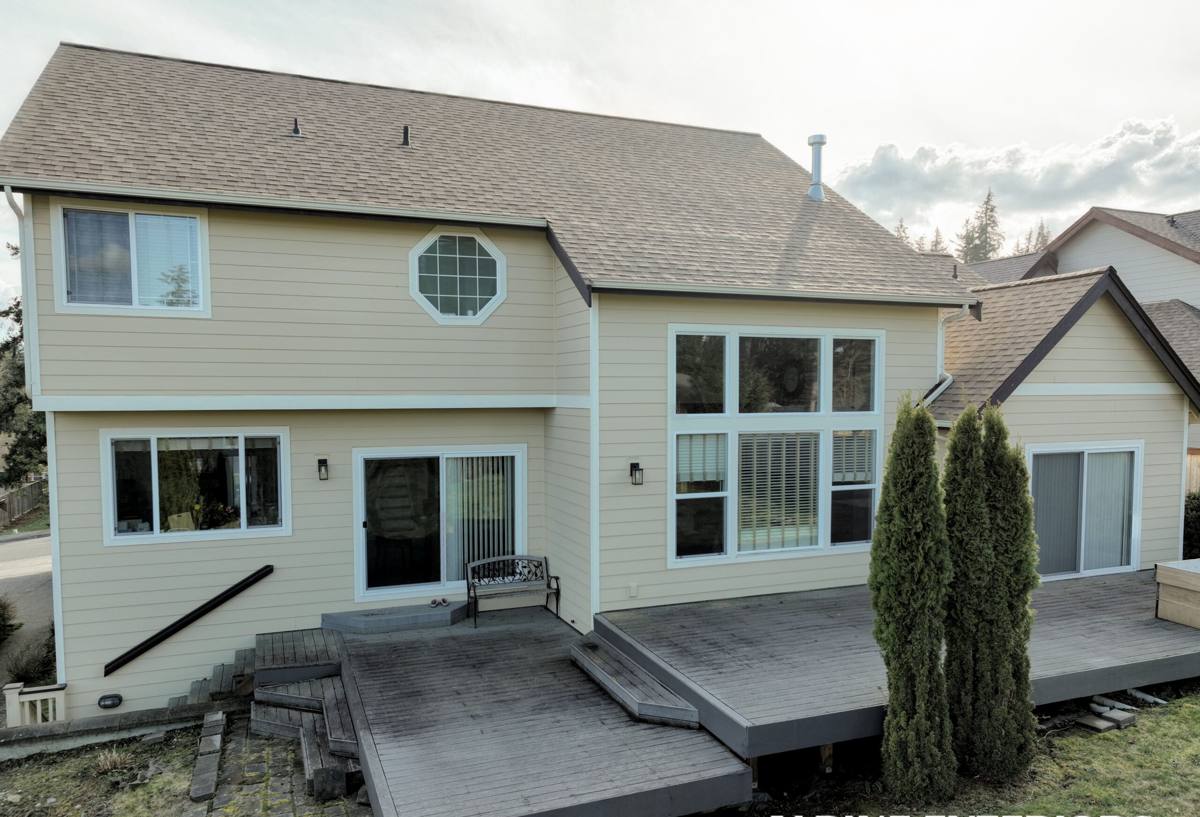
What Bellingham's Weather Actually Does to a Window
It's easy to think of window failure as just "getting old," but in Whatcom County there are three specific stresses doing most of the damage.
Salt Air
Being close to Bellingham Bay means a steady, low-level exposure to salt-laden air, even a few miles inland. Salt air is hard on unprotected metal — it accelerates corrosion in aluminum frames, screws, hinges, and balance hardware. Over years, that corrosion is what causes windows to stick, bind, or stop latching properly.
Driving Rain
Bellingham doesn't just get rain, it gets wind-driven rain, especially on west- and south-facing walls during fall and winter storms. Wind-driven rain doesn't fall straight down — it gets pushed sideways and upward, which means it tests every seam, flange, and sealant joint around a window opening. A window that would be fine in a calmer climate can leak here if the flashing and sealing weren't done right.
Long Moss Season
Shaded, tree-covered lots — common around Sehome Hill — stay damp for much of the year. Moss and algae take hold on sills, in corners, and anywhere water sits instead of draining. Beyond looking bad, that constant moisture keeps wood sills and frame components wet for long stretches, which is exactly the condition that leads to rot.
None of these three problems show up overnight. They accumulate over seasons, which is why a window that seemed fine five years ago can suddenly need attention now.
Signs Your Windows Need a Closer Look
Homeowners in Sehome usually notice one of these before anything else:
- Fogging or a hazy film between the panes of glass (a sign the seal has failed and the gas fill or dry air pocket is gone)
- Windows that are hard to open, close, or lock — often from corroded hardware or a frame that's shifted
- A draft you can feel standing near the window on a windy day
- Soft, spongy, or discolored wood at the sill or lower frame
- Visible gaps or daylight around the frame from outside
- Rising heating bills without an obvious explanation
- Peeling paint or swollen wood trim near the window
- Persistent moss, algae, or black staining on the sill that keeps coming back after cleaning
Any one of these on its own might just mean routine maintenance. Two or three together, especially on the same window, usually means it's past the point where caulk and touch-up paint will solve it.
Full-Frame Replacement vs. Insert Replacement
There are two basic ways to replace a window, and which one makes sense depends on the condition of what's already there — not just personal preference.
| Factor | Full-Frame Replacement | Insert (Pocket) Replacement |
|---|---|---|
| What's replaced | Entire window unit including the existing frame, down to the rough opening | New window inserted into the existing, intact frame |
| Best for | Frames with rot, water damage, or visible failure | Sound frames that are square, dry, and structurally solid |
| Access to hidden damage | Yes — flashing and framing are exposed and can be corrected | No — hidden rot or old flashing problems stay hidden |
| Disruption | More involved; may affect interior and exterior trim | Faster, less disruption to siding and trim |
| Typical fit in Sehome | Common on older homes near Sehome Hill with original wood frames showing wear | Common on newer or previously-updated homes with healthy frames |
We won't recommend an insert replacement over a window frame we haven't confirmed is sound. Covering up a wet or rotting frame with a new window is one of the most common ways a "quick, affordable" replacement turns into a bigger repair a few years later.
Choosing Materials and Glass for This Climate
Whatcom County's combination of salt air, rain, and shade narrows down what makes sense long-term.
| Material | Strengths | Considerations Here |
|---|---|---|
| Vinyl | Cost-effective, low maintenance, doesn't corrode | Good all-around choice; quality varies a lot between manufacturers |
| Fiberglass | Very stable in temperature swings, strong, low maintenance | Higher upfront cost; holds up well against damp, shaded exposure |
| Wood-clad / aluminum-clad wood | Traditional look, good for period homes near Sehome Hill | Needs a well-maintained exterior cladding and good flashing since any breach exposes wood to constant moisture |
On glass, a dual-pane, low-E unit with an argon or krypton gas fill is the baseline we'd recommend for almost any Sehome home — it handles our mild-but-damp winters well and cuts down on both heat loss and condensation. Triple-pane glass is worth discussing for rooms facing prevailing wind and rain, or for homeowners prioritizing sound reduction near busier streets, but it adds weight and cost that isn't necessary on every elevation of every house.
Hardware Matters More Than People Expect
Given how hard salt air is on unprotected metal, we pay close attention to hinge, lock, and balance hardware — not just the frame material. A great frame with cheap hardware will still start sticking and corroding within a few years in this environment.
What a Correct Installation Actually Involves
The window itself is only part of the job. How it's installed determines whether it actually performs the way it's rated to.
Flashing and Water Management
Given how much of Bellingham's rain arrives sideways, flashing is where most leaks start if it's done wrong. Proper installation means integrating window flashing with the existing weather-resistive barrier in the correct shingle-lap order — so water is always directed outward and downward, never trapped behind the siding. This is where our siding background actually helps: we're not treating the window as an isolated box, we're treating it as one part of the whole wall assembly.
Air Sealing and Insulation
The gap between a new window frame and the rough opening needs to be sealed and insulated correctly — not overpacked with expanding foam, which can bow a frame out of square, and not left with gaps that create drafts and condensation points.
Fit, Level, and Reveal
A window that's slightly out of square will bind, won't lock cleanly, and will wear its hardware and weatherstripping unevenly. Getting the unit level, plumb, and square before final fastening is a basic step that's easy to rush and expensive to fix later.
Our Process, Start to Finish
- On-site assessment of existing windows, frames, and any signs of water or rot damage
- Accurate measurement of each opening — older Sehome homes often have non-standard sizes
- Review of material, glass package, and full-frame vs. insert options for your specific home
- A written estimate with no pressure to decide on the spot
- Careful removal of the old unit, checking framing and flashing as it's exposed
- Installation with proper flashing integration, air sealing, and squaring
- Exterior trim and sealant finish work matched to your home's existing look
- Final walkthrough — operating every window with you before we consider the job done
Why It Matters That We Already Work in Sehome
Working regularly in this part of Bellingham means we've seen the common patterns in the local housing stock — the age ranges, the framing quirks, the typical trouble spots on shaded or exposed elevations. That's not a substitute for looking at your specific windows, but it does mean fewer surprises and a more accurate estimate up front. It also means we're not learning Whatcom County weather on your house. A crew that mainly installs windows in a drier or calmer climate may not default to the flashing and sealing details that driving rain here actually requires.
Being local also matters after the job is done. If something needs a follow-up adjustment or a warranty question comes up, we're not a crew that drove in from out of the area for one job and is hard to reach afterward.
Keeping New Windows Performing Long-Term
A correct installation buys you years of trouble-free performance, but a little seasonal attention keeps it that way in this climate:
- Rinse sills and tracks periodically to keep moss and algae from taking hold in shaded spots
- Keep gutters and downspouts clear so water isn't sheeting down over window heads
- Check exterior caulk lines once a year, especially after a hard winter
- Operate every window a few times through the year so hardware doesn't seize up
- Wipe down tracks and weatherstripping to keep them free of grit that causes premature wear
If you're noticing drafts, fogged glass, or sticking windows in your Sehome home, it's worth having them looked at before another wet Whatcom County winter adds to the wear. We're happy to come take a look and put together a free, no-pressure estimate — there's a form below whenever you're ready.