 Bellingham
 Why Metal Roofing Makes Sense in Edgemoor
Edgemoor sits close to Bellingham Bay, tucked under a heavy canopy of fir, cedar, and maple that keeps the neighborhood shaded, quiet, and green most of the year. That same setting is hard on a roof. The combination of salt-laden air off the water, long stretches of driving rain, and shade that never fully dries out is a tough environment for any roofing material — and it's exactly the kind of environment where a properly specified and installed metal roof earns its keep.
We're not going to tell you metal roofing is right for every house or every budget. It isn't. But for homes in Edgemoor dealing with moss buildup, gutter overflow during heavy rain, or a roof that's simply reached the end of its life, metal is worth a serious look — as long as it's the right system, installed the right way, by people who understand what this particular stretch of coastline does to a roof over time.
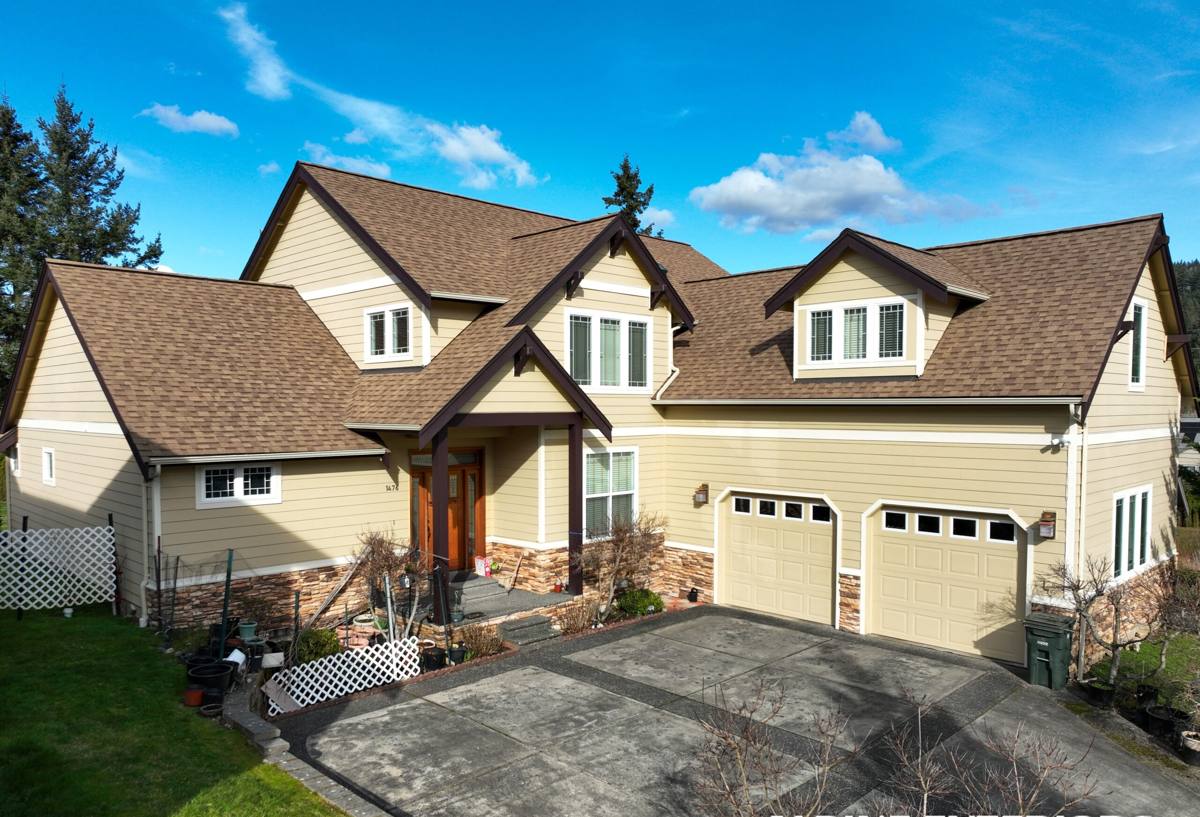
What Salt Air, Rain, and Moss Actually Do to a Roof Here
Salt Air and Corrosion
Homes within a mile or two of saltwater don't get rusted-out roofs overnight, but airborne salt accelerates corrosion on any exposed metal — fasteners, flashing, and lower-grade panel coatings included. This is a slow, cumulative process. A roof that would hold up fine twenty miles inland can show streaking, pitting, or fastener corrosion years earlier if it wasn't specified for a coastal environment.
Driving Rain
Whatcom County doesn't just get rain — it gets sustained, wind-driven rain that finds every gap in flashing, every under-lapped seam, and every place where a roofer cut a corner. On a shaded lot like most in Edgemoor, that moisture doesn't evaporate quickly. It sits, it wicks under poorly sealed edges, and over years it finds the weak points in a roofing system.
Moss Season
Tree cover means shade, and shade means moss. Moss doesn't just look bad — on shingle roofs it lifts edges, holds moisture against the surface, and shortens the roof's life. Metal roofing doesn't stop moss spores from landing, but a smooth, non-porous metal surface gives moss far less to grab onto than a textured asphalt shingle, and it can't work its way under panels the way it works under shingle tabs.
Standing Seam vs. Exposed-Fastener Metal: Which Fits an Edgemoor Roof
Not all metal roofing is the same, and the choice matters more in a wet, shaded, coastal-adjacent neighborhood than it does in a dry climate. Here's how the two most common systems compare for this specific setting.
| Factor | Standing Seam | Exposed-Fastener Panel |
|---|---|---|
| Fastener exposure | Concealed clips, no exposed screws | Screws penetrate the panel face |
| Long-term weathertightness in driving rain | Excellent — seams interlock | Good, but depends on gasket seal integrity over time |
| Corrosion risk near salt air | Lower — fewer exposed metal-on-metal contact points | Higher — exposed fastener heads are the first thing to corrode |
| Maintenance | Minimal; no fasteners to re-torque or reseal | Gaskets and fastener seals should be checked periodically |
| Upfront cost | Higher | Lower |
| Best fit | Primary roofs meant to last 40+ years with minimal upkeep | Outbuildings, shops, budget-conscious projects |
For a primary residence in a neighborhood like Edgemoor — shaded, close to salt water, exposed to sustained rain — we generally steer homeowners toward standing seam when the budget allows. It's not that exposed-fastener panels are a bad product; it's that the exposed screws are the first failure point in exactly the conditions this location produces, and re-sealing or replacing gaskets down the road is real maintenance a homeowner has to stay on top of.
Coatings and Metal Choice Matter More Here Than the Panel Style
The panel profile gets most of the attention, but the substrate and coating underneath it do more of the actual work in a coastal-influenced climate. Bare or lightly coated steel will corrode faster near salt air. Galvalume-coated steel and aluminum both hold up better, with aluminum having a natural edge in true salt-spray zones since it doesn't rust the way steel does even when a coating is compromised. The paint or finish system on top matters too — a quality PVDF (fluoropolymer) finish resists fading and chalking far longer than a basic polyester coating, which matters on a roof you're not planning to touch again for decades.
We'll walk through these tradeoffs with you honestly, including cost, rather than defaulting to whatever's cheapest to install. A roof that has to survive Whatcom County rain and Bellingham Bay air for 40-plus years is not the place to save money on the coating.
What a Correct Metal Roof Installation Actually Involves
Metal roofing fails early almost exclusively because of installation mistakes, not because the material itself wore out. In a wet, shaded environment like Edgemoor, the details matter more than usual.
- Underlayment: A high-temp synthetic or self-adhered underlayment, not felt paper, to handle both condensation on the underside of the metal and any wind-driven moisture that finds a seam.
- Ventilation: Proper intake and exhaust airflow so trapped moisture doesn't condense against the underside of the panels — critical on shaded roofs that never fully warm and dry.
- Flashing at valleys, walls, and penetrations: These are the most common leak points on any roof, metal or otherwise, and they need to be formed and lapped correctly, not just caulked.
- Fastener spacing and type: Corrosion-resistant fasteners matched to the panel metal, spaced per manufacturer specification — mismatched metals in contact with each other can cause galvanic corrosion over time.
- Panel expansion allowance: Metal expands and contracts with temperature swings; clips and fastening methods need to allow for that movement so panels don't buckle or pull loose over the years.
- Ice-and-water shield at eaves and valleys: Even though this area doesn't see heavy snow loads, cold snaps and ice damming do happen, and the eaves are where backed-up water does the most damage.
How Our Process Works
Assessment
We start with an honest look at your existing roof, the tree cover and shading on your specific lot, and your gutter and drainage setup — because a metal roof installed above clogged or undersized gutters will still have moisture problems, no matter how good the roof itself is.
System Selection
We'll recommend a panel style, metal, and coating based on your home's exposure, budget, and how long you want this roof to last — not a one-size-fits-all pitch.
Installation
Underlayment, ventilation, flashing, and fastening are done to manufacturer spec, with particular attention to valleys, wall transitions, and any penetrations — the details that determine whether a metal roof lasts 20 years or 50.
Walkthrough
Before we consider the job done, we walk the roof and the site with you, explain what was done, and go over any maintenance that's genuinely worth doing — which for a well-installed metal roof is minimal.
What Affects the Cost of a Metal Roof in This Area
| Factor | Why It Matters Here |
|---|---|
| Panel system (standing seam vs. exposed-fastener) | Standing seam costs more upfront but reduces long-term maintenance in salt air and heavy rain |
| Metal type and coating | Aluminum and premium PVDF finishes cost more but resist coastal corrosion and fading longer |
| Roof complexity | Valleys, dormers, and multiple roof planes — common on larger Edgemoor lots — add flashing and labor |
| Tree removal or trimming needs | Overhanging limbs near the roofline can shorten the life of any roof and may need addressing first |
| Existing roof condition | Deck repairs or rot from long-term moss and moisture add cost but shouldn't be skipped |
| Ventilation upgrades | Older homes often need improved intake/exhaust venting to perform well under a metal roof |
We give straightforward, itemized estimates so you can see where the money is going, rather than a single lump number that hides what you're actually paying for.
Maintaining a Metal Roof in Edgemoor's Conditions
One of the real advantages of metal roofing is how little ongoing work it needs compared to shingles — but "little" isn't "none," especially under tree cover this heavy.
- Clear needles, leaves, and debris from valleys and gutters at least twice a year — more often if you're under heavy fir or maple cover.
- Check gutters and downspouts before the wet season ramps up; overflowing gutters push water back under eave flashing.
- Look (or have us look) for early moss or algae growth in shaded, low-slope areas and address it before it spreads.
- Trim back branches that overhang or scrape the roof surface, which can scratch protective coatings over time.
- After any major windstorm, do a visual check for loose flashing or debris impact, particularly around chimneys and vents.
Why It Matters That We Already Work in This Neighborhood
A metal roof is a long-term investment, and the value of that investment depends heavily on whether the crew installing it actually understands the microclimate it's going into. A contractor who mostly works drier, less shaded parts of Whatcom County may not think twice about ventilation detailing or coastal-grade fasteners — because they haven't had to. Working in and around Edgemoor and the greater Bellingham waterfront means we're specifying underlayment, metal coatings, and flashing details with this exact combination of salt air, rain, and shade in mind, not applying a generic approach and hoping it holds up.
It also means we understand the practical realities of these lots — mature trees close to the house, limited staging space on some properties, and the need to protect landscaping during a reroof. None of that shows up in a spec sheet, but it affects how smoothly the job goes.
Get a Straightforward Estimate
If you're weighing a metal roof for your Edgemoor home, we're happy to take a look, walk you through what your specific roof and site need, and give you a clear, no-pressure estimate. There's a form below — reach out and we'll get back to you with honest answers, not a sales pitch.