 Bellingham
 Why Happy Valley Roofs Wear Differently
Happy Valley is close enough to Bellingham Bay to pick up salt-laden air off the water, and shaded enough by mature tree cover to stay damp longer than roofs out in the open. That combination is hard on a roof. Salt-tinged moisture speeds up corrosion on exposed fasteners, flashing, and metal accents. Shade and morning fog keep shingle surfaces wet well past the point where a sunnier roof would have dried out, and that extra moisture window is exactly what moss and algae need to establish themselves. Layer in Whatcom County's long stretch of driving rain from fall through spring, and a roof in this neighborhood is simply doing more work, more often, than the same roof would in a drier inland climate.
None of this means Happy Valley homes need something unusual. It means the details that get overlooked elsewhere — ventilation, underlayment choice, flashing quality, and ongoing moss control — matter more here, and shortcuts on any of them tend to show up sooner rather than later.
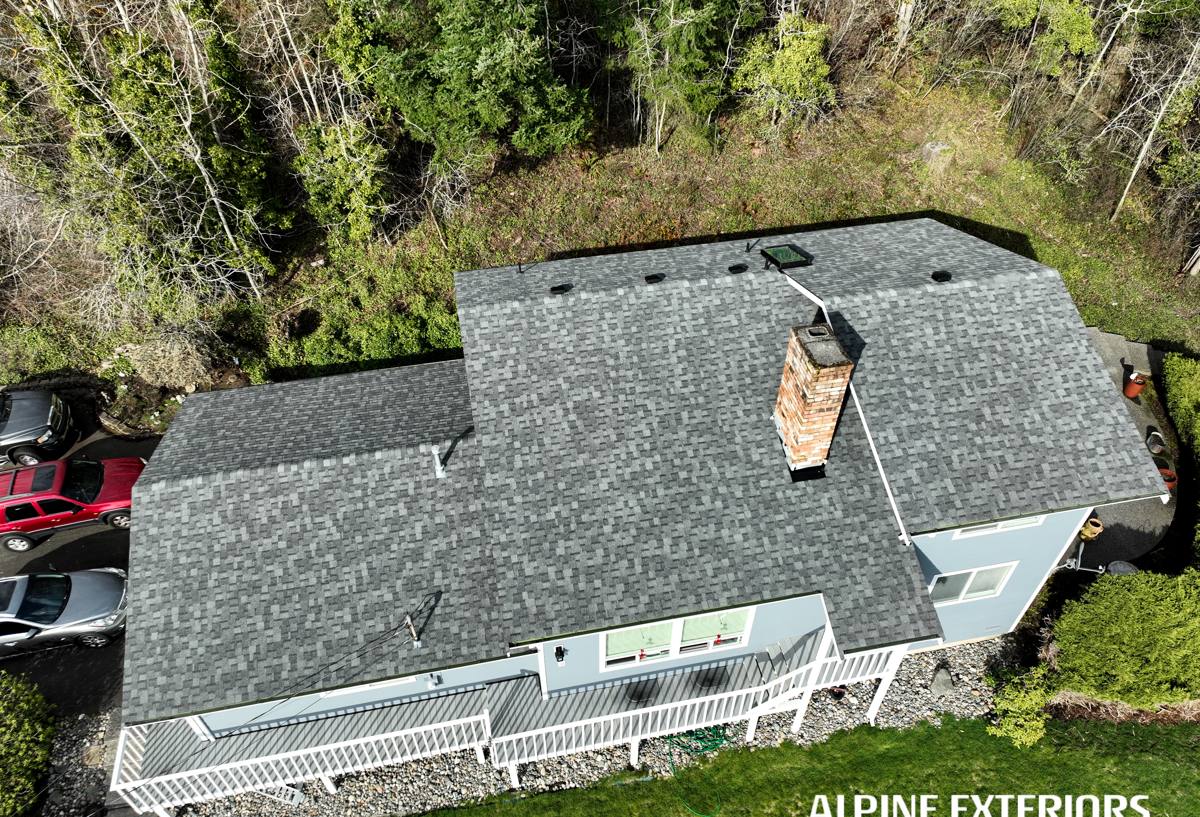
Signs a Roof Needs Replacing, Not Just Patching
A lot of roofs get repaired past the point where repair is actually the right call. Repeated patch jobs cost real money over a few years and don't fix a roof that's simply worn out. Before we recommend full replacement, we look for a pattern of problems rather than one isolated issue.
What We Check For
- Shingles cupping, curling, or losing granules in patches across the field of the roof, not just at the edges or ridge
- Soft or spongy spots underfoot, which usually means the decking beneath has taken on water
- Moss that returns within a season or two of cleaning, even after treatment — a sign the roof surface is staying wet longer than it should
- Water stains, daylight, or a musty smell in the attic along the roofline
- A roof already in its 20s or beyond, with a history of repeat repair calls
If a roof shows one or two of these, a targeted repair or a partial re-roof of one slope may still make sense. If it shows several at once, replacement usually ends up cheaper than another round of patching, and it's the only way to reset ventilation and underlayment that have been quietly failing underneath.
What a Correct Roof Replacement Involves
Full Tear-Off and Deck Inspection
We don't install new roofing over old. A full tear-off exposes the decking, which is the only way to find soft, delaminated, or water-damaged plywood or sheathing before it's covered up again for another 20-plus years. Any damaged decking gets replaced before anything else goes down — skipping this step is the single most common shortcut that leads to early failure.
Underlayment Built for a Wet Climate
In a climate that gets sustained, driving rain, underlayment isn't a formality — it's the roof's real waterproofing layer, with shingles acting as the first line of defense on top of it. We pay particular attention to eave and valley protection, where wind-driven rain and ice damming (on the rare cold snaps we do get) put the most pressure on the system.
Ventilation That Actually Balances
Proper intake at the eaves and exhaust at the ridge keeps the attic close to outside temperature and humidity. Get this wrong and moisture gets trapped under the deck from the inside, which rots sheathing from below no matter how good the roofing above it is. On tree-shaded lots like many in Happy Valley, good ventilation also helps the roof surface dry out faster between rain events, which matters directly for moss control.
Flashing and Penetrations
Chimneys, vent pipes, skylights, and roof-to-wall transitions are where most leaks actually start — not in the open field of shingles. We replace flashing rather than reuse it, and we take extra care around any penetration under tree cover, since debris and standing moisture tend to concentrate there.
Choosing a Roofing Material for This Climate
There's no single "best" roofing material — the right choice depends on the home, the budget, and how much long-term maintenance the owner wants to take on. Here's how the common options compare for a shaded, damp, salt-air-adjacent property.
| Material | Moss & Moisture Resistance | Typical Lifespan | Maintenance |
|---|---|---|---|
| Architectural asphalt shingle | Good, especially algae-resistant lines | 25–30 years | Low to moderate — periodic moss removal |
| Standing seam metal | Excellent — sheds moss and debris well | 40–50+ years | Low, but coastal-grade fasteners matter near salt air |
| Composite/synthetic shake | Good | 30–40 years | Low to moderate |
| Cedar shake | Requires ongoing upkeep in this climate | Varies widely with maintenance | High — regular treatment needed to manage moisture |
We're straightforward with clients about cedar: it can look great, but a shaded, wet lot is the hardest possible environment for it, and the maintenance commitment to keep it performing is significant. For most Happy Valley homes we point people toward algae-resistant architectural shingles or metal, depending on budget and the look they're after — not because other materials are bad products, but because they suit this specific climate with less ongoing work from the homeowner.
Our Process, From Estimate to Cleanup
- On-site inspection of the current roof, attic ventilation, and any visible trouble spots
- A written estimate that spells out materials, scope, and what happens if the tear-off finds deck damage
- Scheduling that accounts for Bellingham's rain patterns, with materials staged and protected on-site
- Full tear-off, deck inspection and repair, new underlayment, flashing, and roofing installation
- Ventilation check and final walk-through before we consider the job done
- Full site cleanup, including a magnetic sweep for nails
We give a straight answer about timeline before work starts, and we don't treat a rain delay as a surprise — it's a normal part of building in this part of Washington, and we plan around it rather than rushing to beat weather that's likely coming anyway.
After the Install: Keeping Moss and Gutters Under Control
A new roof still needs a little seasonal attention in a climate like this one. Gutters clogged with needles and leaves send water back under the eaves instead of away from the house, which undercuts even a well-installed roof. Moss that's allowed to establish itself can lift shingle edges over time and hold moisture against the surface. Keeping gutters clear and dealing with moss growth early — rather than letting it build up over a few seasons — is the simplest thing a homeowner can do to protect the investment.
Permits and What Drives the Cost
Roof replacement typically requires a building permit, and code requirements can affect ventilation and underlayment specifications depending on the scope of work. We handle the permit process as part of the job rather than leaving it to the homeowner to sort out.
Cost varies by roof size, pitch, layers to remove, deck condition, and material choice, so we won't quote a number without seeing the roof. What we can say is which factors tend to move the price most:
| Factor | Why It Matters |
|---|---|
| Roof size and pitch | More surface area and steeper slopes mean more material and labor time |
| Number of existing layers | Tearing off multiple old layers takes longer and adds disposal cost |
| Deck condition | Rotted or soft decking found during tear-off adds material and labor to replace it |
| Material choice | Asphalt, metal, and composite options span a wide cost range |
| Access and site conditions | Tree cover, tight lots, or difficult roof access can affect labor time |
An accurate number only comes from an actual inspection — anything else is a guess, and we'd rather give you a real figure than a low one that changes once we're on the roof.
Why Local Happy Valley Experience Matters
A crew that's worked roofs in this specific neighborhood already knows what to expect before the ladder goes up: which lots hold moisture longest under tree cover, where moss tends to establish first on a given roof pitch, and how salt air off the bay tends to age exposed metal over time. That's not something you can fully substitute with a generic checklist. It shapes decisions like where to focus extra flashing attention, which underlayment makes sense for a shaded lot, and how aggressively to plan for moss prevention up front rather than treating it as an afterthought. Working in Bellingham and across Whatcom County day in and day out means we're not learning this climate on your roof — we already know it.
Choosing a Roofing Contractor in Happy Valley: A Checklist
- Ask for a written, itemized estimate — not a verbal number
- Confirm they pull the required building permit themselves
- Ask specifically how they handle deck damage found during tear-off, and how that's priced
- Ask what underlayment and ventilation approach they use, and why, for a shaded or damp lot
- Confirm workers' compensation and liability coverage, and ask to see proof
- Ask what the manufacturer's and workmanship warranty actually cover, in writing
- Ask how they handle scheduling around rain, since delays are normal here, not a red flag
A contractor who answers these plainly, without dodging, is usually one worth hiring. One who avoids specifics is worth a second look before you sign anything.
If your roof is showing its age or you're just not sure whether it needs repair or full replacement, we're happy to take a look. Reach out for a free, no-pressure estimate using the form below, and we'll give you a straight assessment of where your roof actually stands.