 Bellingham
 Building New in Blaine? The Windows Have to Match the Location
Blaine sits right on the water at the top corner of Whatcom County, which means new construction here deals with a combination of conditions you won't find in most inland builds: salt-laden air off the bay, wind-driven rain that comes in sideways during winter storms, and a damp, shaded season that keeps moss and algae active on north-facing walls for months at a time. When you're building new, the window installation is one of the few chances you get to build in protection against all of that from the start — before siding, trim, and paint cover up the details that actually keep water out for the next 20-plus years.
We install new-construction windows for homes and additions in and around Blaine, and the approach we use is shaped by what this stretch of coastline actually does to a building envelope over time. This page covers what that means in practice: what the climate demands, what a correct install actually involves, how our process works with your builder or GC, and why it matters to have a crew that's done this specific job in this specific area before.
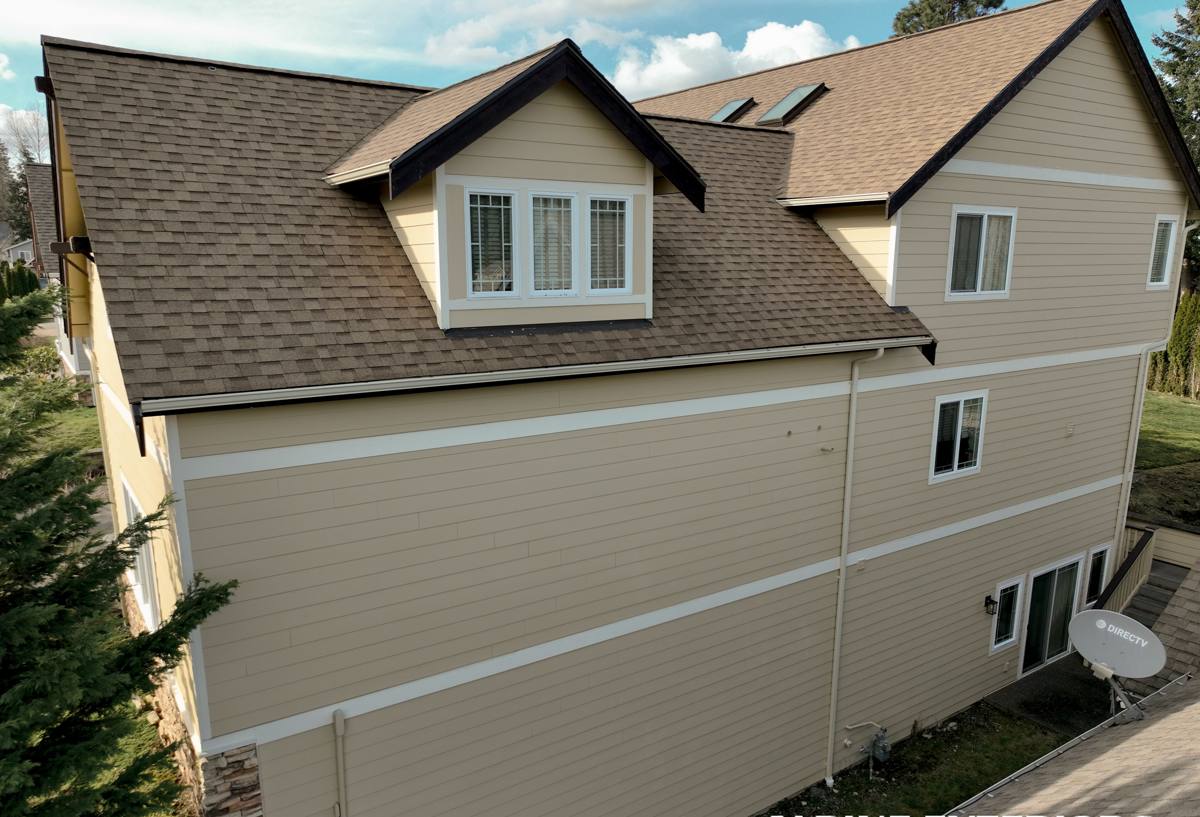
What Blaine's Climate Demands From a New-Construction Window Install
Salt Air and Corrosion
Homes close to Semiahmoo Bay and Drayton Harbor get regular exposure to salt-carrying air, even when there's no storm happening. Over years, that air attacks unprotected fasteners, low-grade hardware, and certain metal components faster than it would 20 miles inland. It doesn't ruin a window overnight, but it does mean the frame material, screws, flashing metal, and hardware finish all need to be chosen with corrosion resistance in mind — not just whatever's cheapest or most common in a builder's standard spec.
Wind-Driven Rain
Storms coming off the Strait of Georgia don't just drop rain straight down — they push it sideways and upward under eaves and around openings. A window that would perform fine in a calm, dry climate can leak in Blaine if the flashing sequence isn't done correctly, because wind-driven rain finds gaps that gravity-fed rain never would. This is the single biggest reason new-construction window failures show up here: not bad windows, but flashing details that weren't built for sideways water.
A Long Moss and Moisture Season
Whatcom County's wet season runs long, and shaded or north-facing exterior surfaces can stay damp for weeks at a stretch. That doesn't just grow moss on roofs — it keeps sills, trim, and any exposed wood around a window opening wet longer than they'd stay wet elsewhere. Materials and details that shed water quickly and don't trap moisture against wood matter more here than in a drier climate.
New Construction vs. Replacement — Why the Install Method Is Different
New-construction windows aren't just "windows installed in a new house." The term refers to a specific installation method that only works when the wall is open — before siding and exterior finish go on. New-construction windows have a nailing fin (a flange around the frame) that gets fastened directly to the sheathing and integrated into the weather-resistant barrier (WRB, or house wrap) in a specific layered order. Replacement windows, by contrast, are built to fit into an existing opening without disturbing the siding around it.
Because Blaine's exposure is high, this is the stage where we have the most control over long-term performance. Once siding is up, a lot of these details are hidden for good — so getting the sequence right during framing is what actually determines whether a wall stays dry through the next few decades of coastal storms.
What a Correct New-Construction Install Actually Involves
Rough Opening Prep
The opening needs to be square, correctly sized to the window with proper shim clearance, and structurally sound before anything gets installed. Rushing this step is one of the most common causes of operational problems (windows that stick, don't latch cleanly, or develop air gaps) years down the line.
Sill Pan Flashing
A sill pan creates a sloped, waterproof pan at the bottom of the rough opening so that any water that does get past the window — which happens even with a well-installed unit — drains back out to the exterior instead of soaking into the framing. In a climate with as much wind-driven rain as Blaine gets, skipping or shortcutting the sill pan is one of the more expensive mistakes we see corrected later.
Shingle-Style Flashing Integration
Flashing tape and house wrap need to be layered like shingles — each layer overlapping the one below it — so water is always directed outward and downward, never into a seam. This applies at the sill, jambs, and head of every opening, in that order, before the nailing fin is taped over.
Fastening the Nailing Fin
The fin gets fastened on a specific schedule (spacing and fastener type matter) to hold the window flat and true against the sheathing without distorting the frame — a distorted frame is a frame that won't seal or operate correctly for the life of the house.
Interior Air Sealing and Insulation
The gap between the window frame and the rough opening gets sealed and insulated from the inside — not stuffed, not skipped — to control both drafts and interior condensation, which matters in a climate with cool, damp winters.
Choosing Frame Material for a Coastal Whatcom County Build
There's no single "best" window material for every project — it depends on budget, exposure, and how the home is being finished. Here's how the common options hold up against Blaine's specific conditions:
| Frame Material | Salt Air / Corrosion | Moisture & Moss Resistance | Maintenance | Typical Cost Tier |
|---|---|---|---|---|
| Vinyl | Good — won't corrode | Good, doesn't absorb water | Low | Entry to mid |
| Fiberglass | Very good — dimensionally stable, resists corrosion | Very good | Low | Mid to upper |
| Aluminum | Fair — needs a quality corrosion-resistant finish near the water | Good, but can show pitting over time near salt air without proper coating | Low to moderate | Mid |
| Wood-Clad | Depends heavily on the cladding and joint sealing | Requires careful detailing; wood core is moisture-sensitive if compromised | Higher | Upper |
For homes directly exposed to the bay or open wind, we generally steer clients toward vinyl or fiberglass because they hold up with the least maintenance burden in salt air. Wood-clad can look great and perform well, but it puts more weight on flawless installation and ongoing upkeep — worth discussing honestly before you commit, since the trade-off is appearance and character versus long-term maintenance in a wet climate.
How Our Process Works on a New Build
1. Plan Review and Coordination
We review window schedules and rough opening details with you or your builder/GC before framing is finalized, so sizes, swing directions, and flashing details are settled ahead of time rather than figured out on the fly.
2. Product Selection
We walk through frame material, glass package, and hardware options against your budget and this site's specific exposure — full sun, mostly shaded, direct wind off the water, and so on all factor in.
3. Installation at the Right Framing Stage
Windows go in once the WRB is up and the opening is ready, following the flashing and fastening sequence above — timed to work cleanly with your framer's and siding crew's schedule.
4. Inspection Before Closing the Wall
Before siding covers the opening, we check flashing, sealant lines, and fastening so any issue is caught while it's still easy to fix — not after it's buried behind finish material.
Why a Crew That Already Works Blaine Matters
Whatcom County's building department and inspectors see a lot of coastal builds, and there are local expectations around flashing and moisture management that a crew unfamiliar with the area might not anticipate. Beyond permitting, there's a practical advantage to experience with this specific stretch of coastline: we've seen what actually fails on homes exposed to Semiahmoo Bay's wind and salt, and what holds up over time. That's different from general new-construction experience in a drier or more sheltered part of the state — the margin for a skipped detail is smaller here.
We also coordinate directly with builders and GCs already working in Blaine, which keeps the window install from becoming the schedule bottleneck it can be when a crew has to learn a site's conditions from scratch.
Mistakes We See (and Build Against)
- Sill pan flashing skipped or improvised instead of properly sloped and integrated
- Flashing tape layered in the wrong order, directing water into the wall instead of out of it
- Standard-grade fasteners used where corrosion-resistant hardware was warranted given proximity to the water
- Nailing fin over- or under-fastened, distorting the frame and causing long-term seal or operation issues
- Interior air sealing skipped, leading to drafts and condensation risk in cooler months
- Window and siding trades not coordinated, forcing rushed or out-of-sequence work
Checklist: What to Confirm Before Your Windows Go In
- Rough openings are square, correctly sized, and structurally sound
- Sill pan flashing is planned for every opening, not just the most exposed ones
- Flashing sequence is shingle-style — sill, then jambs, then head
- Frame material and hardware are appropriate for salt air exposure at this specific site
- Fastening schedule for the nailing fin is being followed, not eyeballed
- Interior air sealing is scheduled as its own step, not skipped for time
- Installation is inspected before siding closes up the wall
Maintenance Once the Home Is Built
New-construction windows installed correctly need very little upkeep, but Blaine's climate rewards a little seasonal attention: rinsing salt residue off frames and glass a couple times a year, keeping gutters and drainage clear so water isn't pooling near sills, and checking exterior caulk lines periodically since UV and moisture cycling will eventually wear any sealant. None of this is heavy maintenance — it's the kind of thing that takes an afternoon and adds years to how long the install performs the way it's supposed to.
If you're planning a new build or addition in Blaine and want windows installed to hold up against what this stretch of coastline actually does to a house, we're happy to walk the plans with you. Reach out for a free, no-pressure estimate — use the form below to get started.