 Bellingham
 Why Metal Roofing Fits Cordata Homes
Cordata sits in a part of Bellingham where new construction, established neighborhoods, and mature tree cover all meet, which means roofs here deal with a mix of conditions in a single year: wind off Bellingham Bay, long stretches of drizzle, shaded lots that hold moisture, and the occasional heavy winter storm rolling in off the Sound. A well-installed metal roof handles that mix better than most other roofing materials, which is why we get asked about it constantly from homeowners in this part of Whatcom County.
Metal roofing isn't the right fit for every home or every budget, and we'll tell you honestly if it isn't. But for homeowners planning to stay in their Cordata home long-term, or who are tired of dealing with moss, granule loss, and repeat repairs on an aging asphalt roof, metal is worth a serious look.
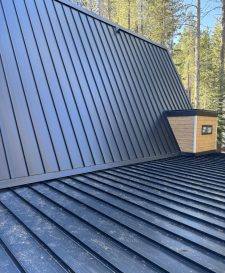
What Bellingham's Climate Actually Does to a Roof
Whatcom County doesn't get the extreme heat or hail that shortens roof life in other parts of the country. Our problems are slower and quieter: constant moisture, salt-laden air near the water, and short winter days that keep shaded roof sections wet for weeks at a time. Individually these aren't dramatic. Over ten or twenty years, they add up.
Driving Rain and Wind-Driven Moisture
Storms coming off the water don't always fall straight down. Wind pushes rain sideways into fascia, valleys, and any place where flashing or fastening is even slightly off. On an asphalt roof this shows up as slow leaks around penetrations. On a metal roof, the same conditions demand correctly lapped seams and properly sealed fasteners from day one, because there's no forgiving mat of shingles to fall back on if a detail is wrong.
Salt Air Off Bellingham Bay
Cordata isn't waterfront, but Bellingham's proximity to salt water means airborne salt reaches homes well inland, especially during winter storms. Salt accelerates corrosion on unprotected metal fasteners, flashing, and cut panel edges. It's a slow process, but it's real, and it's one of the main reasons material selection matters more here than it would in an inland, dry climate.
Moss, Shade, and a Long Wet Season
Whatcom County's moss season is long — many roofs stay damp from fall through spring, especially on north-facing slopes or under conifer cover, which is common in and around Cordata. Moss doesn't just look bad. On asphalt shingles, it lifts the mat and traps moisture against the roof deck. Metal roofing changes that equation because moss has a much harder time gripping a smooth, sloped metal panel, and standing water simply doesn't sit on the surface the way it can on shingles.
That doesn't mean a metal roof is maintenance-free in a shaded, mossy yard. Debris still collects in valleys and behind chimneys, and organic buildup anywhere on a roof holds moisture against the surface. The difference is how much less moss actually attaches to the panel itself, and how much easier it is to clear off when it does.
Getting the Metal Right for a Coastal Climate
Not all metal roofing is built the same, and this is where a lot of installation problems start — not with the panel itself, but with fasteners, cut edges, and coatings that weren't specified for a marine-influenced climate.
Steel vs. Aluminum
Steel panels, when properly coated, perform well in our region and are the more common choice for cost reasons. Aluminum is naturally corrosion-resistant and is worth considering for homes closer to open water or with heavy salt exposure, though it typically costs more. We'll walk through which makes sense for your specific lot and budget rather than defaulting to one option.
Fasteners and Cut Edges
Every screw, clip, and cut panel edge is a potential weak point for corrosion if the wrong hardware is used. We specify fasteners and flashing metals that are compatible with the panel material, and we treat cut edges properly instead of leaving raw metal exposed to weather. This is a small detail that has an outsized effect on how a roof looks and performs after ten winters.
Standing Seam vs. Exposed-Fastener Panels
Homeowners in Cordata usually ask us to compare these two systems, since they look similar from the street but perform very differently over time.
| Factor | Standing Seam | Exposed Fastener |
|---|---|---|
| Fastener exposure | Concealed under the seam | Visible, penetrates the panel face |
| Long-term leak risk | Lower — no exposed penetrations to fail | Higher over time as washers age |
| Upfront cost | Higher | Lower |
| Best suited for | Primary roofs, long-term ownership | Outbuildings, shops, budget-conscious projects |
| Maintenance | Minimal | Periodic fastener/washer inspection |
For a primary residence in a wet climate like ours, we generally steer homeowners toward standing seam. The exposed-fastener systems have their place, particularly on detached garages or shops, but the rubber washers on exposed fasteners degrade with age and UV exposure, and replacing them isn't a one-time job — it becomes a maintenance item.
What a Correct Metal Roof Installation Involves
A metal roof is only as good as what's underneath it and around its edges. Most problems we see on other contractors' metal roofs trace back to shortcuts in these areas, not the panels themselves.
Underlayment
We use a high-temperature synthetic underlayment rated for metal roofing, with additional ice-and-water protection at eaves, valleys, and around penetrations — the places most exposed to wind-driven rain.
Flashing and Penetrations
Chimneys, vents, and wall transitions need flashing detailed specifically for metal panel profiles, not adapted from asphalt roofing practice. This is where a lot of leaks originate on poorly installed metal roofs.
Ventilation
Metal roofs perform best with proper attic ventilation. Without it, condensation can form on the underside of panels in our damp climate, leading to problems that have nothing to do with the roof surface itself.
- Deck inspected and repaired before any underlayment goes down
- High-temp synthetic underlayment plus ice-and-water membrane at vulnerable areas
- Panel and fastener metallurgy matched to avoid galvanic corrosion
- Custom-formed flashing at every penetration, valley, and wall transition
- Ridge and soffit ventilation checked and corrected if inadequate
- Cut edges treated, not left exposed
Our Process, Start to Finish
We keep the process straightforward because homeowners deserve to know what's happening on their roof and when.
- On-site assessment — we inspect the existing roof, deck condition, ventilation, and any moss or moisture issues specific to your lot's sun exposure.
- Material and system recommendation — we walk through panel type, metal, and finish options based on your home, budget, and how long you plan to stay in it.
- Written estimate — a clear scope of work with no vague allowances or surprise add-ons later.
- Installation — deck prep, underlayment, panels, flashing, and ventilation work, done in sequence with attention to the details covered above.
- Final walkthrough — we go over the finished roof with you before calling the job done.
Maintenance and Cost Factors
Metal roofing costs more upfront than asphalt, but the comparison isn't complete without looking at what drives the price and what you get in return.
| Cost Factor | What It Affects |
|---|---|
| Panel material (steel vs. aluminum) | Base material cost and corrosion resistance |
| Panel system (standing seam vs. exposed fastener) | Installation labor and long-term maintenance needs |
| Roof complexity | Number of valleys, penetrations, and custom flashing required |
| Existing deck condition | Whether repair or replacement is needed before installation |
| Ventilation upgrades | Added cost if current attic ventilation is inadequate |
On the maintenance side, metal roofing asks for less than asphalt, but "less" isn't "none." A short seasonal routine keeps a metal roof performing the way it should through Whatcom County's wet months:
- Clear needles and debris from valleys and behind chimneys each fall
- Check gutters and downspouts before the heavy winter rains arrive
- Look for any panels or trim disturbed by wind after major storms
- Have flashing and sealant points inspected every few years, not just when a leak appears
Why Hiring a Crew That Works Cordata Matters
A lot of roofing advice online is written for a national audience and doesn't account for the specific combination of conditions a home in this part of Bellingham actually faces — the salt air, the shaded lots, the amount of rain we get compared to most of the country. A crew that regularly works in Cordata and the surrounding Whatcom County neighborhoods already knows which details matter here: how much ice-and-water protection to use at eaves, which fastener hardware holds up near the bay, and where moss tends to build up fastest given how a particular lot sits relative to tree cover and sun exposure.
That local familiarity shows up in the details — flashing choices, underlayment placement, ventilation decisions — that don't show up in a sales brochure but do show up in how the roof performs ten winters from now.
If you're weighing metal roofing for a Cordata home, we're happy to take a look and give you a straight answer about whether it makes sense for your roof, your budget, and your plans for the house. Use the form below to request a free, no-pressure estimate.