 Bellingham
 Roof Repair Built for South Hill's Hillside Climate
South Hill sits up above downtown Bellingham with mature tree cover, older housing stock, and enough elevation to catch wind and rain that flatter neighborhoods don't see in the same way. That combination — shade, moisture, and age — is exactly what wears a roof down faster than the manufacturer's warranty ever accounts for. Add Bellingham Bay's salt air and Whatcom County's long, wet moss season, and a roof here is working harder than the same roof would be twenty miles inland.
Roof repair in this neighborhood isn't a one-size-fits-all job. A roof shaded by big conifers holds moisture longer than one in open sun. A roof on a home built decades ago may have layers, flashing details, and decking that a newer build doesn't. We repair roofs across Bellingham, but South Hill's specific mix of tree cover, hillside exposure, and older construction is something we plan for before we ever get on the ladder.
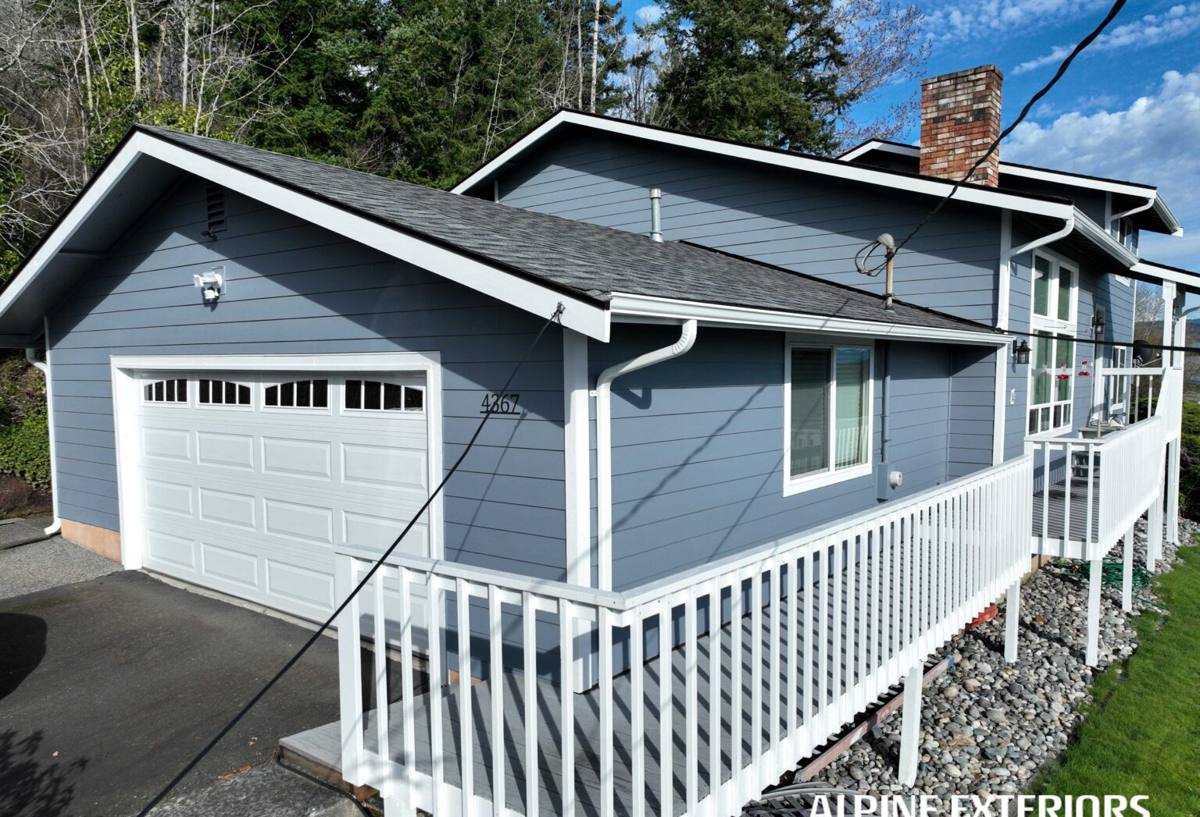
What South Hill's Climate Does to a Roof
Moss and Organic Growth
Shaded, north-facing slopes in South Hill can stay damp for days after a storm passes. That's ideal growing conditions for moss and algae, which root into shingle granules, lift shingle edges, and hold water against the roof deck long after the rain has stopped. Left alone, moss doesn't just look bad — it shortens the life of the roofing material underneath it.
Driving Rain and Wind-Driven Water
Bellingham's storms often come in sideways off the water, and elevation adds wind exposure. Driving rain finds any weak point — a lifted shingle tab, a gap in flashing, an under-sized nail — and pushes water where gravity alone wouldn't take it. This is why so many "mystery leaks" show up nowhere near where the water actually entered the roof.
Salt Air and Metal Fatigue
Proximity to Bellingham Bay means metal roofing components — flashing, fasteners, gutters, vent caps — face slow corrosion over time. It's not dramatic, but it adds up, and it's a factor we account for when we spec repair materials rather than just matching what's already there.
Tree Debris and Blocked Drainage
Mature trees are part of what makes South Hill a nice place to live, but needles, cones, and leaf litter collect in valleys and behind chimneys, damming water that should be draining off the roof. That standing water is one of the most common causes of the leaks we get called out for.
Common Roof Problems We Find in South Hill Homes
- Moss-lifted shingles on shaded north- and east-facing slopes, especially under tree canopy
- Failed or corroded flashing around chimneys, skylights, and roof-to-wall transitions
- Clogged valleys and gutters from needle and leaf buildup, causing water to back up under shingles
- Aging materials on older homes where the roof is original or near the end of its service life
- Nail pops and lifted tabs from wind exposure on the hill
- Soft or spongy decking where long-term moisture intrusion has gone unaddressed
What a Correct Repair Actually Involves
A lot of roof repairs done wrong aren't done wrong because of bad materials — they're done wrong because the crew patched the symptom and never found the cause. If we caulk over a flashing gap instead of replacing the flashing, or shingle over wet decking instead of drying and inspecting it first, the repair looks fine for a season and then fails again.
Our approach on every repair call is the same regardless of the size of the job:
- Find the actual entry point. Water often travels along the underlayment or decking before it shows up as a stain inside, so the visible leak and the real leak are frequently in different spots.
- Check what's underneath. If shingles are compromised, we look at the decking below them for soft spots, rot, or delamination before closing anything back up.
- Address moss and moisture at the root, not just the surface. Removing moss without addressing the shade, drainage, or ventilation issue that let it grow just means it comes back.
- Match materials responsibly. We use materials and fastener types suited to Bellingham's marine climate, not whatever is cheapest, and we're upfront if an exact match to older materials isn't available.
- Confirm the fix before we leave. A repair isn't done until we've checked that the surrounding area — flashing, seams, fasteners — is also sound, not just the spot that was reported.
Our Process, Start to Finish
| Step | What Happens |
|---|---|
| 1. Inspection | We walk the roof and attic (where accessible) to trace the leak or damage to its actual source, not just its symptom. |
| 2. Diagnosis & Estimate | You get a plain-language explanation of what's wrong, what caused it, and a written estimate before any work starts. |
| 3. Repair | We complete the agreed scope — flashing, shingles, decking, moss treatment, or a combination — using materials suited to this climate. |
| 4. Cleanup & Walkthrough | Debris and old material are cleared, and we walk you through what was done and what to watch going forward. |
Repair or Replace? How We Help You Decide
Not every roof problem in South Hill calls for a full replacement, but not every leak should be patched forever, either. We give you an honest read on which side of that line your roof is on.
| Factor | Leans Toward Repair | Leans Toward Replacement |
|---|---|---|
| Age of roof | Well within expected service life | At or past expected lifespan for the material |
| Extent of damage | Isolated to one area (flashing, one slope, one valley) | Widespread across multiple slopes |
| Decking condition | Solid, dry, no rot | Soft, delaminated, or repeatedly wet |
| Moss/moisture history | First occurrence, addressable at the source | Chronic, recurring despite past treatment |
| Shingle condition elsewhere | Granule loss and wear limited to the repair area | Widespread granule loss, brittleness, curling |
If your roof is closer to the "repair" column, we'll say so plainly. We don't push replacement on a roof that has good years left in it.
Materials and Methods We Use
For South Hill's shaded, wet conditions, we pay particular attention to a few things beyond just matching shingle color:
- Corrosion-resistant flashing and fasteners appropriate for a marine-influenced climate, not standard interior-grade hardware
- Proper underlayment at repair areas so a future leak doesn't reach the decking even if a shingle fails again
- Moss treatment methods that clean the surface without damaging granules, paired with a conversation about long-term prevention (shade, debris, and airflow) rather than a one-time spray and forget
- Attic and roof ventilation checks, since poor ventilation traps moisture from the inside out and accelerates the same problems the weather causes from the outside
We frame material choices around what holds up in this specific climate, and we'll tell you plainly if a particular product or shortcut isn't something we're willing to install because of how it performs in wet, shaded conditions — not because of marketing claims one way or the other.
What Roof Repair Costs Depend On
We don't quote a number until we've seen the roof, but the honest answer is that repair cost in South Hill depends on a handful of factors, not a flat per-square-foot rate:
| Factor | Why It Matters |
|---|---|
| Roof pitch and access | Steeper slopes and hillside lots can affect setup time and safety equipment needed |
| Extent of hidden damage | Decking replacement adds cost beyond surface-level shingle or flashing work |
| Material availability | Matching older or discontinued materials can take more time to source |
| Scope of moss/moisture treatment | Isolated cleaning is different from treating a chronic recurring problem |
| Number of penetrations | Chimneys, skylights, and vents each add flashing detail work |
We'd rather give you a real number after looking at the roof than a range that doesn't mean much once we're actually up there.
Why It Matters That We Already Work in South Hill
A crew that regularly works this neighborhood knows what to expect before the ladder goes up: hillside access considerations, tree cover patterns, and the age range of homes common to the area. That's not a small thing when it comes to diagnosing a leak correctly the first time instead of guessing. We also understand that a home on a slope has different drainage behavior than one on flat ground, which changes where we look first for water intrusion.
Being local to Bellingham and familiar with Whatcom County's building requirements also means we're not learning the climate on your roof — we've already seen how moss, salt air, and driving rain behave on homes like yours.
A Simple Maintenance Checklist for South Hill Homeowners
- Clear needles and leaf debris from valleys and gutters at least twice a year, more often under heavy tree cover
- Look for dark streaking or green growth on shaded slopes, especially after winter
- Check attic spaces for damp insulation, staining, or musty odor after major storms
- Have flashing around chimneys and skylights inspected periodically, not just when a leak appears
- Trim overhanging branches that keep sections of the roof shaded and damp longer than necessary
- Address small leaks promptly — a slow drip today is often a soft deck board in a year
If you're noticing moss buildup, a stain on a ceiling, or just want a second opinion on a roof you're not sure about, we're happy to take a look. Fill out the form below for a free, no-pressure estimate — we'll tell you honestly what we find.