 Bellingham
 Ferndale Siding Takes a Different Kind of Beating
Ferndale homes sit close enough to the Salish Sea that salt-laden air reaches siding on every wall, not just the side facing the water. Add Whatcom County's driving winter rain, cool damp summers, and a moss season that can run eight months or longer, and you've got a climate that finds every weak point in a home's exterior. Siding here doesn't fail because it's old — it fails because moisture, salt, and organic growth found a gap and never left.
That's why siding repair in Ferndale isn't the same job as siding repair in a dry inland town. A patch that would hold up fine in eastern Washington can fail here in a season if it doesn't account for how water actually moves through this climate. We've repaired enough siding on Ferndale homes to know where the damage starts and what it takes to actually fix it, not just cover it up.
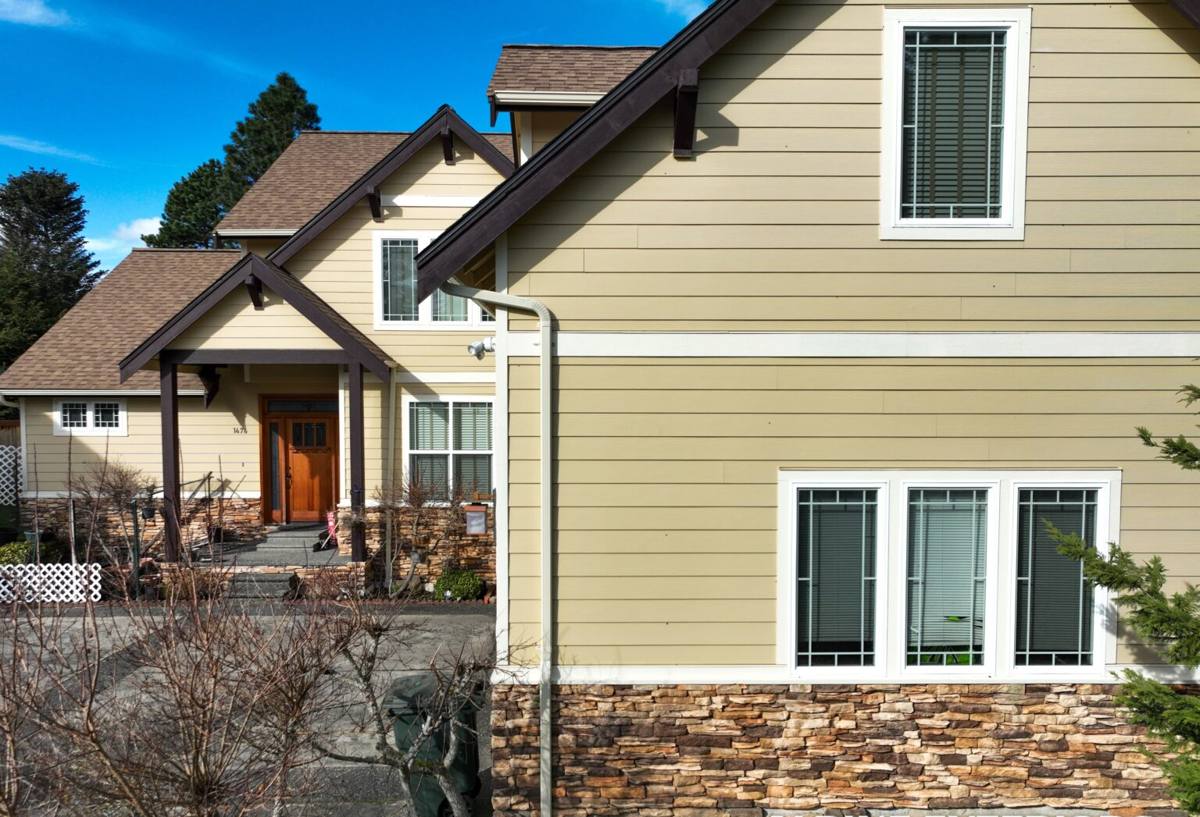
Where Damage Actually Starts on Ferndale Homes
Salt Air and Coastal Moisture
Salt air accelerates corrosion on fasteners, flashing, and any exposed metal trim. Once fasteners start rusting behind the siding, they lose their grip, boards loosen, and water finds a new path inward. This process is slow and mostly invisible until a board is already soft or a seam has opened up.
Driving Rain and Wind-Driven Water
Wind off the water doesn't just fall — it pushes rain sideways into laps, seams, and trim joints that were never designed to handle water hitting them head-on. Over years, this wears down caulk lines and finds its way behind poorly lapped boards, especially on the windward side of a house.
Moss, Mildew, and Prolonged Dampness
Whatcom County's long wet season keeps north-facing walls, shaded siding, and anything under tree cover damp for weeks at a stretch. Moss and mildew don't just look bad — they hold moisture against the siding surface far longer than open, sun-exposed walls, which speeds up rot in wood-based products and breaks down paint film faster than most homeowners expect.
Signs Your Siding Needs Repair — Not Just Paint
- Soft or spongy spots when you press on a board, especially near the bottom courses
- Visible gaps, cracks, or separation at seams and corner trim
- Peeling or bubbling paint that keeps coming back in the same spots after repainting
- Dark streaking, moss buildup, or a persistently damp look on shaded walls
- Warped, buckled, or bowed boards, particularly on the side that takes the worst weather
- Visible daylight or drafts from inside near exterior walls
- Rust staining running down from nail heads or metal trim
Any one of these can be an isolated issue. Several of them together, especially clustered in one area, usually mean water has been getting behind the siding for a while — which changes what an honest repair looks like.
What a Correct Repair Actually Involves
A siding repair that only replaces the board you can see is a repair that's likely to fail again. Here's what we check before we call a repair complete:
Find the Real Source, Not Just the Symptom
Damaged siding is often a downstream sign of a flashing, caulking, or drainage problem elsewhere. We trace water intrusion back to its actual entry point — a failed kick-out flashing, a gap at a window head, a seam that was never properly lapped — before we touch the siding itself.
Check What's Behind the Siding
Once boards come off, we look at the water-resistive barrier, sheathing, and framing underneath. If moisture has reached the sheathing, patching the visible siding without addressing what's underneath just seals the problem back in.
Match Material and Method, Not Just Color
A repair that doesn't match the existing siding's profile, reveal, and finish stands out and can also behave differently in weather — expanding, contracting, or absorbing moisture at a different rate than the surrounding material. That mismatch is often where the next round of damage starts.
Reinstall with Proper Flashing and Fastening
Corrosion-resistant fasteners, correctly lapped water-resistive barrier, and flashing detailed to shed water — not just plug a hole — are what separate a repair that lasts from one that buys a season or two.
Common Siding Materials on Ferndale Homes — and How They Hold Up to Repair
| Material | How It Ages in This Climate | Repair Considerations |
|---|---|---|
| Cedar / wood lap siding | Attractive but absorbs moisture readily; prone to rot, especially in shaded or damp-prone areas | Damaged sections often extend further than visible; matching weathered wood tone is difficult |
| Vinyl siding | Doesn't rot, but becomes brittle over time and can crack or warp; traps moisture behind it if installed with gaps | Discontinued colors and profiles make exact matches hard to find years later |
| Engineered wood (LP SmartSide and similar) | Vulnerable to swelling and edge deterioration if the factory seal is compromised by cutting, drilling, or impact | Once moisture gets into the substrate, the damaged area typically needs full panel replacement |
| James Hardie fiber cement | Non-combustible and dimensionally stable; resists moisture absorption and doesn't feed rot or insects | Individual planks can be cut in and matched cleanly; ColorPlus finish holds color well over time |
We install and repair with James Hardie fiber cement because it holds up to this specific mix of salt air, rain, and moss without the moisture sensitivity that makes wood and engineered wood products harder to repair reliably over the long run.
Our Ferndale Siding Repair Process
- On-site inspection — we assess the visible damage and check surrounding areas, trim, and flashing for related issues
- Diagnosis — we identify the actual water entry point, not just the symptom
- Clear scope and estimate — you get a straightforward explanation of what needs to happen and why, in plain terms
- Removal — damaged material comes out, along with anything compromised underneath
- Barrier and flashing correction — we fix the water-resistive barrier and flashing detail before any new siding goes back on
- Reinstallation — matched material, correct fasteners, proper lapping and sealing
- Final check — we walk the repair with you before we call it done
Repair or Replace? What Actually Drives the Decision
| Factor | Leans Toward Repair | Leans Toward Replacement |
|---|---|---|
| Extent of damage | Isolated to one or two areas | Recurring in multiple spots or across a whole wall |
| Age and condition of remaining siding | Siding is otherwise sound and well-maintained | Siding is near end of service life or already showing widespread wear |
| Underlying moisture damage | Sheathing and framing are dry and intact | Rot or moisture has spread into structural components |
| Material availability | Matching material is available for a clean repair | Product is discontinued or too weathered to match |
We'll always tell you honestly which side of that line your home falls on. Plenty of Ferndale homes just need a targeted repair; we don't push a full replacement when a correctly done repair will genuinely hold.
Why We Use James Hardie for Repairs, Too
Even when we're only replacing a section of siding, the material matters. James Hardie fiber cement is engineered for climates like this one — it doesn't swell with moisture, it resists the freeze-thaw and wet-dry cycling common in Whatcom County winters, and it's non-combustible, which matters as wildfire smoke and dry-season fire risk become more of a regional concern even in wetter parts of the state. Its ColorPlus factory finish also means a repaired section can match the existing color far more reliably than field-painted alternatives, which is a real problem when you're trying to blend new boards into siding that's weathered for years.
We don't install or repair with LP SmartSide, vinyl, or cedar, because we've seen how those materials perform once moisture finds a way in around this coastline. Hardie repairs go back on the wall built to handle the same salt air and rain that caused the original damage — not just to look fixed for a season.
Why a Crew That Already Works Ferndale Matters
Siding repair done wrong is expensive twice — once for the bad repair, and again when it fails and the damage has spread. A crew that already works Whatcom County homes knows which walls in Ferndale take the worst weather, how far moisture typically travels once it gets behind a board, and what flashing details actually hold up here versus what looks fine on paper. That local experience shows up in the difference between a repair that lasts and one that doesn't.
Questions to Ask Before You Hire a Siding Repair Contractor
- Will you check what's behind the damaged siding, or only replace what's visible?
- What caused this damage, and how does the repair address that cause?
- What material and fasteners will you use, and how will they be matched to my existing siding?
- Is your crew licensed and insured to work in Washington?
- Will I get a written scope of work before anything is removed?
- What's your plan if you find additional damage once the siding is off?
A contractor who can answer these clearly, before any work starts, is one who's done this kind of repair enough times to know what actually matters.
If you're seeing soft boards, open seams, moss buildup, or paint that won't stop peeling, it's worth having someone take an honest look before it spreads further. We offer free, no-pressure estimates for siding repair in Ferndale and the surrounding area — fill out the form below and we'll take it from there.