 Bellingham
 Fairhaven's Waterfront Setting Puts Extra Demands on Siding
Fairhaven sits close enough to Bellingham Bay that the weather here isn't quite the same as a few miles inland. Homes in this part of Bellingham take on a steady dose of marine air, wind-driven rain, and a moss season that can stretch from October through April in a wet year. That combination is hard on exterior materials that weren't built for it, and it's a big reason so many houses in this neighborhood need siding work sooner than homeowners expect.
This page is specifically about siding installation for Fairhaven properties — what the local climate demands, what a correctly installed job looks like, and why we install one product system rather than offering a menu of options. If you're comparing siding materials in general, that's a separate conversation; here we're talking about doing the job right, on this coastline, the first time.
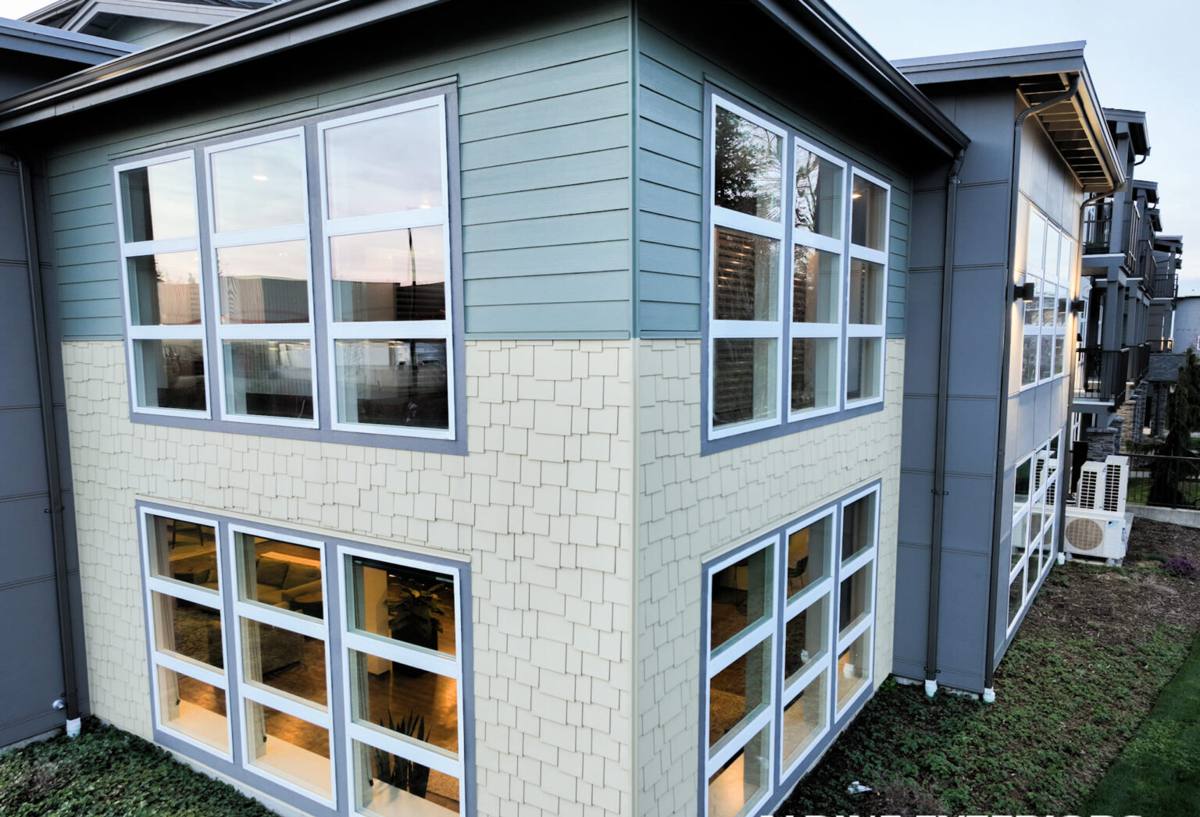
The Three Forces Working Against Your Siding Here
Salt-Laden Marine Air
Proximity to Bellingham Bay means airborne salt and moisture reach exterior walls even on days without rain. Over years, that salt exposure accelerates corrosion on fasteners and trim, degrades paint films faster than manufacturers' inland test data predicts, and speeds up the breakdown of materials that rely on surface coatings alone for protection.
Driving Rain Off the Water
Wind off the water doesn't just bring rain straight down — it drives it sideways into wall assemblies, seams, and butt joints. Siding that isn't installed with the right clearances, flashing, and drainage path will eventually let that water find a way behind the cladding, where it does damage you can't see until it's already expensive.
A Long, Damp Moss Season
Whatcom County's wet season is long, and Fairhaven's tree cover and shaded lots keep siding damp for extended stretches. Moss and algae growth on north- and west-facing walls is common, and repeated moisture cycling — wet, damp, wet again — is what breaks down materials that swell, delaminate, or hold water at the surface.
Why We Install Only James Hardie Fiber Cement Here
We install James Hardie fiber cement siding exclusively — we don't offer vinyl, LP SmartSide, Cemplank, Allura, primed spruce, or cedar. That's a deliberate standard, not a sales preference, and in a climate like Fairhaven's the reasoning holds up especially well.
Fiber cement is dimensionally stable in a way wood-based and engineered-wood products aren't — it doesn't absorb and release moisture the same way, which matters directly when a house is cycling through a wet season for six months at a stretch. It's also non-combustible, which matters for wildfire-adjacent insurance considerations even on the wet side of the state. James Hardie's factory-applied ColorPlus finish is baked on under controlled conditions rather than field-applied, and it's engineered to resist the fading and cracking that marine air and UV exposure cause faster here than in drier inland areas.
James Hardie also builds region-specific product lines — including HZ5 formulations engineered for climates with more moisture exposure — rather than a single one-size-fits-all board. For a neighborhood dealing with salt air, wind-driven rain, and a long moss season, that's the difference between a product designed for this problem and one that merely tolerates it.
What a Correct Siding Installation Actually Involves
The board itself is only part of the system. Most siding failures we're called out to inspect in this area weren't caused by bad material — they were caused by installation shortcuts that let water management fail. A correct job includes:
- A continuous, properly lapped water-resistive barrier behind the siding, with no gaps at penetrations
- Correct flashing at every window, door, and roof-to-wall intersection
- Proper fastener type, spacing, and depth per the manufacturer's installation instructions
- Minimum clearances at grade, roof lines, and decks so siding never sits in standing water or gets buried by soil or mulch
- Sealed, back-primed cut ends at every joint, corner, and penetration
- A drainage plane that lets any incidental moisture that gets behind the cladding find its way back out
Skip any one of these and the siding can look fine for a few years while moisture quietly does damage behind it — which is exactly the failure pattern we see on older homes in wetter, coastal-adjacent neighborhoods.
How We Approach a Fairhaven Installation
Every home is different, but the sequence of a correctly run installation doesn't change:
- On-site assessment. We look at the existing siding, wall assembly, and any signs of moisture damage before quoting anything — you can't price a job correctly without knowing what's underneath.
- Removal and sheathing inspection. Old siding comes off and we inspect the sheathing underneath for rot or soft spots, which is common on homes with a history of failed siding or poor flashing.
- Repair before covering anything up. Any damaged sheathing or framing gets repaired — covering compromised wall structure with new siding just hides a problem that gets worse.
- Water-resistive barrier and flashing. This is the layer that actually keeps a house dry; we treat it as non-negotiable, not an afterthought.
- James Hardie installation to manufacturer spec. Fastening patterns, clearances, and joint treatment follow James Hardie's published requirements — this is also what keeps the manufacturer's warranty valid.
- Caulking, trim, and finish detail. Careful sealant work at penetrations and joints is a small line item that prevents a large future problem.
- Final walkthrough and cleanup. We review the finished work with the homeowner before we consider the job done.
Common Problems We Find on Older Fairhaven Homes
Fairhaven has a mix of older housing stock and newer construction, and the older homes especially tend to show a consistent set of issues by the time siding is due for replacement:
| What we typically find | Why it happens here |
|---|---|
| Moss and algae staining concentrated on shaded, north-facing walls | Long wet season plus tree cover keeps those walls damp for months at a time |
| Soft or delaminating sheathing near old window flashing | Driving rain finds gaps in aging flashing details over years of wind off the water |
| Paint failure and fading well ahead of the paint's rated lifespan | Salt air accelerates UV and coating breakdown faster than inland test conditions predict |
| Siding sitting too close to grade or buried by landscaping | Additions of soil, mulch, or hardscape over time reduce original clearances |
Comparing Siding Materials in a Marine Climate
We only install James Hardie, but homeowners often ask how it stacks up against the alternatives they've seen elsewhere. Here's the honest comparison for a climate like this one:
| Material | Behavior in salt air & driving rain | Moss/algae resistance | Long-term maintenance |
|---|---|---|---|
| James Hardie fiber cement | Dimensionally stable, factory-finished coating holds up well | Good; smooth surface sheds moisture better than porous materials | Occasional cleaning and repaint cycle on trim |
| Vinyl | Can warp or become brittle with UV and temperature cycling over time | Seams and laps can trap moisture and debris | Low upkeep but limited repairability when damaged |
| LP SmartSide / engineered wood | Wood-based core is sensitive to sustained moisture exposure | Prone to swelling and edge damage in prolonged wet cycles | Requires diligent caulking and coating upkeep |
| Cedar | Absorbs and releases moisture with weather cycles | Susceptible to moss, mildew, and rot without regular treatment | Ongoing staining/sealing on a recurring schedule |
A Homeowner's Checklist Before Hiring for a Siding Job
Whether you hire us or someone else, these are the questions that separate a job that lasts from one that fails early in a climate like this:
- Does the contractor inspect and repair sheathing before installing new siding, or just cover what's there?
- Will they detail their water-resistive barrier and flashing approach in writing, not just "we'll handle it"?
- Are they following the manufacturer's published installation instructions closely enough to keep the product warranty valid?
- Do they carry current WA state contractor licensing and insurance, and can they show it?
- Have they worked on homes in this specific area before, and do they understand the exposure differences a few miles can make?
- Is the estimate itemized, or a single vague number with no breakdown?
Why Local Installation Experience Matters in Fairhaven
A crew that mostly works drier, inland parts of Whatcom County can install siding perfectly correctly for that environment and still under-detail a job for a waterfront-adjacent neighborhood like this one. The clearances, flashing details, and even fastener choices that hold up fine a few miles from the bay aren't always enough this close to it. Working this neighborhood regularly means knowing which walls take the worst of the wind-driven rain, which older homes are likely to have hidden sheathing damage before the tear-off even starts, and how much clearance actually holds up through a full wet season here — not just on paper.
That local pattern-recognition doesn't show up on a spec sheet, but it's often the difference between a siding job that needs attention again in a decade and one that doesn't.
If your Fairhaven home needs new siding, we're happy to take a look and walk you through what we'd recommend and why — no pressure, no obligation. Request a free estimate below and we'll schedule a time to assess your home in person.