 Bellingham
 Why Ferndale Roofs Wear Differently
Ferndale sits close enough to the water and to open farmland that its roofs take a different kind of beating than a roof twenty miles inland. Homes here deal with salt-laden air drifting off Bellingham Bay and the Strait, long stretches of driving rain that comes in sideways off a southwest wind, and a moss season that can run nearly nine months out of the year in shaded, north-facing sections of a roof. None of that is unusual for Whatcom County, but it does mean a roof installed with generic, one-size-fits-all methods tends to show its age faster here than the same roof would in a drier climate.
A correctly installed roof in Ferndale isn't just about nailing shingles down in straight rows. It's about the underlayment choice, the flashing details, the ventilation path, and the fastener spec all being selected with this specific climate in mind. That's the standard we hold ourselves to on every Ferndale job, and it's the reason this page exists separately from a general new roof installation page — the details that matter here aren't identical to the details that matter in a dry inland town.
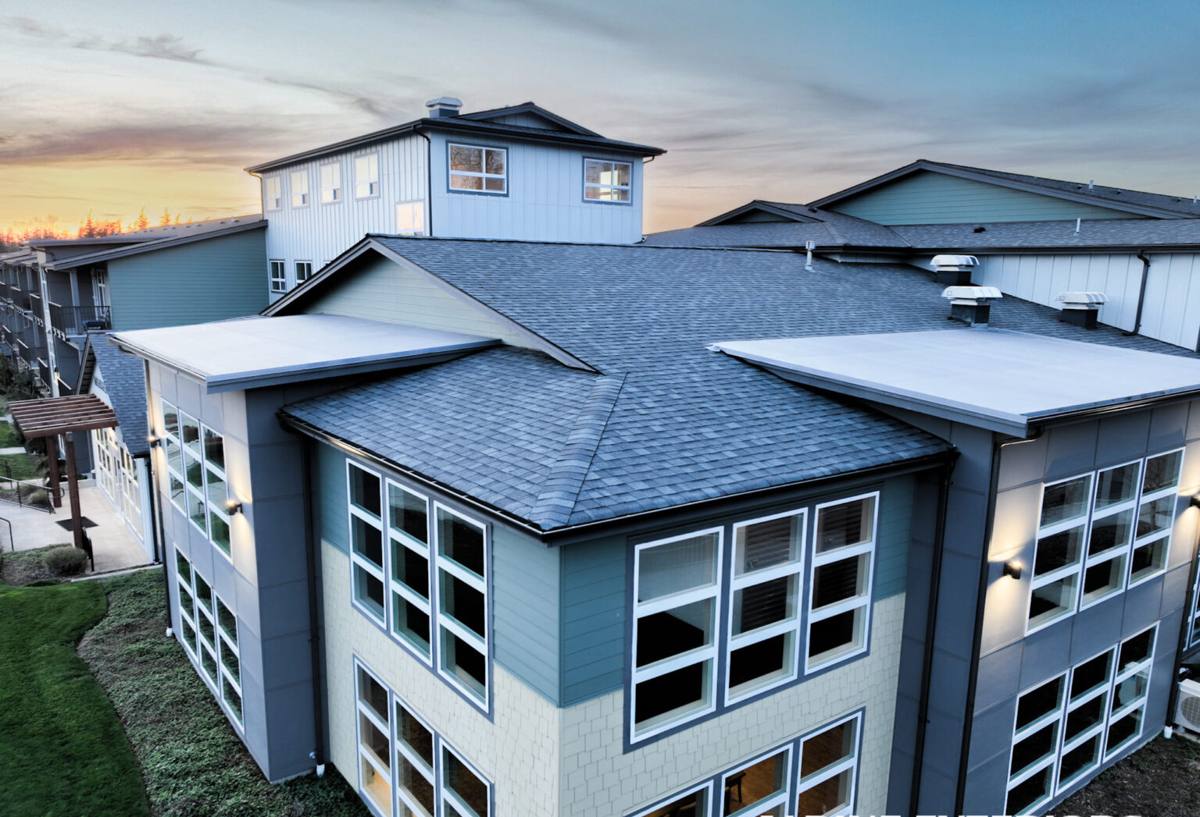
What a Correct New Roof Installation Actually Involves
A new roof is a system, not a single product. When we quote a new roof installation, every one of the following gets specified in writing — not assumed, not left to "whatever's standard":
- Tear-off and deck inspection — removing the old roofing down to the sheathing and checking for soft spots, delamination, or rot before anything new goes down
- Ice-and-water shield at eaves, valleys, and around every penetration, since these are the spots where wind-driven rain gets pushed uphill under standard felt
- Synthetic underlayment across the field of the roof, chosen for tear resistance in wind rather than the cheapest felt option
- Flashing at every wall intersection, chimney, and skylight — step flashing and counter-flashing, not just caulk and hope
- Balanced ventilation — intake at the eaves and exhaust at the ridge, sized to match the attic, so moisture has somewhere to go instead of condensing on the underside of the deck
- Fastening pattern and nail spec matched to the manufacturer's high-wind installation instructions, not the minimum builder-grade pattern
Skip any one of these and the roof may still look fine for a few years. The failures that show up in year four or five in this region — soft decking at a valley, moss-driven granule loss, a slow leak at a chimney — almost always trace back to one of these steps being shortcut during installation, not to bad luck.
Why Ventilation Gets Extra Attention Here
Whatcom County's damp, mild climate means attics rarely get the hot, dry stretches that bake moisture out the way they might in a drier region. If a roof deck stays cool and damp because ventilation is undersized, moss gets a head start from underneath as well as from rain sitting on the shingles above. We size intake and exhaust ventilation as part of every new roof quote, not as an upsell added later.
Choosing the Right Roofing Material for a Ferndale Home
There's no single "best" roofing material — the right choice depends on your home's slope, your budget, and how much long-term maintenance you're willing to take on. Here's how the common options actually compare for a home in this climate:
| Material | Typical Lifespan Here | Moss/Moisture Behavior | Maintenance Load |
|---|---|---|---|
| Architectural asphalt shingle | 25-30 years | Good with proper ventilation and periodic cleaning | Low to moderate |
| Standing seam metal | 40-50+ years | Sheds moss and debris well due to smooth, sloped surface | Low |
| Synthetic/composite shake | 30-40 years | Resists moisture absorption better than real wood | Low to moderate |
| Cedar shake (natural wood) | 20-25 years in this climate | Absorbs moisture, needs regular treatment to resist moss and rot | High |
We install architectural asphalt and metal roofing most often in Ferndale because they hold up to the moisture cycle here with the least ongoing homeowner effort. Natural cedar shake can look great, but in a climate this wet it needs a real maintenance commitment — periodic cleaning, treatment, and closer inspection — to avoid the moss and moisture problems that shorten its life. That's a genuine trade-off worth knowing before you commit, not a knock on the material itself.
Moss, Moisture, and the Long Game
Moss is the single most common complaint we hear from Ferndale homeowners about their existing roof, and it's almost always a symptom rather than the root problem. Moss needs shade, moisture, and a surface to grip — a north-facing slope under overhanging trees checks all three boxes. Once it takes hold, moss holds water against the roofing material, lifts shingle edges, and accelerates granule loss.
A new roof installation is the best time to get ahead of this, because there are permanent options available during install that aren't practical to retrofit later:
- Zinc or copper strips installed near the ridge, which release trace metal ions with every rain that discourage moss regrowth over the roof's life
- Correct shingle selection — some products include algae-resistant granules built in, which helps with the related issue of dark streaking
- Trimming back overhanging branches where practical, to reduce the shade and debris that feed moss growth
- Proper valley and gutter detailing so water doesn't pool in the low spots where moss establishes fastest
None of this eliminates moss forever — nothing does in this climate — but it stretches the time between cleanings and reduces how aggressively moss returns.
Our Installation Process, Start to Finish
We keep the process the same on every job because consistency is what prevents the details above from getting missed:
- On-site inspection and estimate — we walk the roof (or use a lift for steep pitches), check the attic for ventilation and moisture signs, and measure for an accurate material quote
- Written scope of work — underlayment type, flashing plan, ventilation changes, and material spec are all listed before you sign anything
- Permit pulled where required — a new roof installation in Whatcom County typically requires a permit, and we handle that filing
- Tear-off and deck check — old roofing removed, deck inspected, any damaged sheathing replaced and documented before covering it up
- Installation — underlayment, flashing, and roofing material installed to the manufacturer's specified fastening pattern
- Cleanup and magnetic nail sweep — job site and yard cleared of debris and stray fasteners
- Final walkthrough — we review the finished roof with you and go over warranty paperwork before we consider the job done
What a New Roof Costs, and What Actually Drives the Price
Every roof quote should be specific to your house, but the factors that move the price up or down are consistent:
| Cost Factor | Why It Matters |
|---|---|
| Roof size and number of stories | More square footage and steeper access both add labor time |
| Roof complexity (valleys, dormers, chimneys) | Each penetration and valley needs individual flashing work |
| Deck condition underneath | Rotted or soft sheathing found during tear-off adds material and labor to replace |
| Material selected | Asphalt shingle, metal, and composite shake carry different material costs and labor time |
| Ventilation upgrades needed | Adding intake or exhaust vents where the current attic is undersized |
We won't quote a number over the phone without seeing the roof — anyone who does is guessing, and a guess isn't useful to you when you're comparing bids. A proper estimate accounts for your specific roof, not a national average.
Signs Your Ferndale Home Needs a New Roof, Not Another Patch
Repairs make sense for isolated problems on an otherwise sound roof. A full replacement makes more sense when you're seeing several of these at once:
- Shingles cupping, curling, or losing granules across large sections rather than one spot
- Moss buildup returning within months of a cleaning, especially on north-facing slopes
- Soft or spongy spots when walking the roof, which usually mean deck damage underneath
- Daylight visible through the attic roof boards, or damp insulation after a storm
- A roof older than 20-25 years that's never had ventilation upgraded
- Multiple repair calls in the same year for different leaks
If only one or two of these apply, a repair or targeted section replacement is often the honest recommendation — we'll tell you that directly rather than push a full tear-off you don't need yet.
Why a Crew That Already Works Ferndale Matters
Roofing crews who mostly work in drier parts of the state can install a technically correct roof and still miss the details that matter specifically here — the extra attention to valley flashing in a high-rainfall area, the ventilation math for a persistently damp attic, the moss-prevention details that only make sense once you've seen what a few Whatcom County winters do to an under-ventilated roof. A crew based in Bellingham and working Ferndale regularly has already seen how local roofs age, which is a different kind of knowledge than a spec sheet.
It also means we're a short drive away if something needs a look after a storm, and that our crew already knows the local building department's permitting expectations rather than learning them on your job.
Permits, Warranty, and What Happens After Installation
A new roof installation in Whatcom County typically requires a building permit, and we handle that filing as part of the job rather than leaving it to you. You'll get manufacturer warranty documentation for the materials installed, along with our workmanship coverage in writing — ask us for the specific terms during your estimate, since warranty structure varies by material and manufacturer program.
After installation, a roof in this climate benefits from an occasional visual check, especially after a heavy windstorm or before the wet season ramps up in the fall. We're happy to talk through a simple maintenance routine during your estimate so you know what to watch for on your specific roof.
If your Ferndale home needs a new roof, or you're not sure yet whether it needs repair or replacement, we're glad to take a look. Fill out the form below for a free, no-pressure estimate — we'll walk the roof, answer your questions honestly, and give you a written scope before you decide anything.