 Bellingham
 Roof Repair Built for Ferndale's Weather
Ferndale sits close enough to the water that homes here take a different kind of beating than roofs twenty miles inland. Salt-laden air off the Strait moves through on the prevailing winds, driving rain comes in sideways during winter storms, and the gray, damp stretches from fall through spring give moss more time to get established than almost anywhere else in the Pacific Northwest. None of that means a roof is doomed — it means repairs have to account for how this specific climate wears a roof down, not just patch what's visible on the surface.
We work on roofs throughout Whatcom County, and Ferndale's mix of older farmhouses, established neighborhoods, and newer construction near the edges of town gives us a good cross-section of what actually fails here and why. This page covers what we look for, what a proper repair involves, and how to think about a repair versus letting a problem sit.
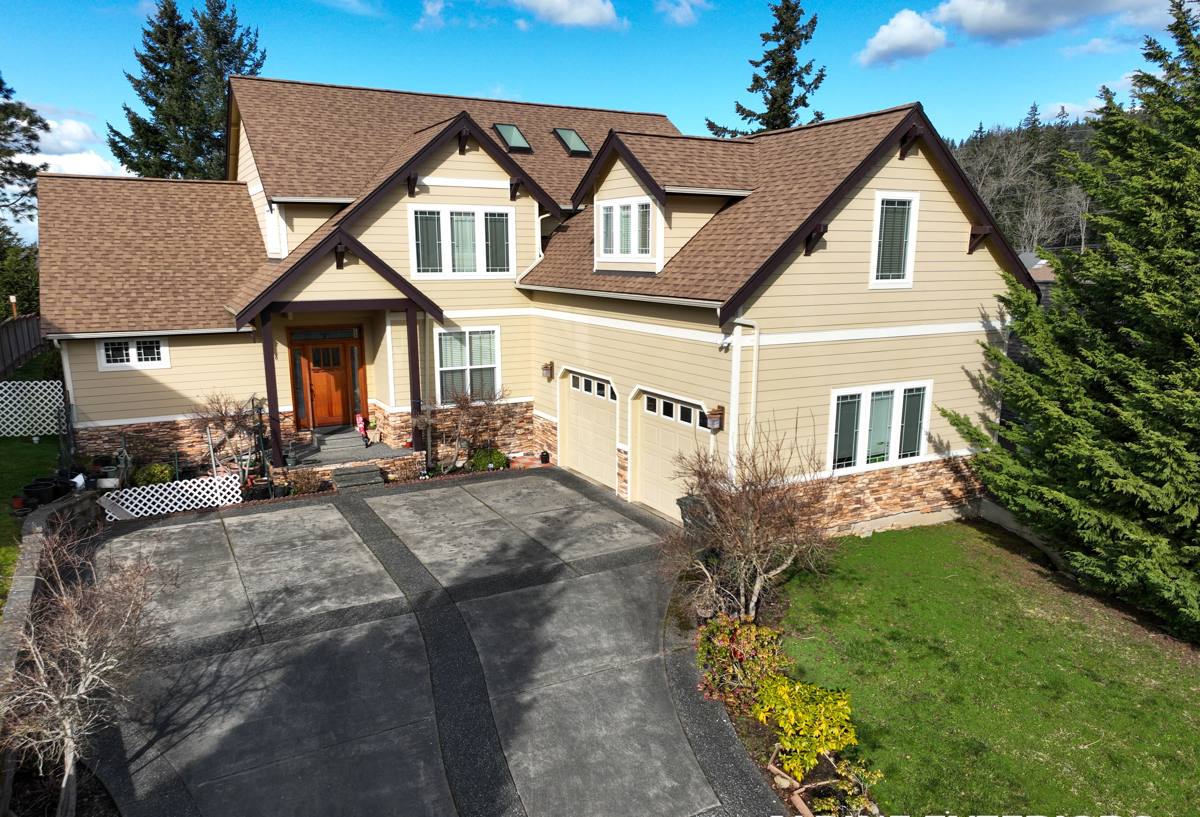
What Ferndale's Climate Does to a Roof
Moss and Organic Growth
Moss doesn't just sit on top of shingles looking bad — it holds moisture against the roofing material for weeks at a time, which accelerates granule loss on asphalt shingles and can work its way under shingle tabs and shakes as it grows. In a climate with a genuinely long moss season, a roof that isn't cleaned and treated periodically will show accelerated wear years before its rated lifespan is up. Moss buildup in valleys and along the north-facing slopes (which dry slowest) is one of the first things we check.
Driving Rain and Wind-Driven Water
Storms coming off the water don't always drop rain straight down. Wind-driven rain gets pushed sideways and upward under flashing, around vent boots, and into any gap in the roofing system that would stay dry in a calmer climate. This is why so many "mystery leaks" in this area trace back to flashing details rather than the field of the roof itself — step flashing at wall intersections, chimney flashing, and valley flashing are common culprits.
Salt Air and Metal Fasteners
Proximity to Bellingham Bay and the Strait means airborne salt is a real, if slower-acting, factor. Exposed metal fasteners, older flashing, and lower-grade hardware corrode faster here than they would further inland. When we're repairing a roof in Ferndale, we're specifically checking fastener condition and flashing metal, not just assuming standard-grade materials will hold up as long as the manufacturer's spec sheet suggests in a milder environment.
Signs a Ferndale Roof Needs Repair, Not Just Watching
- Water stains on interior ceilings or upper walls, especially after a windy rainstorm rather than a calm one
- Visible moss mats, especially in valleys, along eaves, or on north-facing slopes
- Granules collecting in gutters or at downspout outlets, a sign of accelerated shingle wear
- Curling, cupping, or missing shingles, particularly on slopes that catch the prevailing wind
- Soft or spongy spots when walking the roof (a sign of decking damage underneath)
- Rusted, lifted, or visibly corroded flashing around chimneys, skylights, or roof-to-wall intersections
- Daylight visible through the roof deck from inside an attic space
- Consistently damp or musty smell in an attic, even without an obvious active leak
Any one of these on its own might not be urgent. Two or more together, especially heading into fall storm season, is worth a proper look before it becomes a bigger job.
What a Correct Repair Actually Involves
A roof repair done right isn't just "find the leak, cover the hole." It's a sequence, and skipping steps is how the same leak comes back a year later under a different-looking patch.
1. Find the Real Source
Water travels. A stain on a ceiling might be ten feet from where water is actually entering the roof system, especially if it's running along a rafter or down the inside of decking before it drips. We trace the path rather than patching wherever the stain happens to be.
2. Check the Decking, Not Just the Surface
If water has been getting in for any length of time, the roof decking underneath the shingles or shakes may be soft, delaminated, or rotted. Replacing shingles over compromised decking doesn't fix anything — it just buys a little time before the same spot fails again, often worse.
3. Address Flashing Properly
Given how much of Ferndale's leak activity traces back to flashing, we treat flashing repair as its own step, not an afterthought. That means correct step flashing at wall intersections, properly lapped valley flashing, and vent boots that haven't cracked from sun and temperature cycling.
4. Match Materials Correctly
Patch materials need to match the existing roof's type, age, and profile as closely as possible — mismatched shingle color or a different shake profile isn't just a cosmetic issue, it can also mean different expansion behavior and water-shedding characteristics at the seams.
5. Clean Before You Close Up
If moss or debris caused or contributed to the failure, we clear it from the surrounding area before finishing the repair. Sealing a patch on top of an actively wet or moss-packed section just traps the problem.
Roof Repair vs. Roof Replacement: How We Think About It
| Factor | Leans Toward Repair | Leans Toward Replacement |
|---|---|---|
| Age of roof | Under roughly 15 years (asphalt) or well-maintained shakes | Near or past manufacturer's expected lifespan |
| Extent of damage | Isolated to one section, flashing, or a specific penetration | Widespread across multiple slopes |
| Decking condition | Solid, dry decking around the damaged area | Soft or rotted decking in multiple spots |
| Moss history | Light to moderate, treatable | Heavy, long-term growth with granule loss underneath |
| Repair history | First or second repair on this roof | Repeated repairs to the same or nearby areas |
We'll always tell you honestly which side of that table your roof falls on. A repair that's genuinely the right call is a repair we'll recommend — there's no benefit to us or you in replacing a roof that has years of good service left.
Our Repair Process
Inspection and Honest Assessment
We start with a full look at the affected area and the roof as a whole, not just the spot you called about. Given how leaks travel and how moss spreads, a roof with one visible problem often has a second one starting nearby.
Written Scope Before Any Work
You'll know what we're repairing, why, and roughly what it involves before anyone's on the roof. No surprise add-ons mid-job.
The Repair Itself
Decking replaced where needed, flashing corrected where it's failing, matching materials installed, and the surrounding area cleaned of moss or debris that contributed to the problem.
Walkthrough
We'll show you what was found and what was done, including anything worth keeping an eye on going forward — like a moss-prone section that would benefit from periodic treatment.
Rough Cost Factors
Roof repair costs vary a lot based on scope, so we won't quote a number without seeing the roof. What generally moves the price:
- Size of the damaged area and how much decking needs replacing
- Roof pitch and access — steep roofs and multi-story homes take more time and safety setup
- Roofing material type — asphalt shingle, cedar shake, and metal repairs each require different skills and materials
- How much flashing work is involved versus just field repair
- Whether moss removal and treatment are part of the scope
A small, isolated flashing repair is a very different job — and price — than a section with rotted decking and heavy moss buildup. That's exactly why we look before we quote.
Why a Crew That Works Ferndale Regularly Matters
A roofer unfamiliar with this specific stretch of Whatcom County might treat every leak as a generic shingle failure and miss that the real cause is wind-driven rain finding its way under a specific flashing detail, or moss that's been quietly holding moisture against the deck for two seasons. Working Ferndale roofs regularly means we already know which details tend to fail first in this climate — coastal wind exposure, long wet winters, and heavy moss pressure — and we check those spots first instead of guessing. That translates into a faster, more accurate diagnosis and a repair that's built to hold up against the conditions that caused the problem in the first place, not just a patch that looks fine until the next storm off the Strait.
If you're seeing signs of a leak, moss buildup, or storm damage on your Ferndale roof, we're glad to take a look and give you a straight answer about what it needs. Use the form below to request a free, no-pressure estimate.