 Bellingham
 Window Installation in Ferndale: Built for Salt Air, Driving Rain, and a Long Moss Season
Ferndale sits close enough to open water and to the flat, exposed farmland around it that its homes take a particular kind of weather beating: salt-tinged marine air, rain that arrives sideways more often than straight down, and a moss season that can run most of the year on any wall or sill that stays shaded. A window is the single spot in an exterior wall where all three of those forces converge at once. It's a manufactured seal set into a rough-framed opening, and if the installation doesn't account for what this climate actually does, the window itself can be a perfectly good product and still leak, fog, or rot at the sill within a handful of wet seasons.
This page is specifically about installing new windows in Ferndale, not a general services overview. Whether you're replacing failing windows on an existing home or putting windows into new construction or an addition, the installation details matter as much as the window you choose, and in Whatcom County's climate, sometimes more.
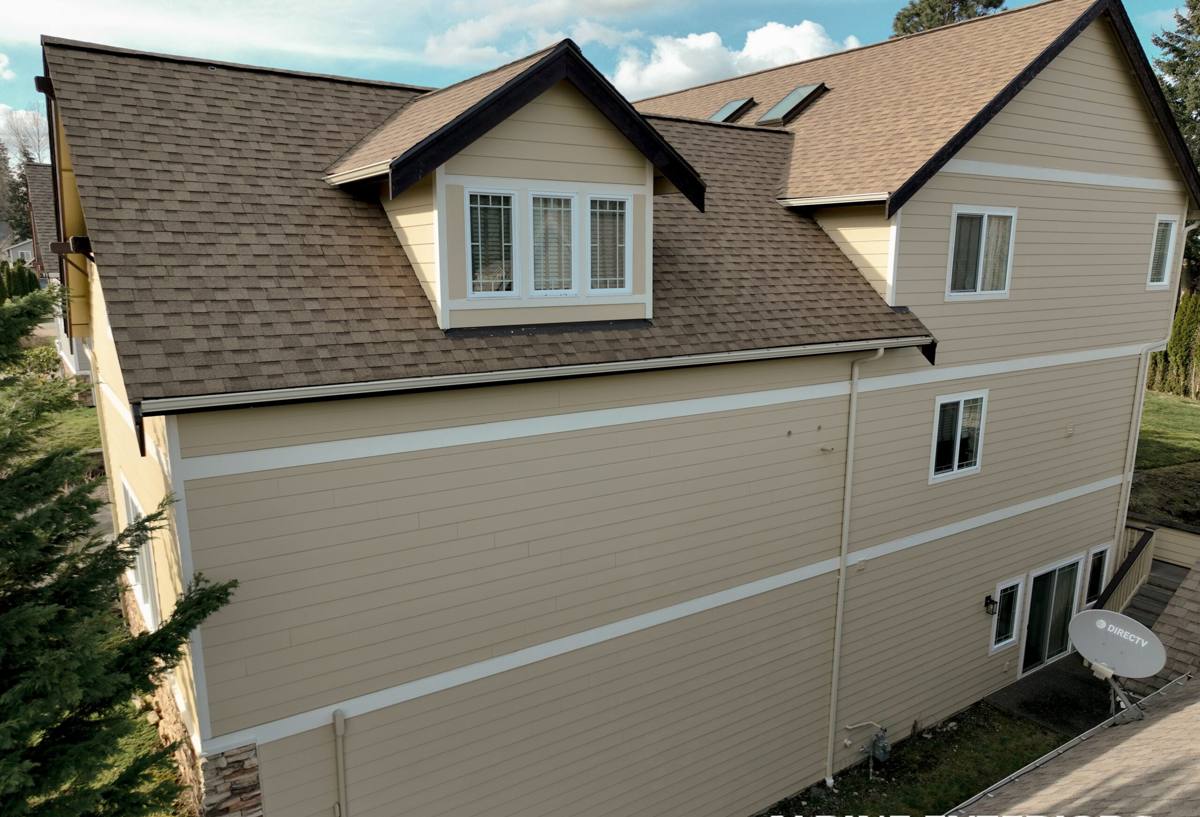
What This Climate Demands From a Window Installation
Salt Air and Hardware Corrosion
Even homes set back from the shoreline get a steady drift of salt-carrying air moving through this part of the county. Over years, that accelerates corrosion on window hardware, screen frames, and lower-grade fasteners, especially on elevations facing the prevailing weather. An installation that uses the wrong fastener finish or skips corrosion-resistant flashing tape sets a window up to develop problems years before the glass or frame itself would ever fail on its own.
Wind-Driven Rain and Flashing
Rain here rarely falls straight down. Wind pushes it sideways into head flashing, jamb details, and the sill beneath the frame, which is a far more demanding load than a simple annual rainfall total suggests. This is where most window problems in Ferndale actually originate. A window with a mediocre spec but correctly detailed flashing tends to outperform an expensive window installed with sloppy sill and jamb work, because the water intrusion happens around the frame, not through it.
Moss, Mildew, and Sill Rot
Shaded walls and sills that don't drain cleanly hold moisture longer here than in a drier climate, and that sustained dampness feeds mildew growth and, on wood components, slow rot at the sill and lower corners. It's gradual. Most homeowners don't catch it until paint starts failing or a sill feels soft underfoot, well after the moisture has already been working on the framing behind it.
What a Correct Window Installation Involves
Most window failures in this climate trace back to shortcuts in the installation, not defects in the window itself. On every installation, we treat the following as non-negotiable, not upgrades:
- A sill pan pitched to shed water outward instead of letting it pool under the frame
- Head flashing integrated with the housewrap above the opening, lapped so water sheds down and out rather than behind it
- Jamb flashing tied into the surrounding wall assembly, not relying on a bead of caulk to do that job alone
- Weep holes and drainage paths left open and functional after trim and finish work is complete
- Corrosion-resistant fasteners and hardware suited to sustained damp, salt-influenced air
- Insulation and air sealing around the frame that closes gaps without trapping moisture against the framing
None of these steps add meaningfully to the cost of a project relative to the window itself. Skipping any of them is exactly what turns a window that should last decades into one that's leaking inside the wall cavity within a few winters, often invisibly until the damage has already spread.
Full-Frame vs. Insert Installation: Which Fits Your Home
One of the first decisions on any window project is whether to do a full-frame installation, which removes the old window down to the rough opening and rebuilds the flashing from scratch, or an insert installation, which fits a new window into the existing frame. Insert installation is faster, less disruptive to surrounding siding and trim, and a sound choice when the existing frame is structurally solid and was properly flashed to begin with. Full-frame installation costs more and takes longer, but it's the honest call when there's already moisture damage at the sill or jambs, or when the original flashing was never done correctly. We'll tell you which situation your home is actually in, based on what we find once the old window is out, rather than defaulting to whichever option is quicker for us.
Choosing a Frame Material for Ferndale's Climate
There's no single correct answer for every home. Budget, sun exposure on a given wall, and how long you plan to stay in the house all factor in. What matters is understanding how each material actually behaves under sustained coastal moisture before you decide, rather than choosing on appearance or price alone.
| Frame Material | Behavior in Salt Air & Moisture | Typical Maintenance | Realistic Lifespan Here |
|---|---|---|---|
| Vinyl | Won't rot; performance depends heavily on installation and weld quality | Low; occasional track and weep-hole cleaning | 20-30 years |
| Fiberglass | Dimensionally stable across wet-dry cycling; strong resistance to corrosion | Low | 30-40+ years |
| Wood, painted or clad | Attractive but vulnerable at joints and sills without diligent upkeep | Higher; regular paint or finish maintenance | 15-30 years depending on upkeep |
| Aluminum | Conducts cold and can corrode in salt-influenced air unless well-finished | Moderate | 20-30 years |
We'll walk through which material fits a specific wall's exposure and your budget rather than defaulting to whichever product is easiest to move. A shaded, north-facing window and a sun-exposed south-facing one on the same Ferndale house don't always call for the same answer.
Our Installation Process
- On-site assessment. We look at the existing openings (or rough framing, for new construction), note exposure and drainage patterns specific to your lot, and measure precisely.
- Material selection. We go over frame material, glass package, and grille or trim options against your budget and the wall's actual sun and weather exposure.
- Scheduling and lead time. Windows are typically manufactured to order, so we give you a realistic timeline up front rather than a vague estimate.
- Careful removal. On replacement projects, we remove the old window and inspect the rough opening and sill for hidden moisture damage before anything new goes in.
- Sill pan and flashing. We build a pitched sill pan and integrate head and jamb flashing with the housewrap, the step most responsible for whether a window stays dry for decades or leaks within a few years.
- Setting, insulating, and sealing. The window is set plumb and square, insulated around the frame without overpacking, and sealed with attention to weep holes and drainage paths.
- Trim, finish, and walkthrough. Interior and exterior trim is finished to match the home, and we walk the completed work with you before calling the job done.
Signs a Ferndale Home Is Ready for New Windows
- Visible fogging or condensation between panes, usually meaning a failed seal on a double- or triple-pane unit
- Noticeable drafts or a cold spot near a closed window
- Soft, discolored, or spongy trim and sill material, especially on shaded or weather-facing walls
- Windows that are difficult to open, close, or latch compared to how they used to operate
- Peeling paint or bubbling finish around a wood-framed window
- Visible gaps, cracked caulk, or daylight around the frame from inside the house
- Water staining on interior wall or ceiling surfaces near a window
Any one of these is worth a professional look before another wet season passes. Left alone, most of them get more expensive to fix, not less.
Why a Local Whatcom County Crew Matters
A crew that installs windows across this county year-round sees how salt air, wind-driven rain, and moss actually behave on real houses over full seasons, not just how a product performs on a spec sheet. That shows up in practical decisions on install day: how much extra attention a given Ferndale wall needs because of tree shade or open exposure to prevailing wind, how a sill pan should be pitched for the amount of water that specific elevation actually sees, and which flashing details are worth the extra time so you're not dealing with a leak two winters later. Ferndale's mix of coastal exposure and open, lower-lying terrain isn't identical to every other town in the county, and a crew with local experience accounts for that instead of installing the same way everywhere.
We also handle siding, roofing, and decks, so if a window installation turns up moisture damage in the surrounding wall or trim, we can address it as part of the same conversation instead of sending you to find a second contractor.
If your Ferndale home needs new windows, whether that's a full replacement, a project tied to new construction, or an honest second opinion on what a window opening actually needs, we're glad to take a look. Reach out using the form below to schedule a free, no-pressure estimate.