 Bellingham
 Why Ferndale Homes Need a Different Approach to Siding
Ferndale sits close enough to the water and the marine layer that comes with it that siding here works harder than siding fifty miles inland. Homes in this part of Whatcom County deal with a three-part problem: salt-tinged air off the bay that accelerates corrosion on fasteners and trim, driving rain that comes in sideways during winter storms, and a long, damp moss season that keeps north-facing walls and anything under tree cover wet for weeks at a time. Any one of those on its own is manageable. Together, they're exactly the conditions that separate siding installed correctly from siding installed fast.
We install siding in Ferndale regularly, and the failures we get called out to repair almost never come from bad siding material. They come from water management details that were skipped, fasteners that were the wrong type for a coastal-adjacent climate, or a product that simply wasn't built to handle sustained moisture exposure. That's the gap this page is about.
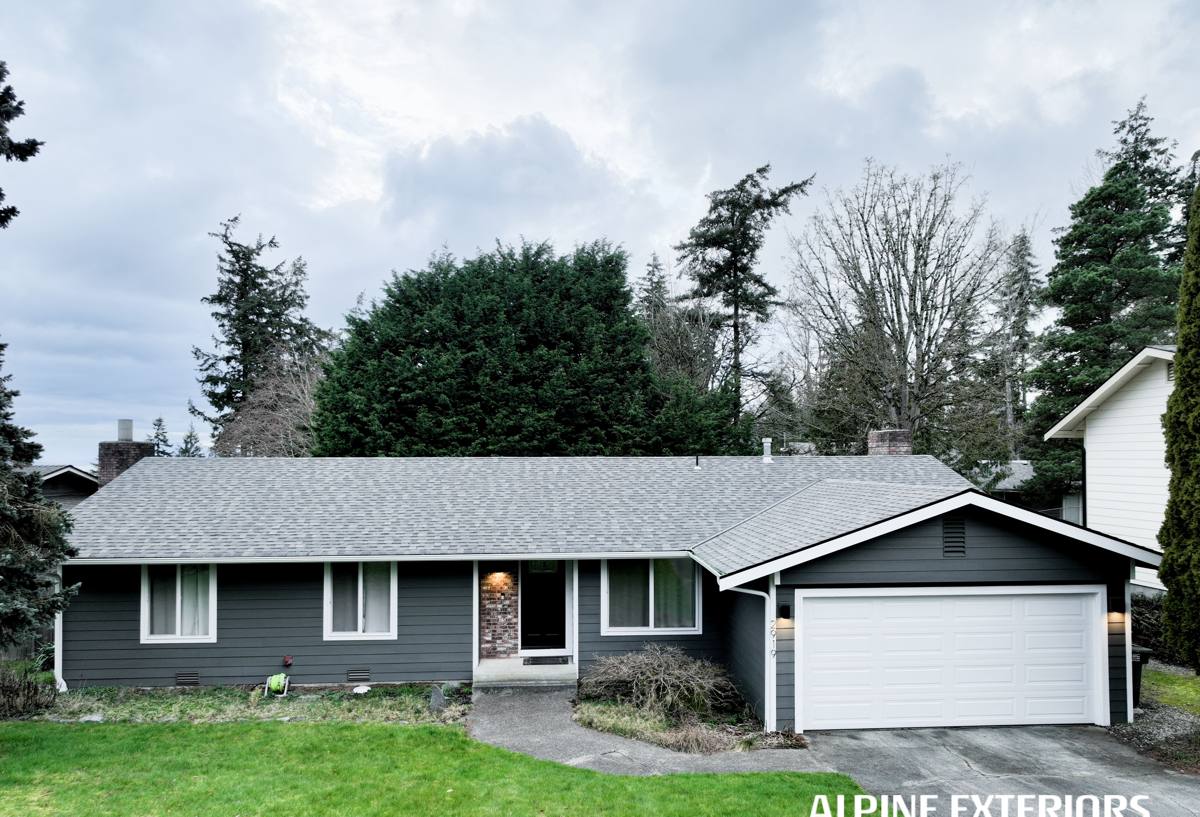
What Ferndale's Climate Actually Does to a Wall
Salt Air and Metal Fatigue
Proximity to Bellingham Bay and the Strait of Georgia means airborne salt reaches further inland than most homeowners assume, especially on days with onshore wind. Salt exposure speeds up corrosion on exposed fasteners, flashing, and trim hardware. Over years, corroding fasteners lose their grip, and once a fastener backs out or fails, the siding panel it was holding starts to move — which opens gaps for water.
Driving Rain
Whatcom County storms don't always fall straight down. Wind-driven rain pushes water sideways and upward under laps, around windows, and into any seam that isn't properly flashed or lapped. A siding system can be rated for high moisture exposure and still leak if the installation doesn't shed water correctly at every horizontal joint, corner, and penetration.
Moss Season
North sides of houses, shaded walls, and anything near mature trees stay damp for extended stretches in fall, winter, and spring. Moss and algae don't just look bad — sustained moisture against a wall surface is a stress test for the siding material itself, the paint or finish on top of it, and the water-resistive barrier behind it. Products that absorb moisture or swell when wet are at a real disadvantage in a climate that offers so little drying time between rain events.
What Correct Siding Installation Actually Involves
Siding installation is often talked about like it's one step — put panels on the wall. In a climate like Ferndale's, it's really a layered water-management system, and every layer matters.
- Water-resistive barrier: A correctly lapped and taped weather barrier behind the siding, installed so water is directed out and down, not trapped against the sheathing.
- Flashing at every penetration: Windows, doors, hose bibs, vents, and any other wall penetration need flashing detailed to shed water outward, not just caulk covering a gap.
- Proper starter strip and lap alignment: Getting the first course level and consistent sets the tone for the entire wall and keeps water from finding a path behind the bottom edge.
- Correct fastener type, placement, and spacing: Fasteners need to be corrosion-resistant, driven to manufacturer spec (not overdriven, which crushes the material and creates a water entry point), and spaced to allow for the material's normal expansion and contraction.
- Rainscreen or drainage gap where appropriate: A small gap between the back of the siding and the barrier lets any moisture that does get in drain and dry instead of sitting against the wall.
- Sealed and caulked joints at trim, corners, and butt joints: Done with the right sealant, in the right locations — not everywhere, since some joints are designed to be left open for drainage.
Skip or shortcut any one of these, and the siding material underneath almost doesn't matter — water will find its way in eventually. This is why we treat installation quality as inseparable from product choice.
Why We Install James Hardie Fiber Cement — and Nothing Else
We standardized on James Hardie fiber cement siding for every home we work on, including Ferndale, and we don't install vinyl, LP SmartSide, or wood-based products. That's a deliberate call, not a default:
- Non-combustible material: Fiber cement doesn't feed a fire the way wood-based or vinyl products can, which matters as much for insurance conversations as it does for safety.
- Moisture resistance without swelling: Fiber cement is engineered to handle sustained wet conditions — like Ferndale's moss season — without the swelling, delamination, or rot risk that engineered wood products can be prone to when moisture management isn't perfect.
- Factory-applied ColorPlus finish: The finish is baked on at the factory under controlled conditions, which holds up better against UV and moisture cycling than field-applied paint, and it comes with its own finish warranty.
- Climate-engineered HZ product lines: James Hardie makes region-specific formulations (HZ5 for this climate zone) designed around local moisture and temperature patterns rather than a one-size-fits-all product.
- Strong, transferable warranty: A meaningful warranty on both the substrate and the finish, which matters if you sell the home before the siding's service life is up.
We're not going to pretend other products don't have their place. Vinyl is inexpensive and low-maintenance in mild climates. Engineered wood has a warmer look some homeowners want. But given what salt air, driving rain, and a long wet season do to a wall over twenty or thirty years, we decided we'd rather put our name on one product installed right than several products installed to a lower standard. If you want the deeper reasoning on a specific alternative, we've written separate pages comparing Hardie to vinyl and to engineered wood siding.
Our Installation Process for Ferndale Homes
- On-site assessment: We look at wall orientation (which sides take the most wind-driven rain and shade), existing moisture damage, current siding and sheathing condition, and any problem areas like unflashed penetrations.
- Tear-off and sheathing check: Old siding comes off and we inspect the sheathing underneath for rot or soft spots before anything new goes up. This is where hidden problems from old, poorly installed siding usually show up.
- Water-resistive barrier and flashing: We install and properly lap the weather barrier, then detail flashing at every window, door, and penetration before a single piece of siding goes on.
- Hardie installation to manufacturer spec: Correct fastener type and spacing, proper lap and gapping, and attention to butt joints and corners — installed to James Hardie's published installation requirements, which is also what keeps the product warranty valid.
- Trim, caulking, and final detailing: Trim work and sealant applied only where it should be, so drainage paths stay open where the system is designed to breathe.
- Walkthrough: We go over the finished work with you before we consider the job done.
Signs Your Current Siding Is Losing the Fight
- Persistent moss or algae staining that comes back quickly after cleaning
- Visible warping, bubbling, or soft spots, especially on north-facing or shaded walls
- Paint that's peeling or blistering rather than just fading
- Rust streaks below fasteners or trim hardware
- Gaps opening up at seams, corners, or around window trim
- A musty smell or visible staining on interior walls that share an exterior wall
Any of these on their own might be minor. Several together, especially on a home more than fifteen to twenty years old, usually means the water-management layer behind the siding has been compromised for a while.
Cost Factors for a Ferndale Siding Installation
| Factor | Why It Matters Here |
|---|---|
| Home size and wall complexity | More corners, dormers, and penetrations mean more flashing detail work, which takes time to do right |
| Existing sheathing condition | Rot found under old siding needs repair before new siding goes on — this is common on homes with a history of moss and moisture exposure |
| Siding profile and trim selection | Lap width, trim style, and accessory boards all affect material cost and labor time |
| Access and site conditions | Tree cover, tight lot lines, and drainage around the foundation can add setup time on Ferndale properties |
| Tear-off scope | Full removal of old siding versus a partial replacement changes both labor and disposal costs |
We give a firm number after walking the property — general prices without seeing the actual walls and existing conditions aren't useful to you, and we'd rather not guess.
Why Hiring a Crew That Already Works Ferndale Matters
A siding crew that mostly works drier, inland areas can do fine work and still get the details wrong for a coastal-adjacent town like Ferndale — because the failure points here are different. Fastener corrosion resistance, drainage gap sizing, and flashing details that account for wind-driven rain aren't universal best practices applied the same everywhere; they're calibrated to what a specific climate actually throws at a wall. A crew that regularly works Whatcom County's marine-influenced neighborhoods has already seen what goes wrong when those details are skipped, and builds the job to avoid repeating it.
There's also a practical side: a local crew can respond quickly if something needs a follow-up look, understands typical Ferndale lot conditions and access, and isn't learning the regional climate on your home for the first time.
A Straightforward Checklist Before You Hire
- Ask what water-resistive barrier and flashing details they use, not just what siding brand they install
- Confirm they install to the manufacturer's published specifications (this protects your warranty)
- Ask how they handle sheathing repair if rot is found during tear-off
- Get specifics on fastener type — corrosion resistance matters more here than in drier climates
- Ask for a written scope that separates material, labor, and any anticipated repair costs
- Confirm what warranty coverage applies to both the material and the labor
If you're weighing a siding replacement on a Ferndale home, we're glad to walk the property, look at what your current siding is telling us, and give you a straight assessment along with a free, no-pressure estimate. There's no obligation — just an honest look at what your home needs.