 Bellingham
 Why Ferndale Roofs Wear Differently Than Roofs Inland
Ferndale sits close enough to Bellingham Bay and the Strait of Georgia that salt-laden air is a real factor in how roofing materials age here, not just a talking point. Add Whatcom County's long, wet fall-through-spring stretch, driving rain that comes in sideways off frequent windstorms, and a moss season that can run eight or nine months out of the year, and you get a roofing environment that's noticeably tougher on materials than what you'd see on the dry side of the state.
None of this means Ferndale homes need exotic roofing. It means the details matter more here than they would somewhere drier — flashing, ventilation, underlayment, and material choice all have to account for the fact that this roof will spend most of the year wet, shaded, or both. A roof replacement that skips those details might look fine for a year or two before the problems that were always there start showing up as leaks, soft decking, or premature shingle failure.
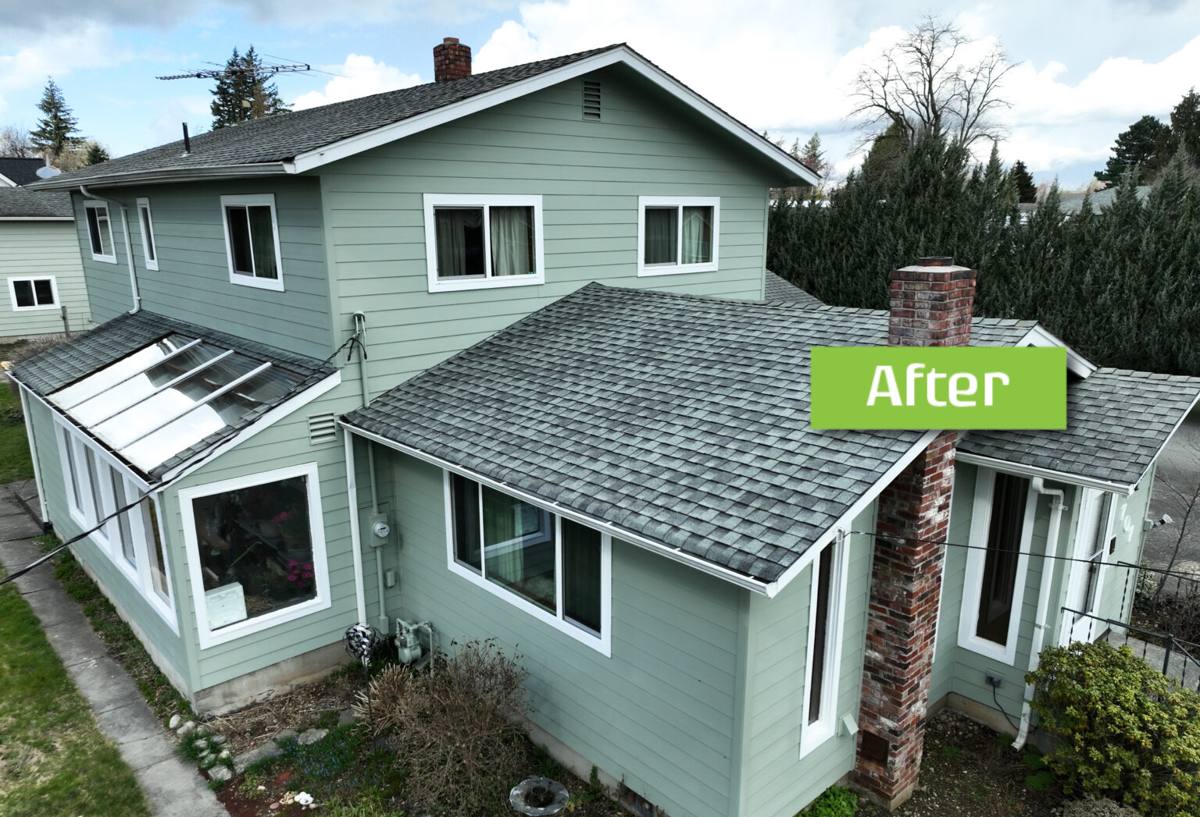
What a Correct Roof Replacement Actually Involves
"Roof replacement" gets used loosely. A proper tear-off-and-replace job in this climate includes several steps that are easy to shortcut and hard to spot once the new roof is on — which is exactly why they get skipped by crews trying to move fast.
Full tear-off, not a layover
Installing new shingles over old ones traps moisture, hides existing deck damage, and voids most manufacturer warranties outright. A full tear-off lets us see the roof deck itself, which is the only way to know its actual condition.
Deck inspection and repair
Once the old roofing is off, we check the plywood or OSB decking for soft spots, delamination, or water staining — all common where moss has been holding moisture against the roof for years. Damaged sections get replaced before anything new goes down. Skipping this step is the single most common cause of a roof that fails early.
Ice-and-water barrier at the vulnerable spots
Eaves, valleys, and roof-to-wall transitions are where wind-driven rain gets pushed backward under standard underlayment. Self-adhering waterproof membrane at those locations is standard practice for this climate, not an upgrade.
Proper ventilation
A roof needs balanced intake and exhaust airflow to keep the attic dry and the shingles at a stable temperature. Poor ventilation shortens shingle life and contributes to moss and moisture problems from the inside out — a detail that matters more in a climate this wet.
Flashing done right, not just caulked
Chimneys, skylights, plumbing vents, and wall intersections need properly formed and layered metal flashing. Caulk is not a flashing substitute — it's a maintenance item that fails long before the roof around it does.
Moss, Algae, and the Long Wet Season
Why moss takes hold here
Moss needs moisture, shade, and organic debris to establish — and a lot of Ferndale properties offer all three, especially on north-facing slopes and roof sections shaded by trees. Once moss gets a foothold, it holds water against the shingle surface, lifts shingle edges as it grows, and accelerates granule loss. Left unaddressed, it shortens roof life significantly.
What actually helps
Zinc or copper strips near the ridge release trace metal ions with every rain, which inhibits moss and algae growth across the roof plane below them — a low-maintenance, mechanical solution rather than a chemical one. Algae-resistant shingles, which use copper-infused granules, are worth the modest upcharge on a shaded or north-facing roof. Beyond materials, keeping overhanging branches trimmed back and gutters clear reduces the moisture and organic matter moss needs to establish in the first place.
Choosing Roofing Materials for a Ferndale Home
Most Ferndale homes are well served by architectural asphalt shingles, but the right specific product and underlayment package depends on sun exposure, roof pitch, and how much shade the property gets. Here's how the common options stack up for this climate specifically:
| Material | Typical Lifespan | Moss/Algae Resistance | Relative Cost | Best Fit |
|---|---|---|---|---|
| Standard 3-tab asphalt | 15-20 years | Low unless treated | Lowest | Budget-driven replacements, low-shade roofs |
| Architectural (laminate) asphalt | 25-30 years | Good with algae-resistant granules | Moderate | Most Ferndale homes — best balance of cost and durability |
| Standing seam metal | 40-50+ years | Excellent — sheds moss and moisture well | Highest | Steep roofs, heavily shaded lots, long-term owners |
| Synthetic/composite shake | 30-40 years | Good, depends on product | High | Homeowners wanting a wood-shake look without wood's moisture issues |
We don't push one product on every roof. A heavily shaded, north-facing home under mature trees is a different situation than an open, sun-exposed roof a mile away, and the material and underlayment recommendation should reflect that.
Signs Your Ferndale Roof Needs Replacing, Not Just Patching
Not every roof problem calls for full replacement — plenty of leaks are legitimately fixable with a repair. But certain signs point to a roof that's past the point where patching makes sense:
- Granules collecting in gutters or at downspout outlets in significant amounts
- Shingles that are cupping, curling, or cracking, especially on south- and west-facing slopes
- Moss or algae covering large sections rather than isolated patches
- Soft or spongy spots when walked on, or visible sagging between rafters
- Daylight visible through the roof deck from inside the attic
- Recurring leaks in the same area despite prior repairs
- A roof approaching or past 20-25 years old, regardless of visible condition
If you're only seeing one or two of these, a repair or a smaller reroof of one slope may be the more honest recommendation — and we'll tell you that if it's true.
Our Replacement Process, Start to Finish
- On-site inspection. We walk the roof and attic, check decking condition from inside where accessible, and note ventilation, flashing, and moss/algae patterns.
- Written estimate. A clear scope of work and price — what's included, what materials, and what would trigger a change order (like decking damage we can't see until tear-off).
- Scheduling around Whatcom County weather. We plan replacement days around forecast windows rather than promising a date regardless of conditions — rushing a tear-off into incoming rain is how interiors get water damage.
- Tear-off and deck inspection. Old roofing comes off, decking is inspected and repaired as needed, and the property is protected throughout.
- Underlayment, flashing, and ventilation installed correctly. This is where most of the long-term performance of the roof is actually determined.
- New roofing installed to manufacturer specification. Correct nailing pattern, exposure, and sealing — the details that keep a warranty valid.
- Cleanup, including a magnetic nail sweep of the yard and driveway.
- Final walkthrough so you know what was done and what to watch for going forward.
Why a Crew That Already Works Ferndale Matters
A roofing crew that regularly works Ferndale and the surrounding Whatcom County area isn't guessing at how a roof here needs to be built — they've already seen what moss does to an unventilated attic, what wind-driven rain does to under-flashed valleys, and how fast an inland-spec roof underperforms this close to the water. That experience shows up in the small decisions during installation that don't get written into an estimate but make a real difference over the next 20-plus years.
There's also a practical side to staying local: faster response if a storm causes damage, familiarity with permitting requirements in this area, and accountability that comes with being an easy drive away rather than a call center. When you're comparing bids, it's worth asking directly how much work a contractor has actually done in Ferndale and the broader Bellingham area — not as a sales pitch, but because it changes how they'll spec your roof.
Protecting the Investment After Installation
A correctly installed roof still benefits from basic upkeep in this climate. Keeping gutters clear so water isn't backing up under the roof edge, trimming back branches that shade and drop debris onto the roof, and doing a periodic visual check after major windstorms all go a long way toward getting full value out of the materials. If zinc or copper strips were installed, they generally don't need attention for many years — that's the point of them. A roof that's flashed, vented, and installed correctly the first time shouldn't need much beyond that.
If your Ferndale roof is showing its age or you just want an honest read on where it stands, we're happy to take a look and give you a straightforward estimate — no pressure, no inflated urgency, just what we actually see. Use the form below to get started.