 Bellingham
 Ferndale's Climate Is Harder on Siding Than Most Homeowners Realize
Ferndale sits close to the water, low in the Nooksack River valley, and open to the marine air that moves in off the Salish Sea. That combination means three things are working against your siding nearly year-round: salt-tinged moisture in the air, wind-driven rain that hits walls at an angle instead of falling straight down, and long stretches of gray, damp weather that keep exterior surfaces from ever fully drying out. Add in the shade from mature trees on many Ferndale lots, and you get ideal conditions for moss, algae, and mildew to take hold on siding that isn't built to shed water and resist organic growth.
None of this is unique to any one house — it's the baseline climate every home in this part of Whatcom County has to deal with. But it means siding decisions that might be low-stakes in a drier climate are higher-stakes here. A product that handles moisture poorly, or a job that skips proper flashing and water management, shows its weaknesses faster in Ferndale than it would somewhere with less rain and less salt air.
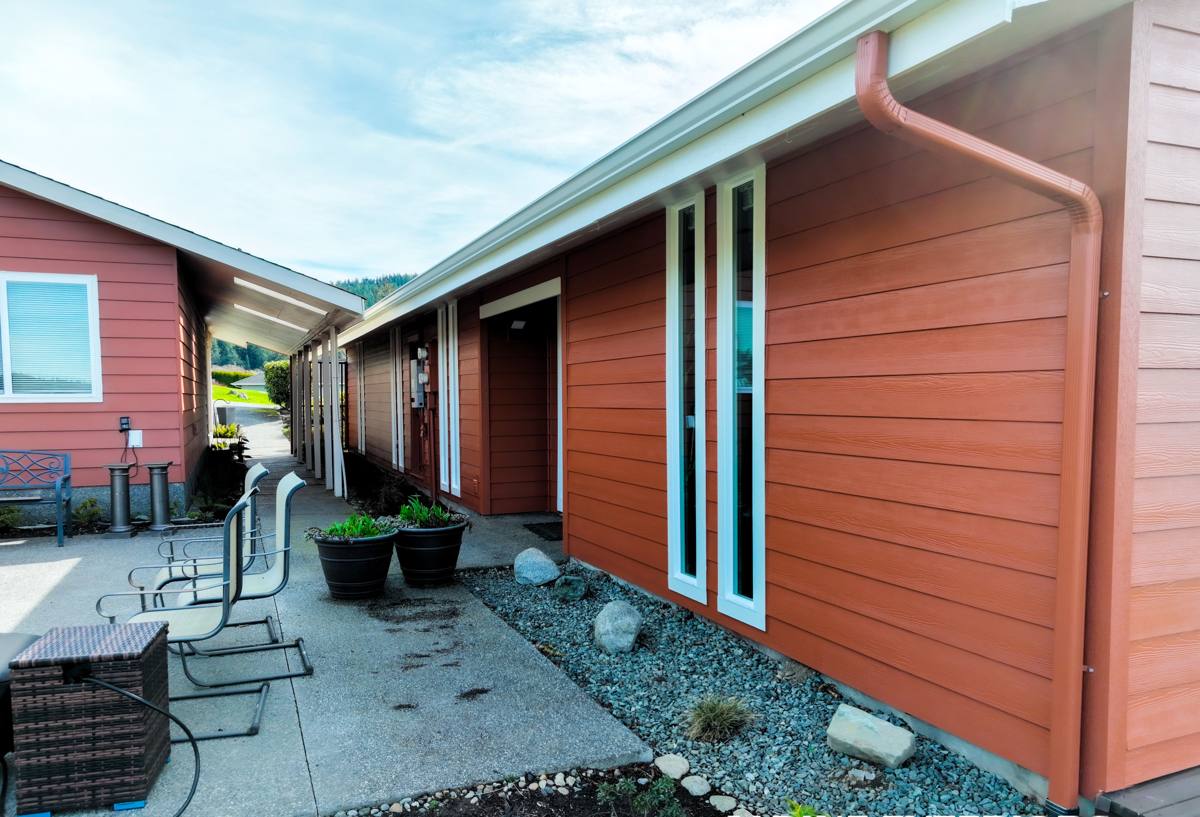
How Salt Air, Rain, and Moss Actually Damage Siding
Salt Air
Airborne salt from the Sound doesn't just sit on the surface — over years it accelerates corrosion of metal fasteners, flashing, and trim, and it can degrade paint and coatings faster than inland weather would. Siding materials and finish systems that aren't engineered for coastal exposure tend to chalk, fade, or break down at the edges sooner than their rated lifespan suggests.
Driving Rain
Wind off the water pushes rain sideways into walls, not just down onto roofs. That means seams, laps, butt joints, and penetrations around windows and doors take on water pressure that a calm-weather installation wouldn't have to withstand. Siding and flashing details that are "good enough" in sheltered conditions can fail here, letting moisture behind the cladding where it causes rot, mold, and sheathing damage nobody sees until it's expensive.
Moss and Algae Season
Whatcom County's wet season runs long, and shaded, north-facing walls in Ferndale often stay damp for weeks at a stretch. Porous or textured siding surfaces give moss spores and algae something to grip. Once established, moss holds moisture directly against the siding, which speeds up rot in wood-based products and keeps the wall assembly wetter than it should be.
Signs a Ferndale Home Needs Siding Replacement, Not Just a Patch
- Soft, spongy, or crumbling spots when you press on the siding, especially near the bottom courses and around windows
- Persistent moss or dark streaking that comes back within a season of cleaning
- Paint that won't hold — bubbling, peeling, or needing repainting far more often than it should
- Visible gaps, warping, or buckling panels, particularly on the sides of the house that face prevailing wind and rain
- Rising energy bills with no other explanation, which can point to a wall assembly that's no longer sealing properly
- Interior signs like musty smells, staining near exterior walls, or trim that's soft to the touch
A few damaged boards can sometimes be repaired. But once moisture has gotten behind the siding in multiple spots, or the underlying material is failing broadly rather than in one isolated area, patching becomes a short-term fix that delays a full replacement without solving the underlying problem.
What a Correct Siding Replacement Actually Involves
Replacing siding is not just swapping old boards for new ones. In a climate like Ferndale's, the work that happens underneath the visible siding matters as much as the siding itself.
Tear-Off and Inspection
Full removal of the old siding lets us see the sheathing and framing underneath — the only way to know if there's hidden rot or moisture damage that needs to be addressed before anything new goes up. Covering over a compromised wall with new siding just hides the problem.
Weather-Resistive Barrier
A properly installed, continuous weather-resistive barrier (housewrap) is the wall's real first line of defense against wind-driven rain. It needs to be lapped correctly, sealed at seams, and integrated with flashing — not just stapled up quickly.
Flashing at Every Penetration
Windows, doors, hose bibs, vents, and any other wall penetration need proper flashing that directs water back out, not into the wall cavity. In a driving-rain climate, flashing details are where most long-term failures start if they're rushed or skipped.
Correct Fastening and Clearances
Fiber cement siding has specific nailing patterns, fastener types, and minimum clearances from grade, roof lines, and decks that manufacturers specify for a reason — get them wrong and you invite moisture intrusion or premature failure, even with a good product.
Finish and Caulking Details
Factory-finished panels reduce the amount of field caulking and painting needed, but the joints, corners, and trim that do need sealant should use products rated for the exposure, applied correctly the first time.
Why We Install Only James Hardie Fiber Cement Siding
We've made a deliberate decision not to install vinyl, LP SmartSide, primed spruce, cedar, or other fiber cement brands like Cemplank or Allura. That's not a marketing position — it's based on how these products hold up, or don't, in exactly the conditions Ferndale sees every winter.
Wood-based siding, even engineered products, relies on its outer coating to keep moisture out. Once that coating is compromised — by a scratch, a poorly sealed cut edge, or years of driving rain — the wood substrate underneath is vulnerable to swelling, rot, and fungal growth, and moss loves the texture. Vinyl handles moisture well on its face but can warp or crack in temperature swings, and its seams and fastening system don't offer the same rigidity or wind performance as fiber cement. Other fiber cement brands may be reasonable products, but we've standardized on one manufacturer, one factory finish system, and one warranty structure so every job we do is consistent and every homeowner gets the same accountability.
James Hardie fiber cement is non-combustible, doesn't provide a food source for moss or insects the way wood does, and its ColorPlus factory-applied finish is baked on under controlled conditions — a more durable, more consistent result than field-applied paint. Hardie also engineers specific product lines (HZ5 and HZ10) for different climate zones, so the product itself is matched to the exposure a home actually faces rather than a one-size-fits-all approach.
| Factor | What to Look For | Why It Matters in Ferndale |
|---|---|---|
| Water management | Continuous weather barrier, proper flashing at every penetration | Driving rain finds any gap in a coastal, wind-exposed climate |
| Material composition | Non-combustible, moisture-resistant fiber cement | Resists rot and doesn't feed moss the way wood substrates can |
| Finish system | Factory-applied, climate-engineered finish | Holds color and seals better than field-applied paint under constant damp exposure |
| Installer experience | Crew familiar with local wind and rain exposure | Fastening, clearances, and flashing details are climate-specific, not generic |
| Warranty structure | Transferable, manufacturer-backed coverage | Protects the investment through a change of ownership, common in growing areas like Ferndale |
Our Process for a Ferndale Siding Replacement
Every home is different, but the sequence of a job we run in this area generally looks like this:
- On-site inspection to assess current siding condition, sheathing, and any moisture damage already present
- A written scope that accounts for the home's exposure — which walls face prevailing wind and rain, where moss and shade are already a problem
- Full tear-off, with sheathing repaired or replaced as needed before anything new goes on
- Installation of weather-resistive barrier and flashing at every window, door, and penetration
- James Hardie panel or plank installation to manufacturer specifications for fastening, clearance, and joint treatment
- Final walkthrough so you understand what was done and why, and what maintenance (if any) to expect going forward
What to Ask Any Contractor Before You Hire Them
- Do you tear off the old siding completely, or install over it?
- Who inspects the sheathing, and what happens if it's damaged?
- What weather-resistive barrier and flashing details do you use, specifically?
- Are you a certified installer for the product you're proposing, and can you show manufacturer training or credentials?
- What does the warranty actually cover — material only, or labor too — and is it transferable?
- Have you worked on homes in this part of Whatcom County before, with this same wind and rain exposure?
Why It Matters That the Crew Already Works in This Area
Siding installation details that work fine in a sheltered inland climate can underperform on a Ferndale wall facing open wind off the water. A crew that already works Whatcom County knows which sides of a house typically take the worst weather, how much clearance to leave near grade given how wet the ground stays, and where moss problems tend to start. That local pattern recognition doesn't replace following manufacturer specs — it adds to it, because it means the details that specs don't spell out in full get handled with the actual climate in mind, not a generic install.
Cost Factors to Understand Before You Get a Quote
Siding replacement cost depends on the size and shape of your home, how much of the existing wall assembly needs repair once it's opened up, the Hardie product line and profile chosen, and the amount of trim and detail work involved. Homes with extensive moisture damage discovered during tear-off will cost more to fully correct than homes where the sheathing turns out to be sound — which is exactly why a real inspection, not a drive-by estimate, is the only honest way to scope a job. Be wary of any quote given without someone actually assessing the current siding and structure first.
If your Ferndale home's siding is showing wear, moss, or moisture damage, we're happy to come take a look and give you an honest read on what's going on and what it would take to fix it right. Use the form below to request a free, no-pressure estimate.