 Bellingham
 Roof Repair Built for Sudden Valley's Microclimate
Sudden Valley sits in a pocket of Whatcom County that takes weather seriously. The lake, the surrounding tree cover, and the proximity to the Puget Sound air mass combine to give homes here a longer wet season than you'll find in town, more shade on north-facing roof planes, and a steady drift of salt-laden air off the water. None of that is dramatic on its own, but stacked together over years, it's exactly the combination that shortens a roof's working life if the roof isn't maintained and repaired with that reality in mind.
We work on roofs throughout Bellingham and greater Whatcom County, and Sudden Valley comes with its own short list of recurring issues: moss colonies that take hold faster under tree canopy, valleys and gutters that clog with needle litter, fasteners and flashing that corrode a little quicker near the water, and roof sections that stay damp longer because the sun doesn't reach them for much of the day. A repair that doesn't account for those conditions tends to fail again within a season or two. One that does can add years to a roof's remaining life for a fraction of the cost of replacement.
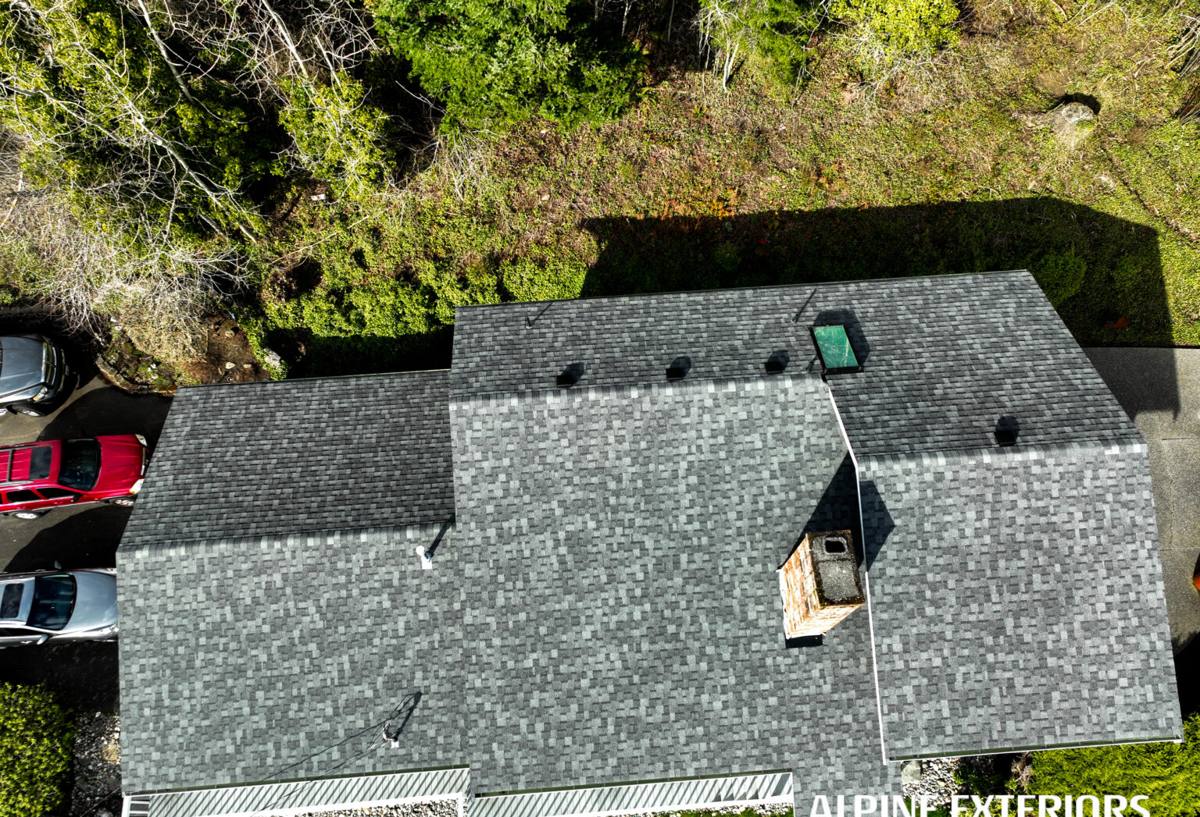
What the Regional Climate Actually Does to a Roof
Moss and Organic Growth
Moss isn't just cosmetic. It holds moisture directly against the roofing material, works its way under shingle tabs and shake courses as it grows, and lifts edges just enough to let wind-driven rain in behind the surface layer. In shaded, tree-adjacent settings like much of Sudden Valley, moss can re-establish within a single wet season if it isn't physically removed and the roof isn't treated to slow regrowth. By the time moss is visible from the ground, it has usually already been working on the roof deck underneath for a while.
Driving Rain and Wind-Driven Water
Storms coming off the water don't just drop rain straight down — they push it sideways, up under eaves, and into any gap in flashing or underlayment that a calm-weather rain would never find. This is why so many "mystery leaks" in this area trace back to flashing details around chimneys, skylights, dormers, and roof-to-wall transitions rather than to the field of the roofing material itself.
Salt Air and Metal Fatigue
Salt-laden air accelerates corrosion on exposed fasteners, flashing, and metal roof edges. It's a slow process, but it's a real one, and it's part of why we pay close attention to the type and condition of metal components during every repair — not just the shingles or panels themselves.
Extended Damp Periods
Long stretches of grey, wet weather mean roofing materials, sheathing, and insulation stay damp longer after a rain event than they would in a drier climate. That extended moisture exposure is what turns a small, contained leak into rot, mold, or a sagging deck if it goes unaddressed for even one extra season.
Common Roof Repair Needs We See in Sudden Valley
- Moss and debris removal from valleys, gutters, and shaded roof planes
- Flashing repair or replacement around chimneys, skylights, and roof-wall intersections
- Shingle or shake replacement where wind or moss lift has caused damage
- Sealant and boot replacement at pipe penetrations, which degrade faster under UV and moisture cycling
- Soft or spongy decking repair where sustained moisture has compromised the sheathing
- Gutter and downspout adjustments so water is actually carried away from the roof edge, not held against it
- Ridge cap and hip repair where wind uplift has worked fasteners loose over time
What a Correct Repair Actually Involves
A roof repair done right isn't just patching the spot where water is showing up inside the house. Interior staining often shows up several feet away from the actual entry point, because water travels along the underlayment or decking before it finds a way through the ceiling. Here's what we check on every repair call, regardless of what the homeowner initially reported:
- Trace the water path, not just the stain. We inspect the roof above and around the reported leak, not just directly over it, since water rarely drips straight down from where it enters.
- Assess the decking condition. If sheathing has gone soft from prolonged moisture, that section needs to be replaced before new roofing material goes over it — covering rot doesn't stop it.
- Evaluate flashing separately from the field material. Flashing is a different material with a different lifespan than shingles or shakes, and it fails on its own schedule.
- Match materials and fastening methods to what's already on the roof so the repair blends structurally and doesn't create a new weak point at the transition.
- Clear the surrounding area — moss, needles, and debris — so the repair isn't immediately undermined by the same conditions that caused the original damage.
Repair vs. Replacement: How We Help You Decide
Not every roof issue in Sudden Valley calls for a full replacement, and we don't default to recommending one. The honest answer usually comes down to the age of the roof, how much of it is affected, and whether the underlying decking is still sound. The table below covers the general factors we weigh — every roof is different, so this is a starting point for the conversation, not a substitute for an on-site look.
| Factor | Leans Toward Repair | Leans Toward Replacement |
|---|---|---|
| Roof age | Well within expected material lifespan | At or beyond expected lifespan for the material |
| Extent of damage | Isolated to one section or detail | Spread across multiple roof planes |
| Decking condition | Solid, dry sheathing | Widespread soft spots or rot |
| Moss history | First occurrence, caught early | Repeated, long-term moss damage |
| Prior repairs | Roof otherwise well maintained | Multiple past patches stacking up |
If a roof is a genuine repair candidate, we'll say so plainly and quote the repair. If the damage points toward replacement being the more cost-effective path over the next several years, we'll explain exactly why, in plain terms, so the decision is yours to make with full information.
Why Local Experience with Sudden Valley Homes Matters
Sudden Valley isn't a generic subdivision — the tree cover, the lake-adjacent air, and the terrain all shape how a roof ages here differently than a roof on an open, sun-exposed lot elsewhere in Bellingham. A crew that hasn't spent time on roofs in this specific setting can miss the details that matter: which valleys collect the most needle debris, which orientations stay damp longest, and where salt air tends to show up first in metal components. We've worked on homes throughout this area and bring that pattern recognition to every inspection, which shortens the diagnostic process and helps us catch secondary issues before they become their own repair calls.
There's also a practical logistics side to hiring local. A contractor based in the area can respond faster when a storm causes sudden damage, and isn't adding significant travel time and cost into every estimate. That matters in a county where weather can turn quickly and a tarp-and-wait situation needs a same-week fix, not a multi-week wait for a crew to make the trip worthwhile.
Our Roof Repair Process
1. Inspection and Diagnosis
We start with a full roof inspection, not just a look at the reported problem area. That includes checking flashing, penetrations, valleys, and the general condition of the roofing material and decking where accessible.
2. Clear, Written Findings
You get a straightforward explanation of what we found, what's causing it, and what the repair involves — including whether we think repair or replacement is the better long-term value, and why.
3. The Repair Itself
We match materials and techniques to what's already on your roof, address the root cause (not just the symptom), and clear surrounding debris and moss so the fix isn't undone by the same conditions that caused the original problem.
4. Cleanup and Walkthrough
We clear the site of debris and old materials and walk through the completed work with you before we consider the job done.
Simple Maintenance That Extends Roof Life Between Repairs
Between service calls, a few habits make a real difference in how a Sudden Valley roof holds up against the local climate:
- Keep gutters and downspouts clear, especially heading into the fall and winter wet season
- Trim back overhanging branches to reduce shade, debris buildup, and moss-friendly conditions
- Address moss as soon as it appears rather than waiting for it to spread
- Have flashing and penetration seals checked periodically, since these fail well before the roofing material itself typically does
- Watch for interior signs — ceiling stains, musty odors in the attic, or peeling paint near the roofline — and have them checked promptly rather than waiting to see if they get worse
Get an Honest Look at Your Roof
If you're dealing with a leak, visible moss, or just want a professional set of eyes on a roof that's due for a check, we're glad to come take a look. The estimate is free, there's no pressure, and you'll get a straight answer about what your roof actually needs — use the form below to get started.