 Bellingham
 Why Sudden Valley's Setting Puts Extra Wear on Windows
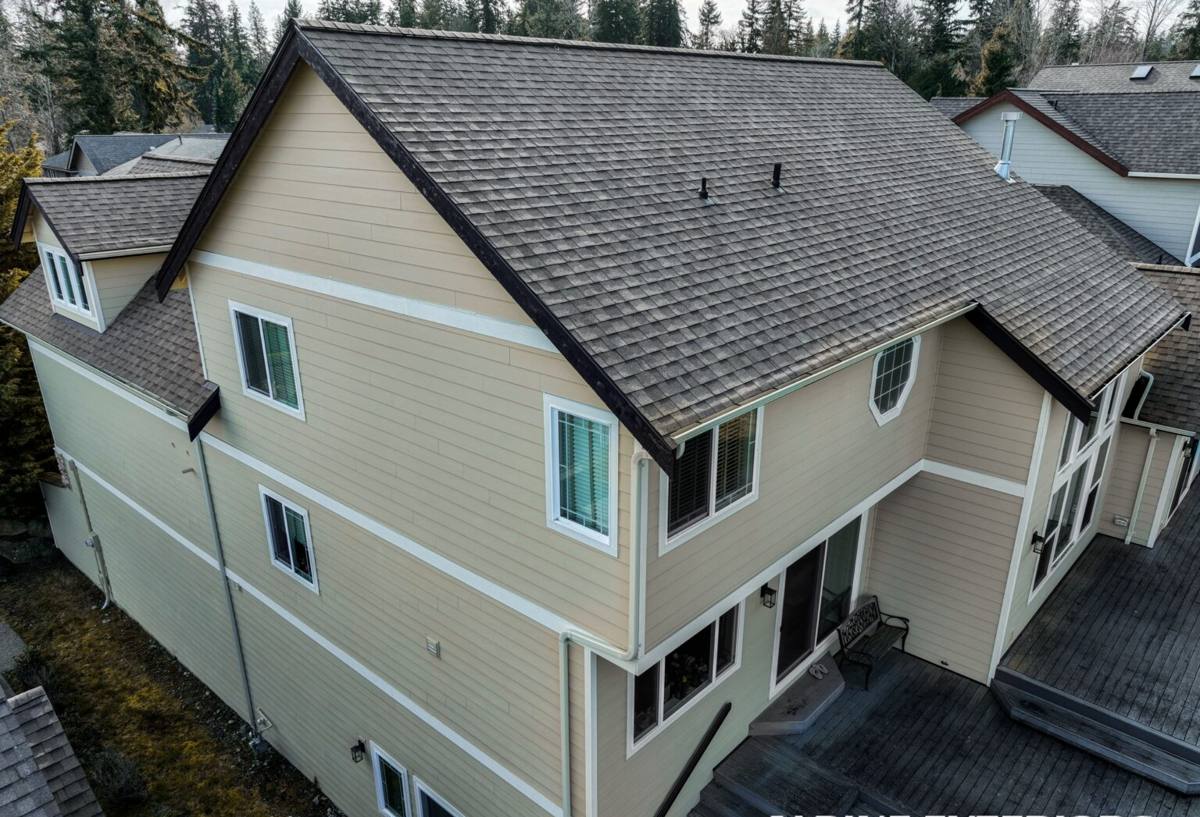
Sudden Valley sits in a heavily wooded pocket of Whatcom County, wrapped around Lake Whatcom with tree canopy close to most rooflines and a lot of shade that never fully burns off, even on clear days. That combination changes how windows age here compared to a house out in the open. Wood surfaces stay damp longer after rain, humidity lingers under the tree cover, and moss gets a head start on anything that holds moisture — sills, frame corners, and the joints where old caulk has started to crack.
Zoom out to the broader Bellingham and Whatcom County climate and you get the same story from a different angle: salt-laden air off Bellingham Bay, driving rain that comes in sideways during fall and winter storms, and a moss season that can run eight or nine months out of the year. Sudden Valley adds its own layer on top of that regional pattern — less direct sun to dry things out, more standing humidity from the lake and forest, and window openings that often sit in near-constant shade for stretches of the day.
None of this means windows fail faster here out of bad luck. It means the installation has to account for slower drying, more moisture cycling, and materials that won't feed the moss and mildew that thrive in shaded, humid microclimates. A window that's a fine choice in a sunny, open neighborhood can be the wrong call on a shaded Sudden Valley lot.
Signs Your Windows Are Past Their Working Life
Most homeowners don't notice window failure until it's obvious — a draft you can feel with your hand, or a pane that's gone permanently foggy. By that point the problem has usually been building for a while. Watch for:
- Fogging or a milky haze between the panes of a double-pane unit — the seal has failed and the gas fill is gone
- Windows that stick, drag, or won't stay up without a prop, often from swollen or warped wood sashes
- Soft, spongy, or discolored wood at the sill or bottom corners of the frame
- Visible moss, algae, or black streaking on frames or trim, especially on north- and shade-facing walls
- A noticeable draft or cold spot near the window even with it fully closed
- Paint that's bubbling, peeling, or won't hold no matter how often it's redone
- Higher heating bills with no other explanation, especially in a house with older single- or early double-pane windows
Any one of these on its own might just need a repair. Several at once, or a window that's original to a home built decades ago, is usually a sign the frame and seal have reached the end of what a repair can fix.
What a Correct Window Replacement Actually Involves
Swapping the visible sash for a new one is the easy part. The work that actually determines whether a window lasts happens in the parts you never see again once trim is back on.
Removal and Inspection
Once the old window is out, the rough opening gets a real look — not a glance. In a shaded, moisture-heavy setting like Sudden Valley, it's common to find soft framing or old water staining behind a window that looked fine from the outside. That damage needs to be addressed before anything new goes in, or the new window is just covering up the same problem.
Flashing and the Moisture Barrier
This is the step that gets skipped on rushed jobs and causes the most callbacks industry-wide. Proper flashing tape and building paper integration direct any water that gets past the window down and out, instead of into the wall cavity. In a climate with driving rain and long wet stretches, a flashing detail that's slightly off doesn't show up as a leak in month one — it shows up as rot two or three winters later.
Insulation and Air Sealing
The gap between the new frame and the rough opening gets sealed with low-expansion foam or backer rod and sealant — not stuffed with fiberglass and forgotten. Done right, this closes off both the draft and the pathway for moist air to reach cold framing and condense.
Finish and Trim
Exterior trim and caulking get reset with a bead that's actually rated for exterior use and sized for the gap it's filling. On a shaded lot, we pay attention to caulk lines and horizontal surfaces that will hold water and stay damp longer than they would in full sun — those spots get extra attention rather than the standard treatment.
Choosing the Right Frame Material and Glass Package
There's no single "best" window material — there's a best fit for the exposure, the budget, and how much upkeep a homeowner wants to take on. For a shaded, humid lot like Sudden Valley, moisture behavior and maintenance load matter more than they would on an open, sunny site.
| Frame Material | Moisture Resistance | Upkeep | Best Fit |
|---|---|---|---|
| Vinyl | Very good — won't rot or absorb water | Low; occasional cleaning | Most Sudden Valley homes, especially shaded elevations |
| Fiberglass | Excellent — dimensionally stable in wet/dry cycling | Low to moderate | Higher-exposure walls, larger openings, longer-term ownership |
| Wood-clad | Good on the exterior face, but the interior wood core needs protection | Higher; finish and seal maintenance | Homeowners prioritizing a traditional interior look who accept the upkeep |
| Aluminum | Poor thermal performance, prone to condensation in this climate | Low structural upkeep, but condensation issues persist | Rarely our recommendation for residential use here |
On the glass side, most Whatcom County homes do well with a double-pane, low-E, argon-filled unit — it's the standard that balances performance and cost for our climate. Triple-pane adds real value on north-facing walls that never see sun, or for homeowners specifically chasing lower heating bills and better sound dampening from wind and rain. It costs more and is heavier to install and service, so it's worth choosing deliberately rather than defaulting to it everywhere.
What Affects Cost for a Sudden Valley Window Project
Every home is different, so we don't quote sight unseen — but these are the factors that consistently move the number up or down.
| Factor | Why It Matters |
|---|---|
| Number and size of windows | Larger openings and whole-house projects have better per-window pricing than one-off replacements |
| Frame material chosen | Vinyl is the most budget-friendly; fiberglass and wood-clad cost more upfront |
| Condition of the rough opening | Rot or water damage found during removal adds framing repair before the new window can go in |
| Glass package | Double-pane low-E is standard; triple-pane or specialty coatings add cost |
| Access and scheduling | Gated-community access, second-story work, and tight lot access can affect labor time |
| Retrofit vs. full-frame replacement | A full tear-out to the studs costs more than an insert replacement but is sometimes the only correct fix for damaged framing |
How We Approach a Sudden Valley Job
- Walkthrough and measurement — we look at each opening, check for existing moisture or rot, and take precise measurements rather than working off rough estimates
- Product selection — we go over frame material, glass package, and trade-offs in plain terms so the decision fits the home and the budget
- Scheduling — including coordinating any gate access or advance notice the community requires so the crew isn't held up on install day
- Removal and framing check — old windows come out, the opening gets inspected, and any soft or damaged framing is repaired before the new unit goes in
- Installation — proper flashing, air sealing, and trim work, done to hold up through a wet Whatcom County winter, not just to pass a quick look
- Cleanup and walkthrough — we clear debris, walk the finished openings with the homeowner, and confirm everything operates the way it should
Questions Worth Asking Before You Hire
Window replacement is one of those projects where the difference between a good job and a bad one isn't visible until years later. A few questions up front can tell you a lot about who you're hiring:
- Are you licensed and insured to work in Washington, and can you provide proof?
- Will you inspect the rough opening for rot or water damage before installing, not just after a complaint?
- What flashing method do you use, and why?
- Is the estimate itemized by window, material, and labor — or one lump number?
- What's covered under warranty, and is it the manufacturer's warranty, your installation warranty, or both?
- Have you worked in gated or HOA communities before, and do you know what that scheduling involves?
Why Local, Sudden-Valley Experience Matters
A crew that's already worked in Sudden Valley isn't guessing about gate access, isn't caught off guard by HOA exterior guidelines on window style or color, and isn't seeing shaded, moisture-heavy framing conditions for the first time. That familiarity translates into fewer surprises on install day and fewer callbacks after the fact — because the flashing and sealing decisions are made with this specific climate in mind, not a generic checklist.
It also means straight answers grounded in what actually holds up here, rather than whatever's easiest to sell. A window that performs well on an open, sunny lot in another part of the county isn't automatically the right choice for a shaded lakeside home, and a contractor who works this area regularly knows the difference.
If your windows in Sudden Valley are drafty, fogged, sticking, or just original to the house and due for an honest look, we're happy to come take a look and put together a straightforward, no-pressure estimate — use the form below to get started.