 Bellingham
 Windows Built for the Sudden Valley Environment
Sudden Valley sits in a pocket of Whatcom County that gets its own weather. Tucked against Lake Whatcom and wrapped in mature timber, homes here deal with more shade, more standing humidity, and more moss pressure than houses out on the open flats near town. Add in the broader South Whatcom marine climate — salt-tinged air drifting up from Bellingham Bay, long stretches of driving rain, and a moss season that can run eight months of the year — and you've got a set of conditions that generic, big-box windows just aren't built for.
We've installed and repaired windows on enough Sudden Valley homes to know the pattern: it's rarely the glass that fails first. It's the frame corners, the sill flashing, and the hardware — the parts that take the brunt of constant moisture cycling and never quite get to dry out between rains.
Why the Lake Changes the Equation
Lake-adjacent lots hold moisture in the air longer than homes even a mile inland. Combined with tree canopy that blocks direct sun on large parts of the house, north- and west-facing walls in Sudden Valley often stay damp for days after a storm system moves through. That's exactly the environment moss, algae, and slow wood rot need. A window that's rated fine for a dry inland climate can still underperform here if the installation doesn't account for how long water sits against the frame before it evaporates.
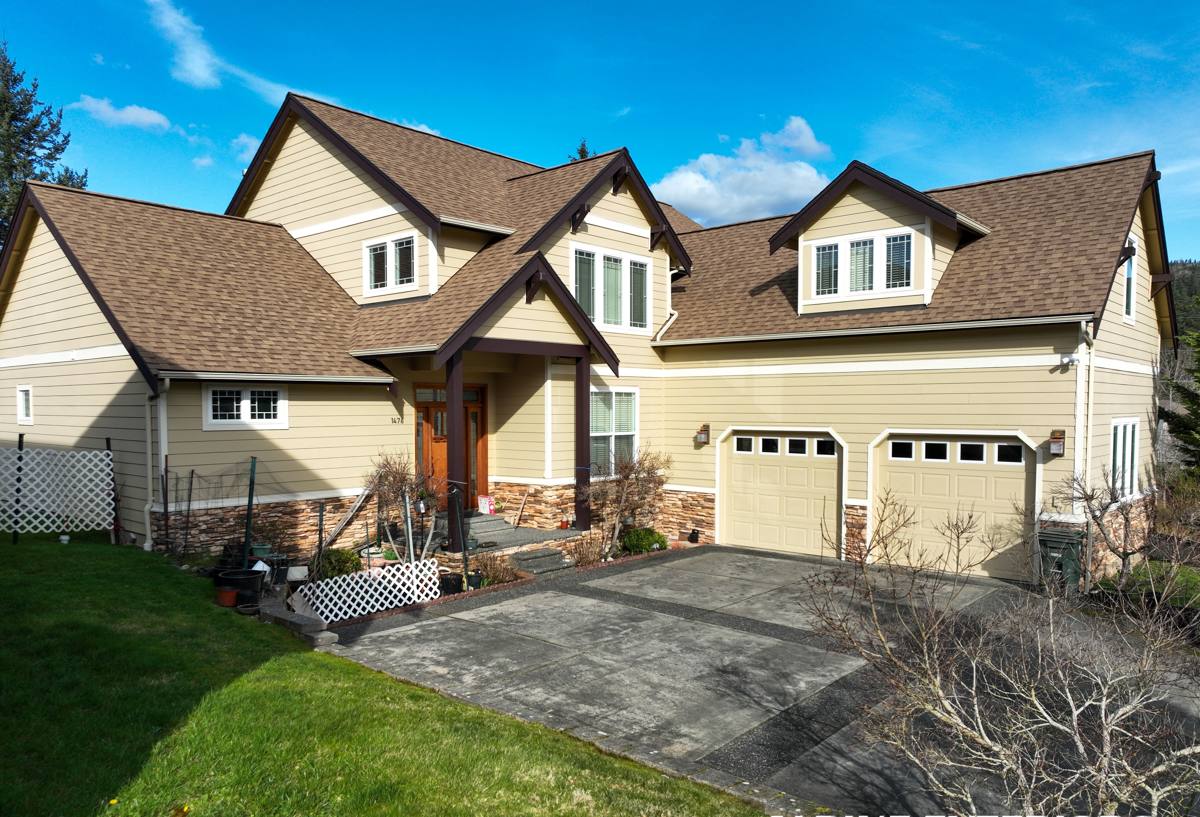
What "Custom" Means for This Job
Custom doesn't just mean a non-standard size, though that's common in older Sudden Valley homes with irregular framing. It means matching the window to three things specific to the property: the exposure (how much direct weather and shade it gets), the wall assembly it's going into, and how the homeowner actually uses the room. A bedroom on the shaded, lake-facing side of the house has different needs than a south-facing kitchen window that gets full sun for half the day.
- Exact opening measurement — old growth-era homes and additions built in different decades rarely match modern standard sizes
- Frame material chosen for the wall's moisture exposure, not just looks
- Flashing and sill pan detail matched to how water actually moves down that specific wall
- Glass package suited to the amount of shade and prevailing wind on that elevation
- Hardware finish that resists the corrosion pattern common to humid, tree-shaded sites
Signs Your Current Windows Are Losing the Fight
Most window failures in this area show up slowly, which is why they get ignored until they're expensive. Here's what we look for on service calls in Sudden Valley specifically:
- Green or black staining building up on the sill or lower frame corners faster than you can clean it off
- Wood trim that feels soft or spongy when pressed near the bottom corners of the frame
- Condensation forming between panes (a sign the seal has failed) rather than just on the inside glass
- Drafts or a whistling sound during wind-driven rain, even with the window latched
- Difficulty latching or a frame that's visibly out of square — often from wood swelling and shrinking with the seasons
- Paint or finish that's bubbling or peeling specifically on the shaded side of the house
Any one of these on its own isn't an emergency. Two or more on the same window usually means water has already gotten past the exterior finish and into the frame assembly, and that's a repair-versus-replace conversation worth having before it spreads to the wall framing.
Frame Material: What Actually Holds Up Here
We get asked constantly which material is "best." The honest answer is that it depends on exposure, budget, and how much upkeep the homeowner wants to sign up for. Here's how the common options actually perform in a shaded, humid, lake-adjacent setting like Sudden Valley:
| Material | Moisture Behavior | Maintenance | Best Fit |
|---|---|---|---|
| Vinyl | Won't rot or corrode; seams and welds are the weak point if installed poorly | Low — occasional cleaning | Budget-conscious replacements, rental or secondary structures |
| Fiberglass | Excellent — dimensionally stable through wet/dry cycling, resists warping | Low | Shaded, high-moisture elevations; long-term value |
| Wood-clad | Good if the cladding is intact; wood core still vulnerable at cut points and corners | Higher — finish needs monitoring | Homeowners prioritizing interior wood look on a sheltered exposure |
| Aluminum | Conducts cold and can corrode over time near salt-influenced air without a good finish | Moderate | Modern designs, sheltered exposures only |
We steer most Sudden Valley clients toward fiberglass or well-detailed vinyl for anything on a shaded or lake-facing wall, and reserve wood-clad for sheltered, south- or east-facing openings where it can actually dry out between storms. That's not a knock on wood windows — it's about matching the material to the wall's real exposure instead of picking on looks alone.
How We Approach Every Installation
The window itself is only part of the job. Most of the long-term performance comes from what happens in the two inches around it.
- Assess the opening. We check the existing sheathing and framing for hidden rot before anything gets ordered — no point installing a great window in a wet wall cavity.
- Confirm the right product. Size, material, glass package, and hardware are matched to that specific wall's sun and rain exposure.
- Remove and inspect. Old units come out carefully so we can see the condition of the framing, sill, and any prior flashing work.
- Repair the opening. Any soft wood or compromised sheathing gets addressed before the new window goes in — skipping this step is the single most common cause of early failure we see on other people's work.
- Install with proper flashing sequence. Sill pan, side flashing, and head flashing go in shingle-style so water is always directed out and down, never trapped.
- Seal and finish. Interior and exterior trim, caulking, and insulation are completed and checked for a tight, even reveal.
- Walk-through. We test operation, check for square, and confirm the finish before we call it done.
Why Local Experience with Sudden Valley Homes Matters
A crew that's only worked open, sunny lots in town will size up moisture risk differently than one that's spent time on shaded, lake-adjacent properties. We've seen how fast moss recolonizes a north wall out here, how differently wood-clad units age under heavy tree cover versus in the open, and which corners of a frame take the worst of the wind-driven rain that comes off the lake during a fall storm. That local pattern recognition changes real decisions — where we add extra flashing, which material we recommend for a given wall, and how we set expectations for maintenance.
It also means we're not guessing at permitting or working blind on older Sudden Valley construction. Many homes in the community were built in stages over different decades, and knowing what's typical for the area saves time and avoids surprises once a window comes out.
Cost Factors Worth Understanding Up Front
Every home is different, so we won't quote a number without seeing the openings, but the main cost drivers on a Sudden Valley job are usually the same ones:
| Factor | Why It Matters |
|---|---|
| Frame material | Fiberglass and premium wood-clad cost more upfront than vinyl but often cost less over the life of the window in a wet climate |
| Hidden rot repair | If sheathing or framing needs replacement, that's additional labor and material beyond the window itself |
| Opening size and shape | Non-standard or custom-shaped openings cost more than stock sizes |
| Glass package | Upgraded coatings for shaded, high-humidity walls add cost but reduce condensation issues |
| Access and site conditions | Steep lots and tree-heavy sites common in Sudden Valley can affect staging and labor time |
We'd rather walk a homeowner through these trade-offs honestly than push the priciest option on every wall. Not every window on a house needs the top-tier package — the ones on the shaded, lake-facing side usually benefit the most from it.
Maintenance That Actually Fits This Climate
Whatever material you choose, a few habits go a long way in a moss-prone, humid setting like this:
- Rinse sills and tracks a couple times a year to clear debris that traps moisture
- Check caulking and exterior trim seams annually, especially before the fall rains ramp up
- Trim back vegetation and branches that keep a wall in constant shade if it's contributing to moss buildup
- Address any soft trim or bubbling paint right away rather than waiting for it to spread
If your Sudden Valley home has windows that are drafty, staining, or just past their useful life, we're happy to take a look and give you a straight, no-pressure estimate — no guesswork, no upsell, just an honest read on what your home actually needs.