 Bellingham
 Building New in Fairhaven Means Building for Salt Air and Rain, Not Just Code Minimums
Fairhaven sits close enough to Bellingham Bay that new construction here deals with a different set of conditions than a build a few miles inland. Salt-laden air moves off the water, wind-driven rain hits west and south-facing walls hard during fall and winter storms, and the moss and mildew season runs long thanks to the marine humidity that sits over Whatcom County most of the year. None of that is a reason to worry — it's just information a window installation has to account for. A new-construction window that's flashed correctly and built from the right materials will handle Fairhaven's climate for decades. One that's installed to a generic spec, without any thought to salt exposure or wind-driven moisture, is the kind of thing that shows up as a callback three or four years later.
New-construction windows are a different job than replacement windows, and it's worth being clear about that distinction up front, because a lot of homeowners and even some builders use the terms loosely.
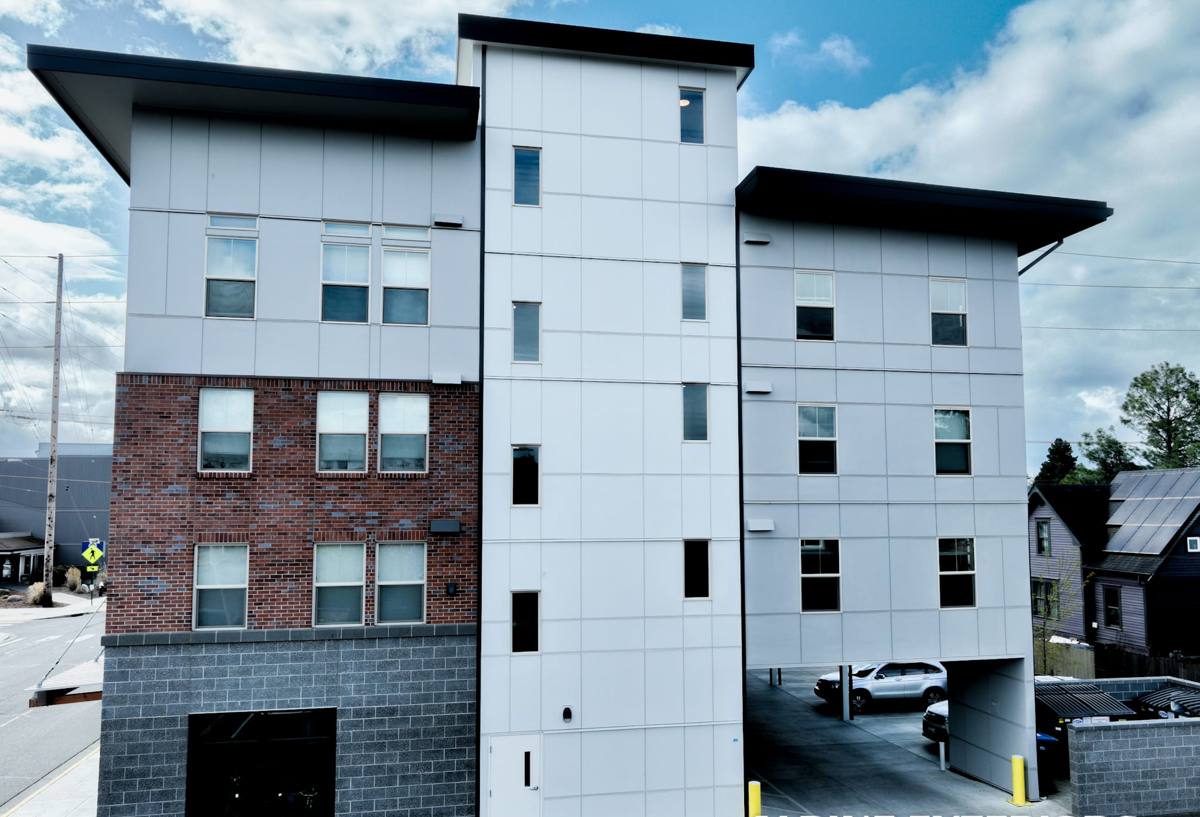
New-Construction Windows vs. Replacement Windows
A new-construction window has a nailing flange (also called a nail fin) around its perimeter. It gets installed into an open, unfinished wall cavity before siding and building wrap details are finished, and the flange gets integrated directly into the water-resistive barrier (WRB) with flashing tape and building paper in a specific shingled sequence. This is the correct approach for new homes, additions, and any opening being framed from scratch — it gives you a fully integrated water management system rather than a window that's just sealed at the edges.
Replacement or "pocket" windows, by contrast, get inserted into an existing frame without disturbing the siding around them. That's a legitimate approach for a remodel where you're not opening up the wall, but it's the wrong call for new construction and it's not what we're covering on this page. If your project involves new framing — a new house, a room addition, a garage conversion with new openings — you want the nail-fin, integrated-flashing approach every time.
Why the Distinction Matters in a Coastal Climate
In a drier inland climate, a mediocre flashing job might go unnoticed for years. In Fairhaven, where wind-driven rain regularly tests every horizontal surface and seam on a building, flashing mistakes at the window opening show up faster — as staining below the sill, soft trim, or moisture intrusion into the wall cavity. New construction gives you the best possible opportunity to get this right, because the wall is open and every layer is accessible. That opportunity doesn't come around again once the siding is closed up.
What a Correct New-Construction Window Installation Involves
There's a specific sequence that governs how a window opening should be built and flashed. Skipping steps or doing them out of order is the single biggest cause of window-related water problems in new construction, coastal or not — but the margin for error shrinks considerably in a place like Fairhaven.
- Rough opening framed to the window manufacturer's specified dimensions, with proper header and sill support
- Sill pan flashing installed first, sloped slightly outward so any water that gets past the window drains back out rather than pooling
- Water-resistive barrier (WRB) integrated with the opening using a shingle-lap sequence — each layer overlapping the one below it, so water always sheds outward and downward
- Window set into the opening, checked for level, plumb, and square before fastening
- Nailing flange fastened per the manufacturer's schedule, then flashed with flexible flashing tape at the sides and top, lapped over the flange in the correct order
- Head flashing installed above the window, tucked behind the WRB above the opening to direct water around, not into, the frame
- Interior air sealing with low-expansion foam or backer rod and sealant, so the wall's air barrier stays continuous
- Exterior trim and siding tied in last, once flashing has had a chance to be inspected
Every one of those steps matters, but the sill pan and the shingle-lap sequencing are the two most commonly rushed or skipped on production builds. They're also the two that matter most once the building faces years of driving rain off the bay.
Choosing Window Materials for a Fairhaven Build
Frame material is a bigger decision near the water than it is inland. Salt air accelerates corrosion of unprotected metal hardware and can be harder on certain finishes over time. This isn't about any one product being bad — it's about matching the material and hardware spec to the exposure the building will actually see.
| Frame Material | Coastal Performance | Maintenance | Typical Use Case |
|---|---|---|---|
| Vinyl | Good — inert to salt corrosion, no paint to fail | Low — occasional cleaning | Most new builds; strong value |
| Fiberglass | Very good — dimensionally stable, resists corrosion and swelling | Low | Higher-exposure walls, larger openings |
| Aluminum-clad wood | Depends heavily on cladding quality and hardware spec | Moderate — clad finish needs monitoring at joints | Design-driven builds wanting a wood interior look |
| Bare wood | Weakest in direct salt/moisture exposure without diligent upkeep | High — regular refinishing required | We generally steer clients away from this on exposed coastal walls |
We're not going to tell you a specific brand is bad — reputable manufacturers make solid products in every one of these categories. Our professional standard is to match the frame material and hardware finish to how exposed the wall actually is. A south- or west-facing wall that takes direct wind-driven rain gets a different recommendation than a sheltered north wall on the same house, and we'll walk through that with you room by room rather than specifying one window type for the whole project.
Hardware and Fasteners
Corrosion-resistant fasteners and hardware matter more here than in a lot of Whatcom County's inland neighborhoods. We spec stainless or coated fasteners for flange attachment and flashing components on projects with direct water exposure, and we pay attention to what hardware ships with a given window line before we recommend it for a coastal-facing opening.
Energy Performance and Washington State Code
New construction in Bellingham has to meet Washington State Energy Code requirements for window U-factor and solar heat gain, and those numbers get checked at the building permit stage. We spec windows that meet or beat code minimums as a baseline, then talk with you about whether it makes sense to go further — better glazing packages pay for themselves differently depending on orientation, how much glass is in the design, and how the rest of the envelope is built. This isn't a page about energy code compliance in detail, but it's part of every new-construction window conversation we have, because the window package and the wall assembly get designed together, not separately.
Working Within Fairhaven's Character
Fairhaven has a distinct architectural identity as one of Bellingham's older, historically significant neighborhoods, and new construction or additions here sometimes involve design review or neighborhood character considerations that don't come up on a typical infill lot elsewhere in the city. We're not a design review consultant, but we've built enough windows into projects in this part of town to know that window proportions, trim profiles, and sightlines get more scrutiny in Fairhaven than in a lot of newer subdivisions. If your project is going through any kind of design or historic review, we can build to the approved window specifications precisely — that's a construction question, and it's one we're comfortable with.
Our Process on a Fairhaven New-Construction Project
Window installation on new construction is a coordinated trade, not a standalone job — we're working inside your builder's or general contractor's schedule, not around it.
- Plan review and window schedule: we go through the architectural plans and confirm rough opening sizes, window types, and material selections before anything is ordered.
- Coordination with framing: we confirm rough openings are built to spec before windows arrive, catching sizing issues while they're still cheap to fix.
- Flashing and installation: sill pan, WRB integration, window setting, and flange flashing done in sequence, with each layer inspected before the next goes on.
- Head flashing and trim tie-in: coordinated with the siding crew so the water management system stays continuous from foundation to roofline.
- Final walkthrough: operation, sealing, and flashing checked window by window before we consider the job finished.
Why Local Installation Experience Matters
A crew that's done new-construction window installs elsewhere in Whatcom County but hasn't worked much in Fairhaven specifically can still do competent work — but they'll be learning the neighborhood's exposure patterns on your project instead of bringing that knowledge in with them. We've installed windows on builds facing the bay's weather directly and on more sheltered inland-facing lots within the same few blocks, and the flashing detail and material choices genuinely differ between them. That's the kind of judgment call that only comes from having done the work here before.
A Practical Checklist Before You Order Windows
- Confirm you need new-construction (nail-fin) windows, not replacement/pocket units — this should match how your walls are being framed
- Get U-factor and solar heat gain numbers confirmed against Washington State Energy Code before ordering
- Decide frame material wall-by-wall based on actual sun and rain exposure, not just style preference
- Ask what fastener and hardware finish ships with your chosen window line
- Confirm your installer plans a full shingle-lap flashing sequence with sill pan flashing — not just caulk around the flange
- If you're in a design review area, confirm window proportions and trim details are locked in before ordering
- Build in a walkthrough before siding closes up the wall, so flashing can be visually confirmed
What This Typically Involves Cost-Wise
New-construction window costs depend on window count, size, material, and glazing package far more than on labor alone, so we don't quote a blanket number here. What we can tell you honestly: fiberglass and higher-end vinyl windows cost more up front than economy vinyl, but for walls with direct wind-driven rain exposure, that upfront difference is often smaller than the long-term maintenance and callback risk of under-specifying a coastal-facing opening. We'll give you real numbers, broken down by window and by wall, once we've seen your plans.
If you're building new or adding on in Fairhaven and want a straight answer on window specification, flashing approach, and what it'll actually cost, we're happy to walk your plans with you. Reach out for a free, no-pressure estimate using the form below.