 Bellingham
 Decks in Sudden Valley Take a Different Kind of Beating
Sudden Valley sits back in the trees on the shores of Lake Whatcom, southeast of Bellingham, and that setting is exactly why decks out here wear out faster than decks in more open, sunnier parts of Whatcom County. Heavy tree cover means less direct sun to dry a deck surface after rain. Proximity to the lake means humidity lingers longer into the day. And the broader region's driving rain and salt-laden air off the Salish Sea add their own slow wear to fasteners, ledger boards, and finishes across every exterior surface in the area, decks included.
Put those together and you get a moss season that runs longer than it does for a deck baking in full sun on the south side of town. Moss holds moisture against wood and composite decking alike, and moisture is the single biggest reason decks fail early — not the number of years on the calendar, but how much of that time the boards spent wet.
If you're looking at a deck that's cupping, spongy underfoot, growing moss faster than you can pressure-wash it off, or showing rot at the ledger board where it meets the house, you're looking at a shade-and-moisture problem more than an age problem. Replacement done right for a lot like yours means designing for drainage and airflow from the start, not just swapping old boards for new ones in the same footprint.
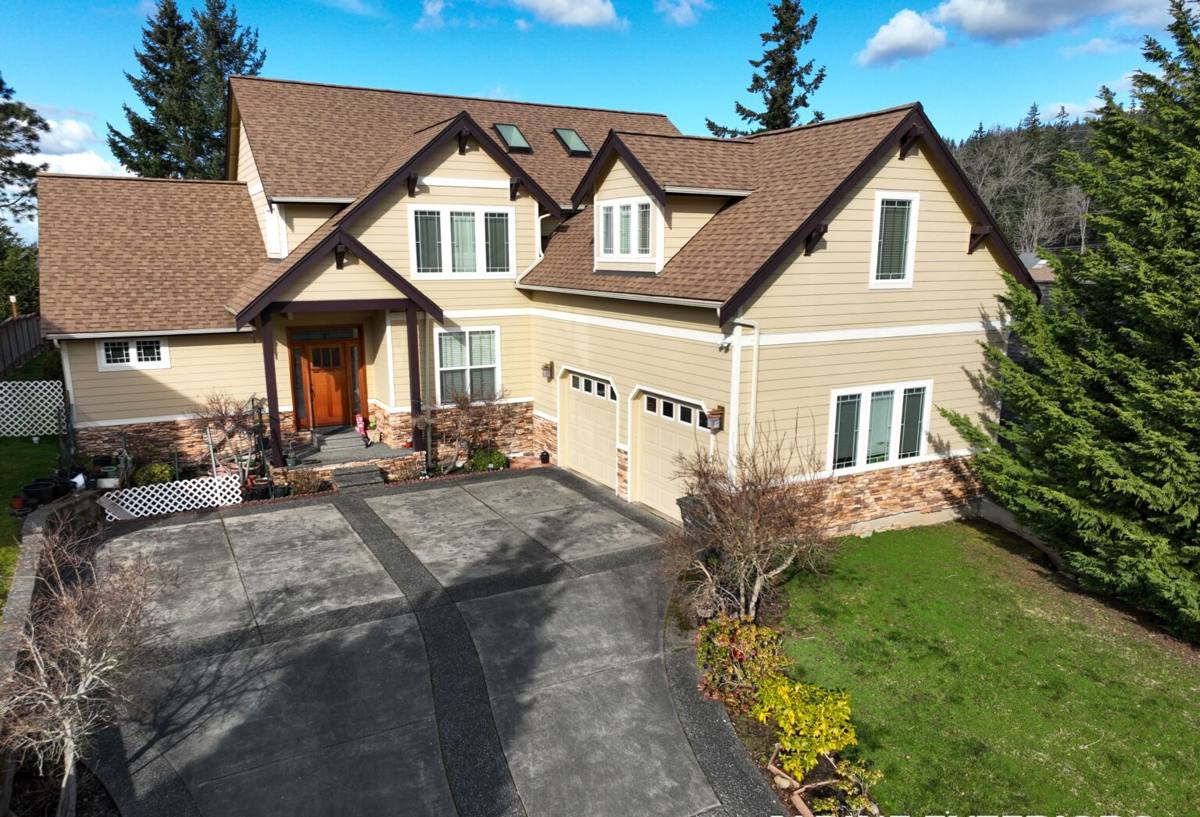
What a Correct Deck Replacement Actually Involves
A deck replacement is not just new decking laid over old bones. Done properly, it's a full evaluation of everything underneath the surface — because on a shaded, damp lot, the substructure is usually further gone than the visible boards suggest.
Structural Assessment
Before anything gets torn out, we check the ledger board connection to the house, the condition of the posts and footings, joist spacing and condition, and whether the original structure was ever properly flashed where it meets the siding. On older Sudden Valley decks, it's common to find ledger boards that were never flashed at all — a shortcut that lets water track directly into the rim joist and wall framing behind it for years before anyone notices.
Drainage and Airflow
On a lot with heavy shade, how well a deck breathes matters as much as what it's built from. We look at joist spacing and gapping between boards, ventilation underneath low-clearance decks, and whether grading around the posts is directing water away or letting it pool. A deck that can't shed water and dry out between rains will grow moss and rot no matter what material sits on top.
Material Selection
We'll walk through the honest trade-offs between wood and composite for your specific lot — sun exposure, how much upkeep you actually want to do, and budget. Neither is automatically "better"; they behave differently under shade and moisture, and we'll tell you which fits your situation instead of just selling you what's easiest for us to install.
Code and Permitting
Deck replacements involving structural changes, height, or guardrails typically require a permit through the City of Bellingham or Whatcom County, depending on your property's jurisdiction. We handle that process as part of the job so you're not tracking down inspections on your own.
Wood vs. Composite Decking on a Shaded, Damp Lot
This is one of the most common questions we get from Sudden Valley homeowners, and there's no single right answer — it depends on how much sun your specific deck gets, how much maintenance you want to do, and what you're trying to achieve visually.
| Factor | Wood (Cedar/Fir) | Composite |
|---|---|---|
| Moss resistance | Needs regular cleaning and sealing to resist moss in shade | Resists moss growth better but still needs periodic cleaning |
| Maintenance | Annual cleaning, periodic staining/sealing | Occasional washing; no staining or sealing |
| Upfront cost | Generally lower | Generally higher |
| Feel underfoot / appearance | Natural wood grain, warms up in sun | Consistent color, can retain heat differently |
| Long-term behavior in shade/moisture | Prone to graying, splintering, and rot if maintenance lapses | More stable dimensionally, but poor ventilation still causes moisture issues underneath |
| Repairability | Individual boards easy to replace | Boards replaceable but color-matching aged material can be tricky |
Our honest take: on a heavily shaded Sudden Valley lot, composite reduces the maintenance burden, but it is not a substitute for good structural drainage and airflow underneath. We've seen composite decks fail prematurely because the framing beneath them was never designed to dry out — the surface material doesn't matter if water is trapped underneath it. That's why we treat the substructure as the priority regardless of what decking you choose on top.
Signs Your Sudden Valley Deck Needs Replacing, Not Just Repair
- Boards that feel spongy or flex noticeably when you walk across them
- Persistent moss or algae that returns within weeks of cleaning
- Visible gaps or dark staining where the deck meets the house (a sign of ledger board water intrusion)
- Posts that wobble or show soft, punky wood when probed with a screwdriver
- Rust streaking from fasteners, indicating corroded connectors underneath
- A railing that feels loose or shifts under moderate pressure
- Consistent dampness underneath the deck days after the last rain
If you're only seeing one or two of these, a repair may genuinely be enough — we'll tell you that if it's true. Replacement makes sense when the structural elements (ledger, joists, posts, footings) are compromised, because at that point patching the surface just delays a bigger problem.
How We Approach the Job
1. On-Site Evaluation
We walk the existing deck with you, probe for soft spots, check the ledger connection, and look at how the site's shade and drainage patterns have affected the structure. This is also when we talk through material options based on how your specific deck sits relative to sun and tree cover.
2. Straightforward Proposal
You get a clear scope of work and pricing before anything is torn out — what's being replaced, what materials are involved, and why. No surprise change orders for problems we should have caught during evaluation.
3. Demolition and Structural Repair
Old decking, framing, and any compromised posts or footings come out. We correct drainage and flashing issues at the ledger board here — this is the step that determines whether the new deck actually outlasts the old one.
4. Rebuild
Framing, decking, railing, and stairs go in to code, with attention to gapping and ventilation appropriate for a shaded lot.
5. Final Walkthrough
We go over the finished deck together, including basic maintenance guidance specific to the material you chose and your lot's sun exposure.
Why It Matters That We Already Work in Sudden Valley
Sudden Valley isn't a typical suburban subdivision — it's a private community with its own access considerations, a mix of steep and wooded lots, and building patterns that differ house to house depending on when and how each home was built. A crew that's already done work in the neighborhood knows what to expect from typical lot grading, tree cover, and the kind of structural issues that show up repeatedly on decks built in similar conditions decades ago.
That familiarity saves time during evaluation and avoids the guesswork that comes with a crew seeing this kind of terrain for the first time. It also means we're realistic with you about timelines — access, weather windows during the wetter months, and material delivery all factor differently on a lot in Sudden Valley than they would on a flat, open lot closer to downtown Bellingham.
We also stand behind the work with a workmanship warranty, separate from whatever manufacturer warranty applies to the decking material itself — worth asking us about directly so you understand what's covered and for how long.
What Deck Replacement Typically Costs
Pricing depends heavily on deck size, material choice, how much structural work is needed underneath, and site access — a deck with easy truck access costs less to build than one requiring materials to be carried in by hand, which is more common on some Sudden Valley lots given the terrain.
| Cost Factor | Why It Matters |
|---|---|
| Deck size (square footage) | Directly drives material and labor quantities |
| Material choice (wood vs. composite) | Composite typically costs more upfront but less to maintain over time |
| Structural condition underneath | Rotted framing, posts, or footings add scope beyond surface replacement |
| Site access | Steep, wooded, or limited-access lots increase labor time |
| Railing and stair complexity | Multi-level decks or custom railing designs add cost |
| Permitting requirements | Structural or height changes may require inspections that add time to the schedule |
We won't quote a number without seeing the deck — anyone who does is guessing. What we can promise is a written proposal that breaks down exactly what you're paying for, so you can compare it against other bids apples-to-apples.
Maintaining a New Deck in a Shaded, Damp Setting
Whatever material you choose, a few habits go a long way toward getting the most life out of a new deck on a lot like yours:
- Sweep leaves and needles off regularly — trapped debris holds moisture against the surface and feeds moss growth
- Clean moss and algae before it gets established rather than after; a light annual wash is easier than a deep scrub
- Keep gutters and downspouts near the deck clear so runoff isn't dumping directly onto or under it
- Trim back overhanging branches where possible to let more air and light reach the deck surface
- For wood decks, reseal on the schedule recommended for your specific product — skipping a cycle in a shaded, wet climate accelerates wear
- Check the ledger board area once a year for staining or soft wood, since that's the first place hidden water damage shows up
None of this is complicated, but consistency matters more in Sudden Valley's shade and moisture than it does on a sunnier lot, where the deck gets a natural head start on drying out.
Ready to Talk About Your Deck?
If your Sudden Valley deck is showing its age, or you just want an honest read on whether repair or full replacement makes more sense for your situation, we're glad to take a look. We'll give you a straightforward evaluation and a clear estimate — no pressure, no upsell, just what your deck actually needs. Use the form below to request your free estimate.