 Bellingham
 Asphalt Shingle Roofing Built for Lynden's Weather
Lynden sits in the Nooksack River valley, tucked against the Canadian border in the northern reach of Whatcom County. It's a different setting than downtown Bellingham or the shoreline communities closer to the Sound, but the roof over a Lynden home is fighting the same Pacific Northwest weather pattern all winter long: long stretches of low-pressure rain, wind events that drive water sideways under loose shingles, and a moss season that can run from October through May in shaded, tree-lined yards. Add in the farmland fog that settles into the valley on cold mornings, and you've got a roof that spends most of the year either wet or damp underneath a wet surface. Asphalt shingles handle that load well when they're installed correctly — but "correctly" matters more here than in drier climates, because a roof in Lynden doesn't get much of a dry season to recover from a bad detail.
This page is specifically about asphalt shingle roofing for homes in and around Lynden — what the local climate demands, what a proper installation actually involves, and how we handle the job from estimate to cleanup.
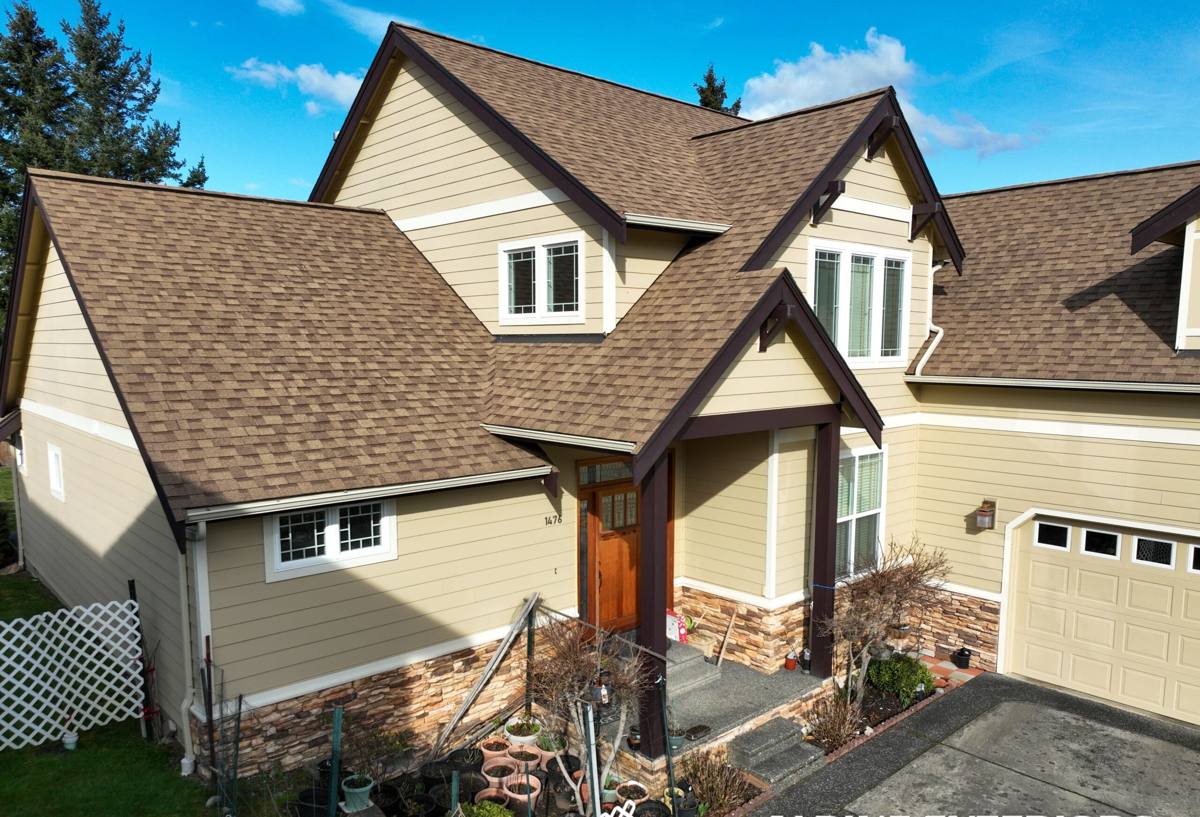
What Lynden's Climate Actually Does to a Roof
Whatcom County's marine climate means moisture is the constant enemy, not heat or UV like you'd worry about further south or inland. A few specific pressures show up again and again on roofs we look at in the Lynden area:
- Driving rain: Winter storms moving in off the water push rain at an angle instead of straight down, which forces water up and under shingle edges, flashing laps, and ridge caps that weren't sealed with enough overlap.
- Moss and algae growth: Mature trees, hedgerows, and shaded north-facing slopes are common on Lynden lots, and shade plus moisture is exactly what moss needs. Moss holds water against the shingle surface and works its way under tabs over time, lifting them and breaking the seal.
- Valley humidity and fog: Overnight fog and heavy dew in the river valley keep roof surfaces damp longer than you'd see on a more exposed or elevated site, extending the window where moss and algae can take hold.
- Wind-driven debris: Farmland and tree cover mean more organic debris — needles, leaves, cottonwood fluff — collecting in valleys, behind chimneys, and in gutters, all of which trap moisture against the roofline.
None of this means asphalt shingles are the wrong product for Lynden — they're the right product for the vast majority of homes here. It means the installation details that get skipped on an easier job (ice-and-water coverage, proper ventilation, moss-resistant strategy) aren't optional extras in this climate. They're the difference between a roof that looks good for 20+ years and one that needs attention by year eight.
What a Correct Asphalt Shingle Roof Involves
The Deck and Underlayment
Everything starts with the roof deck. Before any shingle goes down, we check the sheathing for soft spots, delamination, or water staining that points to a previous leak. Any bad plywood gets replaced — covering over a soft deck just hides a problem that will telegraph through the new roof. From there, synthetic underlayment goes down as the primary water barrier, with self-adhering ice-and-water shield at the vulnerable spots: eaves, valleys, around chimneys and skylights, and anywhere two roof planes meet. In a valley climate like Lynden's, we treat ice-and-water coverage as standard practice at these transition points, not an upgrade.
Flashing
Flashing failures cause more leaks than worn-out shingles do. Valleys, chimneys, sidewalls, and any roof penetration (vents, skylights, plumbing stacks) need new, properly lapped flashing — not old flashing reused under new shingles to save a step. Driving rain finds any gap in a flashing lap, so the overlap and direction of water flow matter more here than they would in a calmer climate.
Shingle Installation
Nailing pattern, exposure, and starter course placement all affect wind resistance and how well the seal strip activates. Shingles rated for higher wind exposure make sense for open Lynden properties without much windbreak from trees or neighboring structures. Ridge cap installation gets extra attention — it's a common spot for lifting when it's rushed.
Ventilation
A roof deck that can't breathe traps moisture from inside the house, which condenses on the underside of the sheathing and rots it from below — a problem that has nothing to do with rain and everything to do with balanced intake and exhaust ventilation. We check soffit intake and ridge or box-vent exhaust as part of every roofing job, because a beautiful shingle job over a poorly ventilated deck still fails early.
Moss: Prevention Beats Removal
Given how much of Lynden sits under mature tree cover, moss deserves its own section rather than a passing mention. Moss doesn't just look bad — it holds moisture against the shingle surface, works its way under tabs, and accelerates granule loss. A few things make a real difference:
| Strategy | What It Does | Best For |
|---|---|---|
| Zinc or copper strips at the ridge | Metal ions wash down the roof with rain and inhibit moss/algae growth | Most homes, especially north-facing or shaded slopes |
| Algae-resistant shingle granules | Built-in resistance to the algae that often precedes moss colonization | Roofs under or near heavy tree cover |
| Routine debris clearing | Removes the organic material moss needs to establish itself | Properties with mature trees close to the roofline |
| Trimming overhanging branches | Reduces shade and debris drop directly onto the roof | Lots backing to treelines or windbreaks |
We'll talk through which combination makes sense for your specific lot during the estimate — a roof shaded by fir trees on the north side needs a different approach than one sitting open over farmland with no tree cover at all.
Our Process, Start to Finish
We keep the process straightforward because a roof replacement is disruptive enough without added confusion:
- On-site inspection: We get on the roof (not just a look from the ground) to check deck condition, existing flashing, ventilation, and moss/algae presence before quoting anything.
- Written estimate: A clear scope of work — what's being replaced, what materials are specified, what the timeline looks like — with no vague allowances buried in the fine print.
- Material selection: We walk through shingle options, wind ratings, and moss-resistance strategy based on your specific property, not a one-size answer.
- Tear-off and deck inspection: Old roofing comes off, the deck gets inspected in daylight, and any needed repairs are confirmed with you before we cover them up.
- Installation: Underlayment, ice-and-water shield, flashing, shingles, and ridge — installed in that order, to spec, with attention to the details that matter most in this climate.
- Cleanup and walk-through: Magnetic sweep for nails, debris removal, and a final walk-through so you know exactly what was done and what to expect going forward.
Signs a Lynden Roof Needs Attention
A few things worth checking before a small problem turns into a deck replacement:
- Granules collecting in gutters or at downspout outlets — a sign of accelerated shingle wear
- Visible moss or thick algae staining on north-facing slopes or shaded valleys
- Curling, cupping, or lifted shingle edges, especially after a windy winter storm
- Daylight visible through the attic roof deck, or damp insulation below it
- Water stains on interior ceilings, particularly near chimneys, skylights, or valleys
- Sagging in the roofline, which can point to deck or structural moisture damage
Catching these early, before the deck itself is compromised, keeps a roofing job a roofing job instead of turning it into a framing repair.
Cost Factors for Lynden Roofing Projects
Every roof is different, but the same handful of factors drive most of the cost variation we see on Lynden homes:
| Factor | Why It Matters |
|---|---|
| Roof size and pitch | Steeper roofs take longer and require more safety setup, adding labor time |
| Number of layers to remove | Tear-off of multiple existing layers adds disposal and labor cost |
| Deck condition | Rotted or delaminated sheathing found during tear-off requires replacement |
| Complexity (valleys, dormers, chimneys) | More transitions mean more flashing work and installation time |
| Shingle tier and wind rating | Higher-rated products cost more but hold up better to open, wind-exposed sites |
| Moss-prevention add-ons | Zinc strip installation and algae-resistant shingles add modest upfront cost, save maintenance later |
We don't quote a number without seeing the roof — anyone offering a firm price over the phone for a job like this is guessing, and it's usually the homeowner who pays for that guess later in change orders.
Why a Locally Established Crew Matters Here
Lynden's building conditions aren't identical to Bellingham's, and they're not identical to the drier side of the Cascades either. A crew that already works this specific stretch of Whatcom County knows how much ice-and-water coverage the valley's rain patterns actually call for, how aggressive the moss strategy needs to be on a tree-lined lot versus an open one, and how local permitting and inspection typically go. That local knowledge shows up in the details — the flashing lap that's sized for driving rain instead of a textbook minimum, the ventilation balance that's calculated for this humidity, not a generic climate zone. It also means we're a short drive away if a warranty question or a storm-related concern comes up after the job is done, not a crew that packed up and moved to the next region.
If you're weighing a roof replacement or just want an honest read on how much life is left in what's up there now, we're happy to take a look. Estimates are free, there's no pressure attached, and you'll get a straight answer either way — use the form below to get started.