 Bellingham
 Barkley's Siding Has to Handle a Lot
Barkley sits close enough to Bellingham Bay to catch salt-laden air off the water, and far enough into the tree cover around Lake Whatcom to sit in shade for long stretches of the year. That combination is tougher on exterior siding than either factor alone. Salt air accelerates corrosion on fasteners and trim metal. Shade from mature trees keeps north- and east-facing walls damp long after a storm has passed, which is exactly the condition moss, mildew, and algae need to take hold. Add Whatcom County's driving rain — often blown sideways by wind off the water — and you've got a wall assembly that needs to shed water aggressively, dry out quickly, and resist organic growth for decades, not years.
A lot of Barkley homes were sided with whatever product was standard at the time of construction, and many are now showing the wear that comes with that climate: soft trim boards, peeling paint, moss lines under roof valleys, and siding seams that have opened up just enough to let moisture behind the wall. Replacing siding here isn't just a cosmetic upgrade — it's a chance to fix a water-management problem before it becomes a structural one.
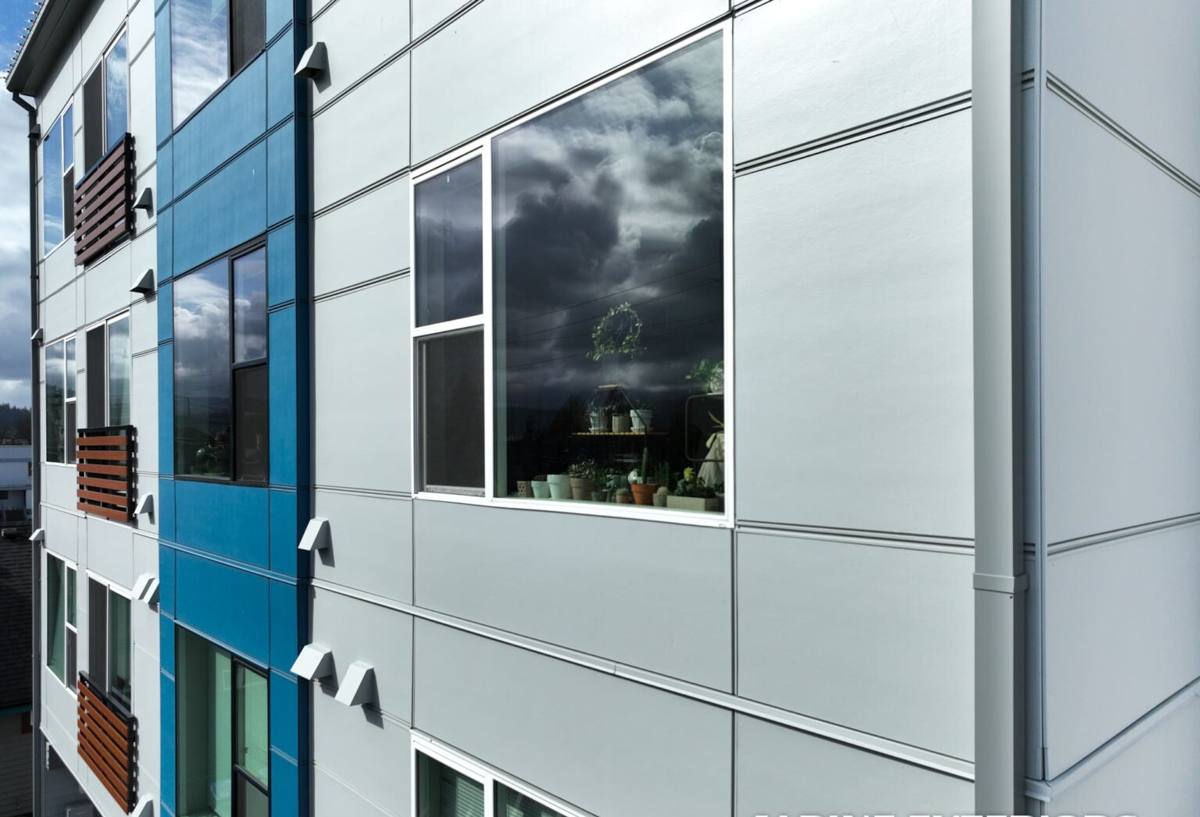
What a Correct Fiber Cement Job Actually Involves
Fiber cement siding is only as good as its installation. The material itself resists rot and fire, but the details around it determine whether a Barkley home stays dry for 30+ years or starts showing problems in five.
Water Management Comes First
Before a single board goes up, the wall needs a correctly lapped weather-resistant barrier, properly integrated window and door flashing, and kick-out flashing at every roof-to-wall intersection. This is the step that gets rushed on cheap jobs and is the single biggest predictor of whether a house stays dry in Bellingham's rain patterns.
Fastening and Clearances
Fiber cement has specific nailing patterns, fastener types, and minimum clearances from grade, roofing, and decks that James Hardie publishes and expects installers to follow. Skipping ground clearance or butting siding tight to a deck surface is a common shortcut that traps moisture right where Barkley's shaded, damp conditions do the most damage.
Joints, Caulking, and Factory Finish
Every butt joint, corner, and penetration needs to be treated correctly — some sealed, some intentionally left to drain. Factory-applied finishes (like Hardie's ColorPlus system) hold their color and seal far better than field-applied paint over cut edges, but only if cut edges are primed and joints are detailed the way the manufacturer specifies.
Why We Only Install James Hardie
We install one fiber cement product: James Hardie. We don't install vinyl, LP SmartSide, Cemplank, Allura, or bare cedar or spruce siding, and we think Barkley homeowners deserve an honest explanation of why.
Vinyl is inexpensive and low-maintenance in mild climates, but it's a petroleum-based product that can warp in temperature swings and offers little protection against wind-driven rain at the seams — a real concern given how much wind-blown moisture this area sees. Engineered wood products like LP SmartSide use a wood-strand core that, while treated, is still an organic material sitting in a climate that's damp for much of the year; if a seal ever fails, the core is more vulnerable to moisture than a cement-based product. Other fiber cement brands (Cemplank, Allura) are chemically similar to Hardie in the raw material, but we've standardized on Hardie specifically for its climate-engineered HZ5 product line (formulated for wet, moderate climates like the Pacific Northwest), its factory ColorPlus finish, and its warranty structure, which is transferable to a future buyer — a meaningful detail if a Barkley home sells within the siding's service life. Bare wood siding (cedar, primed spruce) can look great, but it demands a repainting and recaulking cycle that most homeowners underestimate, especially on the shaded, moss-prone sides of a Barkley lot.
None of these products are "bad" — they're reasonable choices under the right circumstances. We simply decided we'd rather install and stand behind one product system that we know performs correctly in this exact climate than offer five options and hope each one gets installed to spec.
| Siding Option | Where It Struggles Locally | What We Install Instead |
|---|---|---|
| Vinyl | Seams open under driving rain and wind; can warp with temperature swings | James Hardie lap or panel siding, sealed and flashed to spec |
| Engineered wood (LP SmartSide) | Wood-strand core vulnerable if any seal fails in a consistently damp climate | James Hardie fiber cement, non-organic core |
| Bare cedar / primed spruce | Ongoing paint and caulk cycle; moss and mildew take hold fast in shaded spots | James Hardie ColorPlus factory finish, no field painting needed |
| Other fiber cement (Cemplank, Allura) | Similar core material, different finish systems and warranty terms | James Hardie HZ5, engineered for wet, moderate climates |
Our Process for Barkley Projects
- On-site assessment: we walk the exterior, check for existing moisture damage, moss buildup, and problem areas around windows, decks, and roof-to-wall intersections.
- Scope and product selection: we recommend the Hardie plank, shingle, or panel profile that fits the home and confirm ColorPlus color or field-paint plan.
- Tear-off and inspection: once old siding is off, we inspect sheathing for rot or hidden moisture damage before it's covered again.
- Weather barrier and flashing: housewrap, window/door flashing, and kick-out flashing are installed and inspected before siding goes up.
- Installation to manufacturer spec: correct fastening, clearances, and joint treatment, following James Hardie's published installation requirements.
- Final walkthrough: we go over the finished exterior with the homeowner and flag any maintenance notes specific to the home's exposure.
Cost Factors for a Barkley Home
Every home is different, but the same handful of factors drive most of the cost variation we see on fiber cement projects in this area:
| Factor | Why It Matters Here |
|---|---|
| Amount of existing damage | Shaded, damp walls sometimes hide sheathing rot that isn't visible until tear-off |
| Home size and wall complexity | More corners, dormers, and roof intersections mean more flashing detail work |
| Siding profile chosen | Lap, shingle, and panel profiles have different material and labor costs |
| Trim and finish package | Factory-finished ColorPlus trim costs more upfront but avoids a repaint cycle |
| Access and site conditions | Sloped lots and tree-tight setbacks common around Barkley can affect staging and labor time |
Broad ranges vary widely based on these factors, which is why we walk every Barkley home in person before giving a number rather than quoting off a phone call.
Living With Fiber Cement in This Climate
James Hardie siding is low-maintenance compared to wood, but "low-maintenance" doesn't mean "no maintenance" in a place with a moss season as long as Whatcom County's. A yearly rinse-down, especially on shaded north- and east-facing walls, keeps organic growth from getting a foothold. Keeping gutters clear and downspouts directed away from the foundation matters just as much as the siding itself — most of the moisture problems we see start at a roofline or grading issue, not a failure of the siding material.
- Rinse siding annually, focusing on shaded and tree-covered walls
- Keep shrubs and landscaping trimmed back from siding to maintain airflow
- Check and clear gutters before the fall rains set in
- Watch for moss lines under roof valleys and address roof moss promptly
- Re-caulk trim joints if you notice gaps opening up over time
Signs a Barkley Home Needs New Siding Soon
- Soft or spongy spots when you press on trim boards or siding panels
- Paint that's peeling or bubbling rather than just fading
- Persistent moss or dark streaking that comes back within weeks of cleaning
- Visible gaps at butt joints, corners, or window trim
- Warping, cupping, or separation at siding seams
- Rising energy bills that suggest the wall assembly is no longer performing
Why a Crew That Already Works Barkley Matters
Installation quality depends on judgment calls that don't show up in a spec sheet — how much clearance to leave near a shaded planting bed that stays wet longer, how aggressively to flash a roof line given the wind and rain patterns on a particular exposure, which walls will need extra attention to moss and mildew resistance. A crew that regularly works in Bellingham and the surrounding Whatcom County neighborhoods has already seen how James Hardie siding performs on homes with Barkley's specific mix of tree cover, slope, and coastal exposure, and builds those lessons into every install rather than treating each house as a generic template.
If your Barkley home's siding is showing wear, or you're planning ahead for a replacement, we're happy to walk the exterior with you and give a straightforward, no-pressure assessment. There's a form below to request a free estimate.