 Bellingham
 Siding That Actually Fits Barkley's Climate
Barkley sits close enough to Bellingham Bay and the surrounding wetlands that homes here deal with a specific combination of weather stress: salt-laden air moving in off the water, long stretches of driving rain through the fall and winter, and a moss and mildew season that can run nearly nine months out of the year. None of that is unique to one street or one subdivision in Barkley — it's a Whatcom County reality — but it does mean siding choices that work fine in drier parts of the country don't always hold up the same way here.
James Hardie fiber cement siding was engineered specifically for regions like this. It doesn't absorb moisture the way wood-based products do, it doesn't corrode from salt exposure the way some metal trims can, and its factory-applied ColorPlus finish is built to resist the kind of color fade and mildew staining that shows up fast on a north-facing wall in the Pacific Northwest. That's why it's the only siding product we install — not because it's trendy, but because it's the product that actually matches what this climate does to a house year after year.
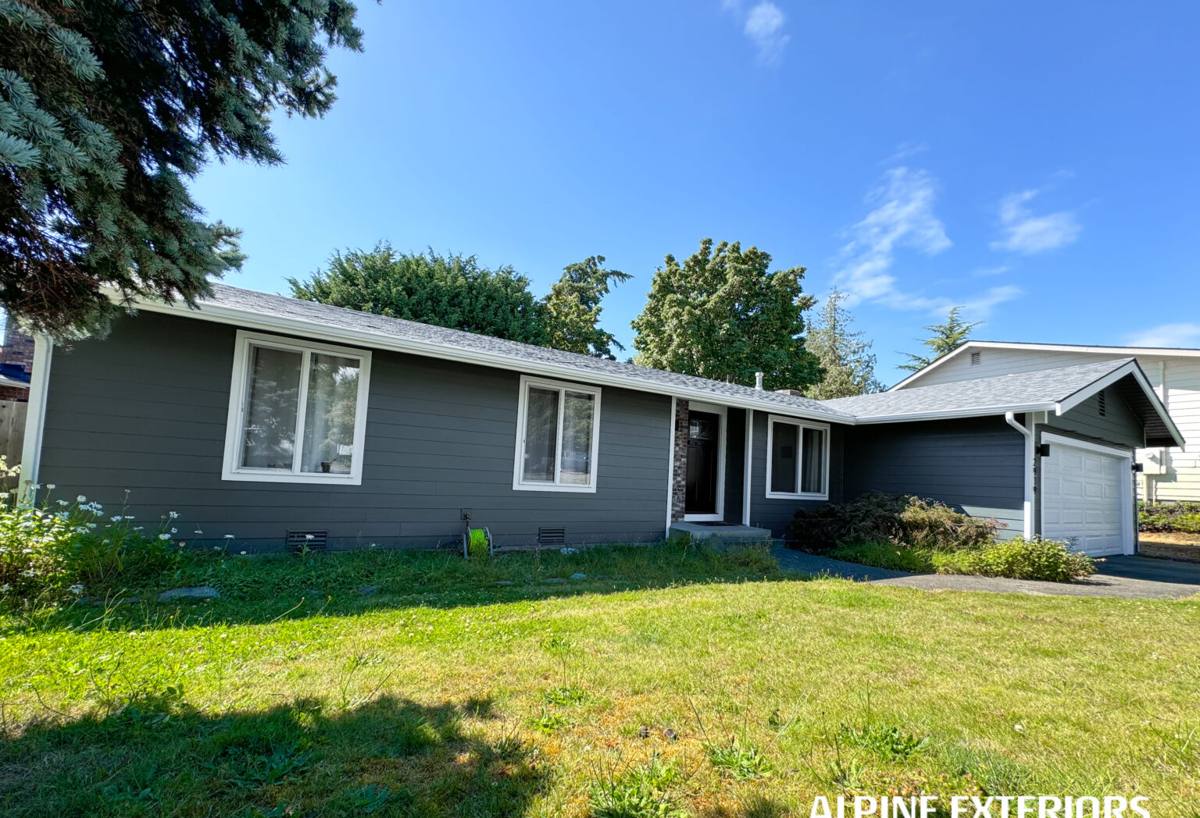
What Salt Air and Rain Do to Siding Over Time
Homes in and around Barkley are close enough to the water that airborne salt is a real factor, even if it's not always obvious day to day. Salt exposure accelerates corrosion on fasteners, trim, and any metal components on a home's exterior, and it can also accelerate the breakdown of lower-quality paint finishes on wood and composite siding. Combine that with Bellingham's rainfall pattern — long, low-intensity rain events that keep exterior surfaces wet for extended periods rather than quick, drying downpours — and you get a recipe for slow, cumulative moisture damage.
Why Constant Dampness Matters More Than Heavy Rain
It's not usually one big storm that damages siding here. It's the fact that a wall can stay damp for days at a time during a wet stretch, which gives moss, algae, and mildew time to establish themselves, and gives any moisture that does get behind the siding time to do real damage to sheathing and framing before anyone notices. Siding that can't shed water efficiently, or that swells and softens when saturated, is working against the climate instead of with it.
The Long Moss Season and What It Means for Your Siding
Moss doesn't just grow on roofs in this part of Washington — it establishes on siding, trim, and anywhere organic buildup, shade, and moisture combine. Barkley's mix of mature landscaping and marine-layer humidity gives moss a long growing window, and once it takes hold on a porous or textured surface, it's difficult to fully remove without damaging the material underneath.
- James Hardie's factory-baked ColorPlus finish creates a smoother, denser surface that gives moss and algae less to grip onto compared to raw or field-painted wood-based sidings.
- Because the finish is factory-cured rather than site-applied, it holds up better to the repeated wet-dry cycling that a marine climate produces.
- Correctly installed trim and flashing details keep water from pooling in the exact spots where moss problems typically start — inside corners, under window sills, and along ground-level starter courses.
What Correct Installation Looks Like in This Climate
James Hardie siding performs the way it's designed to only when it's installed to the manufacturer's specifications — and in a wet, salt-influenced climate like Barkley's, the installation details matter even more than usual. A rushed or generic install can leave a home vulnerable in exactly the areas where local weather is hardest on a building envelope.
The Details We Don't Skip
| Installation Detail | Why It Matters in Barkley |
|---|---|
| Proper clearance above grade, decks, and roof lines | Keeps siding from sitting in standing water or constant splash-back during long rain events |
| Correct fastener type and spacing | Reduces corrosion risk from salt-air exposure and prevents panel movement over time |
| Rainscreen or drainage plane behind the siding | Lets any moisture that does get past the surface drain and dry instead of sitting against sheathing |
| Sealed and flashed joints, corners, and penetrations | Prevents the small entry points where moss, algae, and rot typically start |
| Factory-cut, factory-finished edges wherever possible | Keeps the protective ColorPlus coating intact instead of exposing raw material at cut lines |
Skipping any one of these doesn't usually cause an immediate, visible problem. It shows up two, five, or ten years later as premature staining, soft spots, or paint failure — long after the crew that did the work has moved on.
Why Hiring a Crew That Already Works in Barkley Matters
A siding crew that regularly works Barkley and the surrounding Bellingham area already understands the practical realities of building here: how close a given lot sits to prevailing wind and moisture, how shaded a north or west wall typically stays through the wet season, and how local permitting and inspection processes work in Whatcom County. That local familiarity translates into fewer surprises during the job and a finished install that's set up to handle the specific conditions of the neighborhood, not just generic Pacific Northwest weather assumptions.
It also means faster, more informed answers when something needs attention after the fact — whether that's a warranty question, a minor repair from a fallen branch, or simply advice on how a particular wall is holding up compared to others in the area.
James Hardie Product Lines That Fit Barkley Homes
James Hardie's HZ5 climate-engineered product line is formulated for Pacific Northwest conditions — including moisture cycling and cooler, wetter weather patterns — which makes it the right baseline specification for homes in this area. Within that, homeowners typically choose between a few core product styles:
- HardiePlank lap siding — the most common choice, available in a range of textures and exposures, giving a traditional horizontal-siding look with a factory finish built for this climate.
- HardiePanel vertical siding — often used for accent sections, gables, or a more modern look, and equally engineered for local moisture conditions.
- HardieTrim — used around windows, corners, and fascia to complete the moisture-management system rather than leaving those transition points to a mismatched material.
ColorPlus finishes come pre-matched across these product lines, which keeps color consistent from lap siding to trim to panel accents — something that's harder to achieve with field-painted materials, especially once touch-up painting starts happening at different times across a home's life.
What a Siding Project Involves, Start to Finish
Every home is different, but a properly run James Hardie install generally follows the same core sequence:
- On-site evaluation of the existing siding, sheathing, and any moisture or rot issues that need to be addressed before new siding goes on.
- Removal of old siding and inspection of the wall assembly underneath — this is often the point where hidden water damage from a previous, lower-performing product is discovered.
- Repair of any damaged sheathing or framing, and installation of a proper weather-resistive barrier and drainage plane.
- Installation of James Hardie siding, trim, and flashing details to manufacturer specification.
- Final inspection of seams, corners, and penetrations to confirm the moisture-management system is complete and continuous.
Questions Worth Asking Any Contractor Before You Sign
- Will you install a proper drainage plane or rainscreen behind the siding, not just a house wrap?
- What happens if you find water damage in the sheathing once the old siding comes off?
- Are you using factory-finished ColorPlus panels and trim, or field-cutting and painting on site?
- What's covered under the James Hardie product warranty versus your own workmanship warranty?
- Have you installed Hardie siding elsewhere in Barkley or nearby Bellingham neighborhoods with similar exposure?
Cost Factors Homeowners in Barkley Should Understand
Every project's price depends on the size and complexity of the home, but a few factors tend to move the needle most for local homeowners:
| Factor | Effect on Project |
|---|---|
| Condition of existing sheathing | Hidden moisture damage found during tear-off can add repair scope before new siding goes on |
| Home height and roofline complexity | Multi-story sections and steep or cut-up rooflines increase labor and access requirements |
| Trim and detail work | Homes with more corners, windows, and architectural detail require more precise (and time-intensive) trim work |
| Product selection within the Hardie line | Panel style, texture, and ColorPlus finish selection affect material cost |
We walk through these factors on-site rather than quoting blind, since the condition behind the old siding is often the biggest variable on any given Barkley home.
Get a Straight Answer About Your Home
If you're planning a siding project in Barkley, we're happy to take a look, walk the exterior with you, and give you an honest read on what your home needs — no pressure, no generic sales pitch. Reach out for a free estimate using the form below.